Japanese Festival Dance Costumes: Happi, Yukata, and Tabi Guide
The Heartbeat of Matsuri: Understanding Japanese Festival Wear
Japanese summer festivals, known as matsuri, are a vibrant explosion of culture, music, and community. From the thunderous drumming of Taiko ensembles to the synchronized, hypnotic movements of the Awa Odori and local Bon Odori dances, these events demand garments that bridge the gap between deep historical tradition and intense physical performance. According to the Japan National Tourism Organization (JNTO), summer festivals are among the most significant cultural events in the country, drawing millions of participants and spectators alike. However, participating in these festivals—whether you are carrying a massive mikoshi (portable shrine) or dancing in a circle around a yagura (wooden scaffold)—requires specialized clothing. Standard everyday wear, and even formal traditional garments, often lack the breathability, mobility, and sweat-wicking properties necessary for high-energy summer performances.
This comprehensive guide breaks down the essential elements of Japanese festival and performance costumes, focusing on the happi coat, the Bon Odori yukata, and tabi footwear. We will provide actionable advice on sizing, fabric weights, purchasing timelines, and costs to ensure you are fully prepared for your next festival performance.
The Happi Coat: Power, Mobility, and Group Identity
The happi (法被) is a traditional Japanese straight-sleeved coat, most commonly associated with festival participants, shrine bearers, and Taiko drummers. Historically worn by house servants and firefighters during the Edo period, the happi has evolved into the ultimate symbol of festival unity. As noted by the Metropolitan Museum of Art in their extensive timeline of Japanese dress, the evolution of informal and work garments into festival wear highlights the pragmatic adaptability of Japanese textiles.
For performance, the happi is ideal because it allows for maximum arm mobility and does not restrict the torso during deep stances or heavy lifting. The back panel, known as the se-ko, often features the crest (mon) or the kanji of the specific festival neighborhood or dance troupe, fostering a powerful sense of group identity.
Sizing and Measurements for Performance Happi
Unlike Western jackets, happi coats are measured by their back length and wingspan. Getting the right fit is crucial for safety and aesthetics during a performance.
- Back Length (Mitake): For active festival participation (like carrying a mikoshi), the hem should hit at the mid-thigh to prevent tripping. For an average adult male (175 cm tall), look for a length of 85 cm to 90 cm. For female dancers or shorter participants, 75 cm to 80 cm is optimal.
- Wingspan (Yuki): Measured from the center of the back neck to the edge of the sleeve. A standard performance wingspan is around 75 cm to 80 cm. The sleeves should end just above the wrist bone to ensure they do not catch on drumsticks or shrine poles.
- Fabric Weight: Look for cotton fabrics measured between 15 and 20 monme (a traditional Japanese weight unit for textiles). This weight is heavy enough to absorb sweat without becoming transparent, yet light enough to dry quickly in the summer heat.
Bon Odori Yukata: Dancing Through the Night
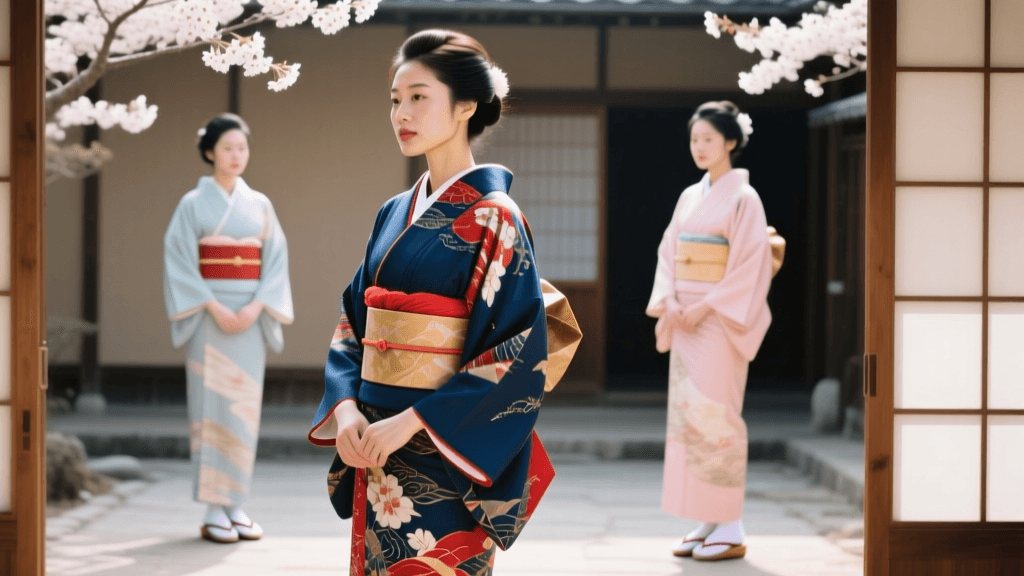
While the standard summer yukata is a beautiful, relaxed garment for strolling through festival stalls, it is entirely unsuited for vigorous dancing. The long, dangling sleeves (sode) can easily strike other dancers, and the continuous straight-line cut restricts high kicks and deep lunges. Enter the Bon Odori (festival dance) yukata.
Bon Odori costumes are often designed as separates (a top and a bottom skirt or pants) or feature modified construction. The sleeves are significantly shorter and narrower, resembling a kosode or even a modern t-shirt cut, while the hemline is intentionally tailored to sit above the ankle.
Actionable Advice for Dance Yukata
If you are purchasing or commissioning a Bon Odori costume, keep these performance-specific details in mind:
- The Two-Piece Advantage: Many modern dance troupes use a two-piece yukata set. The top is cut like a happi but with a wrapped front, while the bottom is a wide-legged hakama or a wrapped skirt. This allows dancers to use the restroom easily and prevents the entire garment from shifting during spins.
- Stretch Blends: While purists prefer 100% cotton, many contemporary performance yukata incorporate a 5% to 10% polyurethane (spandex) blend. This provides crucial stretch across the shoulders and hips for the wide, sweeping arm movements characteristic of dances like the Tankou Bushi or Tokyo Ondo.
- The Obi Knot: Dancers rarely use the stiff, formal maru obi. Instead, they use a heko obi (a soft, sash-like belt) or a pre-tied tsuke obi secured with velcro or hooks. This prevents the belt from unraveling during vigorous spinning and reduces the time needed to dress a large troupe.
Comparison Chart: Standard vs. Performance Festival Wear
Understanding the functional differences between standard traditional wear and performance-specific garments is vital for festival planning. The table below outlines the key distinctions.
| Garment Type | Primary Use Case | Mobility Level | Avg. Cost (USD) | Best Fabric Choice |
|---|---|---|---|---|
| Standard Yukata | Strolling, fireworks viewing, casual dining | Low (Restricted stride and arm lift) | $40 - $120 | 100% Cotton Voile |
| Bon Odori Yukata | Synchronized circle dancing, stage performances | High (Short sleeves, above-ankle hem) | $60 - $150 | Cotton/Spandex Blend |
| Festival Happi | Mikoshi carrying, Taiko drumming, cheering | Very High (Open front, mid-thigh length) | $30 - $90 | Heavy Cotton Sashiko |
| Jinbei | Casual festival wear, children's dancing | High (Shorts and top set) | $25 - $60 | Woven Cotton Seersucker |
Footwear: The Essential Tabi and Jikatabi
No Japanese festival performance is complete without proper footwear. The traditional split-toe tabi is designed to be worn with geta (wooden clogs) or zori (straw sandals). The split toe provides superior grip on the thong of the sandal, which is essential when navigating crowded festival grounds or executing precise dance steps.
However, for high-impact performances like mikoshi carrying or energetic Taiko drumming on asphalt, standard cotton tabi and wooden geta are dangerous and impractical. Instead, performers rely on jika-tabi (tabi with rubber soles).
Sizing and Purchasing Tabi
- The Sizing Rule: Tabi are traditionally made of non-stretch woven cotton with metal fasteners (kohaze) on the side. Because they lack elasticity, you must buy tabi that are 0.5 cm to 1.0 cm larger than your standard street shoe size. A tight tabi will cause severe blisters and restrict blood flow during a multi-hour performance.
- Fastener Count: Tabi are categorized by the number of metal hooks. Standard ankle-height tabi have 4 or 5 hooks. For dance performances where ankle support is needed, opt for 5-hook tabi. For deep crouching and Taiko drumming, some performers prefer 3-hook or stretch-knit tabi that slip on like socks.
- Color Coding: White tabi are the standard for almost all formal and traditional festival dances. However, some rugged neighborhood shrine carriers wear black or navy jika-tabi to hide the dirt and grime of the streets.
Accessories for Performance and Survival
Beyond the main garments, specific accessories serve critical functional roles during a Japanese summer festival, where temperatures frequently exceed 32°C (90°F) with high humidity.
- Hachimaki (Headbands): More than just a symbol of fighting spirit, a tightly tied cotton hachimaki acts as a sweatband, preventing stinging sweat from running into the eyes during vigorous drumming or dancing.
- Tenugui (Hand Towels): Performers often tuck a beautifully dyed tenugui into the back of their obi or wrap it around the neck. It is used to wipe the face and can be soaked in ice water before the performance to lower core body temperature.
- Kinchaku (Drawstring Bags): Since traditional garments lack pockets, a small, sturdy cotton kinchaku is essential for holding modern necessities like smartphones, keys, and hydration salts.
Practical Buying Guide: Timing, Costs, and Sourcing
If you are outfitting a dance troupe, a Taiko group, or simply preparing for your first major Bon Odori, timing your purchase is critical. According to resources on traditional Japanese clothing, the demand for festival wear peaks sharply in early summer.
The Festival Procurement Timeline
- March (Design & Sizing): Finalize troupe sizes and select the crest or pattern for custom happi coats. Custom dyeing (especially traditional aizome or indigo dyeing) can take 4 to 6 weeks.
- April (Ordering): Place bulk orders for happi, custom tabi, and dance yukata. Ordering in April ensures you avoid the June stock shortages that plague domestic Japanese retailers.
- May (Fitting & Alterations): Receive garments and conduct fittings. Hemming Bon Odori yukata to the exact ankle bone of each dancer is crucial for uniformity on stage.
- June (Practice): Begin rehearsing in the actual performance garments. Dancing in a yukata requires adjusting your center of gravity and stride, which takes time to master.
Where to Buy
For authentic, high-quality performance wear, avoid generic costume shops. Look for specialized Japanese retailers such as Suzuyo or Izutsu (based in Kyoto), which supply professional troupes. Online marketplaces like Rakuten Global or specialized Taiko supply stores (like Asano Taiko in the US) offer excellent pre-made happi and performance tabi. Expect to pay between $35 and $60 for a high-quality, mass-produced happi, and upwards of $150 for custom, hand-dyed pieces.
Conclusion
Japanese festival costumes are a masterclass in functional design, perfectly balancing the aesthetic beauty of traditional textiles with the rigorous demands of physical performance. Whether you are slipping into a crisp, indigo-dyed happi to carry a shrine, or adjusting the hem of your Bon Odori yukata for a night of dancing under the paper lanterns, understanding the nuances of these garments will deeply enhance your connection to the culture. By prioritizing correct measurements, appropriate fabric weights, and proper footwear, you ensure that your focus remains exactly where it should be: on the rhythm, the community, and the joy of the matsuri.