Traditional Japanese Festival Costumes: Yukata & Happi
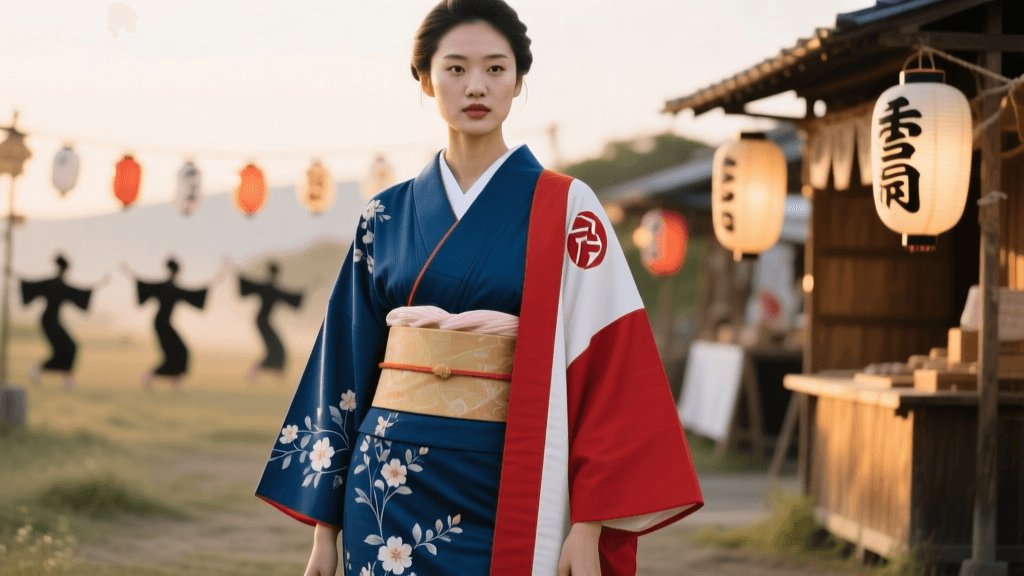
The Intersection of Movement and Tradition: Japanese Festival Costumes
When summer arrives in Japan, the streets and shrines transform into vibrant stages for matsuri (festivals) and Bon Odori (traditional folk dances). Unlike formal kimono worn for tea ceremonies or weddings, Japanese festival costumes are fundamentally designed for performance, endurance, and communal celebration. From the lightweight cotton of a summer yukata to the bold, indigo-dyed happi coats worn by neighborhood associations, these garments bridge the gap between historical tradition and dynamic physical movement.
For dancers, performers, and festival attendees, selecting the right costume requires understanding the biomechanics of the dance, the climate of the Japanese summer, and the specific cultural codes of the region. According to Japan Guide's comprehensive directory of Japanese Matsuri, over 300,000 local festivals take place annually, each with distinct sartorial expectations. This guide provides actionable advice on selecting, fitting, and securing traditional Japanese festival wear for active performance.
The Yukata: Selecting and Fitting for Active Performance
The yukata is the quintessential summer festival garment. Originally a bathing robe, it evolved into the standard casual wear for summer fireworks displays and Bon Odori dances. However, a yukata worn for lounging differs significantly from one worn for vigorous circle dancing.
Measurements and Sizing for Dancers
Formal kimono are tailored to touch the floor, requiring the wearer to lift the hem when walking. For festival dancing, this is a tripping hazard. A performance-ready yukata should be fitted to the ankle bone.
- Mitake (Length): Measure from the base of the neck (the prominent vertebra) down to the ankle bone. For a dancer who is 165 cm tall, the ideal mitake is approximately 125-130 cm, allowing for a 10 cm hem allowance (hashi) that can be folded at the waist.
- Haba (Width): The hips dictate the width. Ensure the front panels overlap by at least 15 cm to prevent the skirt from flying open during spins and kicks.
Fabric Choices: Cotton vs. Polyester
Traditional yukata are made from tetsuya-kon (deep indigo cotton) or printed cotton. Cotton is highly breathable and absorbs sweat, which is crucial in Japan's humid summers. However, heavy cotton can cling to the skin when wet, restricting leg movement. For high-intensity Bon Odori, modern poly-cotton blends or specialized performance polyester (often marketed as 'washable yukata') offer moisture-wicking properties and maintain their structural stiffness, ensuring the silhouette remains crisp even after hours of dancing.
Happi and Hanten Coats: The Festival Uniforms
While the yukata is a full-body garment, the happi and hanten coats serve as the outer layers of festival performance wear, often denoting group affiliation, neighborhood pride, or occupational roles.
The Happi Coat
The happi is a straight-sleeved, open-front coat, typically dyed in indigo with white kanji characters or a family/neighborhood crest (mon) on the back. In the context of performance, happi coats are worn by the musicians (hayashi), mikoshi (portable shrine) bearers, and lead dancers.
The happi coat is designed to be thrown over a base layer, such as a sarashi (chest wrap) or a simple t-shirt, allowing for maximum arm mobility and ventilation during strenuous physical exertion.
The Hanten Coat
Often confused with the happi, the hanten is typically padded (though unpadded summer versions exist) and features a more tailored fit with a shawl collar. While less common for vigorous summer dancing, the hanten is frequently used in autumn and winter folk performances, such as the Namahage demon dances of Akita, where insulation is paramount.
Commissioning Custom Happi Coats
If you are organizing a dance troupe or participating in a local neighborhood association, custom happi coats are a standard requirement.
- Timing: Order at least 6 to 8 weeks before the festival. Traditional dye houses in Kyoto and Tokyo require time for stencil cutting and vat dyeing.
- Cost: Mass-produced, pre-printed happi coats cost between 3,000 and 5,000 JPY. Custom, hand-dyed cotton happi coats with your troupe's specific crest range from 12,000 to 25,000 JPY per piece, depending on the complexity of the kanji and the weight of the cotton (typically 10 to 12 ounces).
Comparison Chart: Japanese Festival Garments
| Garment | Primary Performance Use | Average Cost (JPY) | Key Feature for Movement | Custom Lead Time |
|---|---|---|---|---|
| Yukata | Bon Odori circle dancing, general festival attendance | 5,000 - 15,000 | Ankle-length hem prevents tripping during spins | 2-4 weeks (tailored) |
| Happi | Mikoshi bearing, Taiko drumming, lead dancing | 4,000 - 20,000 | Open front and wide sleeves allow maximum shoulder rotation | 6-8 weeks (dyed) |
| Hanten | Winter folk dances, regional theatrical performances | 8,000 - 30,000 | Padded insulation for cold-weather outdoor stages | 4-6 weeks |
| Tabi | All traditional Japanese stage and festival performances | 1,500 - 4,000 | Split-toe design enhances balance and grip on wooden stages | 1-2 weeks (custom size) |
Footwear and Accessories: Grounding the Performance
The connection between the dancer and the ground is vital in Japanese folk performance. The choice of footwear dictates the rhythm, balance, and safety of the performer.
Tabi: The Foundation
Tabi are traditional split-toe socks. For festival dancing, performers should opt for stretch tabi made from a cotton-polyester-spandex blend rather than traditional stiff cotton. The stretch material allows for full toe articulation, which is essential for gripping the ground during the low stances common in regional dances like the Awa Odori. Ensure the tabi fit snugly; loose fabric around the heel will cause blisters during repetitive stepping.
Zori vs. Geta
While geta (wooden clogs with elevated teeth) are iconic, they are notoriously difficult to dance in for extended periods. The clacking sound of geta is part of the performance's auditory landscape, but for amateur dancers or those performing on uneven shrine grounds, flat zori (woven straw or foam sandals) or low-profile geta (with teeth no higher than 4 cm) are highly recommended to prevent ankle sprains.
Securing the Obi for Vigorous Movement
The obi (sash) is the structural anchor of the yukata. A poorly tied obi will loosen within minutes of active dancing, causing the garment to slip and restrict movement. The Metropolitan Museum of Art notes in their historical overview of Japanese dress that the evolution of the obi from a thin cord to a wide, structural belt fundamentally changed how garments were secured for different classes and activities.
Practical Tying Tips for Dancers
- Use a Koshi-himo (Tying Cord): Do not rely solely on the decorative obi. Use at least two, preferably three, koshi-himo (thin cotton ties) to secure the yukata at the waist and under the bust before applying the outer sash.
- The Knot: For women, the Bunko-musubi (bow knot) is standard. To prevent it from unraveling during spins, insert an obi-ita (stiff belt plate) in the front to maintain tension, and use an obi-jime (decorative cord) woven through the center of the bow to lock the fabric in place.
- Men's Obi: Men typically wear a kaku-obi (stiff, narrow sash) tied in a simple kai-no-kuchi (clam shell) knot at the back or slightly to the side. This low-profile knot prevents interference when sitting on the ground or performing acrobatic festival stunts.
Conclusion: Preparation and Respect
Engaging with Japanese festival costumes requires a balance of aesthetic appreciation and practical preparation. Whether you are stepping into a happi coat to carry a mikoshi through the streets of Tokyo, or tying your yukata for a rural Bon Odori, understanding the functional design of these garments enhances both your performance and your respect for the culture. Always purchase your garments in May or June to ensure proper sizing and alterations before the peak August festival season, and prioritize secure, movement-friendly fittings over purely decorative elements.