Japanese Festival Costumes: A Guide to Happi and Bon Odori
The Cultural Function of Matsuri Attire
Japanese festivals, known as matsuri, and the summer ancestral dances called Bon Odori are some of the most dynamic cultural expressions in Asia. Unlike static museum displays, the traditional garments worn during these events are highly functional performance costumes. They must withstand sweltering summer humidity, allow for vigorous physical exertion, and project a unified community identity. According to The Metropolitan Museum of Art, the evolution of Japanese garments has always been deeply tied to their social and functional roles, and nowhere is this more evident than in festival wear. Whether you are preparing to participate in a local Bon Odori circle, joining a mikoshi (portable shrine) carrying team, or simply attending a summer matsuri, understanding the nuances of Japanese festival costumes is essential for an authentic and comfortable experience.
The Happi Coat: The Ultimate Festival Uniform
The happi coat is the quintessential garment of the Japanese festival. Originally worn during the Edo period by house servants and firefighters, the happi bore the crest (mon) of the family or district they served. Today, it is the undisputed uniform of mikoshi bearers, festival musicians, and street vendors.
Choosing the Right Fabric and Fit
When sourcing a happi for active festival participation, prioritize breathability and durability. Traditional wazarashi (Japanese cotton) is highly breathable but requires careful washing to prevent shrinkage. For rigorous summer performances, modern poly-cotton blends (typically 65% polyester, 35% cotton) are the industry standard. They cost between $35 and $50 USD, resist sweat stains, and dry rapidly.
Pure indigo-dyed cotton (aizome) happi coats are generally reserved for senior team leaders and festival elders. Due to the labor-intensive, multi-dip dyeing process, an authentic aizome happi can cost upwards of $200 USD. The standard length (mitake) of a festival happi is usually 80cm to 90cm, falling just below the hips. This specific measurement is crucial: it allows complete leg freedom for running, squatting, and lifting the heavy wooden poles of a portable shrine without the fabric catching on the knees.
Taiko Drummer Attire: Haragake and Momohiki
For those involved in the percussive heart of the festival—the taiko drumming ensembles—the costume shifts slightly to accommodate extreme upper-body movement. Drummers typically wear a haragake, a short, open-front jacket similar to a happi but often tied with a sash, paired with momohiki (tight-fitting, padded cotton trousers). The momohiki provide compression to support the core and thighs during the deep, wide stances required for powerful drum strikes. When purchasing momohiki, look for quilted cotton variants that offer a slight buffer against the friction of repetitive movement.
Bon Odori Yukata: Dressing for Movement and Rhythm
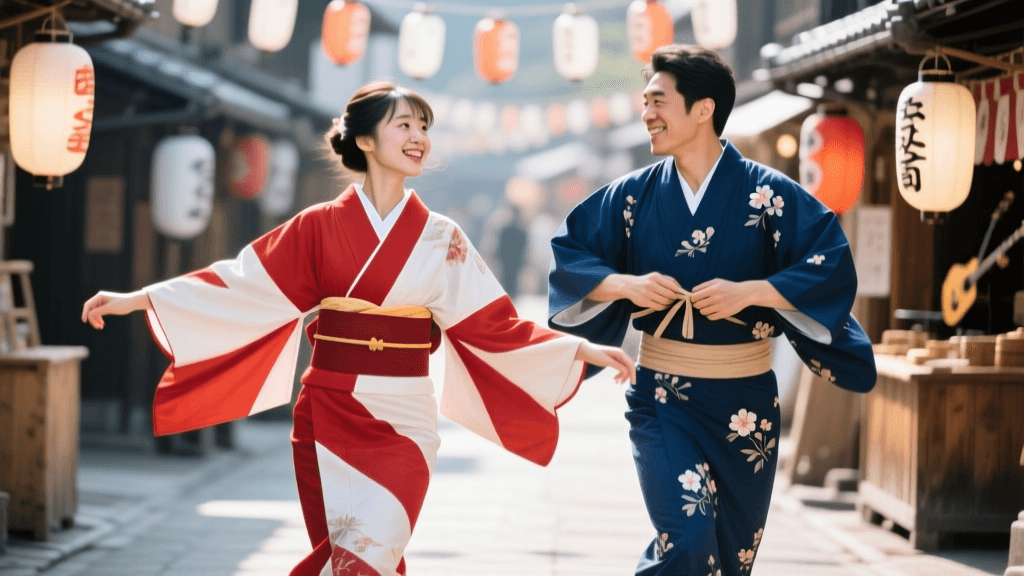
Bon Odori dances require specific garment considerations. While a formal silk kimono restricts movement and traps heat, the yukata is the undisputed queen of the summer dance festival. The Japan National Tourism Organization (JNTO) notes that local summer festivals heavily rely on the visual unity of hundreds of dancers moving in synchronized circles, making the yukata both a personal garment and a piece of collective choreography.
Fabric Weight and Weave
For dance performances, always select a hitoe (unlined) yukata. Standard cotton can become heavy when saturated with sweat. Instead, look for cotton voile, linen blends, or specialized polyester shijira-ori (crepe weave). Shijira-ori features a textured, puckered surface that minimizes skin contact, allowing air to circulate and keeping the dancer cool. These lightweight fabrics typically weigh 30% less than standard cotton yukata.
The Performance Obi
The obi (sash) must be secure but not restrictive to the diaphragm, as Bon Odori requires deep breathing and vocalizations. Women typically wear a bunko musubi (bow knot) or a karako knot. Men wear a kaku obi (a narrow, stiff cotton or silk belt) tied in a simple, flat kata-basami knot.
Pro-Tip: If you are a beginner dancer, use a modern elastic tsukuri-obi (pre-tied belt) secured with a velcro or hook clasp. A traditionally tied silk or heavy cotton obi can easily slip or unravel during the repetitive, sweeping arm movements characteristic of famous dances like the Tanko Bushi or Gujo Odori.
Footwear: Tabi, Jika-Tabi, and Geta
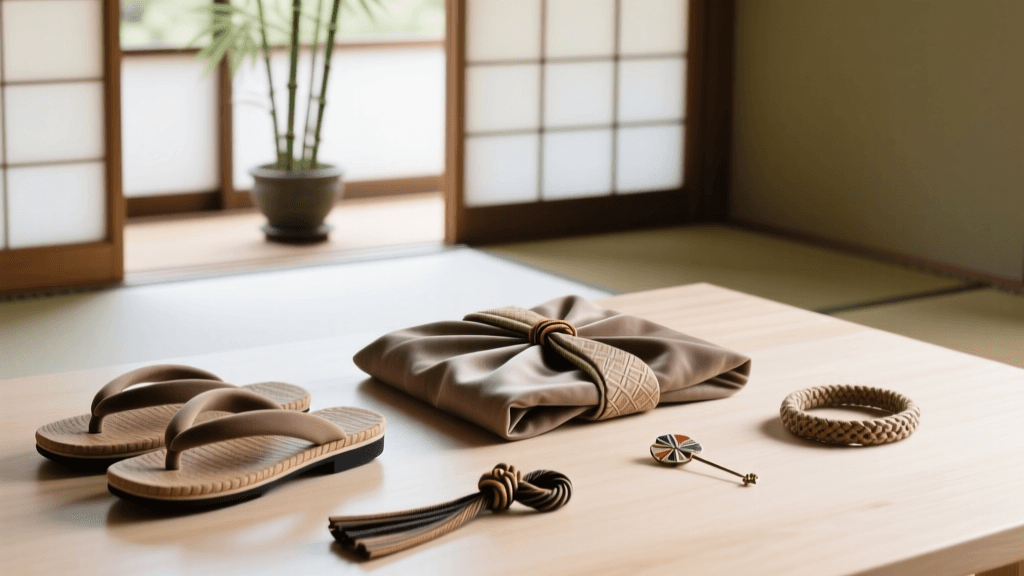
Performance footwear is critical for safety and acoustic contribution. Shrine bearers and taiko drummers wear jika-tabi—split-toe boots with rubber soles. They provide essential grip on asphalt and protect toes from being crushed by heavy wooden shrine poles. Brands like Marugo and Rikio are the industry standards, costing between $30 and $60 USD. Ensure you buy a pair with a reinforced rubber toe cap.
Conversely, dancers wear geta (wooden clogs) with their yukata. The rhythmic clack-clack of geta on pavement is an integral part of the festival's acoustic landscape. For dancing, choose a lower-profile koma-geta (1.5 to 2 inches in height) to maintain a low center of gravity and prevent ankle sprains during spins. Pair them with stretch-cotton tabi socks to prevent blisters.
Festival Garment Comparison Chart
| Garment | Primary Festival Use | Ideal Fabric | Fastening Method | Avg. Cost (USD) |
|---|---|---|---|---|
| Happi | Mikoshi bearing, vending | Poly-cotton blend | Open front, tied with simple sash | $35 - $60 |
| Haragake | Taiko drumming | Heavy cotton canvas | Cross-tied back sash | $45 - $80 |
| Yukata | Bon Odori dancing | Shijira-ori (crepe) | Obi belt (Bunko/Kaku knot) | $50 - $120 |
| Jinbei | Casual festival attendance | Cotton voile / Linen | Drawstring pants, tied jacket | $30 - $50 |
Sizing, Budgeting, and Sourcing
Japanese sizing differs significantly from Western standards. Festival garments are often sold in generic sizes (S, M, L, LL) rather than precise measurements. For happi coats, the chest width is the most critical metric; a standard 'L' size typically accommodates a chest up to 42 inches. If you are broad-shouldered, always check the yuki (sleeve-to-center-back) measurement to ensure the tubular sleeves do not restrict your shoulder joints during overhead lifting.
For sourcing, cultural preservation initiatives highlighted by The Japan Foundation emphasize the importance of supporting traditional artisans. If your budget allows, purchasing directly from regional dyeing cooperatives in Kyoto or Tokyo ensures the survival of these crafts. However, for practical, high-wear festival items like poly-cotton happi and jika-tabi, specialized online retailers like Japan Store or Amazon Japan offer the best balance of authenticity, sizing variety, and international shipping.
"The garments of the matsuri are not merely clothing; they are the skin of the community, transforming the individual into a vital thread of the collective spiritual and rhythmic experience."
Conclusion
Participating in a Japanese festival is a profoundly immersive experience, and wearing the correct performance costume bridges the gap between observer and participant. By selecting the appropriate fabric weights, ensuring proper footwear for your specific role, and understanding the functional geometry of the happi and yukata, you honor the centuries-old traditions of the matsuri while ensuring your own comfort and safety under the summer sun.