Shibori, Yuzen, and Kasuri: A Guide to Japanese Dyeing Arts
Introduction to Japan's Master Dyeing Techniques
When exploring the rich tapestry of Asian traditional garments, few elements captivate the eye and the imagination quite like Japanese textiles. The meticulous craftsmanship, deep cultural significance, and stunning visual aesthetics of Japanese dyeing arts have influenced global fashion for centuries. Among the myriad of techniques developed over the last millennium, three stand out as the undisputed pillars of Japanese textile artistry: Shibori, Yuzen, and Kasuri. Each method requires years of dedicated apprenticeship to master, utilizing distinct chemical processes, physical manipulations, and artistic philosophies. For collectors, vintage enthusiasts, and modern designers, understanding the nuances between these three techniques is essential for authenticating garments, appreciating their value, and ensuring their proper preservation.
Shibori: The Art of Shaped Resist Dyeing
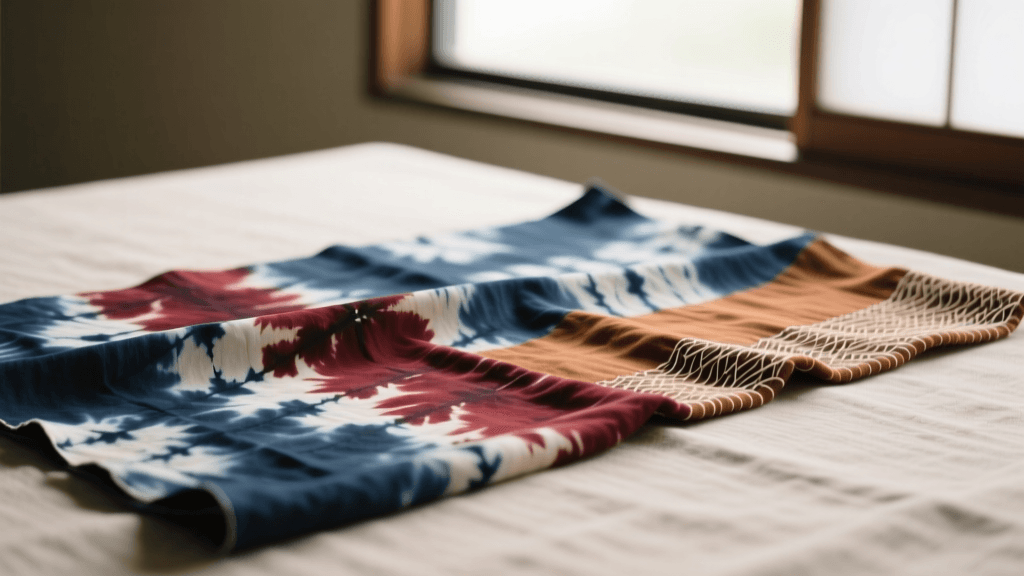
Shibori is a manual resist dyeing technique that involves folding, twisting, binding, or compressing fabric before submerging it in a dye bath. The physical manipulation creates a barrier that prevents the dye from penetrating certain areas, resulting in intricate, organic patterns. According to the World Shibori Network, the term 'shibori' derives from the Japanese verb 'shiboru', meaning to wring, squeeze, or press. While often associated exclusively with deep indigo blue (ai-zome), shibori can be executed with a variety of natural and synthetic dyes.
Key Shibori Techniques
- Kanoko Shibori (Fawn Spots): This highly labor-intensive method involves plucking tiny tufts of fabric and binding them tightly with thread before dyeing. The result is a pattern of small, un-dyed circles resembling the spots on a fawn's back. A single formal kimono can require hundreds of thousands of individual ties.
- Arashi Shibori (Storm Resist): Fabric is wrapped diagonally around a cylindrical pole, tightly bound with thread, and then compressed downwards. This creates a striking, slanted linear pattern reminiscent of wind-driven rain.
- Itajime Shibori (Shape Resist): The fabric is folded and sandwiched between carved wooden blocks or acrylic shapes, then clamped tightly. The clamped areas resist the dye, producing repeating geometric patterns.
- Nui Shibori (Stitched Resist): Intricate patterns are traced onto the fabric, stitched with a running stitch, and then the threads are pulled taut and secured. This allows for highly detailed, pictorial designs.
The beauty of Shibori lies in its unpredictability. Because the resist is created through physical tension rather than a chemical barrier, the edges of the dyed patterns often feature a soft, blurred gradient that gives the textile a living, breathing quality.
Yuzen: Painting with Paste and Pigment
If Shibori is sculptural, Yuzen is purely painterly. Developed in the late 17th century by a fan painter named Miyazaki Yuzensai, this technique revolutionized Japanese fashion by allowing for free-form, multi-colored pictorial designs on silk. The Metropolitan Museum of Art notes that the advent of Yuzen dyeing coincided with the Genroku era, a period of immense cultural flourishing and rising merchant class wealth in Japan, leading to an explosion of vibrant, highly decorative kimono.
The Yuzen Process and Regional Styles
The defining characteristic of Yuzen is the use of a thick, waterproof rice paste called 'itome-nori'. Artisans apply this paste through conical metal-tipped paper cones to outline designs on the silk. Once the paste dries, it acts as a dam, preventing different colors of dye from bleeding into one another. This allows for incredibly precise, detailed, and vibrant imagery, ranging from flowing water and cherry blossoms to cranes and mythical dragons.
There are two primary regional styles of Yuzen that collectors must know:
- Kyo-Yuzen (Kyoto): Known for its opulent, stylized, and highly decorative aesthetic. Kyo-Yuzen frequently incorporates gold leaf (surihaku), metallic embroidery, and a vibrant, contrasting color palette. It is the preferred style for formal furisode (unmarried women's long-sleeved kimono) and wedding uchikake.
- Kaga-Yuzen (Kanazawa): Characterized by a more subdued, realistic, and naturalistic approach. Kaga-Yuzen relies heavily on the 'Kaga Gosai' (five traditional colors: indigo, crimson, ochre, dark green, and royal purple) and utilizes a technique called 'bokashi' (gradation) within the outlines. It rarely uses gold leaf or embroidery, focusing entirely on the mastery of brush-dyed realism, often featuring insect-bitten leaves to reflect the beauty of imperfection.
Kasuri: The Magic of Ikat Weaving
While Shibori and Yuzen are dyeing techniques applied to woven cloth, Kasuri (the Japanese term for Ikat) involves dyeing the threads before they are woven. The Japan Guide on Traditional Crafts highlights Kasuri as a cornerstone of rural Japanese textile heritage, particularly valued for its durability and everyday wearability during the Edo and Meiji periods.
The Mathematics of Kasuri
Creating Kasuri requires astonishing mathematical precision. Artisans calculate the exact placement of the pattern on the final woven cloth, then tightly bind specific sections of the warp (vertical) and/or weft (horizontal) cotton or silk threads with string. The bound bundles are then dipped into an indigo vat. The bound sections resist the dye, remaining white. When the threads are finally loaded onto the loom and woven, the dyed and un-dyed sections align to form a pattern.
Because it is nearly impossible to align the threads with microscopic perfection during weaving, Kasuri patterns inherently feature slightly blurred, pixelated edges. This 'blurriness' is the literal translation of the word 'kasuri' and is highly prized as a mark of authenticity and handcrafted charm. Notable regional variations include Kurume Kasuri from Fukuoka, known for its complex, multi-layered pictorial patterns, and Bingo Kasuri from Hiroshima, celebrated for its bold, geometric indigo designs.
Comparison Chart: Shibori vs. Yuzen vs. Kasuri
| Feature | Shibori | Yuzen | Kasuri |
|---|---|---|---|
| Primary Method | Physical resist (folding, binding) | Chemical/Paste resist (rice paste) | Pre-dyed threads (Ikat weaving) |
| Visual Hallmark | Organic shapes, soft blurred edges | Crisp outlines, vibrant multi-colors | Geometric/pictorial, slightly blurred edges |
| Common Materials | Silk, Cotton, Hemp | Primarily Silk | Primarily Cotton, sometimes Silk |
| Formality Level | Varies (Informal to Semi-formal) | High (Most formal garments) | Informal (Everyday, workwear, yukata) |
| Production Time | Weeks to Months | Months to over a Year | Weeks to Months |
Practical Guide: Identifying and Caring for Dyed Garments
For collectors and wearers, properly identifying and maintaining these textiles is crucial. Authenticity can often be determined by examining the reverse side of the fabric. Genuine Yuzen will show dye penetrating fully through the silk, while the rice paste outlines will appear as stark white lines on the back. Authentic Shibori will feature a textured, puckered surface where the fabric was physically bound. Kasuri will show the exact same pattern on both the front and back of the fabric, as the threads themselves are dyed.
Actionable Care Instructions
Preserving vintage and antique Japanese garments requires strict adherence to specific environmental and cleaning protocols:
- Washing: Never machine wash authentic Shibori or Yuzen silk. If hand-washing is absolutely necessary, use cold water (maximum 30°C or 86°F) and a neutral pH detergent specifically designed for delicate proteins, such as Eucalan. Soak for no more than 3 minutes.
- Drying: Never wring out silk. Lay the garment flat on a clean, dry, white cotton towel. Roll the towel and garment together like a sleeping bag to gently press out excess moisture. Unroll and lay flat on a drying rack away from direct sunlight, which will rapidly fade natural indigo and Yuzen pigments.
- Storage: Store garments flat in acid-free tissue paper inside a breathable cotton storage box. Never hang heavy, vintage silk kimono on wooden or wire hangers, as the weight of the fabric and the dye will cause the shoulders to stretch and tear over time. Include silica gel packets to control humidity and prevent mold, a common killer of silk textiles.
Collecting and Pricing Guide
When building a collection, understanding the market value of these techniques helps in making informed purchases. Vintage Shibori haori (jackets) are highly accessible, typically ranging from $50 to $150 USD, making them excellent entry points for collectors. Authentic, mid-century Kyo-Yuzen furisode in excellent condition command premium prices, often ranging from $800 to over $3,000 USD due to the sheer volume of hand-painting and gold leaf application. Kasuri garments, particularly indigo-dyed cotton kimono from the early Showa period, usually sit between $100 and $300 USD, prized more for their rustic aesthetic and structural durability than formal elegance.
By understanding the profound technical differences between Shibori, Yuzen, and Kasuri, enthusiasts can look beyond the surface beauty of Japanese garments and appreciate the centuries of chemical, mathematical, and artistic innovation woven into every single thread.