Sustainable Japanese Natural Dye Plants: 2026 Eco Guide
The 2026 Renaissance of Kusaki-zome
The intersection of traditional Japanese garment making and global sustainability goals has pushed natural dyeing, or Kusaki-zome, into the spotlight in 2026. As the slow fashion movement matures, artisans and textile designers are actively moving away from synthetic azo dyes and toxic heavy-metal mordants. Instead, they are returning to centuries-old botanical methods, updated with modern ecological science. According to Japan's Agency for Cultural Affairs, the preservation of these intangible cultural properties is now deeply intertwined with environmental stewardship, ensuring that ancient techniques survive by adapting to the ecological demands of the modern era.
Natural dyeing is no longer just a niche historical reenactment; it is a viable, scalable component of the sustainable fashion supply chain. In 2026, climate-adaptive farming and closed-loop water systems have made Japanese botanical dyes more accessible and environmentally benign than ever. This guide explores the most prominent Japanese natural dye plants, eco-friendly mordanting alternatives, and the actionable methods modern studios use to minimize their environmental footprint.
Ai (Japanese Indigo): The Sukumo Fermentation Method
Ai, derived from the plant Persicaria tinctoria, is arguably the most famous of all Japanese natural dyes. Unlike tropical indigo varieties that rely on synthetic reducing agents like sodium hydrosulfite to make the pigment water-soluble, traditional Japanese indigo utilizes a meticulous composting process known as Sukumo.
The Sukumo Process
The leaves of the indigo plant are harvested in late summer, dried, and then fermented over a period of 90 to 120 days. The artisan, or Aishi, carefully turns the composting leaves, sprinkling them with water and wood ash lye (aku) to maintain an alkaline environment. By 2026, modern temperature-controlled fermentation rooms powered by solar thermal energy have allowed smaller studios to produce high-quality Sukumo year-round, mitigating the risks of crop failure due to erratic weather patterns.
Building an Eco-Friendly Vat
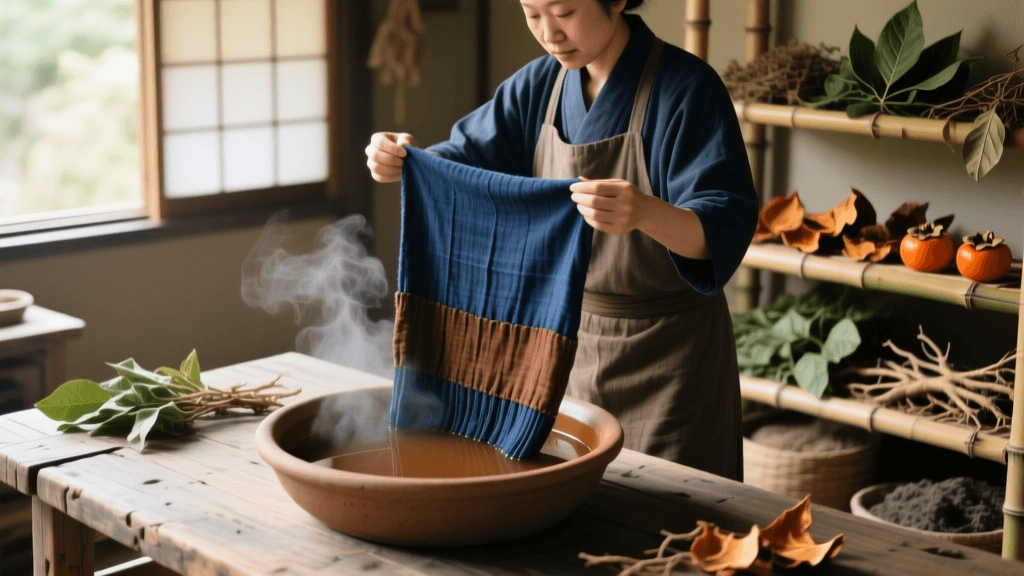
To create the dye vat, the Sukumo is mixed with an alkaline builder (traditionally hardwood ash lye, though sustainably sourced soda ash is sometimes used in modern eco-studios), a reducing agent (such as wheat bran or sake), and mineral-rich water. The vat must be kept at a steady 25°C to 30°C. Because the vat is a living ecosystem of bacteria, it can be maintained and reused for months, significantly reducing the water waste typically associated with synthetic dye runoff.
Kakishibu (Persimmon Tannin): Zero-Mordant Durability
Kakishibu is a remarkable natural dye and fabric treatment made from the fermented juice of unripe astringent persimmons (Diospyros kaki). Unlike most natural dyes that require a metallic mordant to bind the color to the fiber, Kakishibu contains high levels of tannic acid, which naturally binds to cellulose and protein fibers.
Sun-Curing and Polymerization
When fabric treated with Kakishibu is exposed to ultraviolet light and oxygen, the tannins polymerize, creating a durable, water-resistant, and insect-repellent coating. Historically used for paper umbrellas, fishing nets, and workwear, Kakishibu is now highly sought after in 2026 for creating weather-resistant outerwear and sustainable accessories without the use of toxic perfluorinated chemicals (PFCs).
Actionable Advice: For a rich, deep brown color, apply three thin coats of aged Kakishibu to raw cotton or linen. Allow each coat to dry fully in direct sunlight before applying the next. The color will continue to deepen and mature over the first six months of use.
Kihada and Enju: Sustainable Bark and Bud Harvesting
Yellow dyes in Japanese tradition are primarily sourced from Kihada (Amur cork tree) and Enju (Japanese pagoda tree). Both plants offer brilliant, lightfast yellows, but their sustainability profiles require careful management.
- Kihada (Phellodendron amurense): The yellow pigment, berberine, is found in the inner bark. Historically, harvesting the bark killed the tree. Today, regenerative forestry practices dictate that only small, vertical strips of bark are harvested from mature trees, allowing the tree to heal and continue sequestering carbon. Kihada is prized not only for its vibrant yellow hue but also for its natural antibacterial properties, making it ideal for undergarments and infant clothing.
- Enju (Styphnolobium japonicum): The yellow dye is extracted from the unopened flower buds. Harvesting the buds does not harm the tree, making Enju a highly renewable resource. The buds are dried and boiled, yielding a bright, clear yellow that can be shifted to a vibrant green by overdyeing with a light Ai (indigo) bath.
Eco-Friendly Mordanting: Replacing Heavy Metals
Historically, many natural dyeing traditions relied on heavy metals like chrome, tin, and copper to fix colors to fibers. However, aligning with the EPA's Principles of Green Chemistry, the 2026 standard for sustainable textile arts strictly prohibits the use of toxic metallic mordants in favor of bio-based and benign mineral alternatives.
Modern Bio-Mordants
- Soy Milk Binder: For cellulose fibers like cotton and linen, which naturally resist plant dyes, soy milk acts as a protein binder. The fabric is soaked in a solution of 1 part soy milk to 4 parts water, then dried. The plant proteins create a receptive surface for the dye molecules, eliminating the need for alum entirely.
- Symplocos: This Indonesian plant naturally accumulates aluminum from the soil in its leaves. Artisans can boil dried Symplocos leaves to create a 100% plant-based alum mordant, closing the loop on mineral extraction.
- Iron Liquor (Kan-etsu): Instead of using synthetic iron powder, studios create iron water by submerging rusted iron scraps (like old nails) in a mixture of water and white vinegar. This mild iron solution is used to "sadden" or darken colors, shifting yellows to olive greens and pinks to deep purples.
2026 Studio Standards: Closed-Loop Water Systems
Water consumption is the most significant environmental challenge in textile dyeing. In 2026, leading natural dye studios have adopted closed-loop water systems to ensure zero toxic runoff and minimize freshwater extraction.
True sustainability in textile arts is not just about the botanical materials we use, but the water we save and the soil we regenerate through mindful studio practices.
Modern eco-studios utilize rainwater harvesting for the initial dye extraction. Post-dye greywater, which contains residual plant matter and mild organic acids, is filtered through biochar and reed bed systems. This filtered water is then safely routed to irrigate the very gardens where the dye plants are cultivated, creating a perfect regenerative cycle. Organizations like Fashion Revolution have heavily promoted these closed-loop methodologies, proving that traditional craftsmanship can lead the way in modern environmental innovation.
Comparison Chart: Japanese Eco-Dye Plants
| Dye Plant | Botanical Name | Mordant Required | Water Footprint | Primary Color |
|---|---|---|---|---|
| Ai (Indigo) | Persicaria tinctoria | None (Vat dye) | Low (Recyclable vat) | Deep Blue |
| Kakishibu | Diospyros kaki | None (Tannin binder) | Very Low (No rinse) | Warm Brown |
| Kihada | Phellodendron amurense | Alum or Symplocos | Moderate | Bright Yellow |
| Enju | Styphnolobium japonicum | Alum or Symplocos | Moderate | Clear Yellow |
| Kurenai | Carthamus tinctorius | None (pH manipulation) | High (Requires washing) | Crimson Red |
Cultivating Your Own Dye Garden
For artisans and hobbyists looking to embrace the 2026 slow fashion ethos, cultivating a home dye garden is a rewarding endeavor. Persicaria tinctoria is an annual that thrives in temperate climates and requires nitrogen-rich soil. Companion planting with nitrogen-fixing legumes can reduce the need for synthetic fertilizers. Harvesting the leaves just before the plant flowers ensures the highest concentration of indican, the precursor to indigo pigment.
Conclusion
The revival of Japanese natural dye plants represents a vital bridge between cultural heritage and ecological survival. By embracing the Sukumo indigo process, utilizing the zero-mordant magic of Kakishibu, and adopting closed-loop water systems, the textile industry can drastically reduce its environmental impact. As we navigate the fashion landscape of 2026, the ancient wisdom of Kusaki-zome offers a vibrant, sustainable blueprint for the future of garment creation, proving that the most innovative solutions are often rooted deeply in the past.