The Modern Hanfu Revival: A Beginner's Guide to Buying and Styling
The Roots of the Hanfu Yundong (Movement)
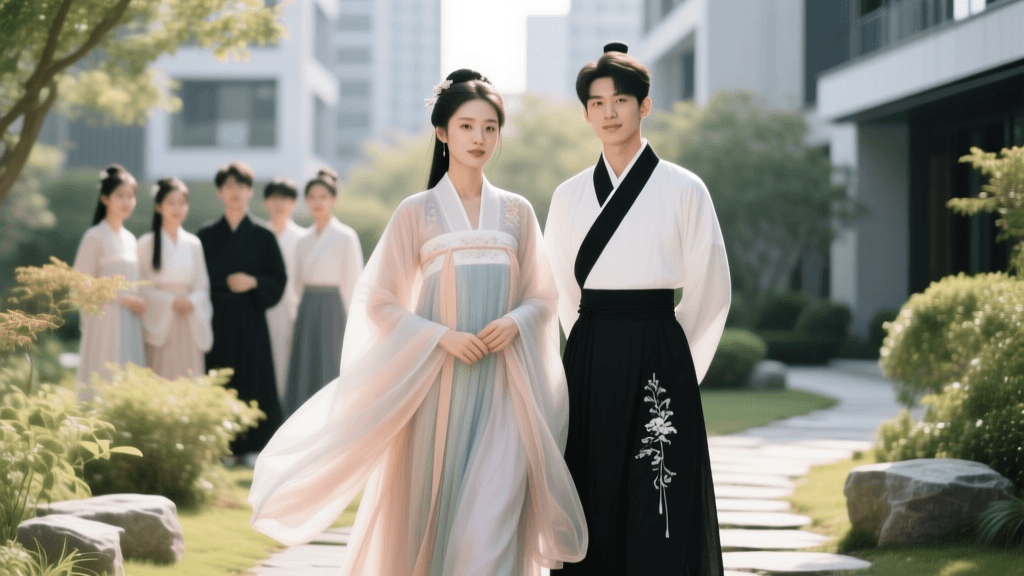
The early 21st century witnessed the birth of the Hanfu Yundong (Hanfu Movement), a grassroots cultural initiative aimed at reviving the traditional clothing of the Han Chinese. Sparked in 2003 when enthusiast Wang Letian wore a self-made Hanfu on the streets of Zhengzhou, the movement has since evolved from a niche internet subculture into a mainstream cultural phenomenon. Today, millions of young people don these historical garments not merely as costumes, but as a profound expression of cultural identity and heritage. According to an in-depth cultural analysis by Sixth Tone, the Hanfu revival is deeply intertwined with a broader resurgence of national pride and a desire among Gen Z and Millennials to reconnect with pre-Qing dynasty aesthetics. As noted by BBC News, these garments are increasingly visible in everyday settings, from subway commutes to university campuses, signaling a permanent shift in modern Chinese fashion.
Decoding Hanfu Silhouettes: Where to Start
For beginners, the sheer variety of historical silhouettes can be overwhelming. Hanfu is broadly categorized by dynasty and structural cut. Understanding these core styles is the first step toward building an authentic wardrobe.
1. Ruqun (襦裙) - The Quintessential Ensemble
Ruqun consists of a top (Ru) and a wrap-around skirt (Qun). It is the most popular entry point for newcomers. Chest-high Ruqun (Qixiong Ruqun), popular in the Tang Dynasty, features a skirt tied above the bust, creating an elegant, elongated silhouette that is highly forgiving and comfortable for summer wear. Waist-high Ruqun (Qiyao Ruqun) is tied at the natural waist, offering a more grounded, traditional look suitable for all body types.
2. Aoqun (袄裙) - Structured Elegance
Prominent during the Ming Dynasty, Aoqun features a heavier, lined jacket (Ao) worn over a pleated skirt (Qun). The jacket typically features a standing collar (Liling) and intricate metal buttons or ties. This style is ideal for autumn and winter, offering structured elegance and excellent warmth.
3. Beizi (褙子) - The Song Dynasty Outerwear
Beizi is a long, open-front outer jacket with side slits, worn over a tube top and skirt or trousers. It creates a slender, vertical line that is highly favored in modern 'daily Hanfu' (Ri Chang Hanfu) because it easily integrates with modern basics like turtlenecks and jeans.
The Mathematics of Drape: Sizing and Measurements
Unlike Western fashion, which relies on standardized S/M/L sizing based on body-hugging fits, traditional Hanfu utilizes flat-pattern cutting. The beauty of the garment lies in its drape, which requires precise 'Fangjun' (ease allowance). When purchasing from Taobao or specialized retailers, you will rarely see standard sizes; instead, you must provide exact body measurements.
| Measurement | How to Measure | Recommended Ease Allowance (Fangjun) |
|---|---|---|
| Bust (Xiongwei) | Measure around the fullest part of the chest while wearing your intended undergarments. | Add 4-8 cm for summer Ruqun; 10-15 cm for winter Aoqun to allow for layering. |
| Waist (Yaowei) | Measure at the natural waistline or exactly where the skirt waistband will sit. | Add 2-4 cm for comfort, ensuring the wrap skirt stays secure without digging in. |
| Skirt Length (Qunchang) | Measure from the waist tie-line down to the ankle bone. | Subtract 5-10 cm from your floor-length measurement to prevent tripping and fabric dragging. |
| Sleeve Length (Xiuchang) | Measure from the base of the neck, over the shoulder, and down to the wrist bone. | Add 15-30 cm for traditional 'Huihu' (gathering) sleeves, allowing the fabric to drape elegantly over the hands. |
Fabric Selection for Seasonal Comfort
Authenticity extends to textile choices. Modern synthetic fabrics can trap heat and ruin the historical drape. For Summer, seek out Ramie, lightweight linen, or Xiangyunsha (a traditional mud-silk dyed with river clay and plant juices). These fabrics breathe exceptionally well and possess a crisp, historical rustle. For Spring and Autumn, cotton-linen blends and high-quality chiffon offer beautiful movement. For Winter, invest in Ming-style Aoqun crafted from wool blends, velvet, or Zhuanghua (brocade), which provide necessary insulation while maintaining structural integrity.
Navigating the Market: Costs, Platforms, and Timelines
Purchasing authentic Hanfu requires navigating specific e-commerce ecosystems. While platforms like AliExpress or YesStyle offer convenience, they often carry a markup or mix authentic designs with 'Xianxia' fantasy costumes. The most robust market is on Taobao, directly from established Hanfu studios (e.g., Minghuatang, Shisanyu, or Zhongling).
Understanding Pricing Tiers
- Budget ($30 - $60 USD): Usually made from polyester-cotton blends. Great for beginners testing the waters, but may lack historical accuracy in patterns and drape.
- Mid-Tier ($70 - $150 USD): The sweet spot for most enthusiasts. Features accurate historical patterning, high-quality jacquard or silk-blend fabrics, and meticulous embroidery.
- High-End/Custom ($200 - $800+ USD): Museum-grade replicas, hand-woven silks, real gold thread embroidery, and custom tailoring. Studios like Minghuatang operate in this tier.
The Timeline: Xianhuo vs. Yushou
When shopping on Taobao, you must understand two critical terms. Xianhuo (现货) means 'in-stock' and will ship within 3 to 5 days. Yushou (预售) means 'pre-sale.' Because authentic Hanfu is often produced in small, highly detailed batches, studios open pre-sales to gauge demand. Yushou items typically require a waiting period of 30 to 45 days before shipping. Always check the listing for the estimated shipping date (Fahuo Shijian) to plan for specific events or festivals.
Essential Undergarments and Accessories
The silhouette of Hanfu is entirely dependent on what lies beneath. You cannot wear a chest-high Ruqun without a Moxiong (抹胸), a traditional tube top that provides support and prevents the collar from gaping. For waist-high skirts, wearing a modern petticoat or a traditional cotton underskirt (Chenqun) is vital to give the skirt volume and prevent the fabric from tangling between your legs while walking.
Accessories elevate the ensemble. Footwear should consist of embroidered cloud shoes (Yunxie) or simple, flat cloth shoes. Avoid modern sneakers unless you are intentionally styling a 'fusion' daily look. For hair, invest in a Zanzi (簪子) (a single-prong hairpin) or a Buyao (步摇) (a dangling hairpin that sways with movement). A simple low bun secured with a wooden or jade Zanzi is historically appropriate and effortlessly elegant for daily wear.
Community Etiquette and the 'Authenticity' Debate
As you enter the Hanfu community, you will encounter the term Tongpao (同袍), meaning 'sharing the same robe,' which is the affectionate term enthusiasts use for one another. The community places a high value on historical accuracy, specifically the rule of Jiaoling Youren (交领右衽)—the collar must always cross left over right. Crossing right over left is traditionally reserved for the deceased and is considered a severe faux pas.
Furthermore, learn to distinguish between true Hanfu and Xiaofu (仙服) or 'fairy clothes.' Xiaofu refers to modern, fantasy-inspired garments often seen in Xianxia television dramas, featuring excessive sheer fabrics, corset-like bodices, and historically inaccurate cuts. While beautiful, they are not considered part of the traditional Hanfu revival. When searching Taobao, always include the characters '正版' (authentic/original) and '汉服' to filter out mass-produced costume knock-offs.
Conclusion
Participating in the Hanfu revival movement is a deeply rewarding journey that bridges the gap between ancient craftsmanship and modern identity. By understanding historical silhouettes, mastering the mathematics of flat-pattern sizing, and respecting the cultural etiquette of the garments, you can build a wardrobe that is both authentic and personally expressive. Whether you are wearing a lightweight Song dynasty Beizi for a spring walk or a heavily brocaded Ming dynasty Aoqun for a winter festival, you are actively weaving living history into the fabric of the modern world.