Hanfu for Extreme Climates 2026: Tropical, Desert & Cold Guide
The Global Expansion of Hanfu in 2026
As the Hanfu movement continues its meteoric global rise in 2026, enthusiasts are no longer confined to the temperate seasons of East Asia. From the sweltering humidity of Southeast Asia to the arid dunes of the Middle East and the biting winters of Northern Europe, traditional Chinese garments are being worn across the globe. However, wearing historical silhouettes in extreme environments requires a deep understanding of both ancient textile wisdom and modern 2026 fabric innovations. The intersection of historical accuracy and climate adaptation has given rise to a new era of functional Hanfu, allowing wearers to honor tradition without sacrificing comfort or safety.
Historically, Chinese clothing was deeply tied to the seasons. The Metropolitan Museum of Art's archives on Chinese silk reveal how ancient weavers manipulated thread density and fiber types to create garments suited for specific regional climates. Today, modern Hanfu brands are leveraging this historical knowledge, combining it with 2026's advanced textile engineering to create climate-specific wardrobes. Whether you are attending a tropical destination wedding in Bali, exploring the desert landscapes of Dubai, or navigating a freezing winter festival in Harbin, this guide details exactly how to adapt your Hanfu for extreme climates.
Tropical Climates: Breathability and the Song Dynasty Silhouette
Wearing Hanfu in tropical regions—characterized by high heat and oppressive humidity—presents a unique challenge. Heavy silks and synthetic brocades, popular in mass-market Hanfu, become unwearable in environments where the heat index frequently exceeds 40°C (104°F). The solution lies in looking back to the Song Dynasty (960–1279 CE), an era renowned for its minimalist, lightweight, and highly breathable garments.
Historical Precedents and 2026 Textile Upgrades
In ancient times, summer clothing relied heavily on Xia Bu (summer cloth), a meticulously woven ramie fabric that offered exceptional airflow and natural moisture-wicking properties. According to the China National Silk Museum, ramie and lightweight gauze silks (Luo) were the premier choices for scholars and nobility enduring the southern Chinese summers. In 2026, leading Hanfu manufacturers have revived these weaves, treating them with modern nano-coatings that enhance UV resistance and prevent the fabric from clinging to sweat-dampened skin.
Key Garments for High Heat
- Song Beizi (褙子): This open-front, long-sleeved jacket is the ultimate tropical layer. Worn over a lightweight camisole or Moxiong, the Beizi creates a chimney effect, allowing air to circulate freely around the torso. Look for 2026 releases made from Tencel-ramie blends, which offer the drape of silk with the cooling properties of plant fibers.
- Song Ku (宋裤): Wide-legged, pleated trousers that provide modest coverage while allowing maximum ventilation. Modern iterations often feature hidden side-slits up to the knee to increase airflow during walking.
- Banbi (半臂): A short-sleeved cross-collar top that prevents fabric from bunching at the wrists and elbows, reducing localized heat trapping.
Pro Tip for 2026: Avoid dark colors and heavy embroidery in the tropics. Opt for pastel or undyed natural tones, and utilize accessories like woven bamboo hand fans and lightweight straw Weimao (veiled hats) to shield your face from direct equatorial sunlight.
Desert Climates: UV Protection and Tang Dynasty Layering
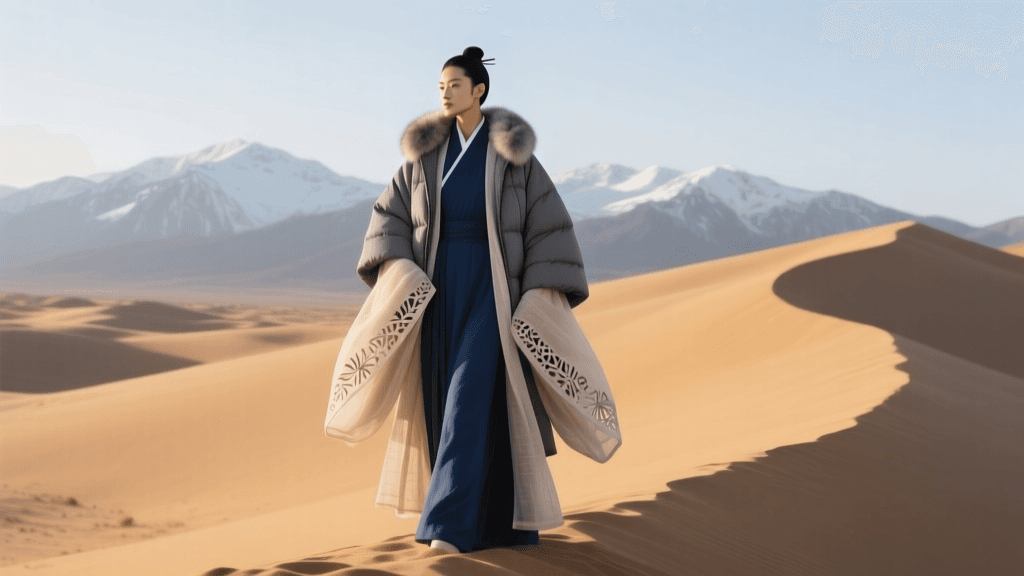
Desert environments require a dual approach: extreme protection from intense solar radiation and dust during the day, and sufficient insulation to handle rapid temperature drops after sunset. The Tang Dynasty (618–907 CE), with its expansive Silk Road trade networks, developed clothing styles perfectly suited for arid, windy, and sun-baked landscapes.
Shielding from Sun and Sand
The most iconic desert garment of the Tang era was the Mili (羃䍦) or the Weimao (帷帽)—a wide-brimmed hat with a sheer veil that protected the wearer's face and neck from harsh UV rays and blowing sand. In 2026, modern Hanfu designers have updated the Weimao using UPF 50+ bio-silk organza, providing medical-grade sun protection without obscuring vision.
Key Garments for Arid Regions
- Yuanlingpao (圆领袍): The round-collar robe is ideal for the desert due to its secure neckline and adjustable cuffs. By tightening the wrist and ankle bindings, wearers can prevent sand and dust from entering the garment. Look for 2026 collections featuring tight-weave cotton-linen blends that block wind while remaining breathable.
- Pibo (披帛): A long, sheer silk scarf draped over the arms. In the desert, a slightly thicker, tightly woven Pibo can be wrapped around the neck and face during sandstorms or used as an extra layer of insulation when the desert temperature plummets at night.
- Layered Skirts (Poqun): Multi-paneled skirts made from crisp, lightweight taffeta. The structural volume of the skirt keeps the fabric away from the legs, creating a pocket of shaded, cooler air around the lower body.
Desert layering is all about trapped air. The voluminous cuts of Tang-style robes create microclimates around the body, insulating against external heat just as effectively as they trap warmth at night.
Cold Regions: Insulation and Ming Dynasty Outerwear
When the temperature drops below freezing, historical accuracy must be balanced with modern survival needs. The Ming Dynasty (1368–1644 CE) experienced several periods of severe climatic cooling, prompting the development of highly structured, heavily insulated garments that remain the gold standard for winter Hanfu today.
Advanced Insulation Techniques
Traditional winter Hanfu relied on layers of padded cotton, wool, and animal furs. Today, the preservation of these techniques is deeply tied to cultural heritage, with traditional sericulture and silk craftsmanship recognized by UNESCO as Intangible Cultural Heritage. Modern 2026 winter Hanfu utilizes these heritage silk linings, but integrates phase-change materials (PCMs) and graphene-infused batting to provide extreme warmth without the crushing weight of historical cotton padding.
Key Garments for Freezing Temperatures
- Ming Ao Qun (袄裙): The quintessential winter ensemble. The Ao is a lined, padded jacket with a high collar and narrow, tight sleeves (often featuring hidden ribbed knit cuffs to block wind). In 2026, premium brands offer Ao jackets lined with ethically sourced faux-mink and thermal-reflective silk.
- Dou Peng (斗篷): A sleeveless, bell-shaped windproof cloak that fastens at the neck. Originally designed for horseback riding in the snow, the modern Dou Peng is crafted from wind-stopper wool blends and features a deep, fur-lined hood that protects the head and ears from biting winds.
- Mamianqun (马面裙): The horse-face skirt is perfect for winter layering. Its overlapping front and back panels allow wearers to add multiple layers of thermal leggings underneath without disrupting the elegant, structured silhouette of the skirt.
Footwear Note: Traditional cloud-toe shoes (Yuntou Xie) are notoriously cold. For extreme winter climates in 2026, enthusiasts are turning to specialized Hanfu bootmakers who craft historically accurate leather boots lined with shearling and equipped with hidden, rechargeable heated insoles.
2026 Climate-Specific Hanfu Matrix
To help you build your extreme-climate wardrobe, refer to the comparison chart below detailing the optimal fabrics, historical styles, and modern upgrades for each environment.
| Climate Zone | Historical Era & Style | Optimal 2026 Fabrics | Key Functional Feature |
|---|---|---|---|
| Tropical / Humid | Song Dynasty (Beizi, Song Ku) | Nano-treated Ramie, Tencel-Silk blends | Moisture-wicking, high-airflow chimney cuts |
| Arid / Desert | Tang Dynasty (Yuanlingpao, Weimao) | UPF 50+ Bio-Silk, tight-weave Linen | UV protection, dust-blocking adjustable cuffs |
| Cold / Freezing | Ming Dynasty (Ao Qun, Dou Peng) | Graphene-batted Wool, thermal Silk linings | Windproof outer shells, heat-trapping volume |
Sourcing and Maintenance in 2026
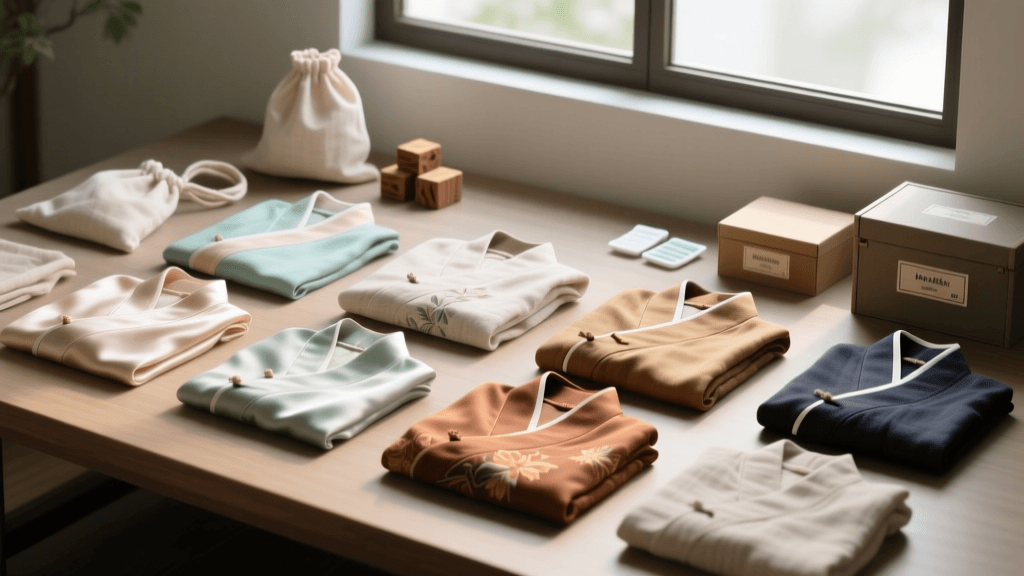
When sourcing climate-adaptive Hanfu, avoid fast-fashion marketplaces that rely heavily on cheap polyester brocades. Polyester is non-breathable and will cause severe overheating in tropical climates, while offering zero insulation in the cold. Instead, invest in specialized boutique brands that publish their exact fabric compositions and weave structures.
Maintenance is equally critical. Tropical sweat and desert dust can degrade natural fibers. Ramie and linen should be hand-washed in cool water with pH-neutral detergents to maintain their structural integrity. Winter padded garments, especially those featuring graphene or PCM linings, should be spot-cleaned or professionally dry-cleaned to prevent the destruction of their thermal properties. By respecting both the historical origins and the modern science of these textiles, you can comfortably wear Hanfu in any corner of the globe, proving that traditional Asian fashion is as versatile as it is beautiful.