Hanfu Storage Rotation & Seasonal Maintenance Guide 2026
The 2026 Hanfu Wardrobe: Why Seasonal Rotation Matters
As the global appreciation for traditional Asian garments continues to accelerate in 2026, owning a curated collection of Hanfu is both a profound cultural practice and a significant financial investment. From the flowing elegance of the Wei-Jin era Ruqun to the structured, pleated majesty of the Ming dynasty Mamianqun, these garments are predominantly crafted from delicate natural fibers. However, the transition between humid summers and dry, artificially heated winters poses a severe threat to natural textiles. Proper storage rotation and seasonal maintenance are no longer optional; they are essential to preventing fiber degradation, color bleeding, and catastrophic pest infestations.
According to the Library of Congress textile preservation guidelines, natural fibers like silk and ramie are highly susceptible to environmental fluctuations. In 2026, with extreme weather patterns causing unpredictable indoor humidity spikes, adopting a museum-grade approach to your home wardrobe is critical for preserving the structural integrity and historical accuracy of your garments.
Fabric Profiling: Know Your Textiles
Before rotating your wardrobe, you must accurately identify the primary fibers in your Hanfu collection. Different fibers require vastly different microclimates and handling techniques.
Mulberry Silk (Sang Can Si)
Silk is a protein fiber. It is incredibly strong in terms of tensile strength but highly sensitive to alkaline substances, direct UV light, and high humidity. In 2026, many premium Hanfu brands utilize heavy crepe de chine, jacquard silk weaves, and delicate Luo (gauze). These require ample space to prevent permanent creasing and must never be stored in direct contact with acidic woods or standard cardboard.
Ramie and Linen (Xia Bu)
Historically used for summer garments due to their exceptional breathability, ramie and linen are cellulose fibers. They are prone to hard, sharp creasing which can eventually lead to fiber snapping along the fold lines. Furthermore, cellulose fibers can develop mildew rapidly if stored while even slightly damp.
Cotton and Modern Blends
The booming Xin Zhongshi (new Chinese style) daily wear movement frequently incorporates cotton or cotton-polyester blends. While more forgiving and machine-washable, pure cotton can yellow over time if exposed to acidic environments or residual body oils left unwashed before long-term storage.
Pre-Storage Preparation: Cleaning and Drying
Never store a worn Hanfu, even if it was only worn for a brief outdoor photoshoot. Invisible perspiration, skincare residues, and body oils oxidize over time, leading to stubborn yellow stains that are nearly impossible to remove from delicate silks without damaging the fabric.
- Silk Garments: Hand wash using a 2026-formulated pH-neutral silk detergent in cool water (below 30°C). Never wring silk; instead, roll it in a clean, dry microfiber towel to gently absorb excess moisture.
- Ramie and Cotton: These can withstand gentle machine washing in a mesh laundry bag, but always air dry them flat in the shade to prevent UV fading.
- Heavily Embroidered Pieces: For Ming-style Aoqun with dense metallic thread embroidery or delicate silk floss work, professional dry cleaning specializing in heritage textiles is mandatory. The Victoria and Albert Museum's textile care protocols strongly advise against home-washing heavily embellished historical garments to prevent metallic thread tarnishing, silk floss bleeding, and irreversible shrinkage.
Mastering the Fold: Preserving Pleats and Silhouettes
How you fold your Hanfu is just as important as where you store it. The Ming dynasty Mamianqun (horse-face skirt) is famous for its intricate, structured pleats. Storing it incorrectly will cause the pleats to collapse and the silk to crack at the stress points.
To properly store a Mamianqun, lay it flat on a clean surface. Fold it strictly along its existing pleat lines. Once folded into a long rectangle, place unbuffered acid-free tissue paper inside every single fold. This 'concertina' padding prevents the sharp creases from crushing the silk fibers over months of storage. For long, flowing garments like the Song dynasty Beizi or the Wei-Jin Pifeng, hanging is generally preferred, provided you use wide, padded wooden hangers to distribute the weight and prevent shoulder dimples.
The Ultimate 2026 Storage Arsenal
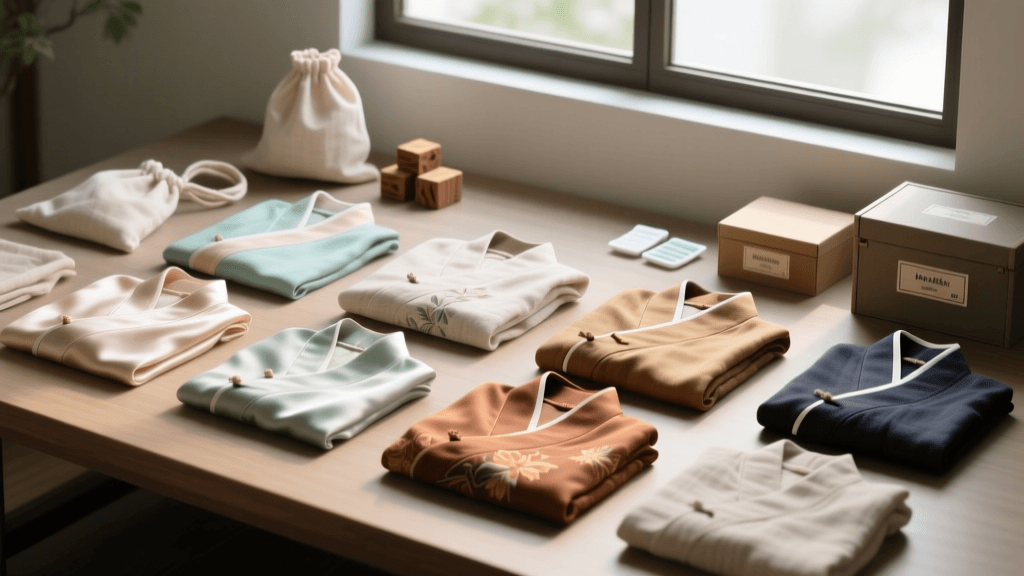
To protect your garments during their off-season, you must invest in the right archival materials. The days of using plastic dry-cleaning bags are over; plastic traps moisture and emits volatile organic compounds (VOCs) that actively degrade silk proteins.
- Archival Storage Boxes: In 2026, museum-quality, acid-free corrugated storage boxes cost between $45 and $95 each. These boxes buffer against rapid humidity changes and block all UV light. Ensure they are large enough to minimize folding.
- Unbuffered Acid-Free Tissue Paper: This is crucial for folding and stuffing. Buffered tissue (which contains calcium carbonate) is safe for cotton and linen but can cause chemical reactions that damage silk and wool. Always use unbuffered acid-free tissue for your silk Hanfu.
- Breathable Garment Bags: For garments that must be hung, use 100% unbleached cotton canvas garment bags. Avoid synthetic non-woven fabrics, which can break down into microplastics and trap condensation.
- Smart Silica Gel Cassettes: Modern indicating silica gel cassettes with built-in humidity color-indicators allow you to monitor the microclimate inside your storage boxes without opening them and exposing the textiles to ambient air.
Seasonal Rotation Strategy
A systematic rotation ensures your garments are ready to wear and properly rested, extending their lifespan by decades.
Transitioning to Spring/Summer (March - April)
- Pack Away: Heavy winter Aoqun, lined Mamianqun, velvet-trimmed Pifeng, and brocade jackets.
- Inspect and Fold: Check all winter garments for microscopic pest activity before sealing them away in archival boxes with fresh cedar blocks.
- Bring Out: Lightweight Ruqun, Song dynasty Beizi, and ramie summer dresses. Air them out in a shaded, well-ventilated room for 24 hours before wearing to remove the 'stored' scent and allow the fibers to acclimate to room temperature.
Transitioning to Autumn/Winter (October - November)
- Pack Away: Thin silks, sheer gauze (Luo) garments, and summer linens.
- Clean Thoroughly: Ensure all summer garments are impeccably clean, as summer sweat is the primary catalyst for pest attraction.
- Bring Out: Layered Ming dynasty styles, lined skirts, and heavy outerwear. Steam any stored pleats gently to revive their structure before the first wear.
Pest and Humidity Control
Clothes moths and carpet beetles are the natural enemies of silk and wool. In 2026, the use of traditional chemical mothballs (naphthalene or paradichlorobenzene) is heavily discouraged due to their severe toxicity and the irreversible chemical damage they cause to natural textile dyes.
Instead, rely on integrated pest management (IPM) tailored for heritage garments:
- Japanese Cedar (Sugi) Blocks: Cedar naturally repels insects and absorbs mild odors. Sand the blocks lightly every six months to refresh the aromatic oils. Never let the wood touch the silk directly; wrap the cedar in acid-free tissue.
- Wardrobe Dehumidifiers: For walk-in closets, a 2026 smart dehumidifier with a targeted humidity setting of 45-50% is ideal. According to the Metropolitan Museum of Art's textile conservation department, maintaining a stable relative humidity between 45% and 55% is the gold standard for preventing both mold growth and fiber desiccation.
- Regular Vacuuming: Pests thrive in dark, undisturbed areas with dust and skin cells. Vacuum your wardrobe floors, baseboards, and corners monthly to eliminate the food source for larvae.
Comprehensive Hanfu Storage & Care Matrix
| Garment Type | Primary Fiber | Storage Method | Ideal Humidity | Maintenance Schedule |
|---|---|---|---|---|
| Mamianqun (Pleated Skirt) | Silk / Brocade | Flat fold with tissue padding in archival box | 45% - 50% | Air out bi-annually |
| Ruqun (Summer Set) | Ramie / Gauze | Flat fold or rolled in cotton bags | 40% - 45% | Inspect for mildew quarterly |
| Beizi / Pifeng (Outerwear) | Silk / Blends | Hung on padded hangers in canvas bags | 45% - 55% | Rotate hanger position yearly |
| Aoqun (Winter Jacket/Skirt) | Heavy Silk / Wool blend | Archival box with cedar blocks | 45% - 50% | Professional clean before storage |
Conclusion
Preserving a Hanfu collection in 2026 requires a shift in mindset from treating these garments as mere clothing to respecting them as wearable cultural artifacts. By implementing a disciplined seasonal rotation, utilizing archival-grade storage materials, and maintaining strict climate control, you ensure that the vibrant dyes, intricate weaves, and historical silhouettes of your collection will remain pristine for generations to come.