Mamianqun in 2026 Fashion Media: Editorial Styling Guide
The Rise of the Mamianqun in 2026 Global Fashion Media
In the landscape of 2026 global fashion media, few garments have commanded as much editorial space and stylistic innovation as the Mamianqun, traditionally known in English as the horse-face skirt. Once confined to historical reenactments and niche internet subcultures, the Mamianqun has firmly established itself as a staple in high-fashion editorials, gracing the pages of Vogue China, Harper's Bazaar, and independent avant-garde zines across Milan and Paris. The transition of this Ming Dynasty garment into the mainstream global fashion consciousness is not merely a fleeting trend; it represents a profound shift in how traditional Asian garments are deconstructed, respected, and reimagined for contemporary aesthetics.
For fashion stylists, editorial directors, and cultural enthusiasts, understanding how to style, source, and photograph the Mamianqun in 2026 requires a deep appreciation of its architectural structure and its evolving cultural narrative. This comprehensive guide breaks down the actionable techniques used by top-tier fashion media professionals to integrate the horse-face skirt into modern editorial spreads.
From Historical Catalyst to 2026 Couture
To understand the 2026 editorial boom, one must look at the historical context that catalyzed global awareness. The turning point for international recognition occurred in 2022, when a major French luxury house released a skirt bearing a striking resemblance to the traditional Mamianqun without proper cultural attribution. As documented by the South China Morning Post, this sparked widespread protests and a massive digital reclamation movement by Hanfu enthusiasts and Chinese students globally.
Rather than retreating from the global stage, this controversy served as an educational catalyst. By 2026, the narrative has completely shifted. Global fashion media no longer treats the Mamianqun as an exotic curiosity but as a masterclass in structural garment design. Top stylists now collaborate directly with heritage weavers in Hangzhou and Suzhou, ensuring that the rich brocades and precise pleating techniques are credited and celebrated in every editorial spread.
Deconstructing the Editorial Look: Anatomy of the Skirt
Before styling the Mamianqun for a 2026 editorial campaign, fashion professionals must understand its unique anatomy, which dictates how it moves and catches light on camera. The skirt is defined by several key structural elements:
- Guangmian (Flat Panels): The skirt features two flat, unpleated panels at the front and back. In editorial photography, these panels serve as the primary canvas for displaying intricate jacquard motifs, metallic thread work, and embroidered borders.
- Zhe (Side Pleats): The sides of the skirt are composed of deep, structured pleats that remain hidden when standing still but explode into dynamic motion when the wearer walks or spins.
- Yaolan (Waistband): Traditionally made of plain white cotton or linen to prevent slipping and reduce bulk, modern 2026 editorial versions often feature contrasting silk-satin or velvet waistbands to create a deliberate color-block effect when paired with cropped tops.
2026 Editorial Styling Matrix
Global fashion editors have developed distinct styling formulas to bridge the gap between traditional Ming Dynasty silhouettes and 2026 contemporary streetwear. The following table outlines the most successful styling pairings currently dominating high-fashion editorials.
| Editorial Theme | Mamianqun Fabric & Length | Top Pairing | Footwear & Accessories |
|---|---|---|---|
| Avant-Garde Corporate | 300gsm Wool-Blend Jacquard, 95cm | Oversized Structured Blazer, Cinched Belt | Chunky Loafers, Geometric Metal Cuffs |
| Ethereal Romantic | 120gms Silk Organza with Flocking, 105cm | Sheer Corset with Boning, Silk Gloves | Strappy Kitten Heels, Pearl Hairpins |
| Urban Streetwear | Heavy Denim with Tonal Pleats, 85cm | Cropped Leather Moto Jacket, Graphic Tee | Combat Boots, Layered Silver Chains |
| Heritage Fusion | Traditional Silk Brocade, 100cm | Fitted Turtleneck, Draped Cashmere Shawl | Embroidered Ankle Boots, Jade Brooch |
Actionable Styling Techniques for 2026 Campaigns
1. The Proportion Shift: Corsets and Cropped Tailoring
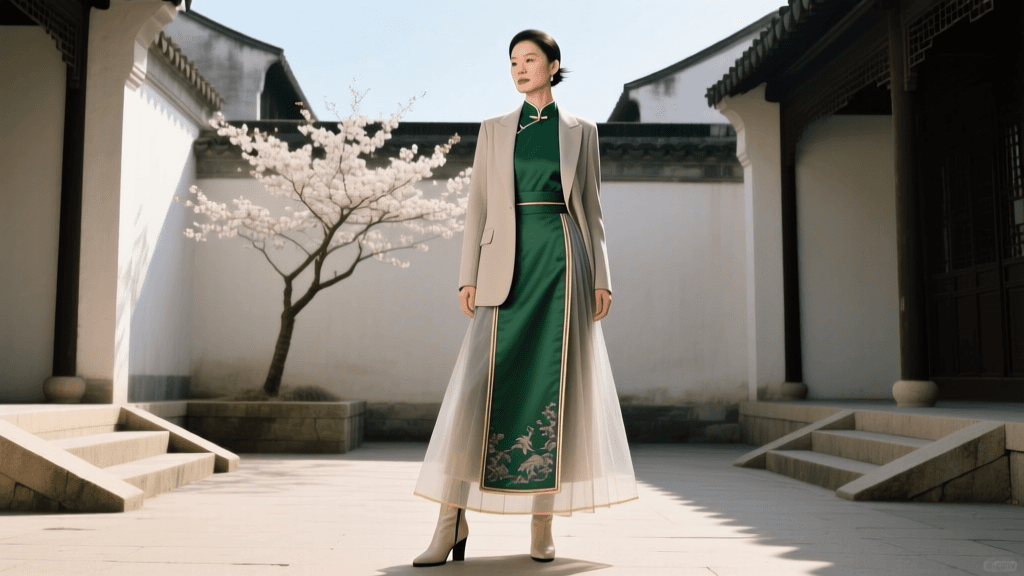
The most prominent styling technique in 2026 media coverage is the deliberate manipulation of proportions. Because the Mamianqun is inherently voluminous and sits at the natural waist, pairing it with loose tops can overwhelm the model's frame. Stylists are now utilizing structured, boned corsets or sharply tailored cropped blazers that end exactly at the waistband. This technique highlights the architectural transition from the rigid bodice to the flowing pleats, creating an hourglass silhouette that translates beautifully in high-contrast editorial lighting.
2. Fabric Contrast and Textural Tension
Modern editorials thrive on textural juxtaposition. If the Mamianqun is crafted from a heavy, light-catching metallic brocade, stylists are pairing it with matte, light-absorbing fabrics like fine-gauge merino wool or sheer silk organza. This contrast prevents the outfit from looking like a historical costume and firmly roots it in contemporary high fashion. For Spring/Summer 2026 shoots, lightweight linen-cotton blend Mamianquns are being paired with sheer, asymmetrical knitwear to emphasize breathability and movement.
3. Grounding the Silhouette with Heavy Footwear
To counteract the delicate, historical connotations of the horse-face skirt, 2026 street-style editorials heavily favor grounding the look with aggressive, modern footwear. Chunky platform loafers, scuffed combat boots, and futuristic sneaker-boots are the industry standard. This styling choice signals a rebellious, modern interpretation of the garment, making it highly relevant for youth-oriented fashion publications.
Photographing the Mamianqun: Lighting and Motion
Capturing the Mamianqun for a 2026 fashion spread requires specific photographic techniques to honor its construction. The flat panels (guangmian) require direct, soft lighting to illuminate the complexity of the woven patterns without washing out the metallic threads. Conversely, the side pleats (zhe) demand cross-lighting or rim lighting to cast deep shadows within the folds, emphasizing the three-dimensional depth of the garment.
Furthermore, motion is non-negotiable in Mamianqun editorials. The skirt is designed to mimic the graceful gait of a horse, and static poses fail to capture its essence. Photographers are utilizing high-speed sync flashes and continuous burst modes to capture the exact moment the pleats fan out during a walk or a spin, creating a dramatic, wing-like effect that has become the signature visual of 2026 Asian fashion media.
Sourcing, Measurements, and Market Data
For stylists and consumers looking to source authentic Mamianquns for editorial or personal use, the 2026 market offers unprecedented accessibility, driven by a massive cultural revival. According to foundational market analyses by Reuters, the Hanfu market has experienced exponential growth over the last half-decade, transforming from a niche hobby into a multi-billion dollar global industry supported by advanced e-commerce and specialized independent designers.
When sourcing for 2026 editorials, precision in measurement is critical. Unlike Western skirts that rely on zippers and elastic, the Mamianqun is secured by wrapping and tying long sashes. Stylists must measure the model's natural waist and ensure the skirt's waistband length is at least 1.5 times the waist measurement to allow for proper overlapping and tying.
2026 Pricing and Sourcing Guide:
- Entry-Level / Commercial Shoots ($85 - $150): Sourced via specialized Taobao and global Hanfu retailers. These are typically made from polyester-blend jacquards. They hold pleats exceptionally well under hot studio lights and are ideal for high-wear street style shoots.
- Mid-Tier / Editorial Standard ($200 - $450): Crafted by independent heritage studios using silk-cotton blends and traditional wooden loom techniques. These offer the best balance of authentic drape, breathability, and camera-ready luster.
- Couture / Cover Shoots ($600 - $2,500+): Custom-commissioned pieces featuring real gold and silver thread weaving (Zhuanghua), taking months to complete. These are reserved for major magazine covers and museum collaborations.
Cultural Respect in Modern Fashion Media
The integration of the Mamianqun into 2026 global fashion media is a triumph of cultural appreciation over appropriation. The key differentiator in modern editorials is transparency and credit. Leading fashion houses and independent stylists now routinely include detailed captions in their digital spreads, explaining the Ming Dynasty origins of the garment, the specific symbolism of the woven motifs (such as the python or floral patterns), and the names of the artisan workshops that produced the textiles.
By treating the Mamianqun not as a costume to be mined for exotic aesthetics, but as a sophisticated, living garment with a rich architectural history, the 2026 fashion media landscape has set a new gold standard for cross-cultural styling. Whether paired with a sharp blazer for a corporate editorial or a sheer corset for an avant-garde cover story, the horse-face skirt continues to prove that true tradition is not static; it is a dynamic force that continually reshapes the future of global fashion.