Banarasi vs Kanjeevaram Silk: 2026 Bridal Fabric Guide
The Resurgence of Heritage Weaves in 2026
As we navigate the bridal fashion landscape of 2026, a profound shift has taken place. Modern brides are moving away from mass-produced, synthetic-heavy ensembles and are instead investing in heritage textiles that serve as generational heirlooms. In the realm of South Asian traditional garments, two undisputed titans of silk weaving dominate the conversation: Banarasi silk from the sacred ghats of Varanasi, and Kanjeevaram silk from the temple town of Kanchipuram. Both fabrics represent centuries of artisanal mastery, yet they offer vastly different aesthetics, drapes, and structural properties. Choosing between them requires a deep understanding of their unique characteristics, especially as 2026 introduces new weaving innovations, sustainable zari alternatives, and contemporary styling techniques.
Understanding Banarasi Silk: The Mughal Masterpiece
Originating from Varanasi (Banaras) in Uttar Pradesh, Banarasi silk is renowned for its intricate brocade work, heavily influenced by Mughal art and architecture. The fabric is woven on traditional pit looms or jacquard looms, utilizing fine mulberry silk yarns intertwined with metallic threads known as zari. The hallmark of a true Banarasi textile is its kalga (paisley) and bel (creeper) motifs, often accompanied by intricate jhallar (fringe) patterns along the borders.
2026 Trends in Banarasi Textiles
This year, the Banarasi textile industry has seen a massive surge in lightweight variations. While traditional heavy brocades remain popular for winter weddings, 2026 has crowned the 'Banarasi Organza' and 'Kora Silk' as the ultimate choices for summer and destination weddings. These fabrics offer the signature Banarasi motifs but with a sheer, ethereal drape that weighs less than 400 grams per saree. Furthermore, pastel color palettes—such as dusty rose, mint green, and icy blue—have overtaken the traditional deep reds and maroons, catering to the modern bride's preference for understated elegance.
Understanding Kanjeevaram Silk: The Temple Weaver's Pride
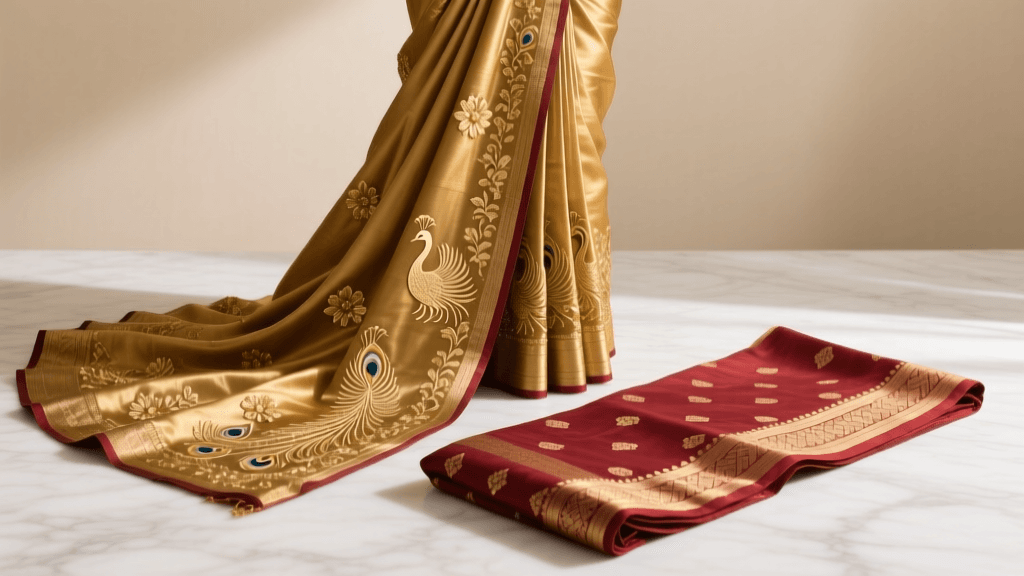
Hailing from Tamil Nadu, Kanjeevaram (or Kanchipuram) silk is the heavyweight champion of South Indian textiles. Woven from pure, high-denier mulberry silk, these garments are famous for their vibrant color contrasts and structural integrity. The defining technique of the Kanjeevaram weave is the korvai, an intricate method where the border, body, and pallu (the decorative end piece) are woven separately and then interlocked together so strongly that even if the saree tears, the border will not detach. Motifs are heavily inspired by South Indian temple architecture, featuring gopurams (temple towers), peacocks, and mythical yali creatures.
2026 Innovations in Kanjeevaram
In 2026, master weavers in Kanchipuram are pushing the boundaries of the korvai technique by introducing 'shot silk' effects, where the warp and weft threads are of contrasting colors (e.g., a magenta warp with a gold weft), creating a mesmerizing dual-tone effect that shifts in the light. Additionally, there is a growing demand for 'minimalist Kanjeevarams'—garments that feature a solid, richly colored body with a single, striking, heavily embroidered border, reducing the overall weight while maintaining the regal silhouette required for grand ceremonies.
Head-to-Head Comparison: Banarasi vs. Kanjeevaram
To help you make an informed decision for your 2026 bridal trousseau, we have compiled a detailed comparison of these two magnificent textiles based on current market data and textile specifications.
| Feature | Banarasi Silk | Kanjeevaram Silk |
|---|---|---|
| Origin | Varanasi, Uttar Pradesh | Kanchipuram, Tamil Nadu |
| Silk Type | Fine Mulberry, Kora, Organza, Tussar blends | Heavy, High-Denier Pure Mulberry |
| Average Weight | 300g (Organza) to 800g (Heavy Brocade) | 600g to 1.2kg (Standard to Heavy) |
| Drape & Fall | Fluid, soft, conforms to body contours | Structured, stiff, holds pleats rigidly |
| Primary Motifs | Temple borders, checks, peacocks, yali | |
| 2026 Bridal Price Range | $250 - $2,500+ USD | $400 - $4,000+ USD |
| Best Climate | Versatile (Organza for summer, Brocade for winter) | Cooler climates or heavily air-conditioned venues |
Sourcing Authentic Silk in 2026
With the rise of power-loom replicas and synthetic blends flooding the market, verifying the authenticity of your silk is more critical than ever. According to the Silk Mark Organisation of India, a government-backed initiative, buyers should always look for the Silk Mark label, which guarantees that the textile is made of 100% natural silk. In 2026, this label has been upgraded with QR-code traceability, allowing you to scan the tag and view the exact weaver cooperative, loom location, and silk grade used in your garment.
Furthermore, both Banarasi and Kanjeevaram silks hold Geographical Indication (GI) status. When purchasing from high-end boutiques or direct-from-weaver platforms this year, ensure the invoice explicitly states the GI certification. The Victoria and Albert Museum's Asian collections highlight that historical authenticity in South Asian textiles relies heavily on the purity of the metallic threads; therefore, ask the retailer for the 'zari testing report' to confirm whether the gold thread is pure silver-gilt, tested copper, or synthetic plastic, as this drastically affects both the price and the archival longevity of the piece.
Modern Bridal Styling and Draping
The way brides are styling these traditional fabrics in 2026 breaks away from conventional norms, blending heritage weaves with contemporary silhouettes.
- The Banarasi Lehenga Fusion: Instead of a traditional saree drape, many brides are utilizing heavy Banarasi brocade fabric to craft structured lehenga skirts, pairing them with minimalist silk-coriset blouses and sheer organza dupattas. This allows the intricate jaal work to be displayed fully without the bulk of pleating.
- The Kanjeevaram Dhoti Drape: For reception events, the rigid structure of Kanjeevaram silk makes it the perfect candidate for the modern dhoti-pant drape. By pre-stitching the pleats into a dhoti silhouette and pairing it with a long, embellished cape, brides achieve a look that is deeply rooted in South Asian tradition yet fiercely modern and mobile.
- Heirloom Upcycling: A major 2026 trend involves taking a mother's or grandmother's vintage Kanjeevaram saree and carefully cutting the heavy korvai border to use as a statement belt or dupatta trim on a contemporary lehenga, bridging the gap between generations.
'The true beauty of a heritage silk lies not just in its visual splendor, but in its structural memory. A Kanjeevaram remembers the tension of the loom, while a Banarasi remembers the fluidity of the river.' — Textile Conservation Symposium, 2026.
Archival Care for Heavy Silks
Investing in these luxury textiles requires a commitment to proper archival care. The high protein content of mulberry silk makes it susceptible to environmental damage if stored incorrectly.
Step-by-Step Storage Guide
- Avoid Plastic: Never store your silk garments in plastic garment bags. Plastic traps moisture and off-gasses chemicals that will yellow the silk and degrade the zari over time.
- Muslin Wrapping: Wrap each saree or lehenga in unbleached, acid-free cotton muslin cloth. This allows the fabric to breathe while protecting it from dust and light exposure.
- Refolding Schedule: The metallic zari threads can snap or leave permanent creases if left folded in the same position for too long. Every three months, remove the garments from storage, gently refold them along different lines, and let them air out in a shaded, well-ventilated room.
- Natural Pest Deterrents: Instead of chemical mothballs, which can tarnish the gold and silver zari, use dried neem leaves or cedarwood blocks placed in the corners of your storage trunk to naturally repel insects.
- Professional Dry Cleaning: Only dry clean your heavy silks when absolutely necessary (e.g., after a spill or heavy wear). For routine maintenance, gentle steam ironing on the reverse side using a cotton pressing cloth is sufficient to remove wrinkles and refresh the fibers.
Conclusion
Whether you are drawn to the fluid, Mughal-inspired elegance of Banarasi silk or the structured, temple-woven majesty of Kanjeevaram, both textiles offer unparalleled beauty and cultural significance. By understanding the distinct weaving techniques, 2026 market trends, and proper care protocols, you can confidently select a heritage silk that will not only make your bridal day unforgettable but will also serve as a cherished heirloom for decades to come.