Styling Complete Hanfu Ensembles With Jade Hair Ornaments
The Renaissance of Hanfu and the Allure of Jade
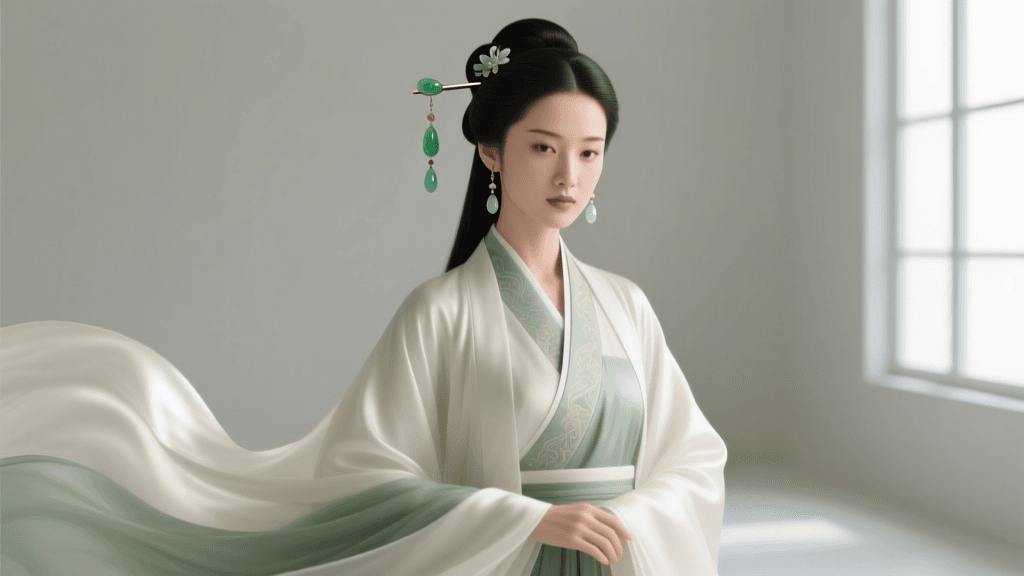
The modern resurgence of traditional Chinese clothing, widely known as the Hanfu movement, has evolved from a niche historical interest into a global cultural phenomenon. Enthusiasts and scholars alike are meticulously recreating garments from the Tang, Song, and Ming dynasties. However, a truly complete Hanfu ensemble extends far beyond the silk robes and pleated skirts; it requires the meticulous integration of traditional accessories, or shoushi. Among these, jade hair ornaments hold a place of supreme reverence. Historically, jade (yu) was considered more valuable than gold, symbolizing purity, moral integrity, and a connection to the divine. When styling a complete Hanfu look, understanding how to select, balance, and secure jade hairpins is essential for achieving an authentic and aesthetically harmonious silhouette.
Understanding Traditional Jade Hair Accessories
Traditional Chinese hair styling relies on an intricate system of pins, combs, and crowns to secure elaborate updos. When crafted from jade, these items transform from mere structural necessities into profound works of art. To properly accessorize your Hanfu, you must first understand the distinct categories of hair ornaments.
Zan (簪) - The Classic Hairpin
The Zan is the foundational hairpin, characterized by a single prong. Historically used by both men and women to secure topknots and buns, the jade Zan is a staple in any Hanfu wardrobe. These pins typically measure between 12 and 15 centimeters in length. The head of the pin is often carved into auspicious motifs such as lotus flowers, ruyi scepters, or bamboo joints. Because jade is dense and heavy, a high-quality Zan requires a thick, unyielding prong—often reinforced with a silver or brass core—to prevent snapping under the weight of thick hair.
Buyao (步摇) - The Step-Sway Ornament
Translating to 'step-sway,' the Buyao is an intricate hairpin featuring dangling elements suspended from the main base. As the wearer walks, the jade drops, pearls, and metal chains sway gently. Historically, the Buyao was a marker of aristocratic status, as the delicate swaying required the wearer to maintain a slow, graceful, and measured gait. In modern Hanfu styling, a jade Buyao is typically worn at the front or side of the updo, providing a dynamic visual element that catches the light and draws attention to the face.
Shubi (梳篦) - The Ornamental Comb
Unlike pins that penetrate the hair, the Shubi is a decorative comb placed prominently at the front or crest of the hair bun. Jade combs are often carved with openwork (filigree) designs, featuring dragons, phoenixes, or peonies. They serve a dual purpose: they smooth the front sections of the hair while acting as a striking focal point that complements the neckline of the Hanfu.
Sourcing Authentic Jade: Nephrite vs. Jadeite
When sourcing jade accessories for your Hanfu ensemble, it is crucial to understand that 'jade' is an umbrella term for two entirely different minerals. According to the Gemological Institute of America (GIA), authentic jade is classified into nephrite and jadeite, each with distinct physical properties, historical associations, and price points. Choosing the right type of jade can significantly enhance the historical accuracy of your outfit.
| Jade Type | Mineral Composition | Mohs Hardness | Typical Colors | Average Cost (USD) | Ideal Hanfu Era Pairing |
|---|---|---|---|---|---|
| Hetian Nephrite | Calcium Magnesium Silicate | 6.0 - 6.5 | Mutton-fat white, celadon, spinach green | $150 - $2,000+ | Pre-Qin, Han, and Song Dynasties |
| Burmese Jadeite | Sodium Aluminum Silicate | 6.5 - 7.0 | Imperial green, lavender, icy white | $300 - $5,000+ | Qing Dynasty and modern fusion |
| Xiuyan Jade (Serpentine) | Magnesium Silicate | 2.5 - 5.5 | Translucent yellow-green, olive | $30 - $150 | Budget-friendly Tang and Ming styling |
For the most historically accurate Hanfu ensembles—particularly those emulating the Song or Ming dynasties—Hetian nephrite is the premier choice. Its soft, waxy luster and subdued celadon or white tones perfectly complement the elegant, understated aesthetics of these periods. Jadeite, with its glassy luster and vibrant emerald greens, is more closely associated with the Qing dynasty and later periods, making it a striking, albeit slightly anachronistic, choice for earlier Hanfu styles.
Styling Your Complete Hanfu Ensemble
Integrating heavy jade ornaments into a traditional hairstyle requires structural engineering as much as artistic vision. Authentic jade hairpins can weigh anywhere from 30 to 80 grams, which is too heavy to be supported by natural hair alone without causing tension and breakage.
Step 1: Building the Structural Base
To support jade Buyao and Zan, you must construct a robust base. Traditional stylists use a jiafa (hairpiece) or a padded hair donut. Begin by pulling your natural hair into a tight, secure bun at the crown or nape of the neck. Wrap a color-matched hairpiece around the bun, securing it with U-shaped hairpins. This creates a dense, interlocking matrix of hair that can grip the thick prongs of a jade Zan without slipping.
Step 2: Strategic Placement and Weight Distribution
When inserting a jade Zan, never push it straight in. Instead, weave the prong through the base of the bun, angling it slightly upward to catch the core of the hair structure. For a Buyao, which features a heavy, top-heavy headpiece, insert the pin at a 45-degree downward angle. This leverages the weight of the dangling jade drops against the scalp, preventing the pin from drooping forward throughout the day.
Step 3: Color Theory and Silhouette Balancing
The visual weight of your jade accessories must balance the volume of your Hanfu. If you are wearing a voluminous Ming Dynasty Mamianqun (horse-face skirt) and a heavy, embroidered Ao (jacket), opt for large, substantial jade combs and thick Zan pins to match the garment's grandeur. Conversely, if you are wearing a lightweight, flowing Tang Dynasty Ruqun, choose delicate, slender jade Buyao with small teardrop carvings to maintain an ethereal, airy silhouette. As evidenced by the extensive Metropolitan Museum of Art's Asian Art jade collection, historical artisans carefully matched the scale of the jade carving to the social standing and physical presence of the wearer.
Navigating the Market: Authenticity and Cost Expectations
The market for Hanfu accessories is flooded with replicas made from dyed quartz, resin, or glass. While these are acceptable for casual cosplay or theater, serious collectors and cultural enthusiasts seek authentic stone. When shopping for jade hairpins, always request a gemological certificate. Be highly skeptical of 'jade' that is perfectly uniform in color, highly transparent, and remarkably cheap. Authentic nephrite features natural inclusions, cloudy variations, and a distinct, cool-to-the-touch thermal conductivity that glass and resin cannot replicate.
For a complete, authentic Hanfu hair accessory suite (one Zan, one Buyao, and one comb), collectors should expect to invest between $400 and $1,500 for genuine, untreated Hetian nephrite with silver-gilt inlay. Budget-conscious enthusiasts often turn to Xiuyan jade or high-quality carved agate, which offer a beautiful, natural aesthetic at a fraction of the cost, typically ranging from $80 to $200 for a full set.
Care and Maintenance of Jade Hairpins
Jade is durable but not indestructible. The intricate carvings and delicate dangling chains of a Buyao require specialized care. After wearing your jade accessories, wipe them down with a soft, lint-free microfiber cloth to remove natural hair oils and styling products. Avoid ultrasonic jewelry cleaners, as the high-frequency vibrations can exacerbate microscopic internal fractures within the jade, leading to catastrophic breakage. Instead, clean your pieces with lukewarm water and a mild, pH-neutral soap, using a soft-bristled brush to gently clean the carved crevices. Store your jade hairpins in individual velvet-lined wooden boxes to prevent the metal inlays from scratching the polished surface of the stone.
Conclusion
Mastering the art of jade hair accessories elevates a Hanfu ensemble from a simple historical costume to a profound expression of traditional Chinese aesthetics. By understanding the structural mechanics of the Zan and Buyao, respecting the mineralogical differences between nephrite and jadeite, and applying thoughtful styling techniques, modern enthusiasts can honor the legacy of ancient artisans. As cultural reporting on the Hanfu movement continues to highlight the dedication of this community, the meticulous integration of jade ornaments stands as a testament to the enduring beauty and depth of Asian sartorial traditions.