Italian Renaissance Gamurra Sewing Guide 2026: Patterns & Silk
The Resurgence of Historical Accuracy in 2026
As we navigate the 2026 historical reenactment and European folk dress revival season, the demand for museum-quality accuracy has never been higher. Modern makers, historical European martial arts (HEMA) practitioners, and Renaissance festival attendees are moving away from synthetic theatrical costumes, favoring meticulously researched garments grounded in primary source analysis. At the forefront of this movement is the recreation of 15th-century Italian clothing, specifically the elegant and highly functional gamurra. This comprehensive guide will walk you through the precise construction, authentic fabric sourcing, and hand-sewing techniques required to build a historically accurate Italian Renaissance wardrobe for the current year.
Deconstructing the 15th-Century Italian Silhouette
The female silhouette of the Italian Quattrocento was defined by layered elegance, natural waistlines, and a striking contrast between plain undergarments and richly decorated outer layers. To understand the gamurra, we must first look at the complete layering system. According to the extensive textile archives at the Victoria and Albert Museum's Renaissance Collection, the transition from heavy medieval wools to lighter, more fluid Italian silks and fine linens fundamentally changed how garments were draped and tailored during this era.
The Camicia (The Linen Foundation)
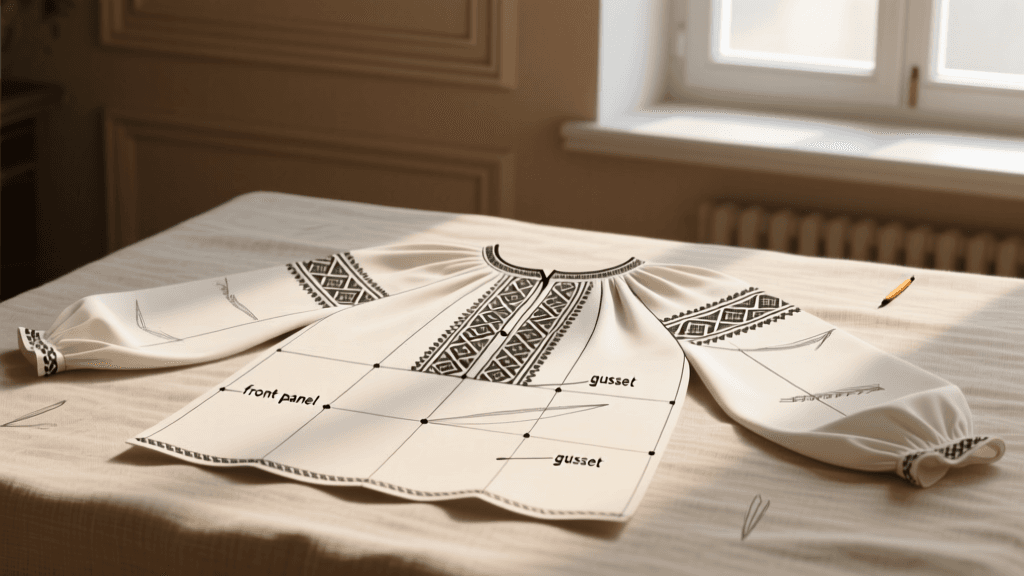
The base layer of any Renaissance ensemble is the camicia, a voluminous linen chemise. In 2026, historical costumers emphasize the use of unbleached or naturally white linen, cut using geometric zero-waste patterns. The camicia features gathered sleeves that puff through the slashings of the outer dress, providing both ventilation and a striking visual contrast. For an authentic 15th-century look, avoid modern cotton muslin; instead, source medium-weight linen (3.5 oz to 5.3 oz) that softens beautifully after multiple historical wash cycles.
The Gamurra (The Core Dress)
The gamurra served as the primary everyday dress for women across various social classes in cities like Florence and Venice. It is a fitted, front-lacing or side-lacing gown with a full skirt and detachable sleeves. The bodice is typically lined with heavy linen or lightweight wool to provide structural support without the need for rigid boning, which was not introduced until the 16th century. The sleeves of the gamurra are its most defining feature, often tied to the shoulder with decorative ribbons or laces, allowing the pristine white camicia to show at the shoulder joint and elbow.
The Giornea (The Ceremonial Overdress)
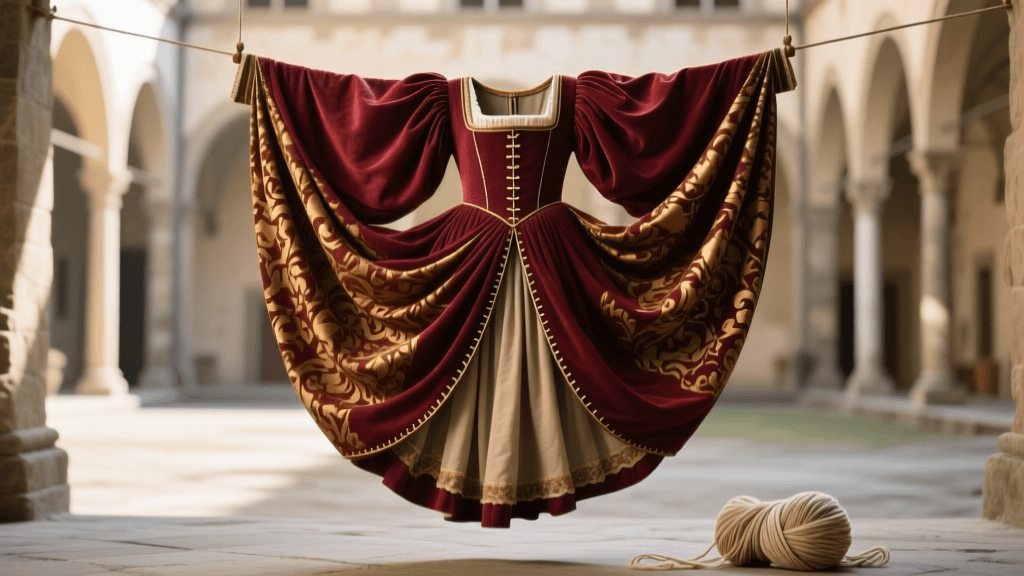
For formal occasions, the gamurra was layered beneath a giornea, an open-fronted, sleeveless overdress made of opulent silk brocades or velvet. The giornea featured distinctive tubular folds at the shoulders and a long, trailing back hem. While the gamurra is the workhorse of the wardrobe, the giornea is where the wearer displayed their family's wealth and status through expensive, locally woven Italian textiles.
2026 Heritage Fabric Sourcing & Market Pricing
Sourcing historically accurate textiles remains the most critical step in garment reconstruction. The 2026 market for heritage fabrics has seen a stabilization in prices following the supply chain fluctuations of the early 2020s, with several European mills expanding their period-accurate reproduction lines. When consulting the Metropolitan Museum of Art's Costume Institute archives, one quickly realizes that the drape and weight of the fabric are just as important as the fiber content. Below is a breakdown of recommended heritage fabrics and their average 2026 market pricing for reenactors.
| Fabric Type | Weight / Specification | Recommended Garment Use | 2026 Avg. Price (Per Yard) |
|---|---|---|---|
| Irish Linen (Bleached) | 3.5 oz (Lightweight) | Camicia, Veils, Partlets | $28.00 - $34.00 |
| Heavyweight Linen Canvas | 7.0 oz - 9.0 oz | Gamurra Bodice Interlining | $22.00 - $26.00 |
| Wool Flannel (Madder Dyed) | Medium Weight (6 oz) | Everyday Gamurra, Winter Gowns | $45.00 - $55.00 |
| Silk Damask (Reproduction) | 100% Mulberry Silk | Giornea, High-Status Sleeves | $110.00 - $145.00 |
| Silk Velvet (Silk-Rayon Blend) | Heavy Drape | Ceremonial Overdresses | $85.00 - $105.00 |
For makers seeking absolute authenticity, pure mulberry silk damasks woven on Jacquard looms in Italy are available through specialized heritage textile importers, though they command a premium price. For everyday reenactment, high-quality wool and linen blends offer excellent durability for outdoor festival environments.
Essential Hand-Sewing Techniques for Authenticity
While modern sewing machines are tempting for long skirt seams, the internal construction of a 15th-century gamurra relies heavily on specific hand-sewing techniques to achieve the correct drape and historical integrity. The Costume Institute's surviving textile fragments reveal that seam finishes were meticulously executed to prevent fraying and ensure longevity.
Cartridge Pleating the Skirt
The hallmark of the Renaissance silhouette is the voluminous skirt attached to a fitted bodice. To achieve this without adding bulk at the waistline, makers must use cartridge pleating (also known as gauging). This technique involves running parallel rows of heavy, waxed linen thread through the top edge of the skirt fabric and pulling them tight to create dense, rounded pleats that stand out from the bodice. In 2026, historical costumers recommend using heavy-duty buttonhole twist or waxed linen cord to ensure the pleats maintain their structural integrity over years of wear.
Hand-Bound Eyelets for Front Lacing
The gamurra is typically closed via spiral lacing through hand-bound eyelets. Metal grommets are strictly anachronistic and should never be used in a museum-quality reproduction. To create authentic eyelets, use a bone or brass awl to gently push the fabric threads apart rather than cutting them. This preserves the tensile strength of the linen or wool. The eyelets are then bound using a heavy silk buttonhole stitch or a waxed linen whipstitch. Spiral lacing, where the cord crosses diagonally from one side to the other, allows for a tighter, more adjustable fit across the bust and waist compared to modern criss-cross lacing.
Flat-Felled and Overcast Seams
For the unlined portions of the skirt and the camicia, flat-felled seams provide a clean, durable finish that encloses all raw edges. For heavier wool gamurras, a simple running stitch followed by an overcast stitch (using a contrasting or matching silk thread) is both historically accurate and visually appealing, mimicking the construction methods documented in 15th-century tailor's guild records.
Accessorizing the Ensemble
No Italian Renaissance outfit is complete without its accompanying accessories. The waist was often cinched or decorated with a leather girdle featuring intricate metalwork. According to the Royal Armouries Collection, surviving 15th-century buckles and chapes were frequently crafted from iron, brass, or silver, often featuring floral or geometric motifs. A simple, hand-stitched vegetable-tanned leather belt with a cast brass reproduction buckle is an excellent investment for the 2026 season.
For headwear, unmarried women and younger brides often wore their hair in intricate braids intertwined with ribbons or pearls, while married women covered their hair with a caul (a netted hairpiece) or a sheer linen veil secured with a delicate circlet. Pearls were immensely popular in Quattrocento Italy, and a simple faux-pearl hairnet can instantly elevate a basic gamurra into a garment suitable for a wealthy merchant's wife.
Final Thoughts for the 2026 Reenactment Season
Constructing a 15th-century Italian gamurra is a rewarding journey into the heart of European folk dress and historical tailoring. By prioritizing natural fibers like linen and wool, mastering structural hand-sewing techniques like cartridge pleating, and paying close attention to the geometry of the camicia, modern makers can achieve a silhouette that is both breathtakingly beautiful and historically defensible. As the 2026 reenactment and festival calendar fills with events celebrating European heritage, stepping into the grounds wearing a garment crafted with such meticulous respect for the past ensures that the legacy of Renaissance artisanship continues to thrive in the modern era.