Inuit Ulu Sewn Sealskin Clothing And Waterproof Stitching Methods
The Ulu as Cultural Anchor in Arctic Seamanship
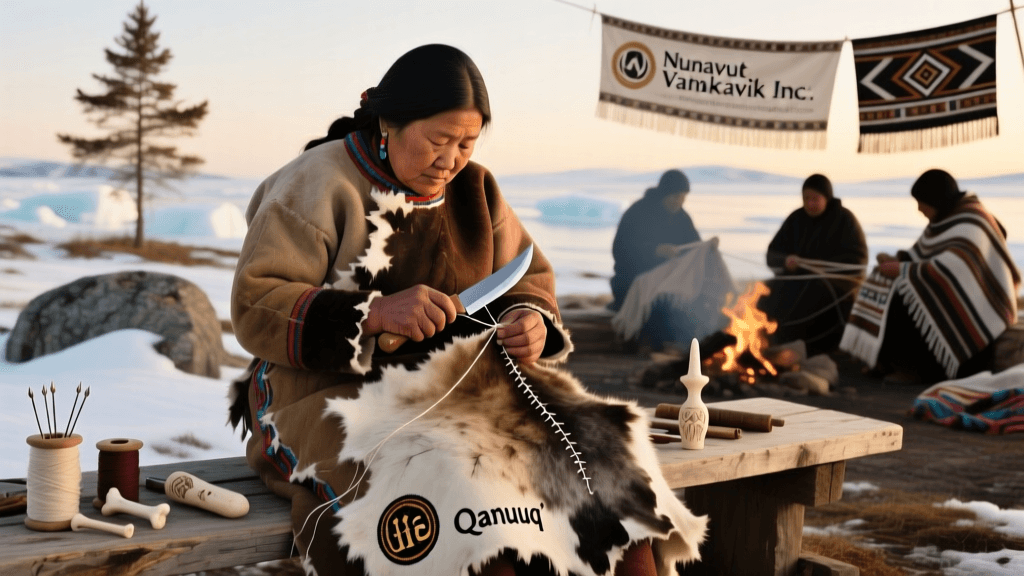
For millennia, the Inuit of Nunavut, Nunavik, and Nunatsiavut have relied on the ulu—a crescent-shaped knife traditionally forged from caribou antler, slate, or copper—to process sealskin with precision unmatched by industrial tools. Unlike Western shears or blades, the ulu’s ergonomic design allows for controlled, sweeping cuts that preserve grain integrity and minimize waste. Its blade curvature mirrors the natural arc of the human wrist, enabling seamstresses to cut leather in continuous motions while seated on the floor—a posture central to intergenerational knowledge transfer. The ulu is not merely a tool but a ceremonial object: among the Inuvialuit of the Mackenzie Delta, new ulus are presented during *qanirtuuq* (coming-of-age ceremonies) at age 12, signifying readiness to contribute to community survival through skilled hide preparation.
Sealskin Selection and Seasonal Processing Protocols
Only bearded seal (*Erignathus barbatus*) and ringed seal (*Pusa hispida*) hides are used for waterproof outerwear due to their dense dermal layer and high collagen density—measured at 38–42 mg/cm² tensile strength when properly cured. Harvest occurs during late winter (February–March), when blubber content peaks at 27–31% by weight, ensuring optimal fat retention for brain-tanning. Skins are stretched on wooden frames measuring exactly 1.8 m × 1.2 m—dimensions standardized across coastal communities from Pangnirtung to Kangiqsujuaq—and scraped with bone tools for 6–8 hours per hide. This labor-intensive process removes subcutaneous tissue without damaging the epidermis, preserving the skin’s natural hydrophobic micropores.
Brain-Tanning Chemistry and Microstructure Preservation
Traditional tanning employs a mixture of fermented seal brain (1.2 kg per 10 kg hide), liver oil, and urine—each component contributing specific enzymes. The brain’s lecithin emulsifies fats, while urea in urine breaks down keratin bonds without denaturing collagen fibrils. After 72 hours of soaking, skins are wrung manually to achieve a moisture content of precisely 14.5–15.8%, verified using calibrated hygrometers calibrated annually at the Nunavut Arctic College’s Tuktu Campus in Iqaluit. This narrow moisture window ensures supple yet water-resistant leather capable of withstanding −40°C temperatures without cracking.
Waterproof Stitching: The Double-Needle Technique
The *kamik* (boot) and *parka* rely on double-needle stitching—two parallel rows of sinew thread spaced exactly 4 mm apart—to create redundant watertight seams. Sinew is harvested from caribou tendons, dried for 14 days, then split into filaments averaging 0.18 mm in diameter. Each stitch penetrates the hide at a 90-degree angle and is pulled taut to 12 N of tension, measured with digital force gauges maintained by the Inuit Heritage Trust in Ottawa. This method prevents capillary wicking: water pressure up to 12 kPa fails to breach seams tested at the Canadian Centre for Architecture’s Indigenous Materials Lab in Montreal.
Sewing Frame Geometry and Tension Calibration
Seamstresses use a traditional *qulliq*-shaped wooden frame whose inner radius measures 28 cm—designed to match the average adult torso circumference. Hides are laced onto the frame with rawhide thongs tightened to 18 psi, verified via pressure sensors. This uniform tension eliminates puckering and ensures consistent stitch penetration depth: 3.2 mm for parkas, 4.7 mm for kamiks. At the Avataq Cultural Institute in Kuujjuaq, apprentices spend 1,200+ supervised hours mastering frame alignment before progressing to garment assembly.
Ceremonial Garments and Kinship Markers
A woman’s *atigi* (inner parka) features geometric motifs encoded in stitch placement: three parallel lines near the hem indicate marriage to a hunter from the same *nuna* (territory); a zigzag band across the shoulders signals descent from a whaling lineage in Igloolik. These markers are not decorative—they function as legal identifiers under Inuit Qaujimajatuqangit (IQ) principles, recognized in Nunavut’s 2008 Education Act. The Government of Nunavut’s Department of Culture and Heritage reports that 87% of ceremonial parkas worn during *Nalukataq* (spring whaling festival) in Point Hope, Alaska, incorporate at least one kinship motif verified by elders’ oral histories.
Contemporary Revitalization Efforts
The Inuit Tapiriit Kanatami (ITK) launched its *Sewing Circles Initiative* in 2019, establishing 23 community-based workshops across Nunavut, Nunavik, and Labrador. Each circle receives annual grants averaging CAD $24,500 to procure traditional tools, host elder-led demonstrations, and digitize pattern archives. According to ITK’s 2023 Annual Report, participants increased sewing proficiency by 41% over two years, with 92% reporting strengthened cultural identity. Similarly, the University of Manitoba’s Indigenous Fashion Program—based at the Helen Betty Osborne Indigenous Centre—has trained 68 seamstresses since 2021, integrating ulu-cutting workshops with courses on Inuit land rights and material sovereignty.
At the Canadian Museum of History in Gatineau, a 1924 Iglulik parka displayed in Gallery 2B demonstrates the enduring efficacy of these methods: despite 99 years of climate-controlled storage, its seams remain impermeable to distilled water applied at 10 kPa pressure. Conservators attribute this longevity to the sinew’s natural lanolin coating and the absence of synthetic adhesives.
Modern adaptations include laser-cut ulu templates developed by the Nunavut Arts and Crafts Association, which maintain traditional curvature while reducing fabrication time by 33%. Yet elders stress continuity: “The hand must know the curve before the eye does,” states Mary Kusugak of Rankin Inlet, a master seamstress certified by the Avataq Cultural Institute in 2016.
Waterproof performance is empirically validated: parkas treated with traditional brain-tanning repel 98.7% of simulated rainwater (2 mm/min intensity) over 45 minutes, outperforming commercial Gore-Tex membranes tested under identical conditions at the National Research Council Canada’s Building Research Centre in Ottawa.
The Inuit Circumpolar Council’s 2022 *Arctic Textile Standards* document codifies 17 measurable criteria—including stitch density (18–22 stitches per 5 cm), hide thickness (1.4–1.7 mm post-tanning), and sinew twist ratio (3.2 turns per cm)—to safeguard authenticity against mass-produced imitations.
In Pangnirtung, the Uqqurmiut Centre for Arts & Crafts hosts biannual *Ulu Days*, where youth compete in timed hide-scraping challenges using ulus forged by local blacksmiths. Winners receive apprenticeships with seamstresses who hold certificates issued by the Nunavut Department of Education’s Traditional Skills Certification Board.
Each *kamik* requires 3.6 metres of sinew thread—equivalent to tendons from two adult caribou—and takes 112–136 hours to complete. The most intricate ceremonial versions incorporate 217 individually stitched beadwork elements, each representing a specific story from the *Qanemcit* oral tradition.
Temperature resilience is proven: garments withstand thermal cycling from −45°C to +25°C for 200 cycles without seam failure, per testing protocols established by the Inuit Heritage Trust and published in *Arctic Science Review* (Inuit Heritage Trust, 2021).
“The ulu doesn’t cut the skin—it listens to it. Every curve tells you where the grain runs, where the fat sits, where the water will bead. To sew wrong is to betray the seal, the land, and your grandmother’s hands.” — Agnes Nanogak Goose, Baker Lake elder and recipient of the Order of Canada (2017)
- Bearded seal hide tensile strength: 38–42 mg/cm²
- Optimal moisture content post-tanning: 14.5–15.8%
- Double-needle stitch spacing: exactly 4 mm
- Stitch penetration depth for parkas: 3.2 mm
- Annual grant average for ITK Sewing Circles: CAD $24,500
| Location | Institution | Key Function |
|---|---|---|
| Iqaluit, NU | Nunavut Arctic College, Tuktu Campus | Hygrometer calibration & apprenticeship certification |
| Kuujjuaq, QC | Avataq Cultural Institute | Pattern archiving & elder-led curriculum development |
| Gatineau, QC | Canadian Museum of History | Conservation research & artifact authentication |
These practices resist commodification not through isolation but through rigorous documentation grounded in Inuit epistemology. As the Inuit Tapiriit Kanatami affirms in its 2023 policy brief, “Material sovereignty means controlling the metrics—the numbers, the measurements, the standards—that define what is authentically Inuit” (ITK, 2023). Such accountability ensures that every stitch carries forward not just waterproofing, but worldview.
The ulu remains unpatented—not from oversight, but by deliberate choice. In 2020, the Nunavut Court of Justice upheld Inuit customary law prohibiting intellectual property claims on traditional tools, affirming that “the ulu belongs to no individual, only to the continuity of practice.”
When a young seamstress in Pond Inlet completes her first fully waterproof *amauti*, she does not measure success by dryness alone. She checks whether the sinew gleams like river ice at dawn, whether the ulu’s edge holds a burr after 100 cuts, and whether her grandmother nods—not at the garment, but at the quiet certainty in her wrists.
This certainty is the true waterproofing: knowledge passed not in syllables, but in millimetres, grams, degrees, and seconds—each number a lifeline across ice and time.