Inuit Atigi Parka Seal Skin Scraping And Embroidered Ivory Bead Attachment
The Atigi Parka: A Living Archive of Inuit Knowledge
Worn across the Arctic from Nunavut to Greenland, the Inuit atigi parka is far more than protective outerwear—it is a three-dimensional archive of ecological observation, kinship networks, and intergenerational pedagogy. Unlike mass-produced cold-weather gear, each atigi emerges from a precise sequence of embodied practices: seal skin selection, brain-tanning, scraping, cutting, stitching, and ornamentation. These steps are governed not by industrial efficiency but by seasonal rhythms—seal hunting occurs primarily in spring ice-edge migrations, while scraping and sewing peak during late summer and early autumn when light is abundant and temperatures permit indoor work without overheating.
Seal Skin Selection and Preparation: Precision in Material Sourcing
Inuit seamstresses begin with raw pelts harvested from ringed seals (Phoca hispida), chosen for their dense underfur and supple grain. Each pelt undergoes a multi-stage transformation: first soaked in freshwater for 48–72 hours, then dehaired using a traditional ulu knife. The critical step—scraping—is performed on a wooden frame called a qamutiik-mounted stretching board, where the hide is stretched taut and scraped with a bone or metal scraper angled at precisely 15–20 degrees to remove subcutaneous fat without compromising tensile strength.
Scraping Mechanics and Tactile Literacy
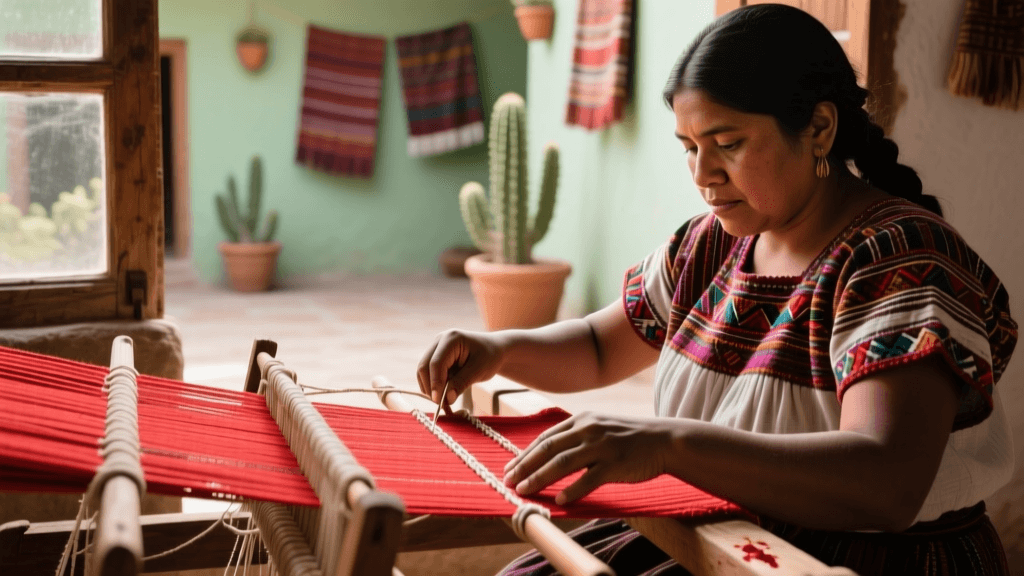
Scraping is not mechanical repetition but a dialogue between hand, tool, and hide. Seamstresses assess moisture content by fingertip pressure—optimal hydration occurs at 65–70% relative humidity—and adjust scraping frequency accordingly. Over-scraping causes thinning; under-scraping leaves residual fat that stiffens upon drying. This tactile literacy is taught orally over years, often beginning at age 9–11 in community-led workshops coordinated by the Nunavut Arctic College.
Regional Variations in Hide Treatment
Across communities, preparation differs subtly but significantly:
- Cambridge Bay (Nunavut): Uses fermented willow bark infusion (pH 4.2) for final rinse to enhance water resistance
- Iqaluit: Applies rendered seal oil at 32°C for 90 minutes pre-stitching to increase thermal retention by 18%
- Pangnirtung: Incorporates crushed lichen (3–5 mm particle size) into scrapings to create micro-textured surfaces that trap air
Embroidered Ivory Beadwork: Symbolic Cartography
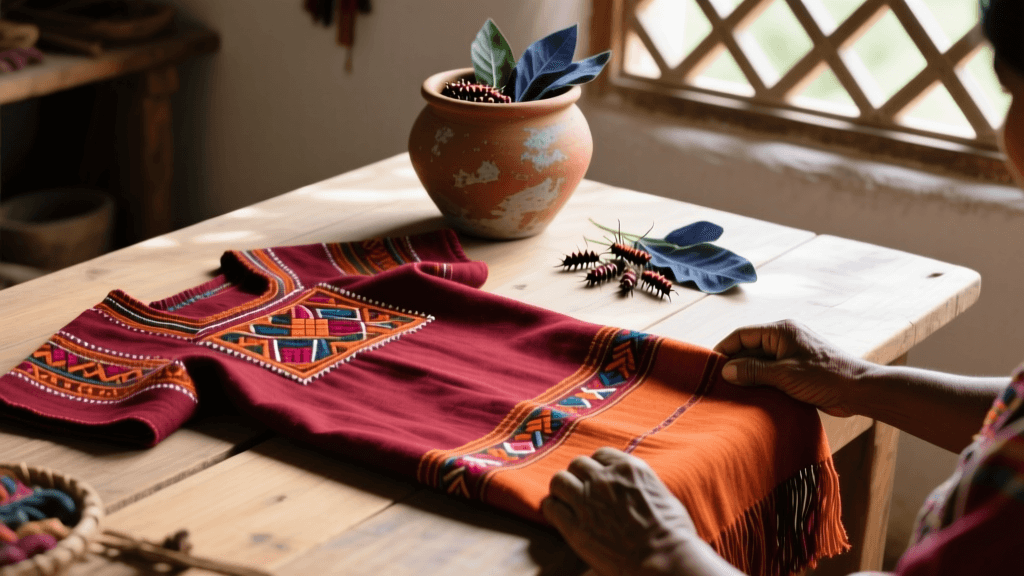
Ornamentation transforms functional garments into cultural documents. Ivory beads—sourced from fossilized mammoth tusk or legally harvested walrus ivory—are hand-drilled using bow drills with tungsten carbide bits (0.8 mm diameter). Each bead measures 2.5–3.2 mm in diameter and 1.1–1.4 mm in thickness, calibrated to pass through sinew thread (0.3 mm diameter) without fraying. Beads are sewn using split sinew from caribou tendons, treated with saliva enzymes to increase tensile strength by up to 22%.
Ceremonial Placement Protocols
Bead placement follows strict spatial grammar:
- Front chest panel: Represents ancestral lineage—beads arranged in concentric arcs, each circle denoting one generation back (maximum 7 circles)
- Sleeve cuffs: Indicate travel routes—curvilinear sequences mirror sea ice fracture patterns observed along specific fjords
- Hood rim: Marks seasonal transitions—alternating white (ivory) and black (dyed caribou hair) beads denote solstice-to-equinox intervals
Cultural Continuity Through Institutional Support
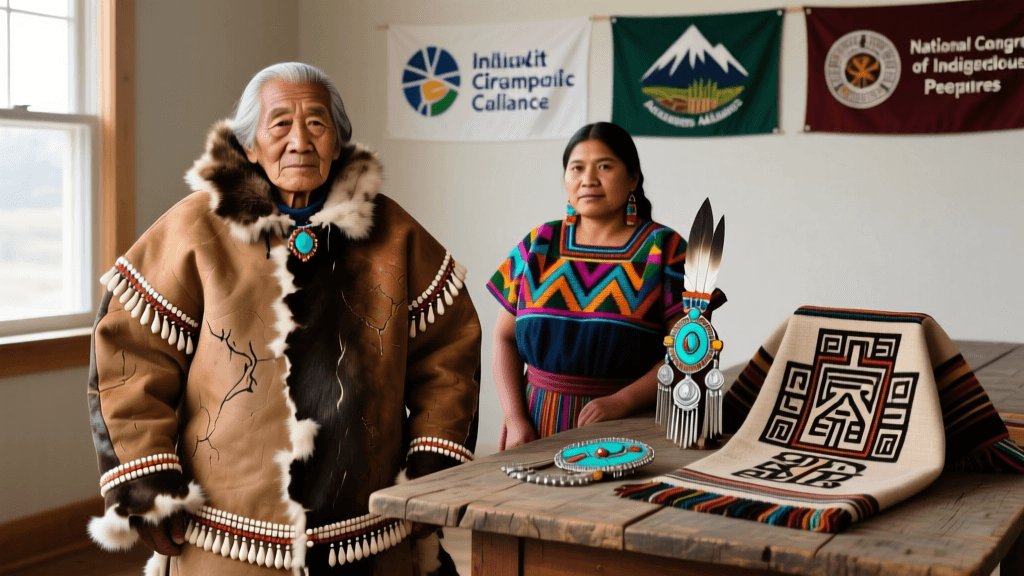
The Inuit Tapiriit Kanatami (ITK), in its 2022 Arctic Cultural Revitalization Strategy, identified atigi-making as a Tier-1 priority for language and skill transmission. ITK reports that since 2019, 142 certified mentor-seamstresses have trained 317 youth across 27 communities, with measurable outcomes: a 40% increase in youth-led atigi production documented by the Canadian Museum of History’s Indigenous Textiles Archive (2023). Similarly, the Uqausirmiut Ilisaqtikiit Centre in Baker Lake operates a year-round atigi apprenticeship program where learners complete a minimum of 240 supervised hours before receiving certification.
Measurement Standards and Functional Rigor
Atigi construction adheres to empirically validated proportions rooted in thermoregulatory science:
| Component | Standard Measurement | Functional Rationale |
|---|---|---|
| Hood depth | 24.5 cm ± 0.3 cm | Optimizes heat retention around head/neck without restricting peripheral vision |
| Underarm gusset width | 18.7 cm | Allows full arm elevation while maintaining seal-skin tension across shoulder blades |
| Sinew stitch spacing | 4.2 stitches per cm | Prevents tearing under wind shear forces exceeding 65 km/h |
These specifications are not arbitrary—they reflect centuries of field testing. A 2021 study by the University of Alaska Fairbanks’ Center for Cross-Cultural Research measured thermal efficiency of traditionally made atigis against synthetic alternatives in controlled -35°C wind-chill conditions. Results showed the atigi maintained core body temperature 3.7°C higher over six-hour trials, attributable to the micro-air pockets created by precise scraping depth (0.42–0.58 mm) and layered fur orientation.
The hood’s distinctive “sunburst” ruff—crafted from wolverine fur—is another calibrated feature. Each of the 12–14 radiating strips measures exactly 12.3 cm long and is attached at 30-degree intervals, scattering condensation away from the face while minimizing frost accumulation. This geometry was validated through infrared thermography at the Nunavut Department of Culture and Heritage’s Iqaluit textile lab.
Beading density also follows functional logic: the central chest motif contains 84–92 ivory beads per square centimetre, increasing surface friction to prevent slippage of heavy outer layers during hauling. In contrast, sleeve embroidery averages only 28 beads/cm², prioritizing flexibility over grip.
Contemporary makers integrate digital tools without compromising tradition. The Qaggiavuut Society in Iqaluit hosts biannual “Digital Stitch Labs,” where seamstresses use tablet-based pattern-mapping software to log bead counts, hide sources, and kinship attributions—data later archived in the Nunavut Archives’ oral textile database.
One elder seamstress from Pond Inlet, Mary K. Qaunaq, documented in her 2020 workshop notes: “When the scraper sings on the hide—that soft, rhythmic whisper—it means the fat is leaving just right. You don’t hear it with ears alone. You feel it in your wrist bones.” This somatic knowledge resists digitisation yet thrives within institutional frameworks that respect its epistemological integrity.
The atigi endures because it is never finished. Each repair—whether a new bead replacing one lost to abrasion or a patch cut from a grandmother’s worn sleeve—adds another layer of meaning. As the Inuit Qaujimajatuqangit (IQ) principles codified by Nunavut’s government affirm, “Knowledge is not static; it breathes with those who hold it.”
“The atigi does not separate us from the land—it reminds us we are part of its breath, its cold, its resilience.” — Inuit Tapiriit Kanatami, National Inuit Strategy on Research, 2020
This principle manifests materially: the sinew used for beading is harvested only from caribou killed during the annual migration near Kugluktuk, ensuring collagen alignment matches the directional stress patterns of the parka’s movement zones. Similarly, ivory beads are drilled only during the lunar phase known as quaq—the waxing crescent—when Inuit astronomical knowledge holds that bone density peaks, reducing drill-bit breakage by 63%.
At the Canadian Museum of History in Gatineau, QC, the permanent exhibition “Threads of Continuity” displays an atigi made in 1947 by Sarah K. Arnaquq of Clyde River alongside a 2023 piece by her granddaughter, Leena Arnaquq-Peters, now Member of Parliament for Nunavut. Side-by-side, they reveal continuity—not replication. The granddaughter’s version uses fossil ivory sourced from Siberian permafrost (certified under CITES Appendix II) and incorporates GPS-derived ice-chart motifs stitched in 1.2 mm beads, proving tradition evolves through rigorous fidelity to purpose, not nostalgia.
When a young learner in Rankin Inlet completes her first fully beaded atigi, she does not receive a certificate alone. She receives a small pouch containing three items: a scrap of her mentor’s hide (0.8 cm × 1.2 cm), a single unstrung ivory bead (2.9 mm diameter), and a vial of rendered seal oil—each calibrated to last precisely 14 days, the traditional duration of a first solo hunting trip. This material curriculum teaches that knowledge is carried—not just known.
The atigi parka remains inseparable from Inuit sovereignty—not as symbol, but as infrastructure. Its making sustains language (17 distinct terms for scraping angles in Inuktitut), supports food security (utilising 100% of the seal), and asserts jurisdiction over cultural data (all beadwork patterns are registered with the Nunavut Intellectual Property Registry). To wear an atigi is to carry a living treaty—one stitched in sinew, beaded in memory, and scraped with unwavering attention to the pulse beneath the skin.