Oaxacan Huipil Backstrap Weaving & Buyer Guide 2026
The Living Heritage of the Oaxacan Huipil
The huipil (pronounced wee-peel) is far more than a traditional garment; it is a wearable codex of indigenous identity, cosmology, and ancestral memory. Across the diverse microclimates of Oaxaca, Mexico, Zapotec, Mixtec, Chinantec, and Mazatec women have woven these tunic-like garments for millennia. As we navigate the global textile landscape in 2026, the Oaxacan huipil stands at a critical intersection of cultural preservation, ethical fashion, and indigenous intellectual property rights. For collectors, cultural enthusiasts, and conscious consumers, understanding the intricate backstrap loom techniques and the current market dynamics is essential to appreciating and respectfully acquiring these masterpieces.
In recent years, the surge in demand for "boho-chic" and mass-produced embroidered blouses has threatened the livelihoods of traditional weavers. However, 2026 has seen a powerful counter-movement led by indigenous cooperatives and cultural institutions, prioritizing direct-to-artisan sales and stringent authenticity certifications. This guide will walk you through the mechanics of the backstrap loom, the alchemy of natural dyes, and how to ethically source an authentic huipil today.
Anatomy of the Backstrap Loom (Telar de Cintura)
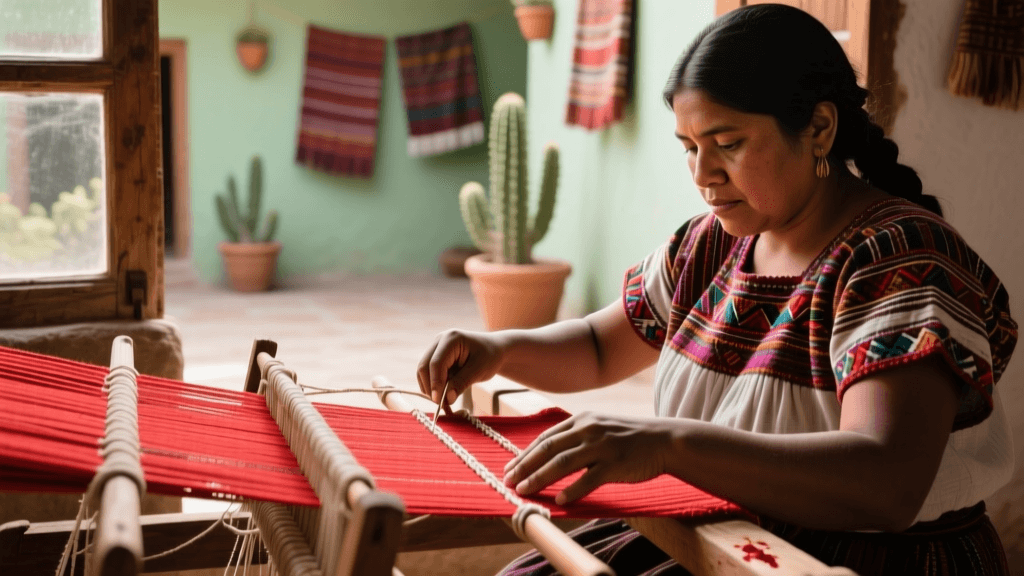
The backstrap loom, or telar de cintura, is a pre-Columbian technology that remains largely unchanged in its fundamental mechanics. Unlike the rigid pedal loom introduced by the Spanish, the backstrap loom is intimately connected to the weaver’s body. One end of the warp is tied to a fixed object, such as a tree or a sturdy post, while the other end is attached to a belt (the backstrap) that wraps around the weaver’s lower back.
The weaver’s body acts as the tensioning device. By leaning forward or backward, she adjusts the tension of the warp threads with microscopic precision. This physical connection is why many indigenous artisans believe the garment absorbs the energy, thoughts, and spirit of the weaver. The primary tool used is the machete or batten, a heavy wooden or bone sword used to beat the weft threads tightly into place, creating a dense, durable fabric. In 2026, master weavers in the Sierra Norte are increasingly using sustainably harvested native hardwoods for their battens, ensuring the tools themselves are ecologically sound.
Identifying Authentic Backstrap Woven Textiles
When shopping for a huipil, it is crucial to distinguish between authentic backstrap-woven brocade and machine-embroidered imitations. Here is what to look for:
- The Reverse Side: True brocade (supplementary weft) is woven directly into the fabric. The pattern on the reverse side will be a mirror image of the front, with long floating threads that are carefully managed. Machine embroidery will show a chaotic backing of bobbin thread and stabilizer.
- Selvedge Edges: A backstrap loom produces fabric with finished, continuous selvedge edges on both sides. If the fabric has raw, cut edges that are hemmed or serged, it was likely cut from a larger bolt of commercial fabric.
- Tension Variations: Because human tension is not perfectly robotic, authentic handwoven cotton will have minute, beautiful variations in thread density that catch the light differently than uniform, mill-woven textiles.
Regional Variations and 2026 Market Pricing
Oaxaca is divided into eight distinct regions, each boasting unique textile traditions. The price of an authentic huipil in 2026 reflects the time invested, the rarity of the materials, and the complexity of the motifs. Below is a comparative look at three highly sought-after weaving communities.
| Region | Community | Motif Highlights | Weave Time | 2026 Coop Price (USD) |
|---|---|---|---|---|
| Sierra Norte | San Juan Cotzocón | Geometric diamonds, coffee brown native cotton | 2-3 months | $450 - $650 |
| Istmo | San Bartolo Yautepec | Intricate floral/fauna brocade, vibrant silks | 1-2 months | $300 - $500 |
| Mixteca | Santa María Alotepec | Red cochineal base, intricate bird and star motifs | 3-4 months | $550 - $850 |
Note: Prices listed reflect direct purchases from artisan cooperatives or verified ethical retailers in 2026. Purchasing from middlemen or boutique resellers in major cities will typically increase the price by 100% to 300%, with little to none of that markup reaching the weaver.
The Alchemy of Natural Dyes: Cochineal and Indigo
The vibrant palette of an authentic Oaxacan huipil is derived from the region's rich biodiversity. In 2026, the revival of natural dyeing has moved beyond a niche interest into a robust, certified organic industry in the Valles Centrales.
Cochineal (Grana Cochinilla)
Cochineal is a parasitic insect (Dactylopius coccus) that lives on the nopal cactus. When dried and crushed, it yields a potent carminic acid, producing brilliant reds, pinks, and purples. The weavers of the Mixteca region are renowned for their mastery of cochineal. By altering the pH of the dye bath—adding acidic lime juice to shift the color toward orange, or alkaline wood ash to push it toward deep purple—they achieve a stunning spectrum without synthetic chemicals. Due to increased global demand for natural cosmetics and textiles, the price of premium, organically farmed cochineal has risen by 15% in 2026, making heavily dyed red huipiles some of the most expensive and prized garments on the market.
Indigo (Añil)
Native indigo (Indigofera suffruticosa) requires a complex fermentation process to extract the blue pigment. Artisans in Oaxaca often use clay pots and specific temperature controls to maintain the living dye vat. The deep, rich blues found in huipiles from the Isthmus of Tehuantepec are a testament to the weaver's patience, as the thread must be dipped, oxidized in the air, and redipped dozens of times to achieve colorfastness.
Ethical Purchasing and Mexico’s Cultural Protection Laws
Cultural appropriation and the plagiarism of indigenous designs by fast-fashion conglomerates have been major issues over the last decade. However, buyers in 2026 are protected and guided by stronger legal frameworks and institutional resources. Mexico’s ongoing enforcement of the Ley Federal de Protección del Patrimonio Cultural de los Pueblos y Comunidades Indígenas y Afromexicanos mandates that commercial entities must obtain free, prior, and informed consent—and provide equitable compensation—before mass-producing indigenous designs.
As an individual buyer, your best approach is to bypass commercial boutiques and purchase directly from verified cooperatives or cultural institutions. The Museo Textil de Oaxaca is an indispensable resource. Not only do they curate world-class exhibitions, but their on-site shop and affiliated network of community workshops guarantee that 100% of the proceeds go directly to the weaving families. Similarly, the Fondo Nacional para el Fomento de las Artesanías (FONART) operates galleries and certification programs that verify the authenticity and origin of the textiles, ensuring you are investing in genuine cultural heritage rather than an imported knockoff.
Questions to Ask Before Buying
- Who wove this, and what community are they from? Ethical sellers will know the weaver's name and village.
- Were the threads hand-spun or mill-spun? While mill-spun cotton is common and acceptable, hand-spun native cotton (coyuche or cuyuscate) commands a higher price and supports specialized spinners.
- Are the dyes natural or synthetic? Aniline dyes are cheaper and brighter but lack the historical and ecological value of cochineal, indigo, and marigold.
Caring for Handwoven, Naturally Dyed Garments
An authentic huipil is an heirloom piece that can last for generations if cared for properly. Because natural dyes are more sensitive to harsh chemicals than synthetic counterparts, you must adjust your laundry routine.
- Washing: Never machine wash a naturally dyed huipil. Hand wash it in cold water using a pH-neutral, gentle detergent or traditional jabón de pan (a mild, locally made soap). Do not soak the garment for extended periods, as this can cause the cochineal or indigo to bleed.
- Drying: Avoid direct sunlight, which will rapidly fade natural dyes. Roll the garment in a clean, dry towel to press out excess water, then lay it flat on a drying rack in a shaded, well-ventilated area.
- Storage: Store your huipil flat or loosely rolled in acid-free tissue paper. Hanging a heavy, handwoven cotton garment for long periods can distort the warp threads and stretch the neckline. Keep it in a cool, dry place, and use natural cedar blocks instead of chemical mothballs to protect the fibers.
Conclusion
The Oaxacan huipil is a profound expression of indigenous resilience and artistic brilliance. By understanding the mechanics of the backstrap loom, the chemistry of natural dyes, and the socio-economic landscape of 2026, collectors and enthusiasts can make informed, respectful purchasing decisions. When you acquire an authentic huipil, you are not merely buying a piece of clothing; you are actively participating in the preservation of a living, breathing textile tradition that has shaped the cultural fabric of the Americas for thousands of years.