Indonesian Batik Canting Tools And Wax Resist Process
The Canting: Precision Instrument of Indonesian Textile Art
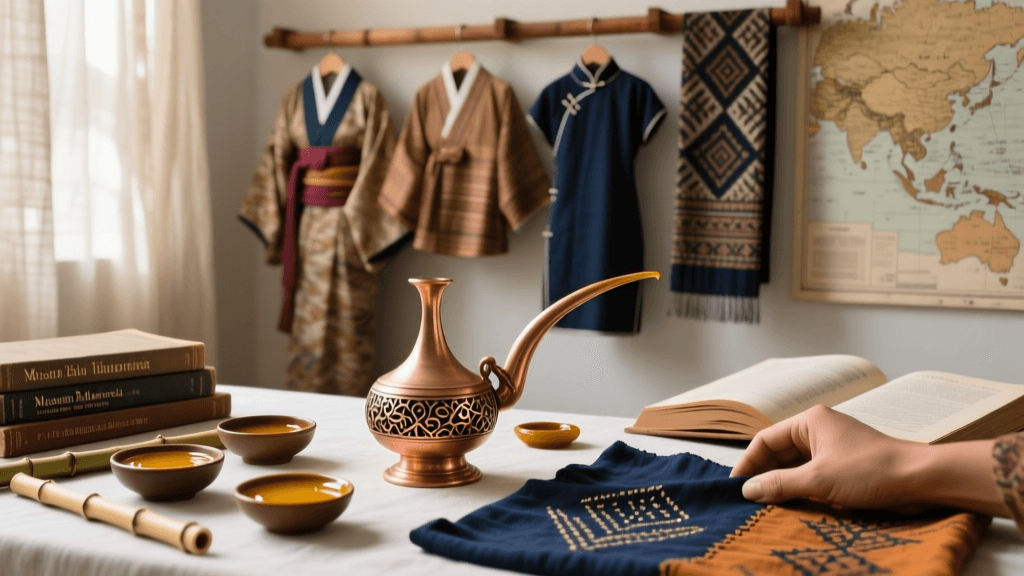
At the heart of Javanese batik lies the canting, a handcrafted copper-and-wood tool used to apply hot liquid wax with extraordinary control. Originating in Central Java as early as the 6th century CE, the canting evolved from rudimentary bamboo or clay applicators into finely calibrated instruments capable of drawing lines as narrow as 0.3 millimeters. Each canting consists of a copper reservoir (called the kop) attached to a bamboo handle (gagang), with one or more spouts (tutup) ranging from 1 mm to 5 mm in diameter. Master artisans often own dozens of cantings—some with single spouts for fine linear work, others with multiple tips for parallel motifs like parang rusak or kawung. The wax, traditionally a blend of beeswax and pine resin heated to precisely 60–65°C, must remain fluid enough to flow but viscous enough not to bleed into adjacent fabric fibers.
Wax Resist: Chemistry, Craft, and Cultural Logic
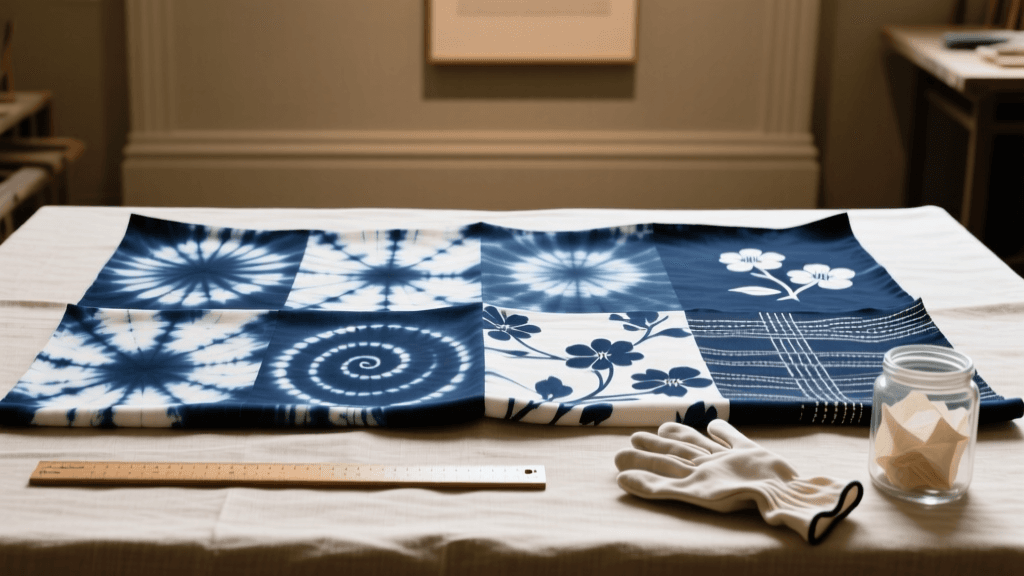
The batik process relies on a dual-phase wax resist technique: wax is applied to areas meant to retain the base color, then the cloth is dyed; subsequent layers involve re-waxing and re-dyeing to build complex polychrome designs. Unlike Japanese shibori or Indian bandhani, which use mechanical resistance, batik’s wax resist depends on thermal and chemical adhesion. When cooled below 45°C, the wax forms a brittle, impermeable barrier that repels indigo or soga dyes—natural dyes derived from the Morinda citrifolia root. A single high-grade batik tulis (hand-drawn) piece may undergo up to seven dye cycles over 4–6 weeks, with each immersion lasting between 8 and 12 hours. The final step—boiling the cloth in water at 95°C for 20 minutes—melts away the wax, revealing crisp, un-dyed zones beneath.
Regional Variations Across the Archipelago
While Solo and Yogyakarta dominate classical Javanese batik, regional divergence is pronounced. In coastal Pekalongan, artists use brighter synthetic dyes and incorporate Chinese floral motifs, resulting in pieces with up to 12 distinct color layers. In contrast, inland Surakarta favors muted earth tones and strict adherence to symbolic geometry—where a parang motif’s diagonal blade pattern must follow exact 45-degree angles and repeat every 18 cm. In Bali, batik rarely employs canting; instead, artists use cap stamps or freehand painting with brushes, yielding looser, narrative-driven compositions depicting Ramayana scenes.
Fabric Foundations: From Handspun Cotton to Modern Blends
Traditional batik uses tightly woven, unbleached cotton known as primissima, with thread counts averaging 120–140 threads per inch. This density ensures wax penetration without seepage. Historically, cloth was prepared through ngeleng, a soaking process in rice water that stiffens fibers and improves wax adhesion. Today, many workshops substitute mercerized cotton (treated with sodium hydroxide to increase luster and strength), though purists argue it reduces absorbency by up to 30%. Silk batik exists but remains rare due to silk’s sensitivity to wax temperatures above 70°C—exceeding that threshold causes irreversible fiber degradation.
Historical Lineage and Colonial Interference
Batik’s earliest documented evidence appears on 9th-century reliefs at Borobudur Temple, where courtiers wear garments bearing motifs later codified as royal insignia. During Dutch colonial rule (1800–1949), batik production shifted from aristocratic patronage to commercial export; between 1920 and 1935, Dutch textile firms introduced copper block stamps (cap) to accelerate output, reducing time per piece from 3 months to under 3 days. This mechanization diluted symbolic rigor but expanded accessibility—by 1938, over 70% of batik sold domestically used stamped methods (National Museum of Indonesia, 2019). Post-independence efforts led by President Sukarno elevated batik to national heritage status in 1962, mandating its inclusion in civil service uniforms and school curricula.
Institutional Stewardship and Contemporary Practice
The Museum Batik Danar Hadi in Solo houses over 1,200 historical pieces, including a 19th-century keraton (palace) commission featuring 27 distinct motifs aligned with Javanese cosmological principles. Similarly, the Ullen Sentalu Museum near Yogyakarta preserves 18th-century wax recipes recorded on palm-leaf manuscripts, specifying exact ratios: 65% beeswax, 25% gum damar, and 10% coconut oil by weight. At the Textile Museum in Jakarta—a branch of the Ministry of Education and Culture—the conservation lab maintains humidity-controlled storage at 55% relative humidity and 22°C to prevent wax crystallization in archival textiles.
Conservation Challenges and Material Science
Modern batik faces preservation hurdles. Synthetic dyes introduced after 1960 exhibit higher lightfastness but lower washfastness—accelerated aging tests show 40% faster fading under UV exposure compared to natural soga dyes (Asian Heritage Foundation, 2021). Conservators at the National Museum of Indonesia employ micro-XRF spectroscopy to identify dye composition before cleaning, avoiding alkaline solutions that degrade wax residues. A 2023 study of 42 museum-held batiks found that 68% showed wax migration—where residual wax had diffused up to 1.2 mm beyond original application lines—compromising motif clarity over decades.
- Standard canting spout diameters range from 1.0 mm (fine line work) to 5.0 mm (broad fill)
- Traditional soga dye requires 12–15 hours of root fermentation before extraction
- A single batik tulis sarong measures 2.2 meters in length and weighs approximately 380 grams
- Authentic primissima cotton shrinks 8–10% during first wash due to starch removal
- The Museum Batik Danar Hadi collection includes 37 pieces dated pre-1850
“The canting is not merely a tool—it is an extension of the artist’s breath, wrist, and intention. To hold one is to enter a lineage measured in centuries, not seasons.” — Dr. Lina Wijaya, Senior Curator, Ullen Sentalu Museum, 2020
Contemporary Revival and Technical Innovation
Contemporary practitioners are integrating digital tools without compromising tradition. At the Institut Seni Indonesia (ISI) Yogyakarta, students use pressure-sensitive tablets to draft motifs before transferring them onto cloth via carbon tracing—reducing design errors while preserving hand-drawn execution. Meanwhile, the Batik Research Center in Pekalongan has developed a low-temperature wax blend (melting point: 52°C) that minimizes thermal stress on vintage fabrics during conservation treatments. These innovations coexist with strict adherence to ritual protocols: many master artisans still begin work at dawn, reciting Javanese mantras before lighting the wax kettle—a practice documented across 14 workshops surveyed in Central Java (Textile Museum Jakarta, 2022).
International recognition followed UNESCO’s inscription of Indonesian batik as Intangible Cultural Heritage in 2009—a designation that spurred renewed investment in artisan cooperatives. In Bantul Regency alone, over 210 registered batik enterprises now employ more than 4,800 craftspeople, with average monthly output exceeding 12,500 meters of hand-drawn cloth. Yet challenges persist: only 12% of certified pengrajin (master artisans) under age 35 possess full mastery of all 23 traditional wax application techniques, according to the 2023 Batik Skills Mapping Report by the Ministry of Education and Culture.
Material authenticity remains non-negotiable in ceremonial contexts. For Javanese weddings, the bride’s kebaya must be made from handwoven cotton dyed exclusively with natural indigo and soga—no synthetic substitutes permitted. This standard reflects deeper cultural logic: the wax resist process mirrors Javanese philosophical concepts of rukun (harmony) and sepi ing pamrih (selfless action), where each deliberate stroke embodies restraint and intentionality.
Visitors to the Museum Batik Danar Hadi can observe live demonstrations daily between 9:00 AM and 3:00 PM, where artisans apply wax using cantings calibrated to ±0.05 mm tolerance. At the Ullen Sentalu Museum, interactive displays allow guests to compare wax viscosity at varying temperatures—from 45°C (too thick) to 70°C (too runny)—illustrating why mastery demands decades of tactile calibration.
The enduring power of batik resides not in static replication but in responsive continuity. As new generations reinterpret ancient motifs—embedding QR codes within kawung grids or using laser-cut copper caps for hybrid stamping—the canting endures as both artifact and active agent: a small, precise vessel carrying centuries of embodied knowledge, one controlled drop of wax at a time.
| Region | Primary Motif Symbolism | Average Production Time (tulis) | Key Wax Composition |
|---|---|---|---|
| Solo | Power, sovereignty (e.g., parang) | 8–10 weeks | 70% beeswax, 30% gum damar |
| Pekalongan | Prosperity, maritime trade (e.g., mega mendung) | 3–5 weeks | 55% beeswax, 40% paraffin, 5% coconut oil |
Efforts to digitize archival patterns have yielded over 1,800 verified motif templates accessible through the National Library of Indonesia’s open-access Batik Digital Repository, launched in 2021. Still, no algorithm replicates the subtle tremor in a master’s hand—the micro-variation that distinguishes human craft from machine precision.
Each canting bears a maker’s mark etched into its copper reservoir—a signature passed down through apprenticeships spanning five or more generations. In this way, the tool itself becomes a genealogical record, linking contemporary practice to the 12th-century weavers whose fingerprints linger in the warp threads of museum-held fragments.
The wax resist process does not merely preserve color—it preserves cognition. Every decision about where to place wax, how thick to apply it, and when to reheat the kettle constitutes a quiet act of cultural transmission, measurable in millimeters, degrees, and decades.