Authenticating & Preserving Shibori, Yuzen, and Kasuri Kimonos
The Art of the Thread: Understanding Japanese Resist-Dye and Pattern Weaving
Japan’s textile heritage is a masterclass in patience, precision, and artistry. For collectors, vintage enthusiasts, and cultural historians, acquiring a traditional Japanese kimono is not merely about owning a garment; it is about preserving a wearable piece of history. Among the most coveted techniques in Japanese textile arts are Shibori, Yuzen, and Kasuri. Each method requires years of apprenticeship to master and represents a distinct regional and historical lineage. However, as the global market for vintage kimonos expands, so does the prevalence of mass-produced, machine-printed imitations. Understanding the nuances of these techniques is essential for authentication, while proper preservation is critical to ensuring these delicate silk and cotton textiles survive for future generations.
Decoding the Techniques: Shibori, Yuzen, and Kasuri
Before you can authenticate or preserve a garment, you must understand how it was made. The 'Big Three' of traditional Japanese patterning rely on entirely different physical and chemical processes.
Shibori (Shaped Resist Dyeing)
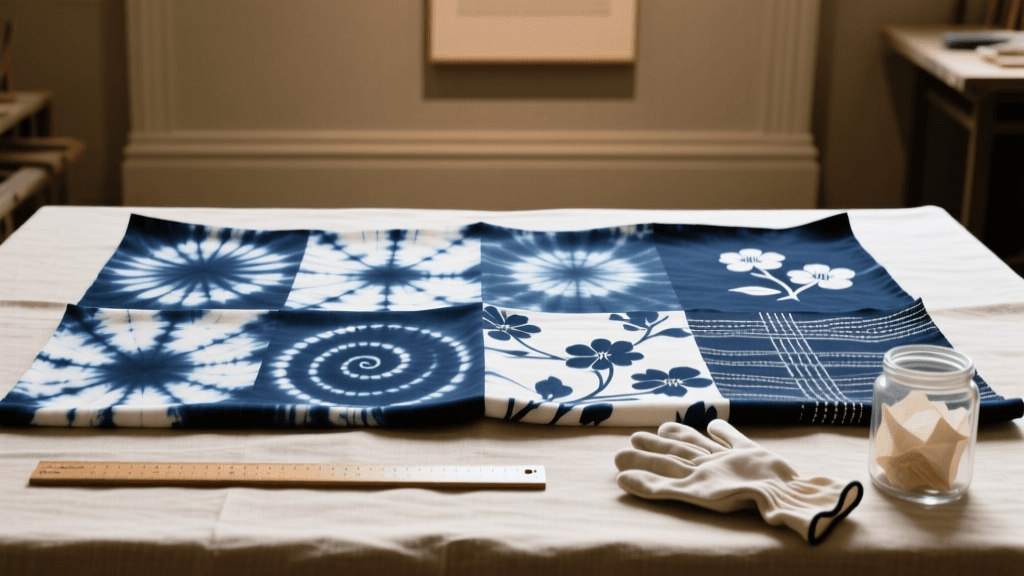
Often mistakenly referred to in the West simply as 'tie-dye,' Shibori is a highly complex family of resist-dyeing techniques that involves shaping, folding, twisting, or compressing cloth before dyeing it in indigo or other natural vats. According to the Metropolitan Museum of Art's Heilbrunn Timeline of Art History, Shibori techniques flourished during the Edo period as a way for commoners to wear patterned clothing in defiance of strict sumptuary laws. Key variations include Kanoko (intricate, fawn-spot binding), Arashi (pole-wrapping that creates diagonal rain-like patterns), and Itajime (shape-resist using carved wooden blocks). True Shibori is highly tactile; the physical manipulation of the fabric leaves a permanent, three-dimensional puckering or texture on the silk.
Yuzen (Paste Resist Dyeing)
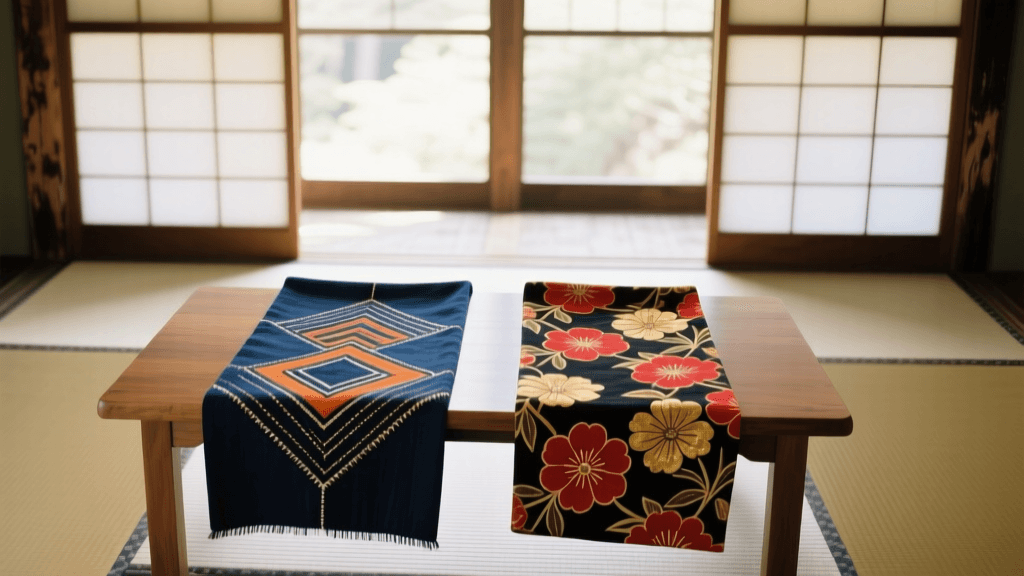
Yuzen is a meticulous, multi-step paste-resist dyeing technique that allows for incredibly detailed, painterly designs. Originating in the late 17th century, it involves drawing a design on the fabric, applying a thick rice-paste resist (itome-nori) along the outlines, and then hand-painting the enclosed areas with vibrant dyes. There are two primary styles: Kyo-Yuzen (from Kyoto), known for its opulent use of gold leaf, embroidery, and expansive, flowing motifs; and Kaga-Yuzen (from Kanazawa), characterized by its realistic, nature-inspired botanical motifs and signature 'mushikui' (insect-eaten leaf) details. Yuzen creates a flat, smooth surface, and the Japan National Tourism Organization (JNTO) notes that it remains the premier technique for formal, high-end ceremonial kimonos today.
Kasuri (Ikat Weaving)
Unlike Shibori and Yuzen, which are applied to woven cloth, Kasuri is a pattern-weaving technique (known globally as Ikat). The threads are tightly bound and resist-dyed before they are woven together. When the dyed warp (vertical) and weft (horizontal) threads intersect on the loom, they create patterns with a distinct, slightly blurred or 'splash' edge. Kurume Kasuri (cotton) and Oshima Tsumugi (silk) are among the most famous regional variants. Authentic Kasuri requires immense mathematical precision; a single miscalculation in the thread binding will result in a misaligned pattern across the entire bolt of fabric.
Technique Comparison Chart
| Technique | Primary Method | Visual Hallmark | Tactile Feel | Typical Base Fabric |
|---|---|---|---|---|
| Shibori | Physical binding/folding resist | Organic, geometric, or spiderweb patterns with soft, bleeding edges | Textured, puckered, 3D surface | Silk (crepe/chirimen), Cotton, Hemp |
| Yuzen | Rice-paste outline resist & hand-painting | Crisp, painterly, highly detailed motifs with white outline borders | Smooth, flat surface (unless embroidered) | Silk (rinzu/satin, chirimen/crepe) |
| Kasuri | Pre-dyed warp/weft thread weaving (Ikat) | Geometric or pictorial motifs with signature blurred, 'splash' edges | Smooth, flat weave with slight slub texture | Cotton, Silk, Ramie |
Authenticating Vintage Pieces: A Collector’s Checklist
When evaluating a vintage kimono or haori jacket at an estate sale, antique market, or online auction, rely on physical evidence rather than seller descriptions. Use this actionable checklist to verify authenticity:
- The Reverse-Side Test: Turn the garment inside out or inspect the hem facing. In authentic Shibori and Kasuri, the dye penetrates the fibers completely, meaning the pattern will be visible (though sometimes slightly muted) on the reverse side. Machine-printed imitations will have a stark white reverse side.
- Examine the Outlines (Yuzen): Use a jeweler's loupe to inspect the borders of the motifs. Hand-applied Yuzen rice paste leaves a slightly raised, textured white line. If the white line is perfectly uniform, flat, and shows a halftone dot pattern under magnification, it is a modern digital or screen print.
- Check the Seams and Basting: Traditional kimonos are constructed using a single, standardized straight-seam method (wasai) and feature visible, hand-stitched basting threads along the outer edges to protect the silk during storage and cleaning. Machine-serged seams or zig-zag stitching indicate modern, mass-produced tourist garments or stage costumes.
- Feel the Texture: Run your fingers lightly over Shibori. Authentic hand-tied Kanoko Shibori will feel bumpy and uneven, and the fabric will have a natural stretch due to the gathered threads. Printed 'shibori-look' fabrics will be entirely flat.
Preservation and Storage: Actionable Guidelines
Silk is a protein fiber, making it highly susceptible to light damage, moisture-induced mold, and acid degradation. Cotton Kasuri is more robust but still vulnerable to pests and acidic environments. The Victoria and Albert Museum (V&A) emphasizes that improper storage is the leading cause of deterioration in historical textiles. Follow these precise conservation standards to protect your collection.
Environmental Controls
Textiles should be stored in a dark, climate-controlled environment. Aim for a stable temperature between 65°F and 70°F (18°C–21°C) and a relative humidity (RH) level strictly between 45% and 55%. Fluctuations in humidity cause silk fibers to expand and contract, leading to structural fatigue. Use a digital hygrometer in your storage room and employ a dehumidifier or humidifier as needed. Never store textiles in attics, basements, or exterior-facing closets.
Archival Storage Materials and Dimensions
Never store a vintage kimono in standard cardboard boxes, plastic dry-cleaning bags, or cedar chests (the acidic oils in cedar can stain and degrade silk). Instead, invest in museum-grade materials:
- Tissue Paper: Use only unbuffered, acid-free, lignin-free tissue paper (such as Lineco or University Products brands). Buffered tissue (which contains an alkaline reserve) is safe for cotton Kasuri but can damage protein-based silk fibers over time.
- Storage Boxes: Purchase archival textile boxes made from acid-free corrugated board. For a standard folded kimono, a box measuring at least 33 x 18 x 6 inches is ideal. This prevents the garment from being compressed, which can snap the silk fibers along the fold lines.
- Pest Deterrents: Avoid chemical mothballs (naphthalene or paradichlorobenzene), which are toxic and can melt synthetic linings or react with natural dyes. Instead, use Desi-Pak silica gel desiccants to control localized moisture, and natural cedar blocks wrapped in acid-free tissue (so the wood never touches the garment) to deter silverfish and moths.
The Six-Month Refolding Rule
Permanent creases are the enemy of vintage silk. The dyes and metallic threads (such as gold surihaku in Yuzen) can crack and flake off if folded in the exact same position for years. You must refold your kimono every six months. When refolding, slightly offset the traditional fold lines by an inch or two to distribute the stress across different areas of the warp and weft threads. Always pad the folds with rolled 'snakes' of acid-free tissue paper to create soft, rounded curves rather than sharp, hard creases.
Professional Cleaning Costs and Considerations
Do not attempt to wash a vintage silk Shibori or Yuzen kimono at home; water will cause the dyes to bleed and the silk to shrink catastrophically. For heavily soiled or vintage pieces, seek out a specialist who performs Arai-hari. This traditional Japanese service involves carefully removing all the basting threads, taking the kimono apart into its original flat fabric bolts, washing and re-stretching the silk on wooden frames (shinshi), and then hand-sewing it back together. Expect to pay between $200 and $450 for a full Arai-hari restoration, and allow 3 to 6 months for the process. For minor spot cleaning on cotton Kasuri or modern Yuzen, a specialized textile dry cleaner will charge between $80 and $150, but always ensure they have specific experience with Japanese metallic threads and natural indigo dyes.
Conclusion
Collecting and preserving Shibori, Yuzen, and Kasuri garments is a deeply rewarding pursuit that connects you to centuries of Japanese artisanal mastery. By training your eye to recognize the tactile and visual hallmarks of authentic resist-dyeing and pattern weaving, you can build a collection of genuine historical significance. More importantly, by adhering to strict, museum-standard storage protocols and utilizing traditional conservation methods like Arai-hari, you ensure that these masterpieces of thread and dye remain vibrant, intact, and beautiful for generations to come.