Chinese Plant Dyes: Eco-Friendly Hanfu Dyeing Guide 2026
The Renaissance of Chinese Botanical Dyes in 2026
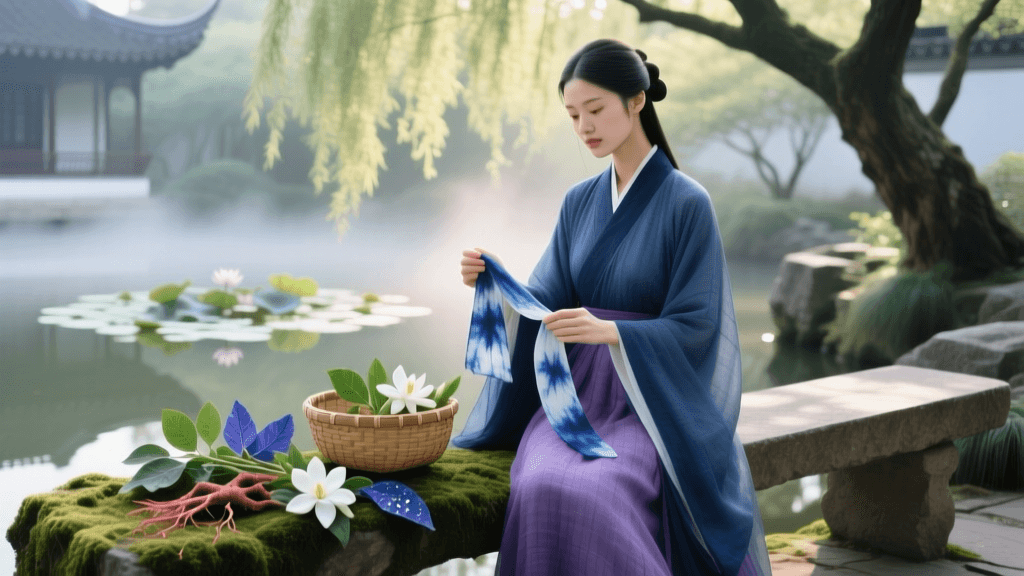
As the global fashion industry confronts its environmental footprint in 2026, a profound shift is occurring within the realm of traditional Asian garments. The revival of Cao Mu Ran (草木染), the ancient Chinese art of plant-based dyeing, has moved from a niche historical curiosity to a cornerstone of sustainable Hanfu and contemporary eco-fashion. Synthetic azo dyes, which have dominated the textile industry for over a century, are increasingly being rejected by eco-conscious consumers due to their reliance on petrochemicals and their contribution to severe water pollution. Today, artisans and modern sustainable brands are turning back to the earth, utilizing indigenous Chinese flora to create vibrant, biodegradable, and culturally resonant textiles.
According to the Ellen MacArthur Foundation's circular fashion principles, transitioning to regenerative and non-toxic dyeing methods is critical for achieving a truly circular textile economy. By leveraging traditional Chinese botanical knowledge, modern dyers are not only preserving intangible cultural heritage but also pioneering closed-loop, zero-waste dyeing systems that align perfectly with 2026 sustainability mandates.
The Core Philosophy of Cao Mu Ran
Unlike modern synthetic dyeing, which forces uniform, static colors onto fabrics regardless of the season, Cao Mu Ran is deeply rooted in the Chinese philosophical concept of harmony between humanity and nature (Tian Ren He Yi). The colors extracted from plants are living, breathing entities that shift subtly with the pH of the water, the mineral content of the soil, and the time of harvest. In 2026, this inherent variability is no longer viewed as a flaw, but as a hallmark of authenticity and artisanal luxury in the Hanfu market.
Furthermore, the traditional process is inherently zero-waste. The spent plant matter is composted and returned to the soil, while the wastewater, free of heavy metals and toxic fixatives, can be safely used to irrigate gardens. This holistic approach stands in stark contrast to the synthetic dyeing industry, which the Textile Exchange's 2026 sustainability standards identifies as one of the leading contributors to global freshwater toxicity.
Essential Chinese Dye Plants for Sustainable Textiles
To master eco-friendly Hanfu dyeing, one must understand the unique botanical and chemical properties of traditional Chinese dye plants. Below are the four most prominent species utilized by master dyers today.
1. Indigo (Lan Cao - 蓝草)
Historically derived from Polygonum tinctorium (Chinese indigo) and Strobilanthes cusia (Assam indigo), indigo remains the undisputed king of natural dyes. Unlike other plant dyes that require a mordant to bind to the fiber, indigo is a vat dye. It is insoluble in water and must be chemically reduced to its leuco (white/yellow-green) form to penetrate the fiber. Once the fabric is removed from the vat and exposed to oxygen, it oxidizes back into its insoluble, brilliant blue state. In 2026, eco-friendly fructose and lime vats have completely replaced the toxic sodium hydrosulfite reduction methods of the past, making indigo dyeing safe for home studios and commercial ateliers alike.
2. Madder (Qian Cao - 茜草)
Rubia cordifolia, known as Chinese madder, is the premier source of natural reds, ranging from soft terracotta to deep crimson. The primary colorant, alizarin, is highly sensitive to temperature and water chemistry. To achieve a true, vibrant red rather than a muddy brown, dyers must carefully control the extraction temperature (keeping it below 70°C) and often add calcium carbonate (chalk) to the dye bath. Madder requires a mordant, typically aluminum potassium sulfate (alum), to bond effectively with cellulose fibers like cotton and hemp, though it binds beautifully to silk with minimal preparation.
3. Gardenia (Zhi Zi - 栀子)
The fruit of the Gardenia jasminoides plant yields a stunning, luminous yellow due to the presence of the carotenoid crocin. Gardenia is a direct dye, meaning it requires no mordant to bind to protein fibers like silk and wool, making it incredibly accessible for beginners. However, its lightfastness is relatively low. In 2026, textile conservators and Hanfu makers often blend gardenia with a small amount of pagoda tree extract or use specialized UV-blocking natural finishing oils to enhance its longevity when used for outer garments.
4. Pagoda Tree (Huai Hua - 槐花)
The unopened flower buds of the Sophora japonica (Japanese pagoda tree) are rich in rutin, a flavonoid that produces brilliant, fast yellow-greens when mordanted with alum. Historically, this color was highly prized and often reserved for imperial and scholarly garments. The buds must be harvested just before they bloom to ensure the highest concentration of pigment. When mordanted with iron, the color shifts dramatically to a deep, somber olive-drab, showcasing the versatility of traditional botanical chemistry.
Comparative Guide: Chinese Dye Plants & Mordants
Understanding the technical specifications of each plant is crucial for achieving consistent, high-quality results in your 2026 dyeing projects. Refer to the table below for a quick comparison of the most popular Chinese dye plants.
| Common Name | Botanical Name | Primary Color Yield | Recommended Mordant | Lightfastness (1-5) |
|---|---|---|---|---|
| Chinese Indigo | Polygonum tinctorium | Deep Blue / Navy | None (Vat Dye) | 5 |
| Chinese Madder | Rubia cordifolia | Crimson / Terracotta | Alum + Chalk | 4 |
| Gardenia Fruit | Gardenia jasminoides | Luminous Yellow | None (Direct Dye) | 2 |
| Pagoda Tree Buds | Sophora japonica | Yellow-Green / Olive | Alum or Iron | 4 |
| Acorn Cups (Oak) | Quercus spp. | Warm Grey / Black | Iron (Tannin rich) | 5 |
Step-by-Step Eco-Friendly Dyeing Protocol for 2026
Whether you are dyeing raw silk for a Ming-style Mamianqun (horse-face skirt) or organic hemp for a modern Song-style tunic, following a precise, eco-conscious protocol ensures color longevity and fiber integrity.
Step 1: Scouring the Fiber
Natural fibers contain waxes, pectins, and oils that repel water and dye. In the past, harsh synthetic detergents were used for scouring. Today, the 2026 standard utilizes bio-enzyme scouring agents or traditional soap nuts (Sapindus mukorossi). Simmer your fabric in a pH-neutral soap nut bath for 45 minutes, rinse thoroughly, and keep the fabric damp. Never let the fabric dry out before dyeing, as this causes uneven absorption.
Step 2: Mordanting (For Cellulose Fibers)
While silk and wool (protein fibers) readily absorb most natural dyes, cotton, linen, and hemp (cellulose fibers) require a mordant. The most eco-friendly and historically accurate method is the tannin-alum process. First, soak the fabric in a bath of gallnut extract (rich in tannins) for 12 hours. Rinse, then submerge in an 8% alum solution (Weight of Fabric) heated to 50°C for one hour. This creates a molecular bridge between the plant pigment and the cellulose fiber.
Step 3: Extraction and Dyeing
Place your dried dye material (e.g., crushed madder root or gardenia fruits) in a stainless steel or enamel pot. Cover with filtered water and slowly bring to a gentle simmer. Crucial Tip: Never boil madder or gardenia, as high temperatures extract brown tannins that dull the final color. Maintain a temperature of 60°C to 70°C for one hour. Strain the liquid through a fine mesh sieve, add your damp, mordanted fabric, and gently agitate for 45 minutes. Allow the fabric to cool in the bath overnight for maximum color saturation.
Sourcing, Cost, and Sustainability Metrics
As demand for authentic, naturally dyed Hanfu surges in 2026, the supply chain for raw botanical materials has matured. Artisanal dye extracts and dried botanicals are now readily available through certified organic agricultural cooperatives in provinces like Yunnan, Guizhou, and Zhejiang.
From a cost perspective, natural dyeing remains a premium process. In 2026, the cost to professionally natural-dye one yard of heavy silk brocade ranges from $18 to $35 USD, compared to just $3 to $5 for synthetic dyeing. However, this premium reflects the living wage paid to botanical farmers, the extensive labor involved, and the vastly superior environmental profile of the garment.
The environmental metrics are staggering. According to UNEP's resource efficiency guidelines, conventional synthetic dyeing can consume up to 150 liters of water per kilogram of fabric, much of which is discharged as toxic effluent. In contrast, modern closed-loop Cao Mu Ran studios utilize rainwater harvesting and recycle their dye baths up to three times, reducing water consumption to under 20 liters per kilogram. Furthermore, because the dyes are 100% biodegradable, the end-of-life impact of a naturally dyed Hanfu is virtually zero; it can be safely composted, returning its nutrients to the earth.
Conclusion
The resurgence of Chinese natural dye plants is more than a passing trend; it is a vital reclamation of ecological wisdom and cultural identity. By embracing indigo, madder, gardenia, and pagoda tree, modern makers and consumers are ensuring that the vibrant legacy of Asian traditional garments continues to flourish in 2026 and beyond, without compromising the health of our planet.