Kimono vs Hanbok vs Cheongsam: 2026 Silhouette & Styling Guide
The Renaissance of East Asian Formalwear in 2026
As global fashion continues to embrace cultural heritage and artisanal craftsmanship, traditional East Asian garments have experienced a profound renaissance. In 2026, the kimono, hanbok, and cheongsam are no longer relegated solely to historical reenactments or strictly traditional ceremonies. Instead, they are being reimagined through the lens of modern bespoke tailoring, sustainable textiles, and contemporary formalwear styling. For the modern wearer, choosing between these three iconic garments requires an understanding of their distinct architectural silhouettes, movement dynamics, and the latest innovations in textile technology. Whether you are attending a high-society gala, a traditional wedding, or a diplomatic banquet, understanding the structural nuances of these garments is essential for making an informed, elegant choice.
This comprehensive guide breaks down the defining characteristics of Japan’s kimono, Korea’s hanbok, and China’s cheongsam, offering a detailed comparison of their construction, 2026 fabric trends, and modern styling techniques.
The Kimono: Linear Elegance and T-Shaped Construction
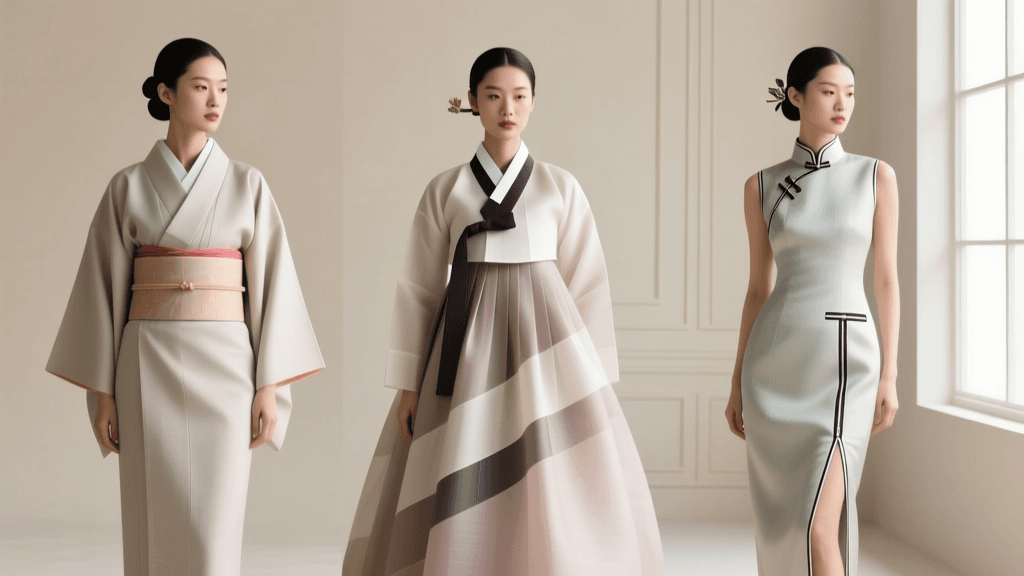
The Japanese kimono is fundamentally defined by its linear, T-shaped construction. Unlike Western garments that are cut and darted to follow the curves of the body, the kimono is constructed from straight bolts of fabric, typically measuring around 36 centimeters in width. This results in a garment that wraps the body in a cylindrical, columnar silhouette, deliberately obscuring the natural waistline and hips to create an elegant, unbroken vertical line.
Structural Elements and Fastening
The kimono relies entirely on the obi (a wide, stiff sash) for fastening and structural support. The art of kitsuke (kimono dressing) involves a complex layering of undergarments, including the juban (under-kimono) and various padding pieces used to smooth the body into a perfect cylinder. In 2026, the traditional labor-intensive tying methods have been supplemented by innovative, discreet magnetic fasteners and pre-structured obi belts, making the garment far more accessible for international formalwear clients without sacrificing the authentic exterior aesthetic.
2026 Fabric Trends and Styling
While heavy brocades and hand-painted Yuzen silk remain highly prized for weddings, the 2026 formalwear market has seen a massive surge in sustainable peace silk and lightweight, breathable linen-silk blends for summer galas. According to Britannica’s extensive archive on the Kimono, the garment's evolution has always been tied to textile innovation. Today, modern stylists are pairing vintage, heavily embroidered Meiji-era obi with minimalist, solid-color silk crepe kimono bodies, creating a striking contrast that appeals to contemporary minimalist sensibilities. Furthermore, wearing a sheer, organza haori (jacket) over a Western-style silk slip dress has become a highly sought-after fusion look on the 2026 red carpet circuit.
The Hanbok: Volumetric Grace and High-Waisted Flow
The Korean hanbok is celebrated for its volumetric grace, characterized by a high waistline and sweeping, bell-like skirts. The traditional women’s formal hanbok consists of the jeogori (a short, fitted jacket) and the chima (a full, wrap-around skirt). The men’s equivalent pairs the jeogori with baji (roomy, tied trousers). The defining visual hallmark of the hanbok is the stark contrast between the fitted, cropped upper body and the expansive, flowing lower half.
Structural Elements and Fastening
Unlike the kimono, the hanbok does not require a sash to hold the skirt up; the chima is tied high above the bust, just below the collarbone. The jeogori is secured by the goreum, long, elegant ribbons that cascade down the front. A critical structural detail is the dongjeong, a crisp, white detachable collar that frames the face and provides a sharp, clean line against the often vibrantly colored silk of the jeogori. In 2026, bespoke tailors are utilizing lightweight, structured crinoline and flexible memory-wire hems to maintain the iconic bell shape of the chima without the heavy, restrictive layering required in previous decades.
2026 Fabric Trends and Styling
Historically, the colors of the hanbok were dictated by strict sumptuary laws and natural dyes. As noted in historical records of the Hanbok, the vibrant hues held deep symbolic meaning. In 2026, the 'Formal Fusion Hanbok' trend dominates the luxury sector. Designers are utilizing architectural silk organza, metallic-threaded jacquards, and even lab-grown spider silk blends to create chimas that hold their volumetric shape while weighing a fraction of traditional silks. Modern styling often involves a slightly elongated jeogori to provide more torso coverage for conservative formal events, paired with contemporary pearl-embellished goreum ties.
The Cheongsam: Form-Fitting Architecture and Mandarin Collars
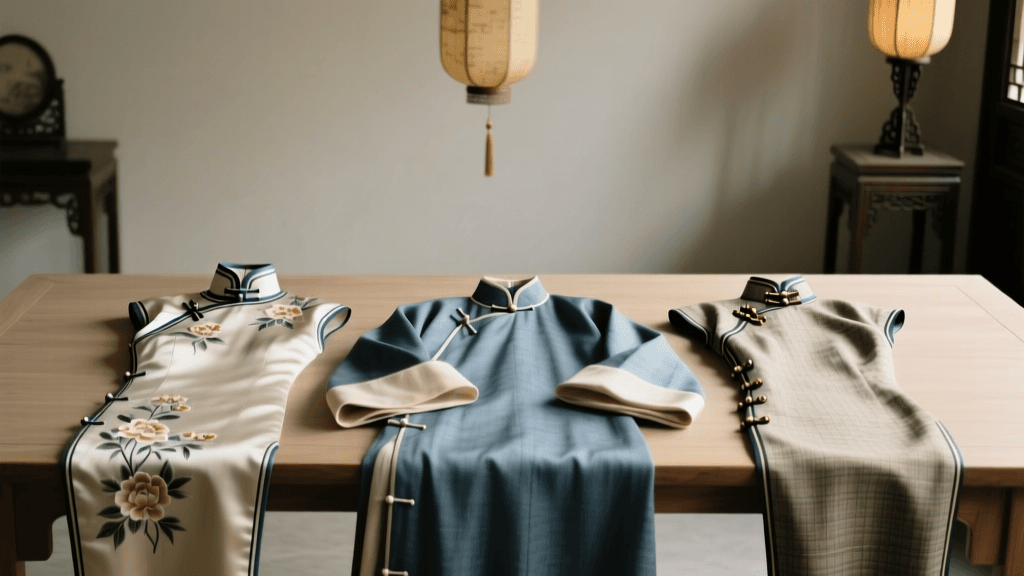
The Chinese cheongsam (also widely known as the qipao) stands in stark contrast to both the kimono and the hanbok. It is a masterclass in form-fitting architecture, designed to celebrate and accentuate the natural curves of the body. Originating as a loose, boxy garment in the 1920s, it evolved into the highly tailored, darted silhouette that is recognized globally today. The cheongsam is defined by its high Mandarin collar, asymmetrical front openings, intricate pankou (frog fasteners), and daring side slits.
Structural Elements and Fastening
The construction of a bespoke cheongsam is incredibly complex, requiring precise darting at the bust, waist, and hips to achieve a seamless, glove-like fit. The side slits are not merely decorative; they are structural necessities that allow for walking and sitting in a garment that features a narrow, tapered hem. The pankou knots, traditionally made from the same fabric as the dress, serve as both functional fasteners and elaborate decorative elements. In 2026, 3D body scanning technology has revolutionized bespoke cheongsam tailoring, allowing artisans to map the wearer's exact proportions and create internal corsetry that provides support without the need for restrictive external undergarments.
2026 Fabric Trends and Styling
The luxury cheongsam market in 2026 is heavily focused on textile manipulation. While traditional heavy brocades are still used for winter weddings, spring and summer formalwear favors sheer silk organza overlays, laser-cut lace, and sustainable cupro-silk blends that offer a beautiful drape and high breathability. Artisans are also experimenting with 3D-printed resin and metallic wire to create avant-garde pankou knots that resemble intricate jewelry. The Victoria and Albert Museum's Asian collections frequently highlight the intersection of traditional Chinese dress and modern design, a dialogue that is more vibrant than ever in contemporary 2026 fashion. Modern styling often features asymmetrical hemlines or cape-like overlays, transforming the classic cheongsam into a dramatic, red-carpet-ready gown.
Comparative Analysis: Silhouette, Movement, and Tailoring
To truly understand how these garments perform in a modern formal setting, it is crucial to compare their structural dynamics. The following table outlines the key differences across several vital categories for the 2026 formalwear season.
| Feature | Kimono (Japan) | Hanbok (Korea) | Cheongsam (China) |
|---|---|---|---|
| Primary Silhouette | Linear, cylindrical, columnar | Volumetric, high-waisted, bell-shaped | Form-fitting, tailored, curve-accentuating |
| Fastening System | Obi (wide sash), obijime, obiage | Goreum (ribbon ties), hidden skirt ties | Pankou (frog knots), hidden zippers |
| 2026 Fabric Trends | Sustainable peace silk, linen-silk blends | Architectural organza, metallic jacquard | Laser-cut lace, cupro-silk, 3D overlays |
| Movement & Drape | Restrictive, requires gliding steps | Highly fluid, expansive lower-body movement | Moderate, constrained by tapered hem and slits |
| Tailoring Complexity | Low cutting complexity, high dressing complexity | Moderate cutting, focus on volume structuring | Extremely high cutting complexity (precision darting) |
Sourcing and Bespoke Tailoring in 2026
Acquiring a high-quality, authentic garment requires navigating the specialized world of East Asian bespoke tailoring. For the kimono, the epicenter of luxury remains Kyoto’s Nishijin district, where master weavers produce the intricate brocades used in high-end obi. However, in 2026, several digital-first bespoke platforms have emerged, allowing international clients to submit precise measurements and select from archived vintage silk bolts, which are then tailored and shipped globally.
For the hanbok, Seoul’s Bukchon Hanok Village remains the premier destination for master artisans who specialize in traditional natural dyeing techniques, such as gal-ot (persimmon dyeing). Modern luxury boutiques in the Gangnam district are currently leading the charge in 'fusion formal' hanbok, offering custom color-matching services that integrate the garment seamlessly with the wearer's personal brand or wedding palette.
The cheongsam requires the most rigorous fitting process. While Shanghai’s historic tailoring districts remain legendary, the 2026 standard for luxury cheongsam involves at least three in-person fittings to perfect the internal corsetry and darting. For those unable to travel, elite tailors now utilize AI-driven photogrammetry apps that generate highly accurate 3D body models from a series of smartphone photographs, ensuring a flawless fit for international clients.
Conclusion: Choosing Your Garment
Selecting between the kimono, hanbok, and cheongsam ultimately depends on the wearer’s desired silhouette, comfort with movement restrictions, and the specific nature of the formal event. The kimono offers unparalleled linear elegance and a sense of grounded, historic gravitas, though it requires a mastery of movement. The hanbok provides a romantic, sweeping volume that is incredibly comfortable and forgiving, making it ideal for dynamic, celebratory environments. The cheongsam delivers a sleek, sophisticated, and undeniably glamorous profile that excels in high-fashion and formal evening settings. By understanding the unique architectural heritage and the cutting-edge 2026 innovations of each garment, you can confidently select the traditional East Asian attire that best reflects your personal style and the occasion at hand.