Inclusive Kimono Guide: Styling for Every Body and Gender
The Myth of 'One Size Fits All' in Traditional Japanese Dress
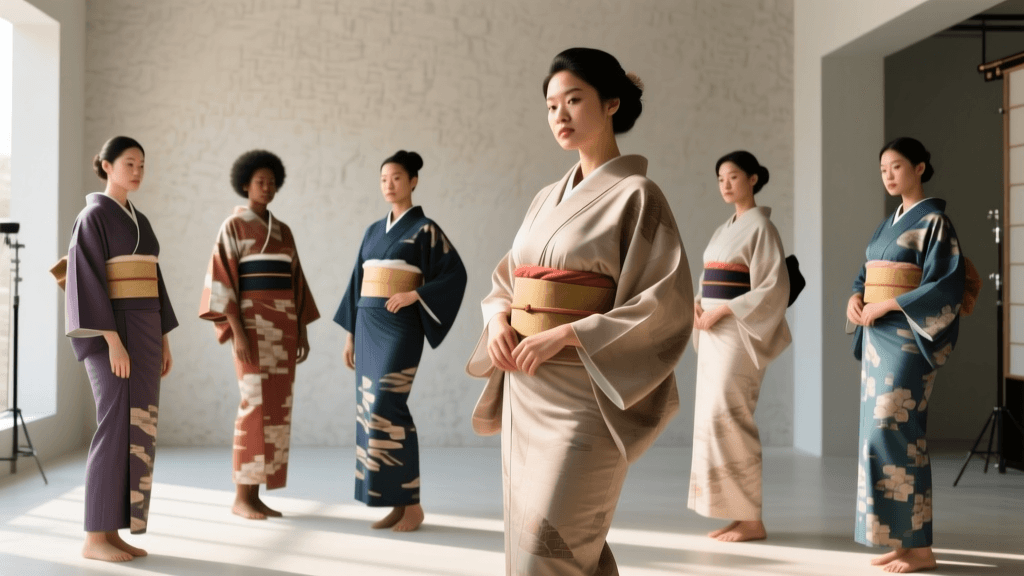
When most people envision the traditional Japanese kimono, they picture a rigid, standardized garment with strict rules for wearing. However, the reality of kitsuke (the art of dressing) is far more fluid. Historically, the kimono was constructed from straight bolts of fabric, designed not to cling to the body's natural curves but to create an entirely new, architectural silhouette. This foundational design makes the kimono inherently adaptable. Yet, as modern wearers seek to embrace this iconic garment, questions of body positivity, size inclusivity, and gender expression naturally arise.
Whether you are a plus-size traveler planning a rental experience in Kyoto, a tall individual struggling with hemlines, or a non-binary fashion enthusiast exploring the jendaresu (genderless) movement, the kimono can be styled to honor your unique identity. According to curatorial experts at the Victoria and Albert Museum, the kimono's beauty lies in its interaction with the body, creating a canvas for self-expression that transcends physical limitations.
Styling for Diverse Body Types
The secret to adapting the kimono for different body types lies in understanding three key measurements: yuki (sleeve length from the center back of the neck to the wrist), mitake (the back length from the base of the neck to the hem), and haba (the width of the fabric panels). Here is how to navigate these elements for various body types.
Petite Frames
For petite wearers, the primary challenge is excess fabric, particularly in the sleeves and the torso. In traditional women's styling, the ohashori (the waist tuck) is mandatory and serves as a built-in adjustment mechanism. A skilled dresser will fold the excess fabric deeper at the waist to raise the hem to the perfect ankle-grazing length. To avoid being overwhelmed by the garment, petite individuals should opt for smaller, localized motifs rather than large, sweeping patterns, and choose a narrower obi (sash) to maintain proportional balance.
Tall Frames
Tall individuals often face the issue of the kimono riding too high, exposing the calves or ankles. While traditionalists insist the hem must touch the ankle bone, modern inclusive styling allows for a slightly higher hem, akin to a midi-skirt, especially when paired with opaque tabi socks or modern footwear. If the yuki (sleeve length) is too short, it is acceptable in casual settings for the wrists to show. For formal wear, tall individuals may need to seek out custom-tailored garments or vintage kimonos from the mid-20th century, which were sometimes cut longer to accommodate Western-influenced diets and height increases.
Plus-Size and Curvy Figures
The kimono's straight-line construction is incredibly flattering for plus-size and curvy bodies, as it does not restrict the waist or bust. The goal of kitsuke for curvy figures is often to create a smooth, cylindrical base layer. Dressers use himō (tying cords) and strategic padding around the waist and hips to smooth out the silhouette, ensuring the obi sits flat and secure. Darker base colors with vertical geometric patterns or subtle gradients can elongate the frame. It is crucial to ensure the haba (width) of the front panels overlaps sufficiently at the chest and hips to prevent the garment from pulling open during movement.
Breaking the Binary: Gender-Inclusive Kimono Fashion
The strict division between 'men's' and 'women's' kimonos is a relatively modern construct. As noted by The Metropolitan Museum of Art, prior to the Meiji Restoration (1868–1912), the basic kosode (small-sleeved robe) was largely unisex, with gender indicated more by color, pattern, and social class than by structural tailoring. It was only during the Meiji era, as Japan rapidly Westernized, that men's clothing became standardized into dark, subdued montsuki and hakama, while women's clothing became more ornate and restrictive.
Today, the jendaresu (genderless) fashion movement in Japan is actively dismantling these historical binaries. Modern wearers are mixing masculine and feminine elements to create deeply personal, non-binary presentations.
- Masculine Elements: The haori (jacket) and hakama (pleated trousers) offer structured, broad-shouldered silhouettes. Men's obi are narrow and tied low on the hips, providing a grounded, utilitarian aesthetic.
- Feminine Elements: The furisode (long-sleeved kimono) features dramatic, flowing sleeves and vibrant, nature-inspired motifs. The obi is wide, heavily brocaded, and tied in elaborate bows at the back.
- Genderless Styling: A popular non-binary approach involves wearing a subdued, dark-colored kimono (traditionally masculine) but tying it with a vibrant, patterned obi (traditionally feminine). Another trend is pairing a feminine floral kimono with a masculine, structured haori and flat setta sandals, blending elegance with utilitarian edge.
'The kimono is not merely a garment; it is an architectural structure that interacts with the body. Its beauty lies not in clinging to the wearer's form, but in creating a new, intentional silhouette that can be molded to any identity.'
— Curatorial notes on Japanese dress, Victoria and Albert Museum
Comparison Chart: Traditional vs. Inclusive Styling Elements
To better understand how modern wearers are adapting the kimono, refer to the table below outlining traditional norms versus inclusive adaptations.
| Garment Element | Traditional Binary Norm | Inclusive / Modern Adaptation |
|---|---|---|
| Obi (Sash) | Women: Wide, ornate, tied in back. Men: Narrow, tied in front/low. | Gender-neutral styling: Men's obi worn higher, or women's obi tied in masculine knots for ease of movement. |
| Ohashori (Waist Tuck) | Mandatory for women, entirely absent for men. | Optional for tall women; used creatively to adjust length for petite wearers of any gender identity. |
| Eri (Collar) | Women: Pulled back to expose the nape. Men: Kept close to the neck. | Adjusted based on personal comfort, neck length, and desired presentation, regardless of gender. |
| Footwear | Women: Zori with tabi. Men: Setta or waraji. | Mixing styles; wearing masculine setta with feminine kimono for a grounded, genderless look. |
| Color Palette | Women: Pastels, brights, florals. Men: Navy, grey, black, subtle stripes. | Complete freedom; men and masculine-presenting individuals wearing florals, women wearing stark geometrics. |
Practical Guide: Renting and Buying Inclusive Kimonos
For tourists and enthusiasts, navigating the commercial side of kimono acquisition requires specific knowledge, especially if you fall outside standard Japanese sizing (which typically caters to heights between 150cm and 165cm, or 4'11' to 5'5').
Renting for Tourists
According to the Japan National Tourism Organization (JNTO), kimono rental is a booming cultural tourism activity in cities like Kyoto, Kanazawa, and Tokyo's Asakusa district. Standard rental packages cost between 3,000 and 8,000 JPY ($20 to $55 USD) and include dressing, hair styling, and a day-long rental.
Actionable Advice for Renters:
- Book in Advance for Plus-Size/Tall: Most standard rental shops stock limited inventory for heights over 175cm (5'9') or bust/waist measurements over 100cm (39 inches). Search specifically for 'plus-size kimono rental Kyoto' or 'tall kimono rental Asakusa' and book at least two weeks ahead.
- Undergarments Matter: Rental shops provide basic juban (under-kimono), but if you require specific chest binding or extra padding for your silhouette, bring your own comfortable, breathable base layers. A tight-fitting sports bra or a dedicated binder worn under the provided hadajuban (undershirt) works well for creating a flat canvas.
- Communicate Your Pronouns: While language barriers exist, many modern rental shops in tourist hubs are accustomed to international visitors. Use translation apps to specify if you prefer 'masculine styling' (dansei-fū) or 'feminine styling' (josei-fū), or point to reference photos of the exact genderless look you wish to achieve.
Buying and Custom Tailoring
If you are investing in a personal kimono, the secondary vintage market is your best friend. Vintage kimonos from the Taisho (1912–1926) and early Showa eras often feature incredible craftsmanship and can be found in Tokyo's Shimokitazawa or Kyoto's Tenjin-san flea markets for as little as 5,000 to 15,000 JPY ($35 to $100 USD). Because vintage pieces were hand-sewn, they can be carefully un-stitched, washed, and re-tailored to adjust the mitake and yuki to your exact measurements.
For brand-new, custom-tailored kimonos, expect to pay upwards of 100,000 JPY ($680+ USD). When ordering, focus on the yuki measurement first; a sleeve that is too short disrupts the visual line of the garment more noticeably than a hem that is slightly off.
Conclusion: The Kimono as a Living Canvas
The kimono is not a relic trapped in the past; it is a living, breathing garment that evolves alongside the people who wear it. By understanding the mechanics of kitsuke and embracing the historical fluidity of Japanese dress, wearers of all body types and gender identities can claim the kimono as their own. Whether you are folding an ohashori to accommodate a petite frame, or tying a masculine obi over a vibrant, floral silk robe, the most important rule of the kimono is the confidence and respect you bring to the garment. In the modern era, true tradition lies in inclusive self-expression.