Iconic Hanfu Styles Of Famous Chinese Historical Figures

The Sartorial Legacy of China's Historical Icons
Traditional Chinese clothing, collectively known as Hanfu, is far more than a mere collection of historical garments; it is a profound visual language that communicates philosophy, social hierarchy, and the cosmic order. Across millennia, specific historical figures have become intrinsically linked to distinct sartorial silhouettes, influencing fashion trends that echo into the modern Hanfu revival movement. By examining the wardrobes of China's most iconic historical figures, modern enthusiasts can accurately recreate these looks while adapting them for contemporary wear. This guide explores the defining garments of three pivotal eras—the Tang, Song, and Ming dynasties—providing actionable advice on sourcing, sizing, and styling these magnificent historical outfits.
Wu Zetian and the Tang Dynasty Qixiong Ruqun
Wu Zetian, the only female emperor in Chinese history, ruled during the Tang Dynasty (618–907 CE), a period renowned for its cosmopolitanism, immense wealth, and bold fashion statements. According to the Metropolitan Museum of Art, the Tang era was a golden age of international trade along the Silk Road, which heavily influenced textile patterns, introducing vibrant colors and exotic motifs to the Chinese court. The defining garment of this era, popularized by court ladies and empresses alike, is the Qixiong Ruqun (chest-high skirt).
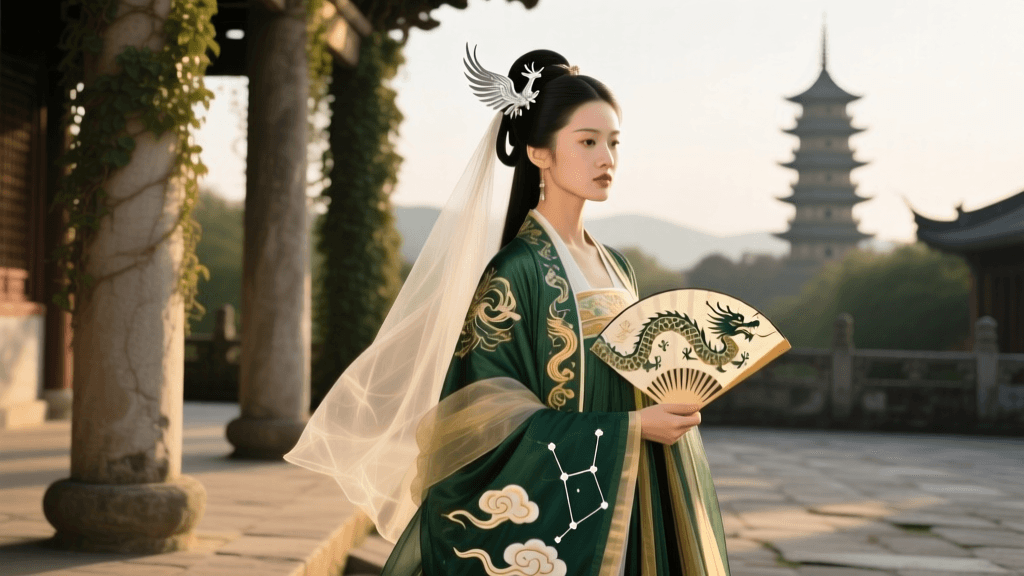
The Qixiong Ruqun features a high-waisted skirt tied securely above the bust, paired with a short-sleeved or wide-sleeved inner top (Shan) and often draped with a translucent shawl (Pibo). This silhouette elongates the lower body, creating a statuesque, flowing appearance that embodied the confidence and opulence of Tang women. The fabrics were often heavy silks, brocades, and vibrant gauzes, featuring large floral roundels and gold-leaf stamping.
Recreating the Tang Look: Actionable Advice
- Search Terms: Look for 'Tang Dynasty Qixiong Ruqun' or 'Tang Pibo Set' on specialized Hanfu retailers.
- Measurements: The critical measurement for the Qixiong skirt is your upper bust (above the breasts). Add 2-3 cm to this measurement to ensure the skirt stays secure without restricting breathing. The strap length should be adjustable, ideally around 120 cm per strap.
- Fabric & Cost: For an authentic drape, avoid stiff cottons. Opt for chiffon, jacquard silk, or silk-blend organza. Expect to pay between $45 and $85 USD for a high-quality, multi-piece set.
- Styling Tip: To prevent the chest-high skirt from slipping down—a common issue for modern wearers—cross the straps over your chest, tie a firm double knot at the side, and tuck the excess strap ends into the skirt's waistband.
Li Qingzhao and the Elegant Song Dynasty Beizi
Transitioning from the opulent Tang to the intellectually refined Song Dynasty (960–1279 CE), we look to Li Qingzhao, China's most celebrated female poet. The Song era marked a shift toward Neo-Confucian modesty, intellectualism, and understated elegance. The vibrant, wide-sleeved silhouettes of the Tang gave way to slender, narrow-sleeved garments with muted, natural color palettes inspired by landscape paintings and celadon ceramics.
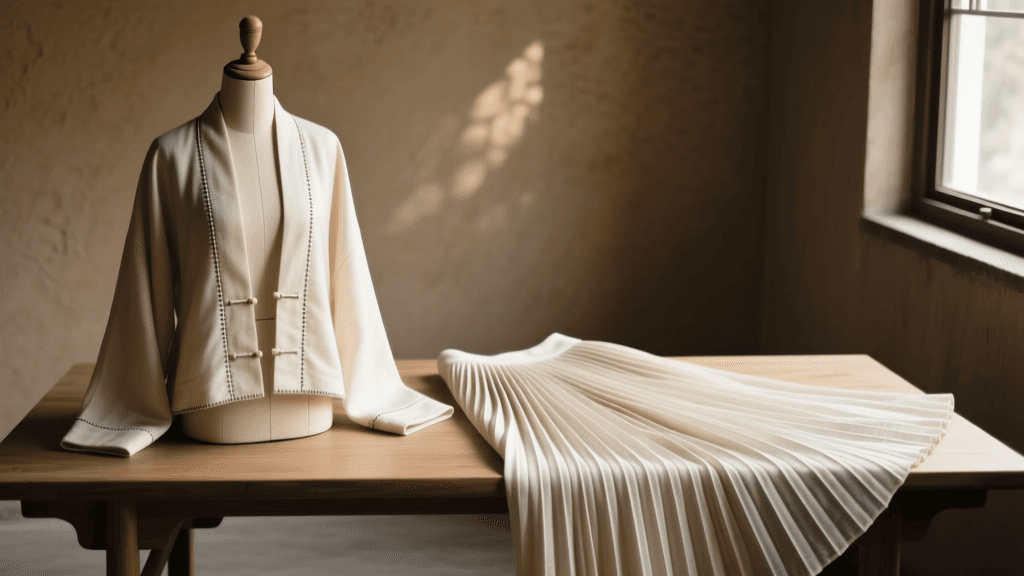
The iconic garment of the Song intellectual elite is the Beizi, a long, open-front jacket with narrow sleeves and side slits that reach the hip or thigh. It was typically worn over a slender inner top (Moxiong) and paired with a pleated skirt or narrow trousers (Songku). The Beizi's straight, vertical lines create a remarkably slimming and graceful silhouette, reflecting the Song dynasty's appreciation for restraint, poetry, and natural beauty.
Recreating the Song Look: Actionable Advice
- Search Terms: Search for 'Song Dynasty Beizi Set' or 'Song Style Hanfu Daily Wear'.
- Measurements: Because the Beizi is open-front and layered, shoulder width and sleeve length are paramount. The sleeve should end exactly at the wrist bone. For the accompanying skirt or trousers, measure your natural waist and inseam.
- Fabric & Cost: The Song aesthetic relies on texture rather than flashy patterns. Seek out raw silk, linen, or lightweight textured cotton in colors like celadon green, pale lotus pink, or ink blue. A complete Beizi set typically costs between $35 and $65 USD.
- Styling Tip: The Beizi is highly versatile for modern climates. It can be worn unbuttoned over a simple camisole for a casual summer look, making it one of the most practical historical garments for everyday integration.
Ming Dynasty Noblewomen and the Structured Mamianqun
The Ming Dynasty (1368–1644 CE) restored Han Chinese rule and instituted strict sumptuary laws that dictated clothing based on social rank. As noted by the Metropolitan Museum of Art, Ming artisans achieved unprecedented technical mastery in silk weaving, particularly in complex brocades and satins. The quintessential outfit for Ming noblewomen and wealthy merchants' wives was the Aoqun, consisting of a structured, lined jacket (Ao) and the legendary Mamianqun (horse-face skirt).
The Mamianqun is a marvel of traditional Chinese textile engineering. It features flat, unpleated panels (the 'horse faces') at the front and back, with deep, overlapping pleats on the sides. This design allowed for ease of movement while maintaining a rigid, architectural front profile. The accompanying Ao jacket often featured a standing collar (Liling) and ornate metal buttons, offering a dignified, regal appearance that remains immensely popular in the modern Hanfu community, especially for winter wear and formal ceremonies.
Recreating the Ming Look: Actionable Advice
- Search Terms: Use 'Ming Dynasty Aoqun', 'Mamianqun Horse Face Skirt', or 'Liling Ao Jacket'.
- Measurements: The Mamianqun sits at the natural waist, not the hips. Measure your natural waist and add 2 cm for overlap. For the length, use the formula: Total Height (cm) - 40 cm. This ensures the skirt grazes the ankle perfectly without dragging on the ground or tripping the wearer.
- Fabric & Cost: The Mamianqun requires heavy, structured fabrics to hold the pleats. Woven jacquard polyester, wool blends, or heavy brocade are ideal. The Ao jacket should be lined. Budget between $60 and $130 USD for a premium winter-weight set.
- Styling Tip: Always use a skirt clip or traditional waist tie to secure the heavy Mamianqun. Pair the outfit with a cloud-shaped collar (Yunjian) for formal events to replicate the exact look of Ming court portraits.
Comparison Chart: Historical Eras and Modern Replicas
| Dynasty / Figure | Iconic Garment | Silhouette & Vibe | Ideal Modern Occasion | Avg. Cost (USD) |
|---|---|---|---|---|
| Tang / Wu Zetian | Qixiong Ruqun | High-waisted, flowing, opulent | Summer festivals, photography | $45 - $85 |
| Song / Li Qingzhao | Beizi Set | Slender, narrow-sleeved, refined | Daily wear, tea ceremonies | $35 - $65 |
| Ming / Noblewomen | Aoqun & Mamianqun | Structured, pleated, regal | Winter events, formal weddings | $60 - $130 |
Practical Guide to Sourcing, Sizing, and Styling
Transitioning from historical appreciation to practical acquisition requires an understanding of the modern Hanfu market, which is heavily centered around Chinese e-commerce platforms and specialized boutique brands. Whether you are sourcing from global retailers or ordering directly from overseas, precision in your approach will ensure historical accuracy and wearable comfort.
Precise Measurement Techniques
Hanfu sizing differs significantly from modern Western fast fashion. Traditional garments rarely rely on standard S/M/L charts. Instead, they utilize precise centimeter-based measurements. Always keep a soft measuring tape on hand. When measuring your bust for a Tang Qixiong, measure the circumference of your chest at its widest point, then measure your upper ribcage. For the Ming Ao jacket, the 'Jiankuan' (shoulder width) is critical; measure from the edge of one shoulder bone to the other across the back. If a garment features a standing collar (Liling), measure your neck circumference and add 1.5 cm to ensure the metal buttons do not chafe your skin.
Budgeting and Fabric Selection
The history of Chinese textiles is deeply intertwined with the evolution of the garments themselves. The Metropolitan Museum of Art's archive on Chinese Silk highlights how sericulture and weaving techniques dictated the drape and status of historical clothing. When budgeting for modern replicas, understand that fabric choice drives the price. Entry-level Hanfu ($20-$40) utilizes polyester chiffon and printed jacquards, which are durable and easy to wash but lack historical breathability. Mid-tier options ($50-$90) introduce synthetic silk blends and woven brocades that mimic the weight of historical textiles. For purists, authentic mulberry silk and hand-woven linen sets can exceed $150 USD, requiring dry cleaning and meticulous care.
Timing Your Purchase for Festivals
The modern Hanfu supply chain operates heavily on pre-sale models, particularly for intricate, embroidered Mamianqun or limited-edition seasonal collections. If you plan to wear your historical outfit for major cultural events like the Lunar New Year, the Mid-Autumn Festival, or the Qixi Festival, you must place your orders at least 45 to 60 days in advance. This window accounts for the boutique manufacturing period (often 15-30 days) and cross-border international shipping. Buying off-the-rack is possible for basic Song Beizi or simple Ruqun, but elaborate Ming court replicas require patience and forward planning.
Etiquette and Accessorizing the Historical Look
Wearing Hanfu is not merely about putting on clothes; it is about adopting a specific physical grace and cultural etiquette. Historical figures like Li Qingzhao and Wu Zetian carried themselves with deliberate posture, aided by the cut of their garments. When wearing a Mamianqun, practice walking with smaller, measured strides to allow the side pleats to fan out elegantly without tangling your legs. When wearing wide Tang sleeves (Daxiushan), learn the traditional greeting gestures: the 'Fist and Palm' salute (Zuoyi) or the elegant hand-clasping bow for women, keeping your elbows slightly raised to show off the sleeve drape.
Accessorizing completes the historical illusion. Avoid modern plastic hair clips. Invest in carved wooden hairpins, jade-imitation hair sticks (Zan), and silk ribbon ties. For footwear, traditional cloud-toe shoes (Yunxie) or embroidered cloth boots are essential; modern high heels or chunky sneakers will immediately break the historical silhouette. By respecting the structural integrity, fabric weight, and cultural etiquette of these iconic garments, you do more than wear a costume—you actively participate in the living preservation of Asia's most enduring sartorial traditions.