Chinese Hualou Drawloom Weaving Techniques Guide 2026
Introduction to the Hualou Drawloom and Yunjin Brocade
When discussing the pinnacle of Asian textile heritage, few achievements rival the complexity and breathtaking beauty of Chinese Yunjin (cloud brocade). Originating from Nanjing, this luxurious fabric was historically reserved for imperial dragon robes and high-court garments. At the heart of this magnificent textile is the Hualou drawloom, an ancient, massive wooden weaving apparatus that functions as a mechanical binary computer. In 2026, as the Xin Zhongshi (New Chinese Style) movement reaches new heights in global fashion, understanding the mechanics, preservation, and modern application of the Hualou drawloom is more relevant than ever for textile enthusiasts, historians, and avant-garde designers alike.
According to The Metropolitan Museum of Art's Heilbrunn Timeline of Art History, Chinese silk weaving technologies were centuries ahead of their European counterparts, with complex drawloom mechanisms allowing for intricate, multi-colored pattern repeats that defined the Silk Road's most coveted luxury exports. Today, the survival of these techniques relies on a delicate balance of museum preservation and high-end commercial adaptation.
The Mechanics of Ancient Chinese Drawloom Weaving
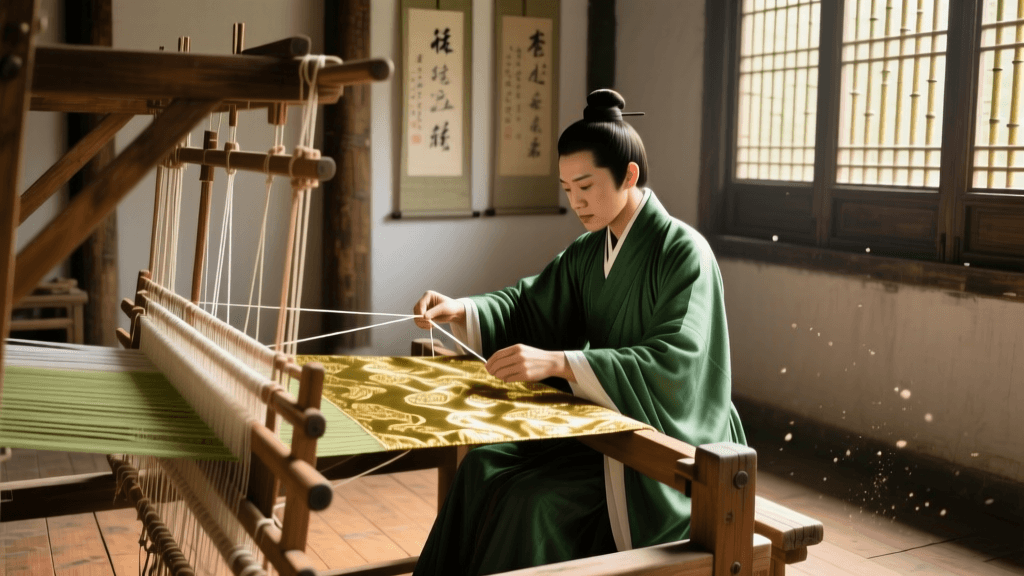
The Hualou drawloom is a towering structure, often measuring over four meters in height and spanning several meters in length. Unlike standard pedal looms operated by a single weaver, the Hualou requires a highly synchronized two-person team. The loom's defining feature is its complex harness system, which acts as a physical memory bank for the textile's pattern.
The 'Jieben' Pattern Harness System
Long before the invention of the Jacquard punch card in 19th-century France, Chinese weavers utilized the Jieben (pattern book or harness). This system consists of thousands of individual cords tied to specific warp threads. The arrangement of these cords dictates the pattern. When the cords are pulled, specific warp threads are raised, creating the 'shed' through which the weft thread is passed. This binary system of 'lift' or 'do not lift' is essentially an early form of programmable code, making the Hualou a marvel of ancient engineering.
The Two-Person Operation
- The Weaver (Zhihua Jiang): Sits at the base of the loom. They are responsible for passing the shuttle, beating the weft into place with the reed, and managing the tension of the warp threads. They also coordinate the rhythm with the drawboy.
- The Drawboy (Tiaohua Jiang): Sits atop the massive loom frame. Following the weaver's vocal or rhythmic cues, the drawboy pulls the specific pattern cords (the Jieben) to raise the correct warp threads for each pass of the shuttle. This requires immense physical stamina and flawless memorization of the pattern sequence.
Step-by-Step Weaving Process
Creating authentic Yunjin brocade on a Hualou loom is a painstakingly slow process. In 2026, master artisans at the Nanjing Yunjin Institute still adhere to the traditional methodologies that yield a mere five centimeters of fabric per day.
- Warping and Threading: Thousands of silk warp threads are measured, dyed, and threaded through the heddles and the reed. A single error in threading can ruin the symmetry of the final brocade.
- Pattern Tying (Tiaohua): The pattern harness is meticulously tied according to the design draft. A complex dragon motif may require tens of thousands of individual cord ties.
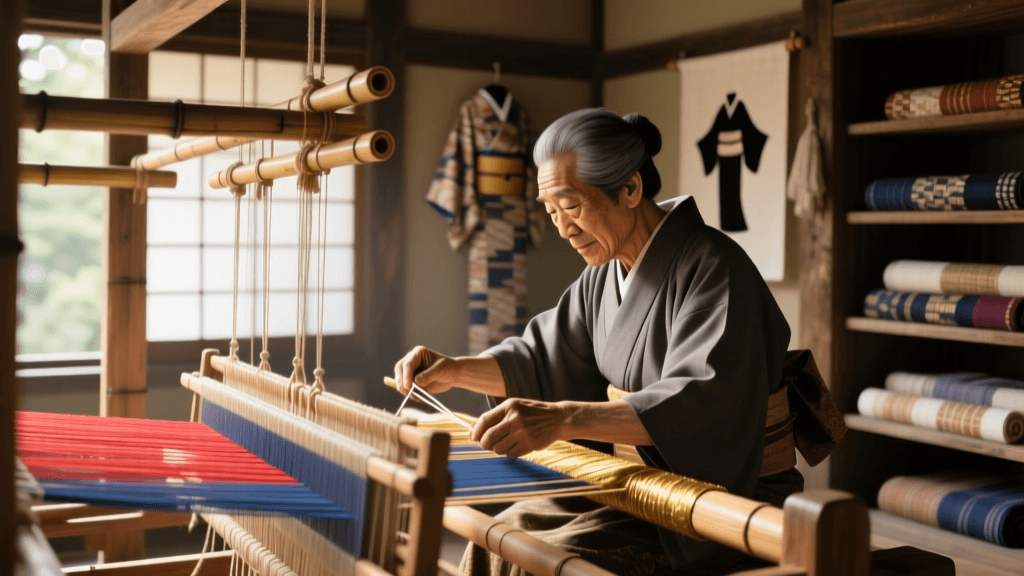
- Weft Insertion: The weaver and drawboy begin their synchronized dance. For Yunjin, multiple shuttles are used simultaneously to introduce different colored silk threads, as well as metallic threads, into the weft.
- Beating and Tensioning: The reed is struck forcefully to pack the weft tightly, ensuring the dense, heavy, and durable nature of the brocade.
Materials: Gold, Silver, and Peacock Feathers
What elevates Yunjin above other Chinese silks (like Shu or Song brocade) is its extravagant use of non-traditional threads. Artisans weave with threads wrapped in genuine gold and silver leaf. In 2026, specialized ateliers have also revived the use of peacock feather yarn, where the iridescent barbs of peacock feathers are spun around a silk core. This creates a shimmering, color-shifting effect that synthetic fibers simply cannot replicate. The integration of these precious materials is why authentic Hualou-woven garments remain some of the most expensive textiles in the modern luxury market.
Yunjin Brocade in 2026: Preservation and Modern Application
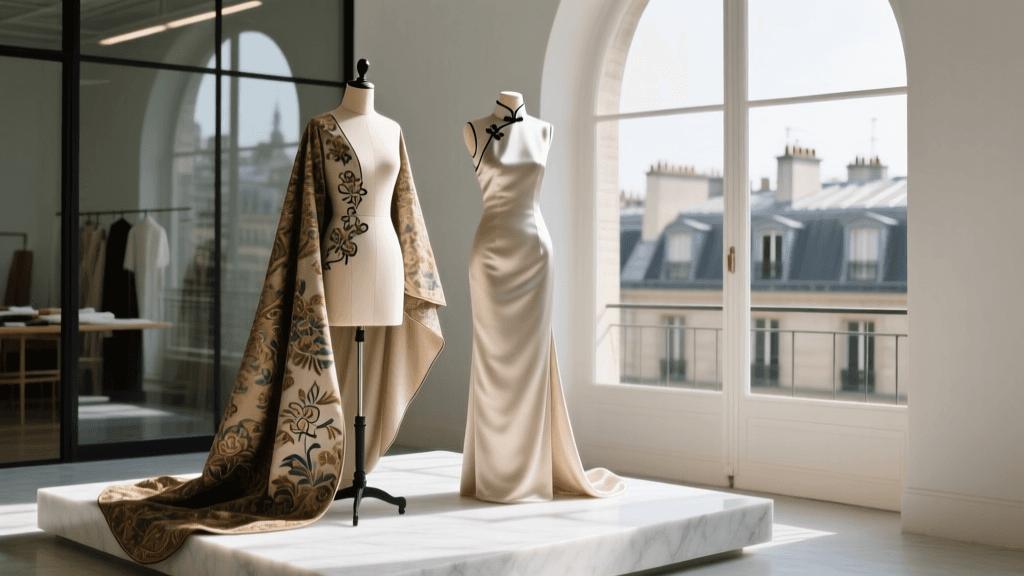
The year 2026 has seen a massive resurgence in the Xin Zhongshi (New Chinese Style) fashion movement. However, contemporary consumers and designers are moving away from mass-produced, digitally printed faux-brocades. Instead, there is a surging demand for authentic, tactile, Hualou-woven accents in modern apparel. High-end designers at the 2026 Shanghai Fashion Week have prominently featured Yunjin lapels, cuffs, and structural corsetry, blending ancient weaving with modern silhouettes.
Furthermore, the Nanjing Yunjin Museum's 2026 apprenticeship program has expanded, utilizing modern ergonomic adjustments to the traditional Hualou to reduce the physical strain on the drawboys, ensuring the craft can be sustained by a new generation of artisans. The cultural significance of this effort cannot be overstated; the traditional weaving skills of Nanjing Yunjin brocade are officially recognized by UNESCO as an Intangible Cultural Heritage of Humanity, a status that continues to drive global interest and funding for its preservation in 2026.
Comparison: Traditional Hualou vs. Modern Electronic Jacquard
For collectors, designers, and historians operating in the 2026 textile market, understanding the difference between authentic Hualou weaving and modern electronic Jacquard reproductions is vital. Below is a comparative analysis of the two methods.
| Feature | Traditional Hualou Drawloom | Modern Electronic Jacquard |
|---|---|---|
| Operation | 2 Artisans (Weaver & Drawboy) | 1 Automated Operator |
| Daily Output | Approx. 5 centimeters | Approx. 50 meters |
| Material Integration | Gold leaf, peacock feathers, thick silk | Standard silk, rayon, synthetic blends |
| Pattern Complexity | Unlimited colors per row, irregular motifs | Limited by harness capacity, grid-based |
| Market Value (2026) | $1,500 - $10,000+ per garment | $80 - $300 per garment |
| Cultural Status | UNESCO Intangible Heritage | Commercial Mass Production |
Sourcing Authentic Yunjin and Supporting Artisans in 2026
If you are looking to acquire authentic Hualou-woven textiles or incorporate them into a 2026 design collection, due diligence is required. The market is flooded with machine-made 'Yunjin-style' fabrics. Here is actionable advice for sourcing genuine pieces:
- Seek Certification: Only purchase from ateliers affiliated with the Nanjing Yunjin Research Institute or those bearing the official Chinese Intangible Cultural Heritage certification seal.
- Examine the Reverse Side: Authentic Hualou-woven Yunjin features a distinct, slightly irregular backside where the metallic and colorful weft threads are carried over. Machine-made Jacquards often have a uniform, net-like backing or use synthetic binding threads.
- Test the Weight and Drape: Genuine Yunjin is exceptionally heavy and stiff due to the dense packing of silk and metallic threads. It does not drape like chiffon or standard charmeuse; it holds architectural shapes, making it ideal for structured 2026 Xin Zhongshi jackets and obi-style belts.
- Invest in Artisan Commissions: Rather than buying off-the-rack, many 2026 luxury buyers commission specific motifs directly from master weavers in Nanjing. Expect a lead time of 6 to 14 months for a custom-woven Hualou garment, with prices starting around $3,500 USD for a standard jacket panel.
Conclusion
The Hualou drawloom is far more than a relic of ancient Chinese engineering; it is a living, breathing testament to the artistic heights of human patience and skill. As we navigate the textile landscape of 2026, the integration of authentic Yunjin brocade into modern wardrobes serves as a powerful bridge between the imperial courts of the Ming and Qing dynasties and the avant-garde runways of today. By understanding the intricate mechanics of the drawloom, the grueling two-person weaving process, and the unparalleled luxury of its materials, we can better appreciate and protect this irreplaceable cornerstone of Asian traditional garment culture.