How to Tie an Otaiko Musubi Obi Knot: Step-by-Step Guide
Introduction to the Otaiko Musubi
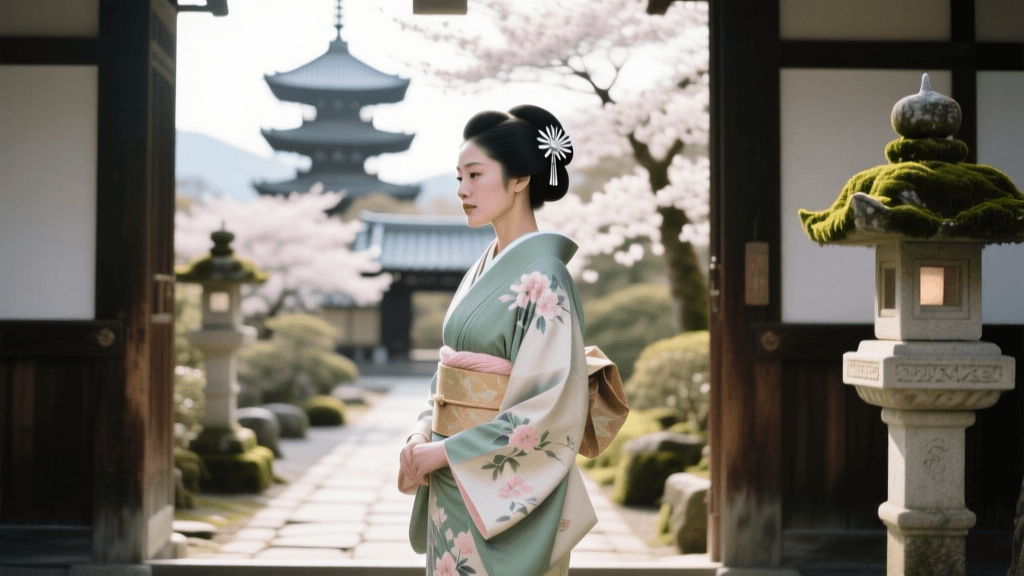
The Otaiko Musubi, often translated as the 'drum knot,' is the quintessential obi tie for women's traditional Japanese fashion. First popularized during the late Edo period and named after the Taiko-bashi (drum bridge) in Tokyo's Kameido Tenjin shrine, this knot is celebrated for its elegant, box-like silhouette. Unlike the flamboyant butterfly knots worn by maiko or young unmarried women, the Otaiko Musubi projects a refined, mature sophistication, making it the standard choice for married women, formal tea ceremonies, and cultural events.
According to the Victoria and Albert Museum, the evolution of the obi from a simple, narrow sash in the 16th century to a wide, heavily structured garment by the 19th century necessitated complex tying techniques like the Otaiko. Today, mastering this knot is a rite of passage for kimono enthusiasts and cultural practitioners alike. While professional kimono dressers (kitsuke-shi) make it look effortless, the Otaiko Musubi relies on precise measurements, specialized undergarments, and deliberate tension. This comprehensive guide will walk you through the exact steps, tools, and measurements required to tie a flawless Otaiko Musubi.
Essential Tools and Measurements
Before beginning, you must gather the correct accessories. The modern kimono silhouette is highly engineered, relying on a system of pads, boards, and ties to maintain its cylindrical shape and support the heavy silk of the obi.
- Obi: A Nagoya obi (pre-folded and stitched for easier tying) or a Fukuro obi (a formal, double-width obi).
- Koshihimo (Waist Ties): You will need at least three long, stretchy cotton or silk cords to secure the layers.
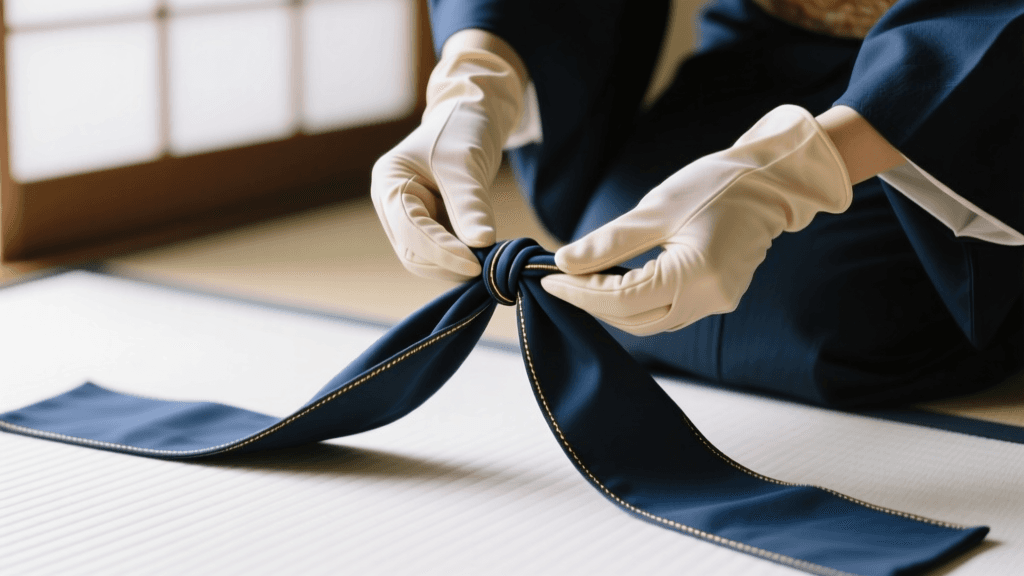
- Datejime: A wide, elasticized under-belt used to secure the kimono before wrapping the obi.
- Obi-ita (Front Board): A stiff felt or plastic board covered in fabric, placed between the obi layers at the front to prevent wrinkling.
- Obi-makura (Obi Pillow): A small, firm cushion used to give the Otaiko knot its signature elevated, rounded 'drum' shape.
- Obiage: A rectangular piece of dyed silk cloth used to cover the obi-makura and add a pop of color.
- Obijime: A decorative braided cord tied around the center of the knot to secure the structure and add a finishing accent.
Obi Types: Nagoya vs. Fukuro
Choosing the right obi is critical for the Otaiko Musubi. While both can be used, the preparation and formality levels differ significantly. The Metropolitan Museum of Art highlights how textile weaving techniques dictate the formality and drape of these garments, which directly impacts how they behave when folded into a knot.
| Feature | Nagoya Obi | Fukuro Obi |
|---|---|---|
| Length | Approx. 315 cm (124 inches) | Approx. 420 cm (165 inches) |
| Width | Pre-folded to 15 cm at the back, 30 cm at the front | Uniform 30 cm (must be folded in half manually) |
| Formality | Semi-formal to everyday (Tsumugi, Shibori) | Formal to semi-formal (Brocade, Gold thread) |
| Best For | Beginners, tea ceremony, casual outings | Weddings, graduation, formal parties |
Step-by-Step Tutorial: Tying the Otaiko Musubi
For this tutorial, we will use a Nagoya Obi, as its pre-stitched structure is much more forgiving for those learning the mechanics of the drum knot.
Step 1: Finding the Mark and Positioning
Every Nagoya obi has a 'mark' (often a small stitch or a change in the pattern) indicating where the Tehaba (the narrower, shorter end) ends and the Tareba (the wider, longer end) begins. Drape the obi over your left shoulder so the mark rests precisely at your left collarbone. The narrow Tehaba should hang down your front, reaching approximately to your wrist or ankle, depending on your height. The wide Tareba will drape down your back, reaching the floor. Secure the Tehaba temporarily to your left shoulder with a clip or by holding it in your mouth to keep it out of the way.
Step 2: Wrapping the Body
Take the wide Tareba and wrap it around your waist from left to right, keeping the bottom edge aligned with the top of your hips. Wrap it around your body twice. The tension here is vital; the obi must be snug enough to support the knot but not so tight that it restricts breathing. After the second wrap, bring the Tareba to the front. Insert the Obi-ita (front board) between the first and second layers of the obi at the center of your stomach to ensure a smooth, wrinkle-free front panel. Tuck the Tareba under the wrapped layers at the front, pulling it tight, and bring it back around to your right side.
Step 3: Forming the Otaiko (Drum)
This is the most complex phase. Take the Tehaba (short end) from your shoulder and bring it to your right side, crossing it over the Tareba (long end). Pinch both layers together at your right hip. Using your first Koshihimo (waist tie), bind the crossed layers tightly at your right side. Now, move to the back. Lift the Tareba up to form the 'drum' shape. The top edge of the drum should sit just below your shoulder blades. Slide the Obi-makura (pillow) inside the top fold of the Tareba to give it volume. Tie the strings of the makura tightly at the front, just above the datejime.
Next, take the excess fabric of the Tareba hanging below the pillow, fold it inward to create a clean, flat bottom edge for the drum, and tuck it securely under the wrapped obi layers at the back. Use your second Koshihimo to tie this bottom fold firmly in place, ensuring the drum shape is perfectly rectangular and horizontal.
Step 4: Securing with Obiage and Obijime
Take the Obiage (silk scarf) and drape it over the obi-makura at the back, tucking the ends into the top of the obi at the front. This hides the pillow and adds a beautiful contrast. Finally, take the Obijime (braided cord), wrap it around the exact center of the drum at the back, bring it to the front, and tie it using a flat, decorative knot (such as the Hon-musubi). Tuck the loose ends of the obijime neatly into the sides of the cord. Adjust the Tehaba at the back so it peeks out slightly from the left side of the drum, a subtle hallmark of a well-tied Otaiko.
Common Mistakes and Expert Troubleshooting
Even experienced dressers encounter structural issues. Here is how to troubleshoot the most common Otaiko Musubi problems:
- The Sagging Drum: If the back of the knot droops, the obi-makura was not tied high or tightly enough. Always tie the makura strings directly over the sternum, pulling upwards to elevate the back.
- Wrinkled Front Panel: This occurs when the obi-ita is omitted or placed incorrectly. Ensure the board is wide enough (at least 40cm) and sits smoothly between the silk layers before final tightening.
- Asymmetrical Folds: The bottom edge of the drum must be perfectly parallel to the floor. Use a mirror or ask a helper to check the horizontal alignment before securing the final koshihimo.
'The architecture of the kimono is not in the sewing, but in the dressing. The obi is the keystone; if the tension fails, the entire silhouette collapses.' — Traditional Kitsuke Proverb
Cultural Significance and Modern Styling
Today, the Otaiko Musubi remains a bridge between historical tradition and modern cultural participation. As noted by the Japan National Tourism Organization, kimono rental experiences have surged in popularity among international visitors, with the Otaiko knot being the standard style provided to tourists due to its comfort and universal elegance. Modern stylists are also experimenting with vintage Taisho-era obi cords and contrasting obiage colors to give the traditional drum knot a contemporary, fashion-forward edge.
Whether you are dressing for a formal tea gathering, attending a summer festival, or simply practicing the meditative art of kitsuke at home, mastering the Otaiko Musubi provides a profound physical connection to Japanese heritage. Take your time, respect the silk, and remember that the beauty of the knot lies in the precision of its geometry and the grace of its wearer.