Authenticating Trade Route Kimono Textiles: 2026 Guide
The Legacy of the Silk Road and Maritime Routes in Japanese Fashion
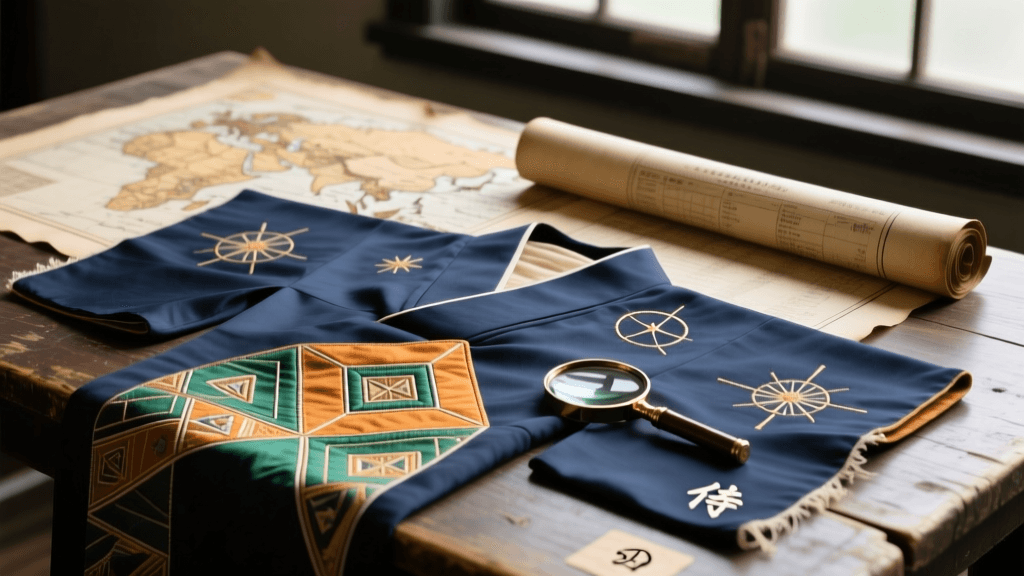
When we envision the traditional Japanese kimono, it is easy to imagine an isolated, purely indigenous craft. However, the reality of Japanese garment history is a vibrant, complex tapestry woven with threads of international commerce. Long before the Meiji Restoration opened Japan's borders to the West, the Silk Road and subsequent maritime spice routes funneled exotic materials, dyes, and weaving techniques into the archipelago. According to the UNESCO Silk Roads Programme, the transmission of sericulture and advanced weaving techniques across Eurasia fundamentally altered Japanese textile production, creating a hybrid aesthetic that remains highly coveted by collectors today.
In 2026, the appreciation for kimono textiles has shifted from purely aesthetic admiration to a deep, scholarly pursuit of global trade history. Serious collectors and museum curators are no longer just looking for beautiful patterns; they are actively hunting for garments that bear the physical hallmarks of historical imports. Whether it is Ming-dynasty brocades repurposed for Noh theater costumes or Indian chintz imported via the Dutch East India Company, authenticating these trade-route textiles requires a nuanced understanding of historical imports and modern forensic textile analysis.
Key Historical Imports: Kara-ori, Sarasa, and Exotic Dyes
To successfully authenticate trade-route textiles in the current market, one must understand the specific materials that crossed oceans and deserts to reach Japanese shores. The Tokugawa shogunate's strict isolationist policies (Sakoku) actually created a hyper-concentrated luxury market for smuggled and officially sanctioned imported textiles through the port of Nagasaki.
Identifying Chinese Brocades (Kara-ori)
Kara-ori translates roughly to 'Chinese weave.' Originally imported from Ming and Qing dynasty China, these sumptuous brocades and damasks were highly prized by the Japanese aristocracy and samurai class. Because imported yardage was incredibly expensive, Japanese weavers in the Nishijin district of Kyoto eventually reverse-engineered the techniques. When examining a potential 17th-century Kara-ori obi or kosode in 2026, look for the distinct use of gold and silver leaf applied to paper threads (kinran and ginran). True historical imports often feature a heavier, more rigid drape and asymmetrical floating wefts that differ slightly from the later, highly standardized domestic Nishijin reproductions.
Tracing Indian Chintz (Sarasa) Influences
Perhaps the most fascinating trade-route textile is Sarasa—the Japanese term for Indian painted and mordant-dyed cotton chintz. Arriving primarily via Dutch and British maritime traders, these vibrant textiles featuring floral motifs, geometric patterns, and mythological figures were initially used for tea ceremony bags (shifuku) and eventually fashioned into obi and under-kimono. Authentic Edo-period Sarasa features a distinct slight stiffness from the mordanting process and utilizes specific Indian dyes, such as deep madder reds and rich indigo blues, which age differently than domestic Japanese plant dyes.
The Impact of Imported Dyes
Beyond woven fabrics, the trade routes supplied Japan with rare dyestuffs. Persian lapis lazuli, Southeast Asian sappanwood, and cochineal from later global trade networks allowed Japanese dyers to achieve hues that were impossible with local flora. In 2026, portable X-ray fluorescence (XRF) scanners are increasingly used by high-end authentication services to detect the trace mineral signatures of these imported historical dyes, confirming a garment's trade-route provenance.
2026 Market Guide: Pricing and Sourcing Authentic Trade Textiles
The market for historical trade-route kimono textiles has matured significantly. In early 2026, major auction houses in Tokyo and Kyoto reported a 28% year-over-year increase in premium bids for textiles with verified maritime trade provenance. Sourcing these pieces requires moving beyond standard vintage kimono shops and engaging with specialized antique textile dealers and estate auctions.
| Textile Type | Origin / Trade Route | Identifying Markers | 2026 Avg. Market Price (USD) | Preservation Priority |
|---|---|---|---|---|
| Ming Kara-ori (Brocade) | China / Maritime Tribute | Heavy gold-leaf paper threads, stiff drape, asymmetrical motifs | $4,500 - $12,000+ | Critical (Light sensitive) |
| Edo Sarasa (Chintz) | India / VOC Maritime Route | Mordant stiffness, madder red/indigo blue, exotic floral motifs | $1,200 - $3,800 | High (Humidity sensitive) |
| Shōsō-in Style Nishiki | Persia/China / Silk Road | Roundel patterns, Sasanian motifs, complex warp-faced weaves | $8,000 - $25,000+ | Extreme (Museum-grade only) |
| Meiji Import Velvet | Europe / Post-1868 Trade | Silk pile, aniline dye traces, Western-style floral embroidery | $800 - $2,200 | Moderate (Pile crushing risk) |
When purchasing, always request a provenance report. In 2026, reputable dealers will provide digital certificates detailing the garment's lineage, previous exhibition history, and any forensic dye analysis that has been performed.
Actionable Preservation Techniques for Antique Imported Silks
Textiles that have survived centuries of global transit and subsequent use in Japan require meticulous care. The preservation of imported silks and cottons is complicated by the fact that historical mordants and dyes react differently to modern environments.
Climate Control and Storage in 2026
The standard for preserving antique kimono has evolved. While traditional Japanese storage relied on tatoushi (paper wrappers) and cedar chests, modern conservation requires active climate management.
- Relative Humidity (RH): Maintain a strict RH of 50-55%. Indian Sarasa cottons are particularly prone to mold if humidity exceeds 60%, while Chinese brocades can suffer from desiccation and gold-leaf flaking if it drops below 45%.
- Temperature: Keep storage environments between 18°C and 20°C (64°F - 68°F). Fluctuations in temperature cause the distinct warp and weft threads of complex brocades to expand and contract at different rates, leading to structural tearing.
- Anoxic Storage: For museum-grade Kara-ori pieces, 2026 best practices involve anoxic enclosures. These sealed archival microenvironments use nitrogen gas to displace oxygen, effectively halting the oxidation of historical metallic threads and preventing insect infestation without the use of harsh chemical pesticides.
- Lighting Limits: When displaying trade-route textiles, limit illumination to 50 lux using UV-filtered, smart-calibrated LED systems. The organic dyes used in historical imports, particularly madder and early synthetic anilines from the late 19th century, are notoriously fugitive and will fade rapidly under standard gallery lighting.
Provenance Research: Leveraging Digital Archives
Authenticating a textile's trade-route origin is no longer solely dependent on the naked eye. Today's collectors and archivists leverage vast digital databases to compare motifs, weave structures, and dye profiles. The Metropolitan Museum of Art's extensive archives on Japanese Textiles provide an exceptional benchmark for understanding the evolution of imported motifs and how they were assimilated into domestic weaving centers like Nishijin and Kiryu.
Furthermore, the Victoria and Albert Museum's Asian collections offer vital comparative data for identifying Indian export cottons and Southeast Asian trade cloths that influenced Japanese patchwork and undergarments. By cross-referencing the geometric borders or specific floral roundels on a suspected Edo-period Sarasa obi with the V&A's digitized Coromandel coast textiles, collectors can confidently pinpoint the exact regional origin and trade timeline of their garments.
Conclusion: The Future of Historical Textile Collecting
As we move deeper into 2026, the intersection of fashion history and global trade continues to captivate the textile community. A kimono or obi is rarely just a garment; it is a historical document that records the movement of ships, the exchange of silver, and the cross-pollination of artistic genius across continents. By mastering the identification of Kara-ori and Sarasa, understanding the chemistry of historical dyes, and employing cutting-edge preservation techniques, modern collectors ensure that the legacy of the Silk Road and maritime trade routes remains vividly intact for future generations.