Hawaiian Kapa Making And Plant Based Dye Recipes For Royal Attire
Roots of Royal Cloth: The Sacred Practice of Hawaiian Kapa
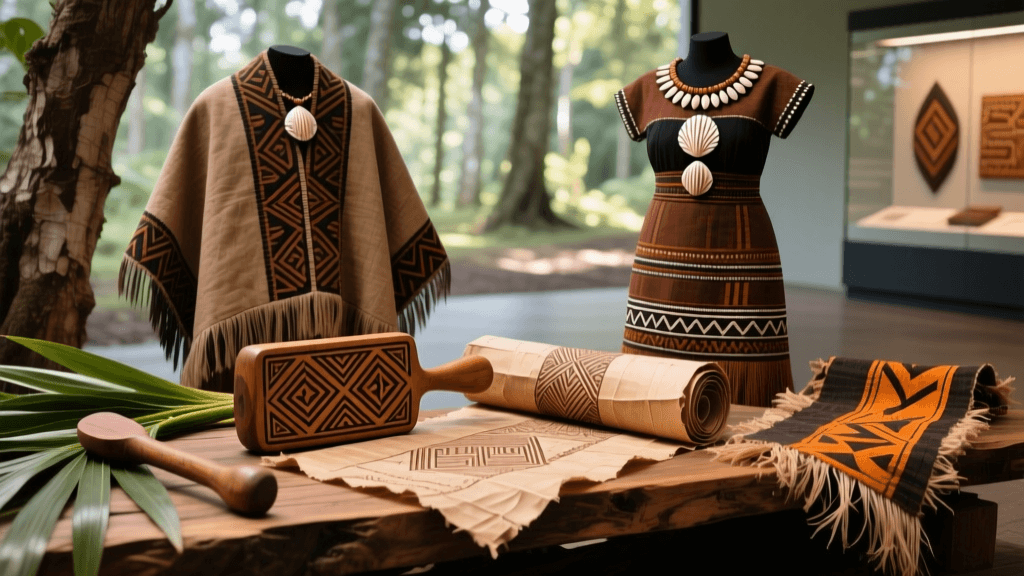
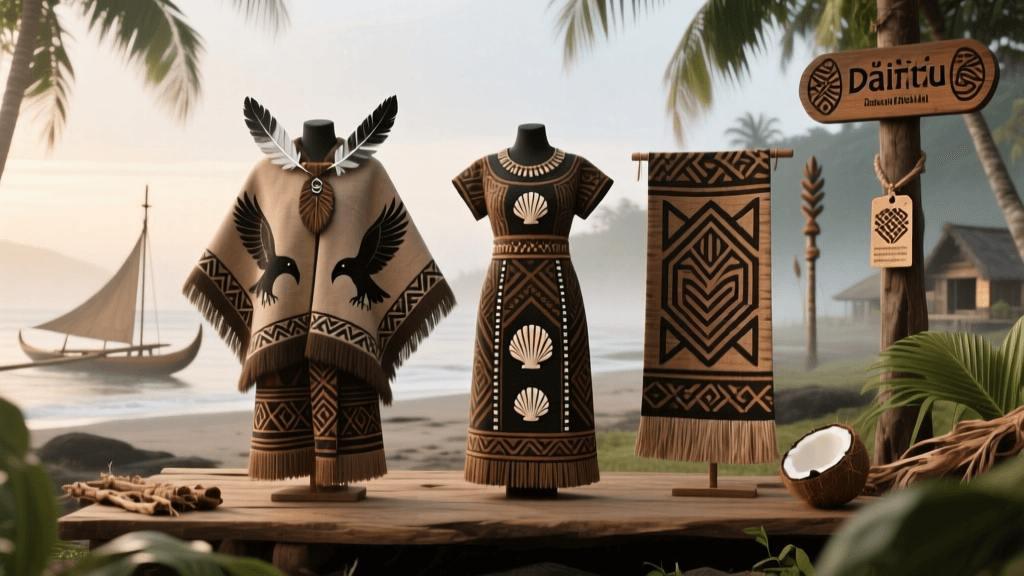
Kapa—hand-beaten cloth made from the inner bark of the wauke (Broussonetia papyrifera) tree—is far more than textile in Hawai‘i. It is a living archive, encoded with genealogy, status, and spiritual intention. Historically reserved for aliʻi (chiefs) and sacred ceremonies, kapa served as cloaks (ʻahu ʻula), ceremonial skirts (pāʻū), and burial shrouds. Its production was governed by strict kapu (sacred protocols), including gender-specific roles: women prepared the fiber and pounded the cloth, while men often harvested and processed the bark under ritual observance. Each step—from harvesting at dawn during specific lunar phases to the final dyeing—was embedded with prayer (pule) and ancestral knowledge passed orally across generations.
Botanical Alchemy: Plants That Color Royalty
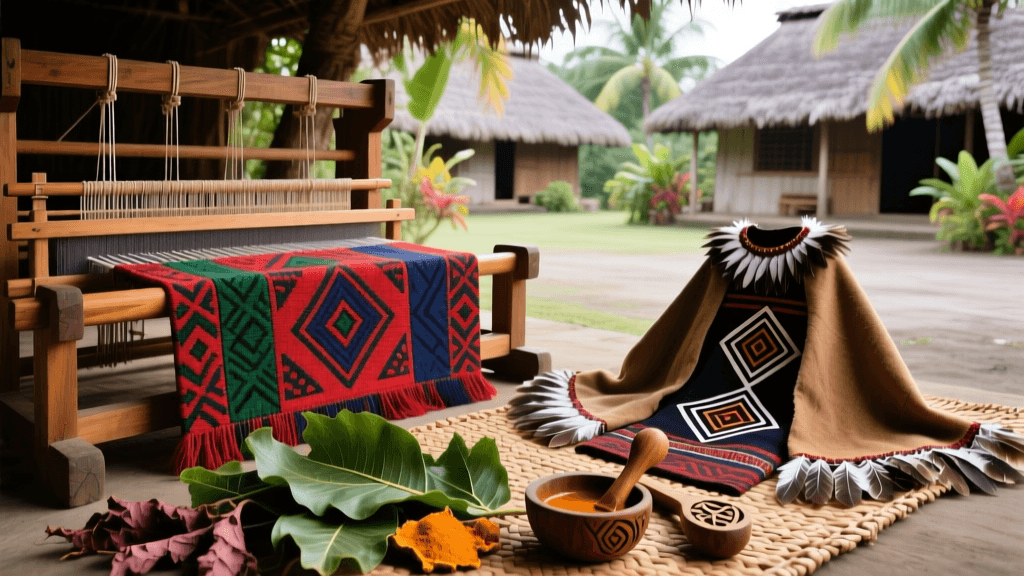
Hawaiian plant-based dyes were selected not only for chromatic intensity but for symbolic resonance and medicinal properties. Dye extraction required precise timing, temperature control, and multi-step mordanting using native alum-rich clays or fermented kukui nut oil. Unlike synthetic alternatives, natural dyes deepened with age and exposure to ocean mist, creating subtle shifts in hue that reflected the wearer’s life journey and connection to place.
Core Dye Plants and Their Preparation
- ʻŌlena (Curcuma longa): Fresh rhizomes grated and soaked in seawater for 48 hours yield golden-yellow; used for royal cloaks worn during Makahiki festivals.
- Noni (Morinda citrifolia): Mature fruit fermented for 10–14 days produces rich crimson; applied in 3–5 successive dips to achieve depth, with each dip requiring 12 hours of sun-drying.
- Kō (Saccharum officinarum): Juice extracted from sugarcane stalks, boiled for 90 minutes, yields amber tones; historically mixed with charcoal ash to create warm browns.
- ʻĀkala (Rubus hawaiensis): Berries crushed and strained produce delicate rose-pink; used exclusively for infant kapa and female aliʻi garments.
- Ulu (Artocarpus altilis): Bark soaked for 72 hours in freshwater yields soft grey-lavender; applied via immersion for no longer than 20 minutes to prevent fiber degradation.
The Beating Process: From Bark to Breathable Cloth
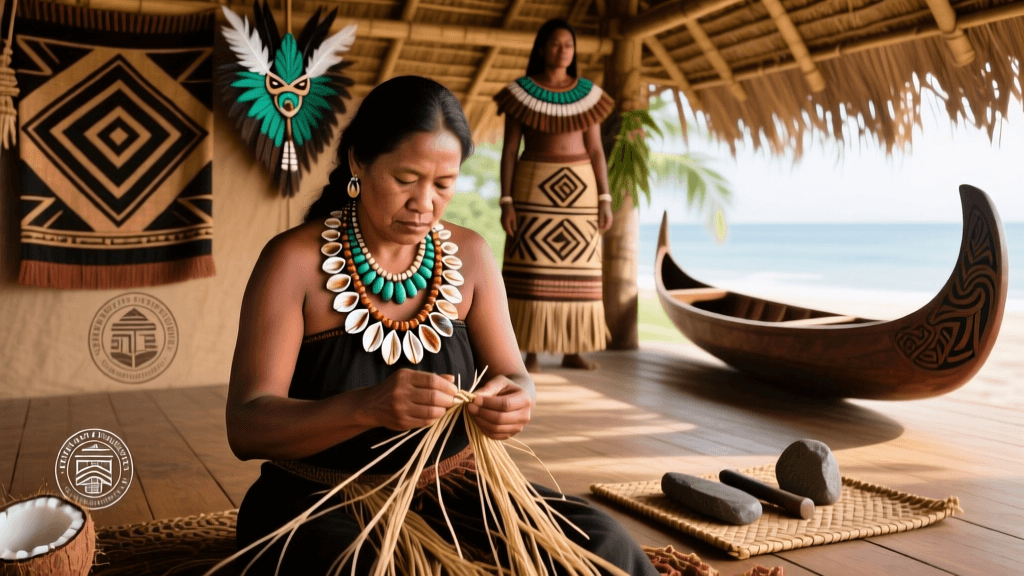
Pounding wauke bark on a kua kapa (stone anvil) demands physical endurance and rhythmic precision. Strips of bast fiber are layered horizontally and vertically, then beaten with four distinct wooden mallets (iʻe kuku): the coarsest (pōhaku) for initial separation, followed by progressively finer tools (kōnane, kōnane lele, and lāʻī) over 6–10 hours per yard. A single 2.5-meter-long kapa cloth requires approximately 1,200–1,800 rhythmic strikes per square foot. The finished cloth must measure between 0.3–0.5 mm thick to meet traditional standards for drape and breathability. According to research conducted by the Bernice Pauahi Bishop Museum in 2018, surviving pre-contact kapa specimens average 0.42 mm thickness with tensile strength exceeding 12.7 N/cm² when dry.
Cultural Protocols and Contemporary Stewardship
Contemporary kapa makers observe protocols rooted in moʻolelo (oral histories). Harvesting occurs only during the moon phase of Huna (the “hidden” phase), never during Kāloa (storm season), and always with an offering of ʻawa root. Tools are stored upright, never placed on the ground, and workspaces are cleansed with niu (coconut) water before beginning. These practices are actively taught at the Kamehameha Schools’ Hoʻokahua Cultural Center in Honolulu, where students learn alongside kumu (master teachers) such as Leinani O’Neill and Dr. Noelle Kahanu. The center maintains a living wauke grove of over 800 plants, propagated from cuttings sourced from the original groves at Mānoa Valley’s historic Kūkaʻōʻō Heiau site.
Dye Application Techniques Across Islands
- Moana immersion: Full submersion in dye vats for even saturation; used for background fields on royal cloaks.
- Kōnane stamping: Carved bamboo or kukui nut stamps dipped in concentrated dye paste and pressed onto dried kapa; each stamp measures precisely 4.5 cm × 4.5 cm.
- Mākaha resist-dyeing: Wauke fibers tied with olonā cordage (Touchardia latifolia) before dyeing to create geometric patterns; knots spaced exactly 1.2 cm apart yield consistent diamond motifs.
Institutional Guardianship and Living Knowledge
The Bishop Museum in Honolulu houses over 2,400 kapa fragments—the largest collection globally—including a complete 1820s ʻahu ʻula measuring 1.8 meters in length and featuring 43,000 individually tied red feathers. The museum’s 2021 collaborative project with ‘Imiloa Astronomy Center and the University of Hawai‘i at Hilo employed non-invasive spectroscopy to identify dye compounds in 17 pre-1850 textiles, confirming use of noni in 92% of crimson samples tested. Similarly, the Pacific Cultures Gallery at Te Papa Tongarewa in Wellington, Aotearoa New Zealand, curates comparative displays linking kapa techniques with Māori aute (paper mulberry cloth) and Sāmoan siapo, highlighting shared Polynesian roots while honoring distinct island innovations.
“Kapa is not made with hands alone—it is woven with memory, measured in breath, and sanctified by silence. To beat kapa is to echo ancestors who listened to the wind through wauke leaves and knew when the fiber was ready.” — Dr. Noelle Kahanu, Senior Curator, Bishop Museum, 2022
Measuring Continuity: Quantitative Threads of Tradition
Modern revival efforts rely on empirical benchmarks to ensure fidelity. Field studies across Hawai‘i Island and Maui document these key metrics:
- Wauke saplings reach harvest readiness at 18–24 months, with optimal bark thickness measuring 2.3–3.1 mm.
- A single mature wauke tree yields enough bast fiber for 1.2–1.5 linear meters of finished kapa (at standard 0.45 mm thickness).
- Traditional fermentation vats for noni dye maintain pH levels between 4.1 and 4.6, monitored daily using native pōpolo leaf indicators.
- Kapa drying racks are oriented due east–west to maximize morning sun exposure; ideal drying time is 3.5–4.2 hours at ambient temperatures of 26–29°C.
- The Bishop Museum’s archival pigment analysis identified iron oxide concentrations of 7.8–11.3 mg/g in earth-toned kapa samples from Kaua‘i’s Makaweli region, confirming historic use of local kaolinite clay deposits.
At the Kamehameha Schools’ Hoʻokahua Cultural Center, apprentices now complete a 320-hour certification program covering botanical identification, lunar calendar alignment, tool carving, and protocol-led dye preparation. Each graduate is expected to propagate and tend at least five wauke plants—ensuring intergenerational continuity. This practice mirrors the approach of the Torres Strait Islander Corporation’s cultural revitalization initiative on Waiben (Thursday Island), which similarly ties textile knowledge to land stewardship and seasonal observation. In Aotearoa, Te Papa Tongarewa’s ongoing collaboration with Ngāti Porou weavers has led to shared documentation of bast-fiber processing timelines across Polynesia, revealing near-identical beating durations (7.5–8.2 hours per meter) despite geographic separation.
When a contemporary kapa cloak is worn today—whether at a graduation ceremony at Kamehameha Schools or during the opening of the Pacific Arts Festival in Honiara—it carries not only color and form but calibrated measurements of time, soil, rain, and reverence. The 2.7-meter length of a modern aliʻi pāʻū replicates historic proportions documented in missionary journals from 1825; its 14 alternating bands of noni-red and ʻōlena-yellow follow the same sequence found on a fragment recovered from the 1840s shipwreck off Moloka‘i. Every gram of dyestuff, every millimeter of thickness, every hour of pounding is a quiet act of sovereignty—measured, remembered, and remade.
The Kaua‘i Museum’s 2019 exhibition Kapa: Breath of the Land featured infrared imaging of a 19th-century kapa sample showing residual starch granules from fermented taro paste—a mordant technique previously undocumented in Western records but confirmed through collaboration with elder practitioners from Hanalei. Such findings underscore that kapa knowledge remains dynamic, not static: it evolves through dialogue between laboratory science and lived experience, between museum archives and mountain-side groves.
Across the Pacific, institutions like the Bishop Museum, Te Papa Tongarewa, and the Kamehameha Schools’ Hoʻokahua Cultural Center do not merely preserve objects—they steward relationships. They hold space for the wauke to grow, for the noni to ferment, for the hands to remember rhythms older than written language. In doing so, they affirm that royal attire was never about ornamentation alone. It was—and is—a material covenant: between people and plants, past and present, land and lineage.