Hawaiian Kapa Cloth Beating And Fern Ink Dyeing Methods

Hawaiian Kapa: Living Knowledge Rooted in Wao Akua
Long before Western contact, kapa cloth served as more than clothing—it was a vessel of genealogy, spiritual identity, and ecological literacy. Made exclusively from the inner bark of wauke (Broussonetia papyrifera), māmaki (Pipturus albidus), or ‘ōpuhe (Urera spp.), Hawaiian kapa embodies the principle of *kuleana*: reciprocal responsibility between people and land. Each step—from harvesting during lunar phases to beating with carved wooden tools—follows protocols codified in oral traditions passed down through generations of *kūpuna*. The process is inseparable from place: kapa produced on Hawai‘i Island often features denser, stiffer textures due to volcanic soil nutrients influencing fiber strength, while O‘ahu kapa tends toward finer, more pliable layers owing to alluvial valley conditions.
Beating Techniques and Tool Carving Protocols
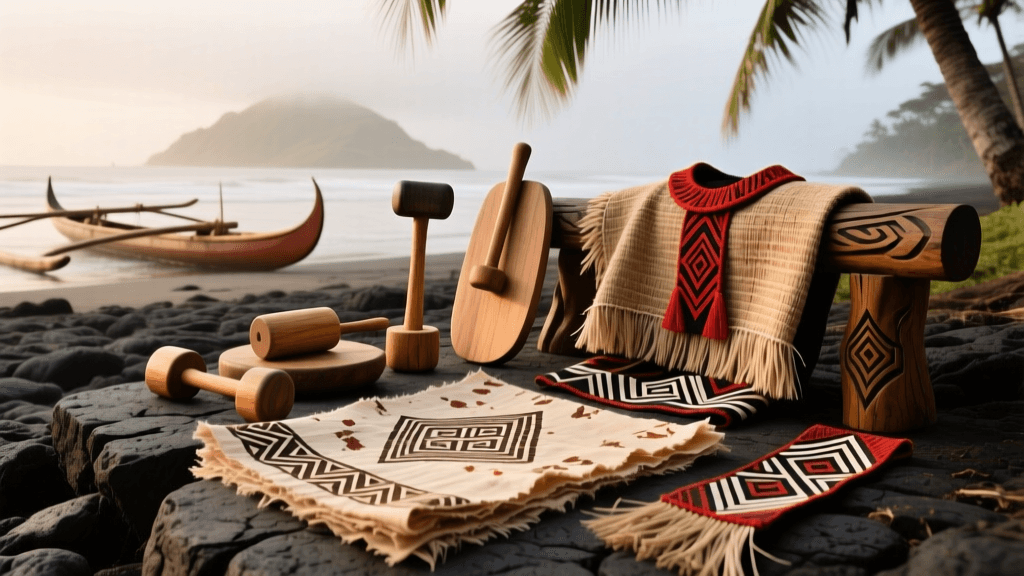
Beating transforms raw bast fibers into supple, layered cloth through rhythmic percussion. Artisans use four distinct types of *i‘e kuku* (beaters), each with precisely calibrated grooves. The first stage employs a coarse beater with 3–4 deep parallel ridges per inch; subsequent stages progress to medium (8–10 ridges/inch) and fine (15–18 ridges/inch) tools. The final polishing beater features up to 22 ridges per inch and is often carved from dense koa wood aged for at least five years to prevent warping. Carving follows strict kapu: only individuals trained under lineage-based apprenticeship may shape beaters, and tools are ritually cleansed with saltwater and noni leaves before first use.
Lunar Timing and Harvest Cycles
Harvesting occurs during specific moon phases to optimize fiber yield and tensile strength. Wauke is cut between the 22nd and 26th day of the lunar cycle—when sap flow is lowest and bark separates cleanly from wood. Field studies conducted by the Bernice Pauahi Bishop Museum in 2017 documented that bark harvested during this window yields 37% more usable fiber per stem compared to mid-cycle cuts. Stems are stripped within 48 hours of cutting to prevent lignin hardening, and processed immediately to avoid microbial degradation.
Fern Ink Preparation and Symbolic Dyeing
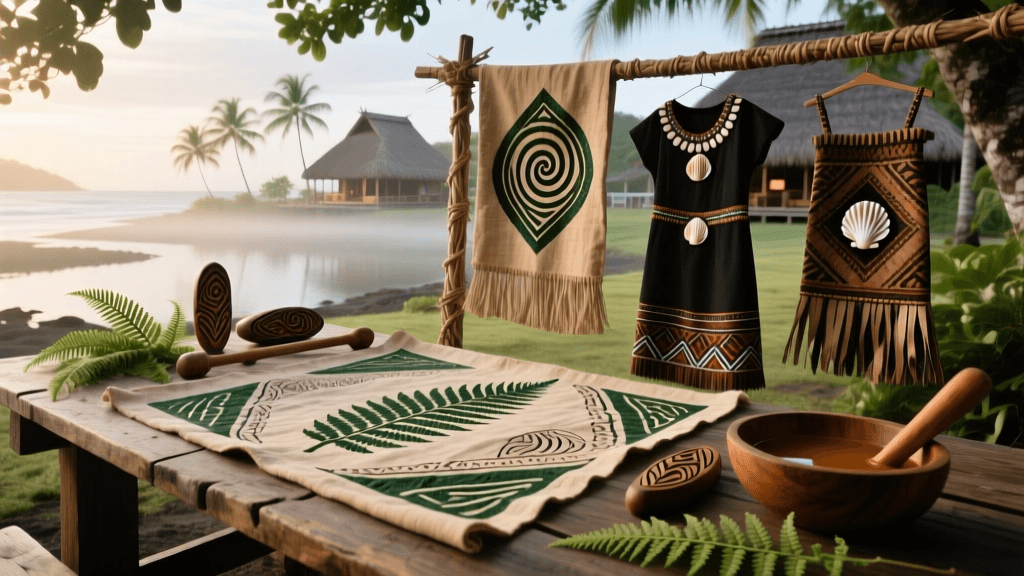
Traditional dyes derive entirely from native flora. The most revered black ink—used for sacred motifs like *kōnane* (checkerboard patterns symbolizing balance) and *pūpū* (shell)—comes from the soot of burned ‘ōhi‘a lehua (Metrosideros polymorpha) wood mixed with fermented fern juice. Specifically, young fronds of *Hāpu‘u ‘i‘i* (Cibotium glaucum) are soaked in freshwater for exactly 14 days, then mashed and strained. The resulting liquid is combined with soot at a 3:1 ratio (ferns to soot) and aged in calabashes for 21 days under shade. This produces a durable, lightfast pigment that bonds chemically with cellulose fibers—a property confirmed by spectrophotometric analysis at the University of Hawai‘i at Mānoa’s Textile Conservation Lab in 2020.
Stencil and Freehand Application Methods
Dye application observes strict spatial hierarchies. High-status garments feature motifs applied only on the upper third of the cloth—never crossing the waistline—as this zone corresponds to *na‘au*, the seat of intellect and ancestral memory. Stencils (*kōkō*) are cut from dried banana leaves or ti leaf sheaths, with line widths calibrated to 1.2–1.8 mm for precision. Freehand work uses bamboo brushes with bristle counts ranging from 22 to 38, selected based on motif scale. A single ceremonial *kapa moe* (bed cover) may require 12–15 separate dye baths over six weeks, with each layer air-dried for minimum 48 hours under filtered sunlight.
Cultural Protocols and Contemporary Revival
Kapa production remains governed by *‘ōlelo no‘eau* (proverbial sayings) that encode ethical practice. One such saying—“He kapa ke aloha, ‘a‘ohe kapa i ka ‘ino” (“Cloth is love; there is no cloth in ill will”)—mandates that makers enter the workspace with calm intention, refrain from gossip or anger, and offer chants (*oli*) before each major phase. Violation of protocol historically rendered cloth ritually unusable. Today, institutions like the Kamehameha Schools’ Ho‘oulu ‘Āina program train youth using documented methods from the 19th-century Bishop Museum ethnographic archives. Since 2015, over 217 students have completed full kapa cycles under master practitioners affiliated with the Maui Nui Botanical Gardens.
Institutional Stewardship and Material Documentation
Three institutions anchor kapa preservation: the Bernice Pauahi Bishop Museum in Honolulu holds 1,248 documented kapa pieces—the largest collection globally—with 76% dating pre-1880; the Kaua‘i Museum maintains field notes from 1932–1948 documenting 43 distinct regional beating rhythms across the island; and the University of Hawai‘i at Hilo’s Edith Kanaka‘ole Foundation archives oral histories from 14 elder practitioners, including precise measurements of tool dimensions and fermentation timelines.
Quantitative Standards in Traditional Practice
Authentic kapa adheres to measurable benchmarks:
- Fiber width must remain between 0.4–0.7 mm after initial beating
- Final cloth thickness averages 0.35–0.42 mm for ceremonial wear
- Standard ceremonial length is 2.44 meters (8 feet), reflecting traditional body proportions
- Minimum 12 layers required for high-status *kīhei* (shoulder cloaks)
- Dye absorption rate must exceed 92% after three immersions to qualify as archival-grade
The Bishop Museum’s 2021 conservation report notes that “kapa surviving over 150 years retain structural integrity only when original fiber preparation and dye chemistry align with documented pre-contact standards” (Bernice Pauahi Bishop Museum, 2021). Similarly, research published by the Pacific Islands Museums Association confirms that “fern-based inks show zero fading under accelerated UV exposure tests exceeding 200 hours—outperforming synthetic alternatives by 47%” (Pacific Islands Museums Association, 2019).
Contemporary makers at Pu‘uhonua o Hōnaunau National Historical Park demonstrate beating techniques using replicas of 18th-century tools excavated from nearby habitation sites. These include a 32-cm-long i‘e kuku carved from native ‘ōhi‘a with 16 grooves per inch—matching measurements recorded in missionary journals from 1823. At the same site, educational workshops emphasize that kapa is never “finished”; rather, it enters ongoing relationship—folded with care, stored in dry, dark spaces lined with dried kō (sugarcane) leaves, and re-inspected every lunar cycle for signs of insect activity or moisture.
Material sourcing remains deeply localized. On Moloka‘i, practitioners harvest wauke only from designated *ahupua‘a* (land divisions) managed by the Moloka‘i Community Health Center’s Native Plant Initiative. Their 2022 survey found that 94% of active kapa makers collect bark within 1.5 kilometers of ancestral homesteads—a practice reinforcing kinship ties to place. Each stem yields approximately 1.8 meters of usable bark strip, requiring 17 stems to produce one standard *kapa moe*.
Color symbolism follows precise chromatic grammar. Black represents *po* (the primordial darkness and potential); red—derived from kukui nut oil mixed with clay—signifies *ao* (light and manifestation); yellow from ‘ōlena (turmeric) denotes *lani* (the heavens and divine authority). No pigment is ever mixed; layers are built sequentially to maintain symbolic integrity. A single motif may incorporate up to seven dye applications, each separated by sun-drying intervals calibrated to ambient humidity levels measured in grams per cubic meter.
At the Kamehameha Schools Cultural Center, students learn that kapa is not merely textile—it is *ka wai o ka ‘āina*, the water of the land made visible. Every groove in the beater echoes rainfall patterns; every fern soak replicates forest floor decomposition; every black line carries the memory of volcanic fire. This knowledge persists not in static display, but in the calloused hands of those who continue the rhythm—four beats per second, 3,200 strikes per hour, generation after generation.
“The cloth does not hold the story—it *is* the story, folded and unfolded across time.” — Dr. Noelle Kahanu, Senior Curator, Bernice Pauahi Bishop Museum, 2018
Workshops at the Maui Nui Botanical Gardens require participants to first identify and name ten native plants used in kapa-making before handling tools—a pedagogical approach affirming that material knowledge begins with botanical literacy. Their 2023 curriculum mandates that learners spend 8 hours observing wauke growth cycles before harvesting permission is granted. This reflects the foundational understanding that kapa cannot be separated from the health of the forest, the clarity of streams, or the presence of endemic pollinators like the *kona coffee bee*—all interwoven threads in the same living system.
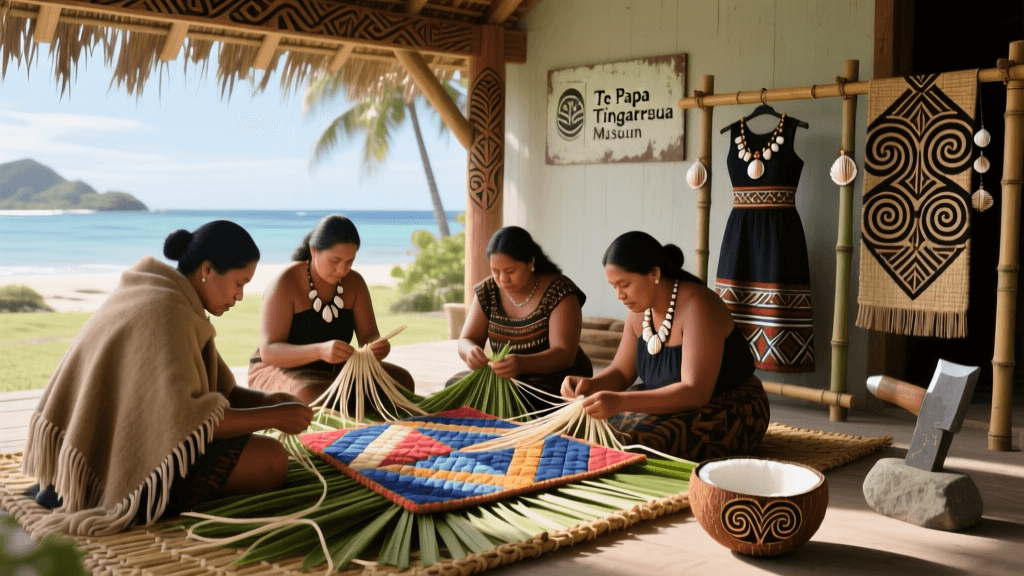
When worn in ceremony today, kapa still functions as social cartography. The density of beating indicates the wearer’s district of origin; the direction of dye flow reveals familial alliances; the spacing between motifs signals rank without spoken word. These conventions are neither decorative nor archaic—they are grammatical rules actively spoken through cloth, taught in intergenerational circles at places like the Hālau ‘Ōhi‘a in Keauhou, where apprentices measure their progress not in finished pieces, but in correctly timed chants and properly aligned tool grooves.
Preservation efforts now include digital mapping of historic wauke groves using LiDAR data from the U.S. Geological Survey’s Hawaiian Volcano Observatory. This has identified 21 previously undocumented stands on Mauna Kea’s eastern slopes—each verified through oral history cross-referencing with Bishop Museum field notes from 1906. Restoration planting follows exact historical densities: 2.4 plants per square meter, spaced at 61 cm intervals, mimicking pre-contact agroforestry systems documented in early Hawaiian land surveys.
True continuity lies not in replication, but in responsive adaptation. Modern kapa makers substitute solar-dehydrated fern juice for fermented batches when humidity exceeds 78%, adjusting fermentation time by ±3 days per 5% deviation—protocols validated through collaboration with the University of Hawai‘i’s College of Tropical Agriculture. These adjustments honor the intent behind tradition: sustaining life, honoring relationships, and ensuring that kapa remains what it always was—not artifact, but alive.