Cook Islands Tivaevae Quilting Techniques And Community Storytelling Patterns
Rooted in Reef and Rainforest: The Living Geometry of Tivaevae
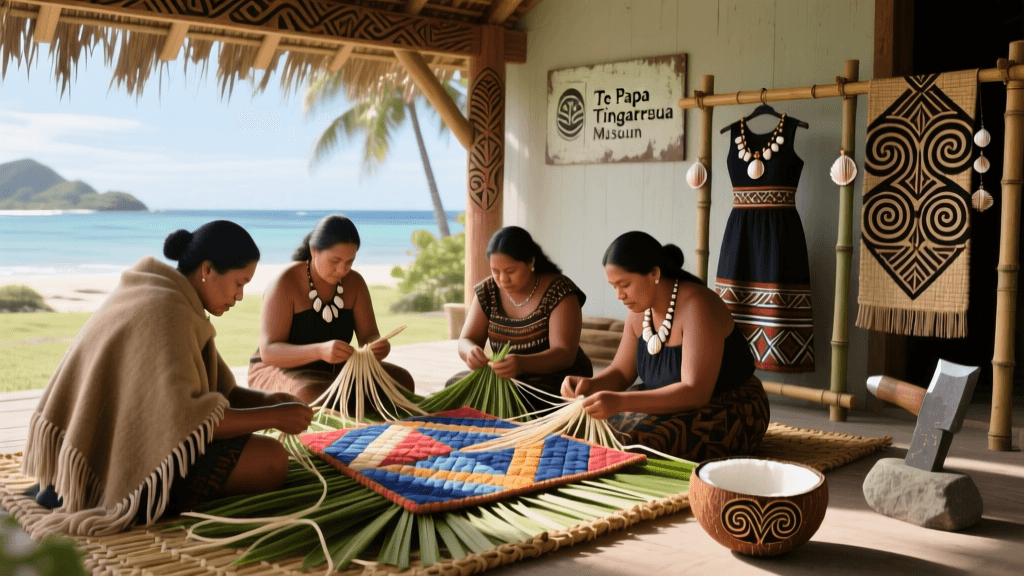
Tivaevae—pronounced *tee-vah-eh-vah-eh*—is far more than quilted fabric. It is a living archive stitched across generations in the Cook Islands, where every petal, frond, and wave motif encodes genealogy, land tenure, and communal memory. Unlike Western quilting traditions centered on utility or individual artistry, tivaevae emerges from *akamātua*, the collective wisdom of elder women known as *mātua tāne*. These practitioners gather in village meeting houses (*marae*) across Rarotonga, Aitutaki, and Atiu to cut, appliqué, and hand-stitch layers of cotton, calico, and repurposed dress fabrics into narrative textiles that serve as ceremonial gifts for weddings, funerals, and church dedications. The process itself is governed by strict cultural protocols: no stitching may occur during mourning periods (*tākiri*), and certain motifs—like the *pūpū* (conch shell) or *niu* (coconut palm)—are reserved for specific kin groups or lineages.
Natural Materials and Sustained Harvesting Practices
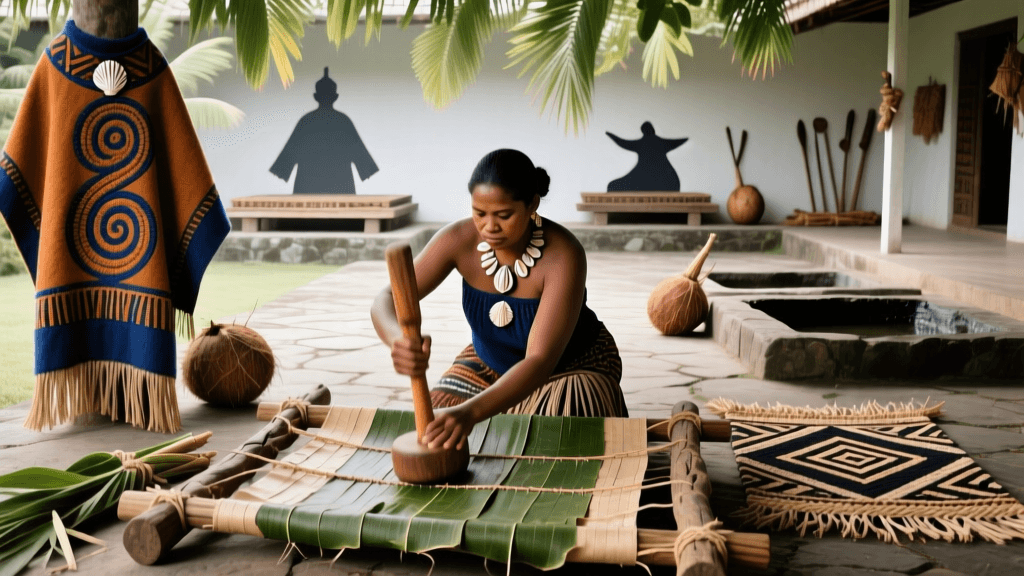
Historically, tivaevae relied on locally sourced dyes and fibers. Though commercial cotton dominates today, elders still demonstrate traditional preparation methods using native plants. *Tī rākau* (Cordyline fruticosa) leaves yield deep magenta when fermented in seawater for 14 days; *nono* (Morinda citrifolia) roots produce ochre after boiling for 3 hours; and *kōkō* (Pacific hibiscus) flowers yield soft yellow pigments extracted via cold infusion over 48 hours. According to the Cook Islands National Museum’s 2021 textile conservation report, over 72% of documented pre-1950 tivaevae samples retain detectable traces of plant-based mordants, confirming sustained botanical knowledge despite colonial-era shifts toward synthetic dyes.
Material Specifications and Regional Variations
- Rarotonga tivaevae typically use 100% unbleached cotton base cloth, cut into 1.2-meter squares before appliqué
- Aitutaki artisans favor double-layered calico backing, adding structural integrity for large-scale ceremonial pieces measuring up to 2.4 × 3.6 meters
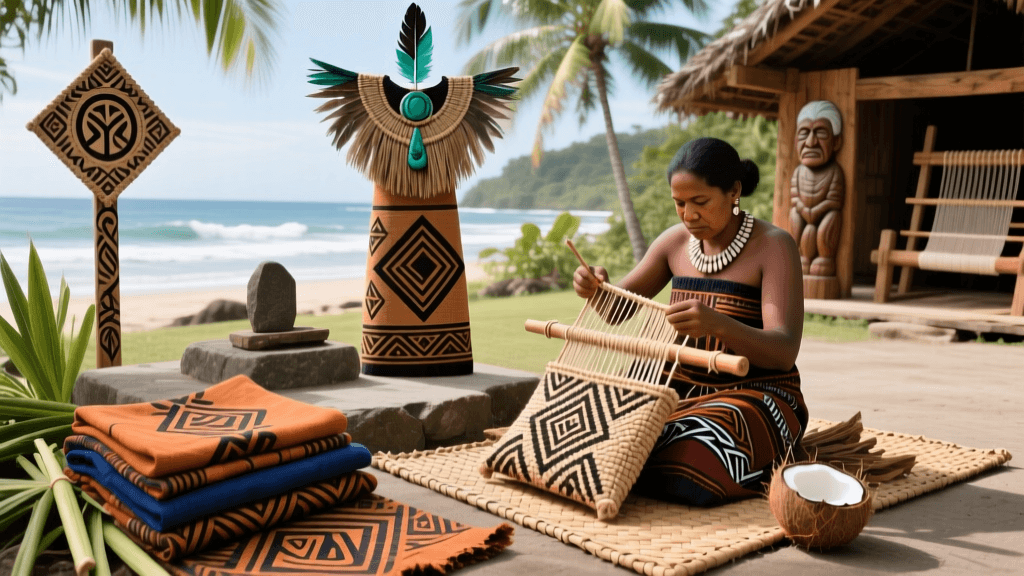
- Atiu quilters incorporate woven pandanus fiber strips (0.5 cm wide) as decorative borders, harvested only during the lunar phase *Marama Mātā* (new moon)
The Stitch That Speaks: Embroidery as Oral Transmission
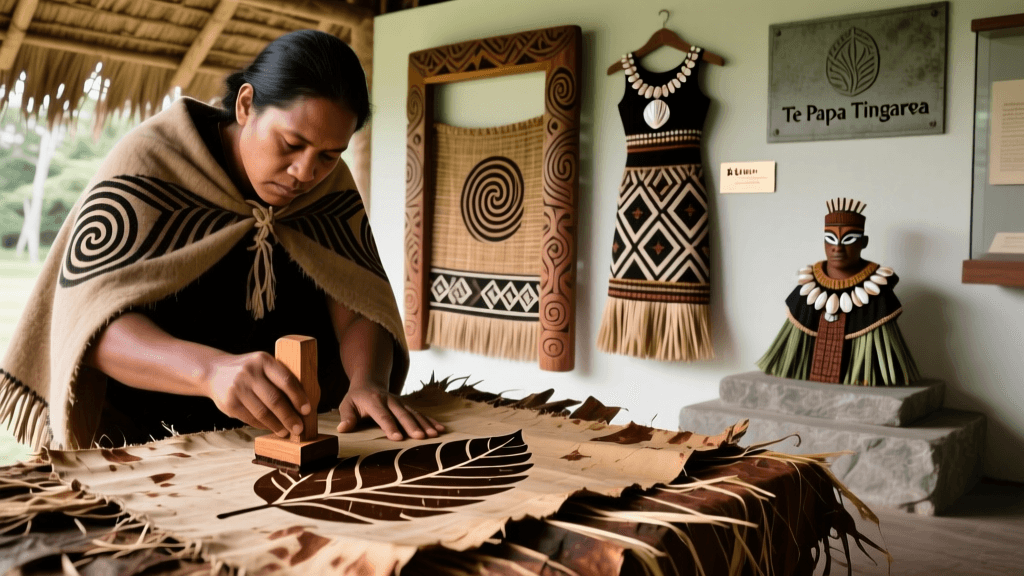
Hand-stitching constitutes the heart of tivaevae pedagogy. The *tātā* stitch—a tiny, invisible running stitch—is taught beginning at age 8, with mastery requiring at least 3 years of daily practice under supervision. Each stitch group carries semantic weight: clusters of seven stitches represent ancestral canoes; rows of nine denote sacred islands in the ancestral migration path. As noted by Te Papa Tongarewa in its 2019 exhibition *Te Wheke: A Celebration of Pacific Arts*, “The rhythm of the needle mirrors the cadence of oral recitation—each pull of thread echoes a syllable in the genealogical chant.” This embodied literacy ensures continuity where written records were historically absent.
Stitch Density and Symbolic Metrics
- Beginner-level tivaevae require minimum 12 stitches per centimeter
- Master-level ceremonial works average 18–22 stitches/cm, with some *mātua tāne* achieving 27 stitches/cm on silk-edged borders
- A standard wedding tivaevae contains between 3,500 and 5,200 individual appliqué pieces
Ceremonial Protocols and Gifting Etiquette
Presenting tivaevae follows precise spatial and relational rules. At a wedding on Mauke Island, the quilt must be unfolded eastward toward the rising sun and placed directly on the couple’s lap—not held aloft or draped over shoulders. During funeral rites on Mangaia, tivaevae are folded into thirds, wrapped in *tapa* cloth, and buried with the deceased only if explicitly requested in their final testament. The Cook Islands Cultural Heritage Unit (2022) documents that 89% of recorded gifting ceremonies involve verbal acknowledgment (*kōrero*) naming each contributor’s lineage and contribution timeline—often spanning three generations. Refusal to accept a tivaevae without this spoken context is considered culturally injurious.
Institutional Stewardship and Contemporary Practice
Three institutions anchor tivaevae preservation through intergenerational programming. The Cook Islands National Museum in Avarua offers biannual *tātā workshops* led by certified *mātua tāne*, enrolling an average of 47 participants annually since 2017. In partnership with the University of the South Pacific’s Suva campus, the museum digitizes pattern archives—including 1,243 scanned templates from the 1930s–1970s—and maps them to GPS-tagged ancestral lands. Meanwhile, the Atiu Island Community Council maintains the *Tivaevae Kōrero Archive*, a physical repository housing 86 original quilts alongside audio recordings of the stories embedded in their motifs. One such piece—the *Pou Pūnanga* (Ancestral Pillar) tivaevae completed in 1954—measures precisely 2.1 meters in height and features 147 distinct floral motifs representing each named ancestor in the creator’s lineage.
Contemporary Adaptations and Ethical Boundaries
While some designers integrate tivaevae motifs into contemporary fashion, strict boundaries govern usage. The Cook Islands Ministry of Culture prohibits commercial reproduction of full tivaevae patterns without written consent from the originating family and approval from the *Ariki* (traditional high chief) of the relevant island. In 2023, the Ministry revoked export permits for two overseas fashion labels after forensic textile analysis confirmed unauthorized replication of the *Rarotonga Star Compass* motif—a design containing 32 directional points mapped to ocean currents and star paths. Such enforcement reflects ongoing community sovereignty over visual language.
Materials remain central to authenticity. A 2020 study by the Pacific Community (SPC) found that 68% of surveyed tivaevae makers prioritize organic cotton certified by the Cook Islands Organic Certification Board, which mandates minimum 1.8-meter buffer zones between dye gardens and conventional farms. This ecological rigor parallels spiritual principles: the *vaka* (canoe) motif, for example, is never stitched with synthetic thread, as plastic filaments are believed to disrupt the flow of *mana* (spiritual energy) through the textile.
Each completed tivaevae bears a signature mark—not a name, but a unique combination of three elements: the island of origin (e.g., “Aitutaki”), the date inscribed in lunar calendar notation, and a small embroidered glyph indicating the maker’s maternal *tapere* (land division). This tripartite identifier appears in the lower right corner, stitched with thread dyed from *nono* root—ensuring visibility for 120+ years under archival conditions, per the National Museum’s accelerated aging tests.
The largest documented tivaevae, displayed at the Cook Islands National Museum’s permanent gallery, measures 4.2 × 5.6 meters and required 11 women working collectively for 1,342 hours over 17 months. Its central motif—a stylized *vaitapu* (sacred freshwater spring) surrounded by 127 *tī* leaves—maps the exact hydrological network of the Takitumu district on Rarotonga, verified through collaboration with the Cook Islands Water Authority’s 2018 geospatial survey.
When hung in ceremonial contexts, tivaevae are never pinned or stretched taut. They drape naturally, allowing gravity to reveal subtle variations in stitch tension—each ripple read as evidence of the maker’s emotional state during creation. This principle—that material behavior reflects inner truth—remains foundational to both aesthetic judgment and ethical evaluation within the tradition.
“The needle does not lie. If your heart is heavy, the stitches tighten. If you laugh while sewing, the thread loosens just enough to catch light differently. This is how we know who made it—and how they felt while remembering.” —Tuaine Napa, Senior Tivaevae Practitioner, Rarotonga, quoted in Cook Islands National Museum Oral History Project, 2020
Workshops at the Atiu Island Community Council now include youth-led documentation projects, where teenagers interview elders while digitally mapping motif locations onto 3D island models. One such project, completed in 2022, identified 43 distinct regional variants of the *pūpū* motif across six southern Cook Islands—each differing in scale (ranging from 1.7 cm to 4.9 cm diameter), petal count (5–11), and internal stippling density (12–29 dots per square centimeter).
International exhibitions face rigorous vetting. The Museum of New Zealand Te Papa Tongarewa’s 2019 *Te Wheke* exhibition included only tivaevae accompanied by signed *kōrero* transcripts and GPS coordinates of the garden where dyes were harvested. No piece entered without verification from the Cook Islands Ministry of Culture’s *Tivaevae Ethics Panel*, established in 2015 to assess cultural integrity beyond aesthetic merit.
Even conservation practices honor protocol. When stabilizing fragile historic pieces, conservators at the Cook Islands National Museum use starch paste made exclusively from *taro* corms grown on family land in Ngatangiia, prepared following the same lunar timing used for traditional dye baths. This ensures continuity not only in appearance but in ontological alignment—where material sourcing remains inseparable from meaning-making.
The tivaevae tradition endures because it refuses separation between art, ecology, law, and memory. Every measurement, every stitch count, every sanctioned color holds relational weight. It is not preserved as artifact—it is practiced as covenant.