Kimono on Global Runways: 2026 Haute Couture Trends
The 2026 Runway Renaissance: East Meets West in Haute Couture
The intersection of traditional Japanese garment-making and contemporary global fashion has reached an unprecedented zenith in 2026. No longer confined to the realms of niche avant-garde designers or historical retrospectives, the kimono has firmly established its silhouette, textile techniques, and structural philosophies on the world's most prestigious runways. From the grand ateliers of Paris to the industrial-chic show spaces of Milan and the vibrant streets of Tokyo, the Spring/Summer and Fall/Winter 2026 collections have showcased a profound reverence for Japanese sartorial heritage. This evolution is not merely about aesthetic borrowing; it represents a deep, technical integration of centuries-old craftsmanship into the modern luxury wardrobe.
According to the Victoria and Albert Museum's historical analysis of Japanese fashion influence, the translation of the kimono from a flat, two-dimensional garment to a three-dimensional global fashion staple requires an intricate understanding of its foundational geometry. In 2026, top-tier fashion houses are moving beyond superficial motifs, instead deconstructing the very architecture of the kimono to create breathtaking haute couture and ready-to-wear pieces.
The 2026 Runway Renaissance: Key Kimono Elements
The Structural Obi: Corsetry and Waist Cinching
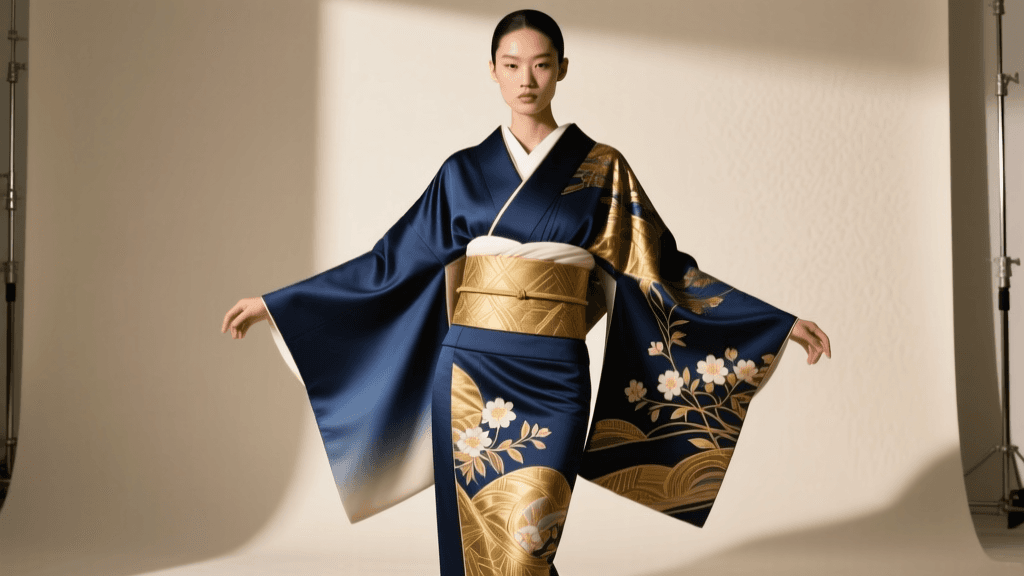
Historically, the obi is the sash used to secure the kimono, often featuring stiff, heavily brocaded textiles that provide structural support. On the 2026 runways, designers have reimagined the obi as the foundation for modern corsetry and waist-cinching outerwear. By utilizing traditional Nishijin-ori (Kyoto brocade) woven with metallic threads, European houses are crafting structured bodices that offer the rigidity of a Victorian corset but with the unmistakable visual weight and texture of Japanese ceremonial wear. These pieces often feature the traditional taiko musubi (drum bow) reinterpreted as dramatic, sculptural back details on evening gowns and tailored blazers.
Furisode Sleeves Reimagined in Outerwear
The furisode, characterized by its long, swinging sleeves, is traditionally worn by unmarried women for formal occasions. In 2026, this dramatic silhouette has been adapted into gender-neutral outerwear and avant-garde trench coats. Designers are utilizing the deep, hanging sleeve not just for visual drama, but as functional, oversized pocket compartments and layered draping elements. When constructed from lightweight, water-resistant technical silks, these furisode-inspired coats offer a striking blend of historical romance and futuristic utility, dominating the Milan Fashion Week outerwear presentations.
Sourcing Authentic Kimono Textiles for Modern Design
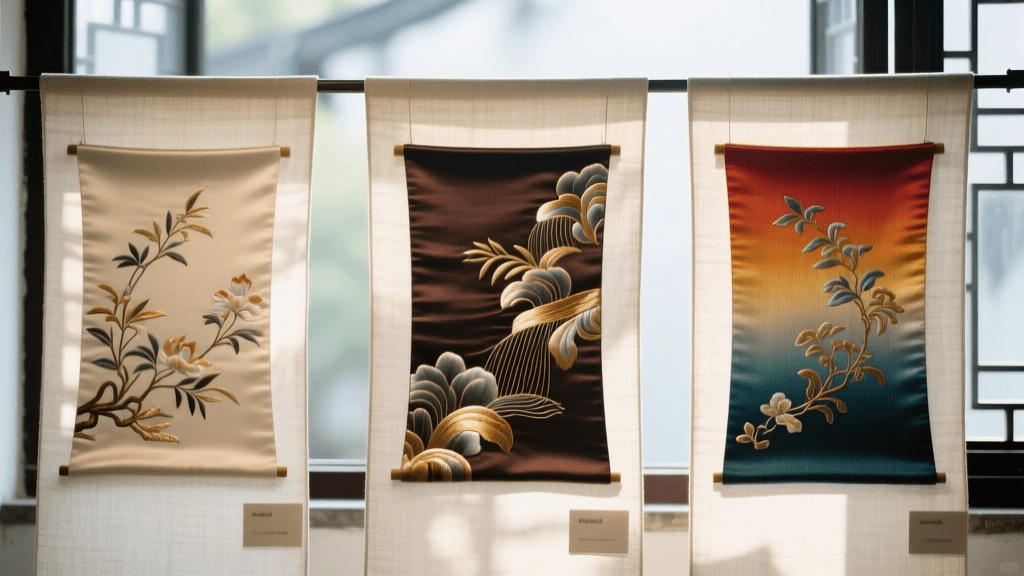
For independent designers, buyers, and collectors looking to integrate authentic Japanese textiles into their 2026 and 2027 collections, understanding the logistics of sourcing is paramount. The global demand for deadstock and newly commissioned artisanal kimono fabrics has surged, requiring precise planning and an understanding of traditional measurements.
Where to Source in 2026
While digital marketplaces offer accessibility, serious designers are returning to physical hubs in Japan to secure exclusive rights to artisanal weaves. The Nishijin Textile Center in Kyoto remains the premier destination for sourcing authentic brocades. For vintage and upcycled silks, the Tokyo Recycle Market and the monthly flea markets at Yasukuni Shrine provide access to mid-century Yuzen-dyed silks that have already undergone the initial shrinkage and color-setting processes, making them ideal for modern garment construction.
Measurements, Costs, and Lead Times
When sourcing traditional kimono silk, you are typically purchasing in units called a 'tan.' A standard tan measures approximately 38 centimeters (15 inches) in width and 12 meters (13 yards) in length. This narrow width dictates modern pattern-making, requiring designers to employ zero-waste, geometric cutting techniques similar to traditional kimono construction, or to meticulously seam multiple tans together.
- Cost: Authentic vintage deadstock Nishijin-ori rolls range from $400 to $1,500 USD in 2026, depending on the presence of gold leaf and the complexity of the weave. Hand-painted Yuzen silks command upwards of $2,000 USD per tan.
- Timing: Sourcing for Fall/Winter 2027 collections requires commissioning new weaves by March 2026. Artisanal looms in Kyoto are heavily booked, and a single custom Nishijin roll can take up to four months to complete.
- Preparation: Always factor in a 5% shrinkage rate for vintage silks when calculating yardage requirements for tailored runway pieces.
Comparative Analysis: Traditional vs. 2026 Runway Adaptations
To fully grasp how the global fashion industry has adapted the kimono, it is essential to compare the traditional garment with its contemporary runway counterparts. The following table outlines the structural and material shifts seen in the 2026 season.
| Feature | Traditional Kimono | 2026 Runway Adaptation | Practical Application |
|---|---|---|---|
| Silhouette | T-shaped, straight-lined, flat construction | Draped, darted, and tailored to the body | Integrating darts into Nishijin-ori for fitted blazers |
| Fastening | Obi sash, koshihimo ties, no buttons | Hidden magnetic closures, obi-inspired corset belts | Using magnets for seamless wrap-dress closures |
| Sleeve (Furisode) | Unattached underarm, deep swinging pocket | Attached gussets, exaggerated dropped shoulders | Creating volume in outerwear without restricting movement |
| Textile Care | Dry clean only, disassembled for washing | Treated with modern nano-coatings for water resistance | Making delicate silks viable for resort-wear collections |
Sustainability and the Upcycled Kimono Movement
A major driving force behind the kimono's presence on 2026 runways is the luxury sector's pivot toward circular fashion. According to the Ellen MacArthur Foundation's circular fashion guidelines, the industry is under immense pressure to reduce virgin textile production. The kimono offers a masterclass in sustainability. Because traditional kimono are constructed from straight cuts of a single bolt of fabric, they can be entirely deconstructed back into their original tan state without damaging the textile.
Designers are capitalizing on this by sourcing stained or damaged vintage kimono and employing traditional Boro (patchwork) and Sashiko (decorative reinforcement stitching) techniques. These mending methods, once born of necessity in rural Japan, are now celebrated as high-art embellishments on the Paris runways. A single damaged vintage silk kimono, which might sell for under $50 in a Kyoto thrift market, can be deconstructed, patched with organic indigo-dyed hemp, and reconstructed into a luxury patchwork bomber jacket retailing for over $3,000. This practice not only preserves historical textiles but also aligns perfectly with the zero-waste mandates of modern fashion conglomerates.
Furthermore, the Japanese government has been actively supporting these intersections of heritage and modern commerce. As noted by Japan's Ministry of Economy, Trade and Industry (METI), the designation of traditional crafts provides vital subsidies and international promotion for artisanal weaving and dyeing centers, ensuring that the raw materials required for these high-fashion adaptations remain viable and economically sustainable for the next generation of craftspeople.
Conclusion
The integration of the kimono into global fashion weeks in 2026 is a testament to the timelessness of Japanese design philosophy. It is no longer about merely printing cherry blossoms onto Western silhouettes; it is about respecting the geometry, the textile engineering, and the sustainable lifecycle of the garment itself. For designers and collectors, the opportunity lies in understanding the traditional metrics—the tan measurements, the obi structures, and the dyeing processes—and translating them through a modern, global lens. As the fashion industry continues to seek authenticity and sustainability, the kimono remains an endless wellspring of inspiration, proving that true tradition is not static, but constantly evolving on the world stage.