Ceremonial vs Everyday Hanbok: 2026 Fabric & Style Guide
The 2026 Hanbok Renaissance: Bridging Heritage and Daily Life
The global appreciation for traditional Asian garments has reached new heights in 2026, with the Korean hanbok leading a vibrant renaissance. Once reserved strictly for major holidays like Seollal (Lunar New Year) or Chuseok, the hanbok has evolved into a dynamic wardrobe staple. However, navigating the world of Korean traditional dress requires understanding the fundamental divide between ceremonial garments and everyday wear. Whether you are attending a traditional wedding, celebrating a child's first birthday, or simply looking to integrate elegant heritage pieces into your daily street style, knowing the distinction between ceremonial hanbok and saenghwal hanbok (everyday living hanbok) is essential.
According to the National Museum of Korea, the structural integrity and historical lineage of the hanbok remain sacred, yet contemporary designers are pushing the boundaries of textile technology and silhouette to make these garments accessible for 2026 lifestyles. This guide breaks down the anatomy, fabrics, and styling nuances of ceremonial versus everyday hanbok, ensuring you make informed, culturally respectful, and fashionable choices this year.
The Anatomy of the Garment: Core Components
Before diving into the ceremonial and everyday distinctions, it is vital to understand the foundational anatomy of the hanbok. The traditional female ensemble consists of the jeogori (a short jacket with long sleeves and a front bow tie called goreum) and the chima (a full, wrap-around skirt). The male counterpart features the jeogori paired with baji (roomy, tied trousers). While these core components remain constant, their proportions, fabrics, and fastening mechanisms shift dramatically depending on the garment's intended use.
Ceremonial Hanbok: The Weight of Tradition
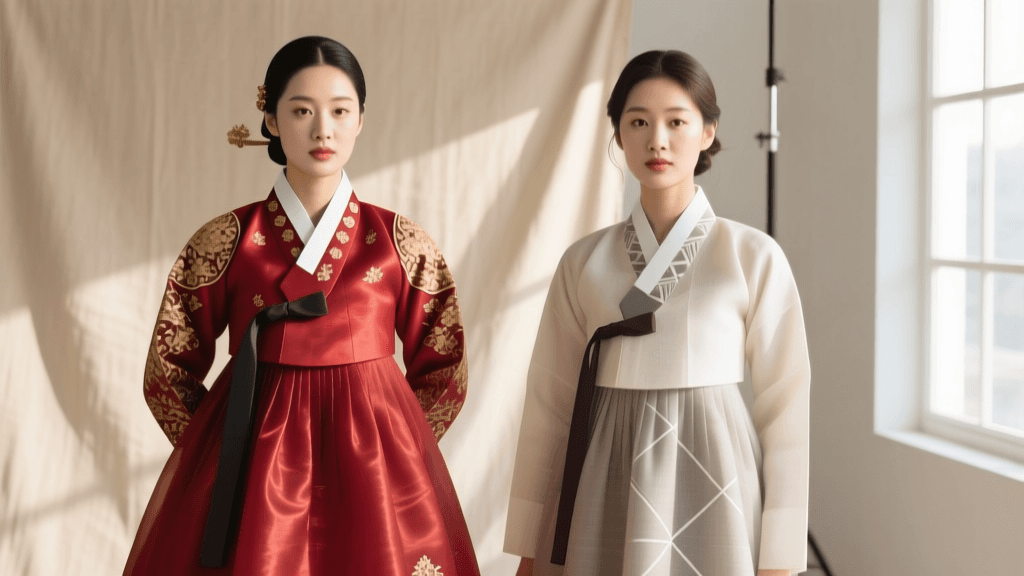
Ceremonial hanbok, encompassing Honbok (wedding attire) and Dolbok (first birthday attire), is designed to project status, solemnity, and cultural pride. These garments are heavily influenced by historical court clothing and upper-class (yangban) fashion of the Joseon Dynasty. As noted by the Metropolitan Museum of Art's Heilbrunn Timeline of Art History, historical Korean costume utilized vibrant color blocking and luxurious textiles to denote social standing and ceremonial importance.
In 2026, ceremonial hanboks continue to utilize heavy, lustrous silks such as gapsa and myeongju, often woven with metallic threads or intricate brocade patterns. The chima is exceptionally voluminous, requiring multiple petticoats (sokchima) to achieve the iconic bell shape that pools gracefully around the ankles. The jeogori features elongated sleeves and a longer hemline to maintain modesty and formality. The goreum (ties) are long, wide, and meticulously knotted, serving as a focal point of the garment. Because of the heavy silks and complex layering, ceremonial hanboks are typically dry-clean only and require careful, climate-controlled storage.
Everyday Saenghwal Hanbok: The Modern Wardrobe Staple
On the opposite end of the spectrum is the saenghwal hanbok, translated as 'living' or 'everyday' hanbok. The primary philosophy behind saenghwal hanbok is practicality without sacrificing the elegant silhouette of traditional Korean dress. In 2026, modern brands like Danha and Kim Me-hee have popularized saenghwal hanbok by adapting it for subway commutes, office environments, and casual weekend outings.
The most striking difference is the fabric. Everyday hanboks utilize washable cottons, breathable linens, and modern ramie (mosi) blends. The chima is significantly shortened, often falling to the mid-calf or just above the ankle to prevent tripping and dragging on urban streets. The volume is reduced, eliminating the need for bulky petticoats. The jeogori is tailored with a slightly wider shoulder and shorter sleeves to allow for unrestricted arm movement. Crucially, while the traditional goreum tie is retained for aesthetic purposes, modern saenghwal hanboks often incorporate hidden snap buttons or hooks beneath the jacket to keep the garment securely fastened throughout a busy day.
Comparative Analysis: Ceremonial vs. Everyday Garments
To help you choose the right garment for your needs, refer to the comprehensive comparison table below, updated with 2026 market standards and styling conventions.
| Feature | Ceremonial (Honbok / Dolbok) | Everyday (Saenghwal Hanbok) |
|---|---|---|
| Primary Fabrics | Heavy silk, brocade, metallic weaves, gapsa | Cotton, linen, ramie, washable poly-blends |
| Skirt (Chima) Length | Floor-length, pooling at the ankles | Midi to mid-calf, optimized for walking |
| Volume & Layering | High volume, requires 2-3 petticoats | Moderate volume, worn over standard undergarments |
| Sleeve Width | Wide, sweeping traditional cut | Narrower, tailored for modern mobility |
| Fastening Mechanisms | Strictly traditional long goreum ties | Hidden snaps/hooks with decorative short goreum |
| Care Instructions | Professional dry clean only, careful airing | Machine washable (gentle cycle) or hand wash |
| 2026 Avg. Price (USD) | $450 - $2,500+ (Bespoke/Luxury) | $80 - $250 (Ready-to-wear) |
Fabric Deep-Dive: What to Choose in 2026
The textile landscape in 2026 has seen a massive shift toward sustainable and climate-responsive fabrics. For everyday summer wear, mosi (ramie) remains the undisputed champion. Traditionally recognized for its crisp texture and exceptional breathability, modern 2026 ramie blends incorporate a small percentage of elastane to prevent wrinkling, making it perfect for travel. The Korean Craft and Design Foundation (KCDF) has recently highlighted several artisan cooperatives that are reviving traditional ramie weaving techniques while treating the fibers with eco-friendly, plant-based dyes.
For transitional weather (spring and autumn), washed cotton and linen-cotton blends are the standard for saenghwal hanbok. These fabrics drape beautifully, soften with each wash, and offer a matte finish that pairs wonderfully with modern accessories. Conversely, if you are sourcing a ceremonial garment, look for 'lightweight brocades.' Textile innovators in 2026 have developed Jacquard-woven silks that mimic the opulent, heavy look of historical court fabrics but weigh 40% less, preventing wearer fatigue during long wedding or holiday ceremonies.
Styling & Accessorizing for the Modern Era
Styling a hanbok in 2026 is all about harmonizing the traditional with the contemporary. For everyday saenghwal hanbok, footwear has shifted away from the traditional rubber kkotsin (which can be slippery on modern tile and concrete). Instead, fashion enthusiasts are pairing midi-length chimas with leather Mary Janes, sleek loafers, or even minimalist white sneakers for a high-low streetwear aesthetic.
Hair accessories also play a pivotal role. While ceremonial wear might call for elaborate braided hairpieces or heavy ornamental pins (binyeo), everyday styling favors the daenggi (a traditional ribbon tied at the end of a braid) or modern interpretations like silk scrunchies featuring traditional geometric motifs. When wearing a shorter, everyday jeogori, layering a simple, high-necked cotton turtleneck underneath in the winter months has become a widely accepted and stylish 2026 trend, providing warmth without disrupting the garment's neckline.
Sourcing, Pricing, and Care in 2026
If you are looking to purchase a hanbok in 2026, the market is more accessible than ever. For high-quality, ready-to-wear everyday hanbok, online bespoke platforms and established modern brands offer global shipping, with prices ranging from $80 for a basic cotton skirt to $250 for a fully tailored, premium linen set. For ceremonial garments, it is highly recommended to visit specialized boutiques in Seoul's Insadong or Bukchon Hanok Village districts, where artisans can take precise measurements and guide you through fabric selections. Ceremonial sets are an investment, starting around $450 and easily exceeding $2,000 for hand-embroidered, master-crafted wedding ensembles.
Care is paramount. While your everyday cotton hanbok can be washed on a gentle cycle with mild detergent and hung to dry away from direct sunlight, ceremonial silks must never be exposed to water. Always store silk hanboks wrapped in acid-free tissue paper or breathable cotton covers, and use natural cedar blocks rather than chemical mothballs to protect the delicate fibers and preserve the garment's structural integrity for generations to come.