2026 Hanfu Travel Wardrobe: Packing Essentials for Multi-Climate Trips
The Rise of the Hanfu Travel Capsule in 2026
The global resurgence of traditional Chinese clothing has transformed how travelers experience Asia. In 2026, Hanfu tourism is no longer confined to renting heavy, ceremonial garments at the gates of scenic spots. Instead, modern travelers and cultural enthusiasts are curating highly functional, modular Hanfu capsule wardrobes designed specifically for the rigors of multi-climate travel. Whether you are navigating the humid, subtropical streets of Guangzhou, riding the high-speed rail to the crisp, high-altitude plateaus of Yunnan, or walking the ancient, windswept walls of Xi'an, packing the right traditional garments requires a strategic blend of historical aesthetics and modern textile innovation.
Building a destination-ready Hanfu wardrobe means moving away from delicate, high-maintenance silks and embracing the cutting-edge fabric technologies that have defined the 2026 Hanfu market. This guide will walk you through the essential garments, structural hacks, and packing methodologies required to maintain an elegant, historically inspired silhouette while living out of a suitcase.
Choosing the Right Fabrics for the Modern Nomad
Historically, the prestige of Chinese garments was deeply tied to the mastery of natural fibers. The rich heritage of sericulture and silk craftsmanship in China produced textiles that were the envy of the ancient world. However, pure silk is notoriously difficult to care for on the road; it wrinkles instantly, stains easily, and requires specialized dry cleaning. For the 2026 travel season, the focus has shifted toward advanced synthetic and semi-synthetic blends that mimic the drape, luster, and breathability of traditional fabrics without the logistical nightmare.
- High-Twist Polyester Crepe: The gold standard for 2026 travel Ruqun (blouse and skirt sets). This fabric offers the fluid, waterfall drape of silk chiffon but is entirely wrinkle-resistant. You can pull it from a compression cube, shake it out, and wear it immediately.
- Tencel-Linen Blends: Perfect for summer-weight Beizi (open-front coats) and Ku (trousers). Tencel provides a cooling, moisture-wicking property, while the linen adds the subtle, textured slub that mimics historical ramie and hemp fabrics favored by scholars of the Song Dynasty.
- High-Density Poly-Brocade: Used exclusively for structured Mamianqun (horse-face skirts). Modern weaving techniques in 2026 allow for intricate, metallic-thread jacquard patterns on a polyester base that holds its pleats permanently, even after being sat on during long train journeys.
The Ultimate Multi-Climate Hanfu Packing Matrix
A successful travel capsule relies on interchangeability. By selecting separates that share a cohesive color palette and waist-to-length ratio, you can multiply your outfit combinations while minimizing luggage space. Below is the essential packing matrix for a comprehensive, multi-region trip across China in 2026.
| Garment Type | Era Inspiration | Best Climate | 2026 Fabric Recommendation | Packing Volume |
|---|---|---|---|---|
| Mamianqun (Horse-face Skirt) | Ming Dynasty | Autumn / Winter | Poly-brocade with heat-set pleats | Medium (Roll tightly) |
| Song-Style Beizi (Long Coat) | Song Dynasty | Spring / Summer | Tencel-linen blend | Low (Folds flat) |
| Jiaoling Youren (Cross-collar Top) | Tang / Ming | All Seasons (Base) | Bamboo-cotton jersey | Very Low |
| Banbi (Half-sleeve Vest) | Tang Dynasty | Spring / Autumn | Quilted cotton-poly blend | Medium |
| Pibo (Silk Scarf/Shawl) | Tang Dynasty | Variable / Evening | Wrinkle-free georgette | Negligible |
Destination Spotlight: Adapting to Regional Extremes
China's vast geography demands a versatile approach to traditional dress. Here is how to adapt your 2026 Hanfu capsule for three distinct travel corridors.
The Northern Heritage Trail (Beijing, Xi'an, Qufu)
Traveling through the northern provinces in the shoulder seasons (April or October) means dealing with biting winds and sharp temperature drops. Layering is your most critical tool. Start with a modern, thermal base layer, followed by a bamboo-cotton Jiaoling top. Add a Ming-style padded Bijia (sleeveless vest) for core warmth, and finish with a heavy poly-brocade Mamianqun. When visiting solemn, historically significant sites like the Temple and Cemetery of Confucius in Qufu, modesty and historical grounding are paramount. The structured, high-collared Ming silhouettes command respect and align perfectly with the architectural gravity of these UNESCO World Heritage locations, while keeping you insulated against the northern chill.
The Southern Water Towns (Hangzhou, Suzhou, Guangzhou)
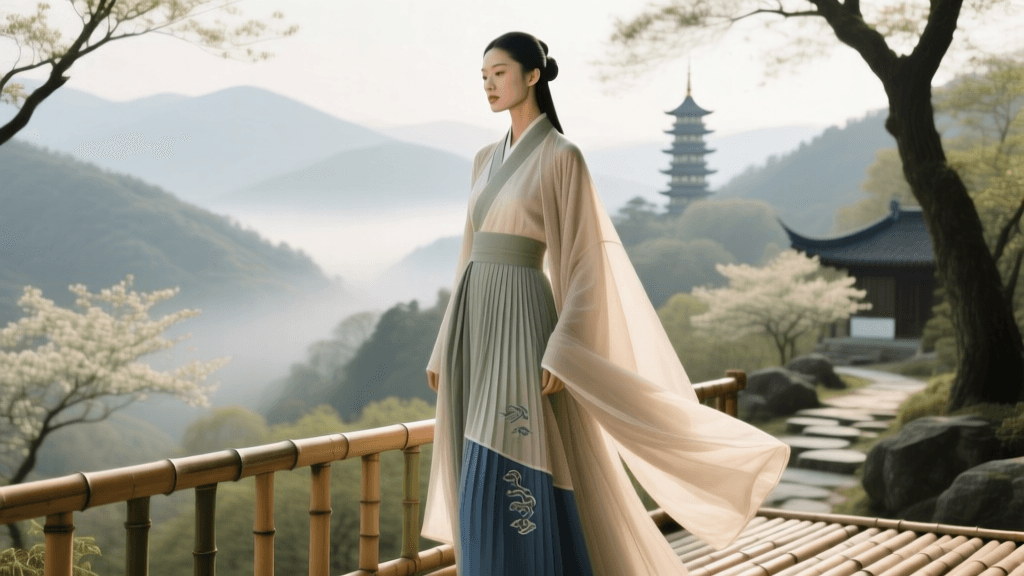
The humidity in the southern provinces can quickly turn heavy, layered garments into a suffocating burden. For these destinations, strip the wardrobe down to Song Dynasty minimalism. A lightweight, unlined Tencel Beizi worn over a modern lace-trimmed Moxiong (tube top) and wide-leg linen trousers offers maximum airflow. The elongated, vertical lines of the Beizi create an elegant, scholarly silhouette that photographs beautifully against the misty backdrops of West Lake or the classical gardens of Suzhou, without causing heat exhaustion.
The Southwestern Plateaus (Yunnan, Chengdu)
Yunnan's high-altitude regions feature intense UV exposure during the day and near-freezing temperatures at night. The key here is the Pibo (shawl) and the Banbi (vest). A vibrant, UV-protective georgette Pibo can be draped over the shoulders to protect against the harsh mountain sun, while a quilted Banbi provides an easily removable layer of insulation when the sun dips behind the Himalayas.
Modern Undergarments and Structural Hacks
The secret to wearing Hanfu comfortably in 2026 lies not in the outer layers, but in the foundational garments and structural hacks that bridge the gap between ancient design and modern mobility.
- Anti-Chafing Bike Shorts: Traditional skirts are often unlined and can be prone to flying up in the wind or clinging to the legs in high humidity. Packing two pairs of mid-thigh, moisture-wicking anti-chafing shorts is non-negotiable for the modern Hanfu traveler.
- Magnetic Closure Conversions: Traditional Jiaoling (cross-collar) tops rely on fabric ties that frequently come undone in crowded markets or on windy mountain peaks. In 2026, many travel-savvy enthusiasts use a portable sewing kit to embed small, neodymium snap magnets into the inner collar intersections, ensuring the garment stays securely closed without constant readjustment.
- The Pleat-Protector Belt: When sitting on high-speed trains or hard wooden benches, the intricate pleats of a Mamianqun can become crushed at the waist. Wearing a thin, elasticized waist-cincher over the skirt's waistband (and hidden beneath the top) helps anchor the pleats and prevents them from splaying awkwardly when seated.
Packing and Care Essentials for the Road
Proper packing and maintenance are what separate a pristine travel wardrobe from a wrinkled mess. Drawing inspiration from the textile conservation principles utilized by institutions housing major Asian textile collections, travelers can adapt museum-level care for standard hotel environments.
The Packing Methodology
Never fold a Mamianqun in half. Instead, utilize the 'roll-and-stuff' method. Lay the skirt flat, align the pleats meticulously, and roll it tightly from the hem to the waistband. Place the rolled skirt into a cylindrical packing cube to maintain tension and prevent the pleats from shifting during transit. For tops and coats, use the bundle-wrapping technique around a soft core (like a rolled-up sweater) to eliminate hard crease lines.
Hotel Sink Laundering
When washing Tencel or bamboo-cotton blends in a hotel sink, avoid standard alkaline soaps which can degrade the fibers and strip the fabric's finish. Pack a concentrated, pH-neutral travel detergent. After gently agitating the garment, never wring it out; instead, roll it in a dry, microfiber hotel towel to press out excess moisture. Hang the garment on a padded hanger in the bathroom while running a hot shower to let the ambient steam release any minor travel wrinkles.
Conclusion
Curating a Hanfu travel wardrobe in 2026 is an exercise in balancing deep cultural appreciation with the pragmatic demands of modern transit. By selecting era-appropriate silhouettes engineered with contemporary, wrinkle-resistant textiles, and by utilizing smart packing and foundational hacks, you can traverse the diverse climates of Asia in absolute comfort. Whether you are sipping tea in a humid Guangzhou teahouse or walking the ancient, windswept paths of Qufu, your modular Hanfu capsule ensures you remain elegantly connected to the region's rich sartorial heritage, no matter where the journey takes you.