Authentic Hardanger Bunad Sølje Silver: 2026 Buyer Guide
The Enduring Legacy of Hardanger Sølje
European folk dress is rarely complete without its accompanying metalwork, and few traditions rival the breathtaking intricacy of Norwegian bunad silver. Among the various regional costumes, the Hardanger bunad—often referred to as Norway's 'national bunad' due to its widespread recognition and historical significance—requires a specific, highly regulated set of silver jewelry known as sølje. As we navigate the 2026 market for traditional European garments and accessories, understanding the nuances of Hardanger silver is essential for collectors, heritage enthusiasts, and those investing in authentic folk dress.
The sølje is not merely decorative; it is a repository of family history, regional identity, and master craftsmanship. Whether you are preparing for the Syttende Mai (Constitution Day) festivities in 2026 or curating a museum-quality collection of Nordic textiles, this comprehensive guide will help you identify, evaluate, and care for authentic Hardanger bunad silver.
Anatomy of the Hardanger Silver Set
A complete Hardanger silver set is a substantial investment, both financially and culturally. The jewelry is designed to contrast brilliantly against the stark white linen and deep black wool of the traditional Hardanger garment. A full suite typically includes the following components:
1. Halsring (Neck Ring)
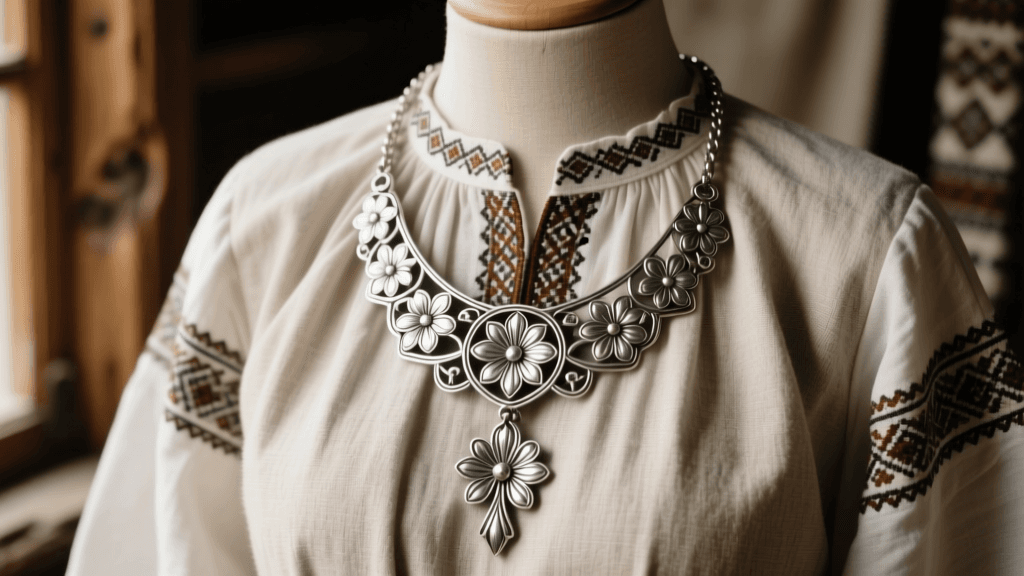
The halsring is a rigid silver collar worn tightly around the neck, resting just above the collarbone. It features a specialized hook-and-eye clasp at the front or side, often adorned with a small, decorative rosette. In 2026, ergonomic designs have slightly improved the comfort of the halsring without compromising the historical silhouette required by heritage committees.
2. Brystsølje (Breast Brooch)
The centerpiece of the ensemble, the brystølje, is a large, intricately detailed breastpiece worn at the neckline of the linen shirt. It is characterized by its elaborate filigree work and dangling elements. The brooch serves a functional purpose—fastening the front slit of the shirt—as well as a deeply symbolic one.
3. Beltespenne (Belt Buckle)
The Hardanger belt is a wide, woven band featuring vibrant geometric beadwork. The beltespenne is a heavy, rectangular or shield-shaped silver buckle that anchors the belt. It is typically crafted using a combination of cast silver and hand-applied filigree wire, often featuring intentional oxidation (darkening) in the crevices to highlight the intricate patterns.
4. Veskelås (Purse Clasp)
Traditional Hardanger purses are small, heavily beaded drawstring pouches. The veskelås is a silver clasp that secures the drawstrings, preventing the loss of the purse while it hangs from the belt or is held in the hand.
The Symbolism of the Dangling Leaves (Løv)
The most striking feature of the Hardanger brystølje is the presence of teardrop-shaped dangling silver leaves, known as løv. Folklore surrounding these elements is rich and varied. Some historians suggest the leaves represent the tears shed by a bride leaving her childhood home, while others argue they mimic the shimmering leaves of the birch trees native to the Hardangerfjord region, catching the light with every movement of the wearer.
In 2026, contemporary jewelers occasionally offer customized leaf counts, though traditionalists and official bunad committees insist on historically accurate configurations—most commonly nine or twelve leaves—to maintain the integrity of the folk dress. When purchasing vintage pieces, counting the leaves and examining their soldering points is a crucial step in verifying the piece's authenticity and historical accuracy.
830 vs. 925 Silver: Understanding Norwegian Alloys
One of the most common points of confusion for international buyers is the silver purity standard. Historically, Norwegian silver was predominantly crafted in the 830 standard (83% pure silver, 17% copper or other alloys). This alloy was favored for its durability and slightly warmer tone, which paired beautifully with the dark wool of the bunad.
Today, in 2026, most newly manufactured pieces conform to the international 925 sterling standard (92.5% pure silver). However, vintage estate pieces from the mid-20th century and earlier will almost certainly bear the 830 hallmark. Both alloys are highly valued by collectors. The 925 standard offers slightly better tarnish resistance and a brighter shine, while the 830 standard is prized by purists seeking historical accuracy. Neither is considered 'inferior'; rather, they represent different eras of Norwegian silversmithing.
2026 Market Pricing and Authenticity Guide
With silver spot prices fluctuating in early 2026, the cost of authentic bunad silver has seen a steady increase. Mass-produced, imported 'bunad-style' jewelry has flooded online marketplaces, making it vital to understand the true cost of authentic Norwegian craftsmanship. Below is a structured breakdown of average weights and estimated retail prices for authentic, newly forged Hardanger silver in 2026.
| Component | Average 925 Silver Weight | 2026 Est. Retail Price (USD) | Authenticity Notes |
|---|---|---|---|
| Brystsølje (Large Brooch) | 45g - 65g | $450 - $780 | Must feature maker's mark and 925/830 stamp. |
| Halsring (Neck Ring) | 30g - 45g | $320 - $550 | Clasp mechanism must be seamless and secure. |
| Beltespenne (Belt Buckle) | 50g - 85g | $600 - $950 | Often features intentional oxidized detailing. |
| Veskelås (Purse Clasp) | 20g - 35g | $220 - $380 | Hinge integrity and spring tension are crucial. |
| Full Set (Complete Suite) | 145g - 230g | $1,600 - $2,800+ | Buying as a set often ensures design consistency. |
Manufacturing Techniques: Hand-Forged vs. Cast
When shopping for Hardanger silver in 2026, buyers will encounter two primary manufacturing methods. Cast silver is more affordable and widely available, produced using modern 3D-printed wax molds and centrifugal casting. While high-quality casting can produce beautiful results, it often lacks the microscopic crispness of traditional methods.
Hand-forged and die-stamped pieces remain the gold standard for heritage collectors. Master silversmiths in regions like Voss and Bergen continue to use traditional steel dies, hand-drawn filigree wire, and open-flame soldering techniques. These pieces command a 30% to 50% premium in the 2026 market but offer a distinct, sharp texture and structural resilience that mass-produced casts cannot replicate. According to guidelines provided by the Norwegian Institute of Bunad and Folk Costumes, preserving these traditional manufacturing techniques is vital to the survival of the craft.
Step-by-Step Sølje Care and Maintenance for 2026
Silver tarnish (silver sulfide) is a natural chemical reaction caused by exposure to sulfur in the air, moisture, and even the natural oils in human skin. While some tarnish can give vintage pieces a desirable patina, bunad silver is traditionally worn bright and polished. Conservationists at the Norwegian Museum of Cultural History strongly advise against using harsh chemical silver dips, which can strip intentional oxidation and damage the porous structure of older 830 silver.
Follow this 2026-approved care protocol to maintain your Hardanger sølje:
- Dry Dusting: Before applying any moisture, use a soft, clean makeup brush to gently sweep dust and debris out of the intricate filigree crevices and from beneath the dangling løv.
- Mild Washing: If the piece is heavily soiled from wear, wash it in a bowl of lukewarm water with a few drops of pH-neutral dish soap. Use a soft-bristled baby toothbrush to gently agitate the dirt. Rinse thoroughly with distilled water to prevent mineral spotting.
- Targeted Polishing: Use a high-quality, treated silver polishing cloth (such as Town Talk or Hagerty). Wrap the cloth around a wooden skewer or toothpick to carefully polish the tight spaces between the filigree wires. Never polish the intentionally darkened, oxidized background areas, as this will ruin the contrast.
- Ultrasonic Caution: While modern 2026 ultrasonic cleaners are effective for solid silver, they can loosen the delicate solder joints holding the dangling leaves on older brystølje pieces. Use ultrasonic cleaning only for solid components like the halsring or beltespenne, and limit cycles to under three minutes.
- Proper Storage: Store your silver in an airtight container lined with Pacific Silvercloth or anti-tarnish strips. Keep the pieces separated in individual soft pouches to prevent the dangling leaves from scratching the flat surfaces of the belt buckle.
Sourcing Authentic Pieces Today
Acquiring authentic Hardanger silver requires diligence. In 2026, the most reliable method is to purchase directly from authorized dealers affiliated with Norges Husflidslag (The Norwegian Folk Art and Craft Association). These retailers are bound by strict quality controls and can provide certificates of origin, detailing the exact weight, alloy, and master smith responsible for the piece.
For those hunting for vintage or estate pieces, Scandinavian auction houses and specialized heritage jewelers offer incredible opportunities to own mid-century 830 silver. When evaluating vintage items, always inspect the reverse side of the brooches and buckles. Authentic hand-soldered joints will show slight, organic variations, whereas perfectly uniform, microscopic solder beads often indicate modern laser soldering or mass-production casting.
Conclusion
The Hardanger bunad sølje is a masterpiece of European folk dress, blending profound cultural symbolism with exceptional metallurgical skill. Whether you are investing in a newly forged 925 sterling suite for the 2026 Syttende Mai celebrations or carefully restoring an inherited 830 silver brystølje, understanding the anatomy, market value, and proper care of these pieces ensures they will continue to shimmer for generations to come. By prioritizing authentic craftsmanship and adhering to conservation-approved care methods, you become not just a wearer of traditional garments, but a steward of Norwegian heritage.