Sourcing Authentic Slavic Vyshyvanka & Romanian Ie: 2026 Guide
The 2026 Renaissance of Slavic and Balkan Folk Dress
As we navigate the fashion landscape of 2026, the global appreciation for slow fashion and heritage textiles has reached an unprecedented peak. Within the European folk dress category, the traditional garments of Eastern Europe and the Balkans have transitioned from regional ceremonial wear to highly sought-after masterpieces of sustainable couture. At the forefront of this movement are the Ukrainian vyshyvanka and the Romanian and Moldovan ie (traditional peasant blouse). These garments are not merely clothing; they are wearable manuscripts, encoding centuries of regional identity, spiritual protection, and artisanal mastery.
For collectors, sustainable fashion enthusiasts, and cultural historians, sourcing authentic pieces in 2026 requires a nuanced understanding of textile construction, regional motifs, and ethical procurement. This comprehensive guide will equip you with the knowledge to identify, authenticate, and care for these extraordinary Eastern European garments.
Decoding the Garments: Vyshyvanka vs. Ie
The Ukrainian Vyshyvanka
The vyshyvanka is the quintessential embroidered shirt of Ukraine, with roots tracing back to ancient Slavic pagan traditions where specific motifs were believed to ward off evil spirits. In 2026, the market is saturated with mass-produced imitations, making it vital to understand the distinct regional styles that define authentic pieces.
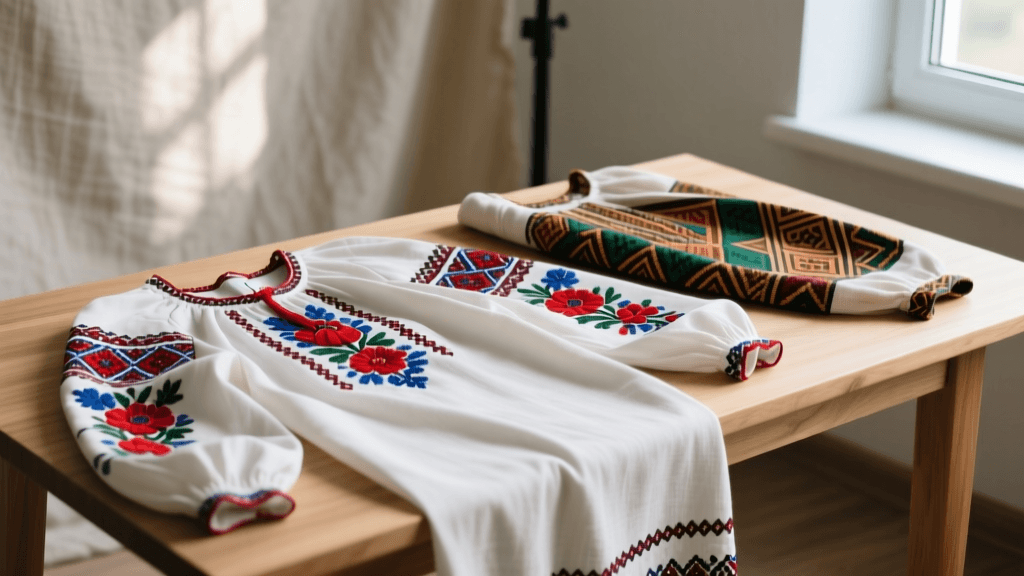
- Poltava Region: Famous for its exquisite "white-on-white" embroidery (bila po bilomu). Artisans use complex satin stitches and cutwork to create subtle, textured patterns that rely on light and shadow rather than contrasting colors.
- Hutsul Region (Carpathians): Characterized by dense, vibrant geometric patterns. The dominant colors are black, red, yellow, and green, often incorporating intricate cross-stitch and metallic thread accents.
- Borshchiv Region: Historically known for its striking black embroidery. According to local legend, women stitched black thread onto their blouses as a sign of mourning after the region's men were lost to historical conflicts, creating a hauntingly beautiful and highly collectible aesthetic.
The Romanian and Moldovan Ie
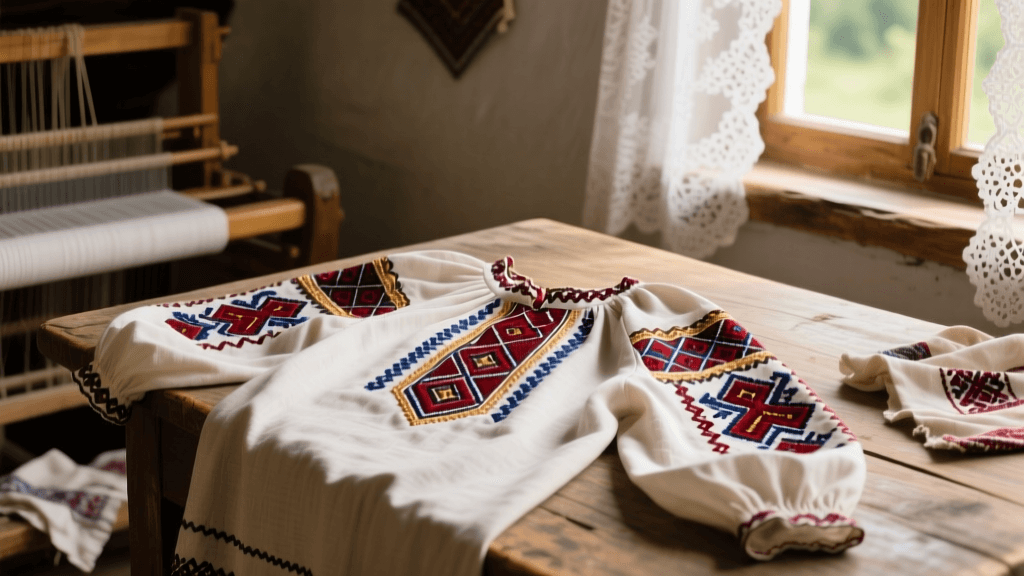
The ie is a masterclass in structural embroidery. Unlike the all-over patterns of some Slavic garments, the traditional Romanian blouse follows a strict, sacred geometry. According to cultural archives preserved by institutions like The Romanian Peasant Museum, the authentic ie is divided into three primary architectural zones:
- Altița: The decorative band on the upper shoulder. This is the most complex and visually dominant part of the blouse, historically indicating the wearer's wealth and regional origin.
- Increțul: The gathered section just below the altița, featuring smaller, denser geometric motifs that transition the eye down the sleeve.
- Râurile (The Rivers): Vertical or diagonal bands of embroidery that flow down the length of the sleeve, symbolizing the flowing rivers of the Carpathian landscape and the continuity of life.
Authentication Checklist for 2026 Buyers
With the rise of AI-generated textile patterns and automated embroidery machines, distinguishing a true heritage piece from a factory-made replica requires a trained eye. When evaluating a vyshyvanka or ie in 2026, apply the following authentication checklist:
- The Reverse-Side Test: Turn the garment inside out. Hand-embroidered pieces will show a nearly identical, albeit slightly less crisp, pattern on the reverse. More importantly, traditional techniques like the Ukrainian nyzynka (darning stitch) are designed to look almost identical on both sides. Machine embroidery will leave a chaotic web of jump stitches and bobbin thread on the back.
- Fiber Analysis: Authentic heritage blouses are woven from natural fibers. Look for hand-loomed linen, hemp, or raw cotton. If the fabric has a synthetic sheen or melts when subjected to a discreet burn test, it is a modern polyester blend.
- Thread Composition: Vintage and high-end contemporary pieces use mercerized cotton, wool, or silk threads. The slight irregularities in hand-spun or naturally dyed threads are hallmarks of human craftsmanship.
- Asymmetry and Imperfections: True folk art embraces the "flaw" as a signature of the maker. Perfectly symmetrical, mathematically flawless repeats across a large surface area are strong indicators of computerized machine embroidery.
Sourcing Channels and Pricing Table (2026)
The ethical sourcing of Eastern European folk dress has evolved significantly. In 2026, buyers are moving away from unverified third-party marketplaces and instead partnering directly with artisan cooperatives and cultural institutions. Organizations dedicated to UNESCO Intangible Cultural Heritage have helped establish transparent supply chains that ensure fair compensation for rural artisans.
| Sourcing Channel | Authenticity Guarantee | 2026 Avg. Price (USD) | Estimated Lead Time |
|---|---|---|---|
| Direct Artisan Cooperatives (e.g., Ukrainian rural guilds) | Highest; includes artisan signature and blockchain provenance certificate | $350 - $800 | 4 - 12 weeks (made-to-order) |
| Museum Gift Shops (e.g., The Ukrainian Museum) | Very High; curated by textile historians and curators | $200 - $500 | Immediate (in-stock) |
| High-End Sustainable Boutiques (European capitals) | High; vetted vintage or contemporary luxury adaptations | $600 - $1,500+ | Immediate or seasonal |
| Online Vintage & Estate Auctions | Variable; requires buyer expertise and independent verification | $150 - $2,000+ | Auction cycle dependent |
Preservation and Care for Heritage Textiles
Owning a piece of Eastern European textile heritage comes with the responsibility of proper preservation. The natural dyes and hand-loomed fibers used in traditional vyshyvankas and ies are highly sensitive to modern laundering chemicals.
- Washing: Never machine wash or dry clean these garments. The harsh agitation and chemical solvents will destroy the natural fibers and cause artisanal dyes to bleed. Hand wash in cold water (below 30°C) using a pH-neutral, conservation-grade textile detergent.
- Drying: Do not wring or twist the fabric, as this will distort the intricate embroidery stitches. Gently press the water out by rolling the garment in a clean, dry cotton towel. Lay flat to dry away from direct sunlight, which will rapidly fade natural botanical dyes like madder root and weld.
- Storage: Store the blouses flat in acid-free tissue paper inside a breathable cotton storage box. Avoid wire hangers, which can stretch the delicate hand-woven linen shoulders and cause permanent distortion of the altița embroidery.
Styling Traditional Blouses in 2026
The modern approach to styling Eastern European folk dress relies on juxtaposition. Rather than wearing the blouse as part of a full, head-to-toe traditional costume—which can veer into appropriation or caricature—contemporary stylists recommend anchoring the heritage piece with modern, minimalist tailoring.
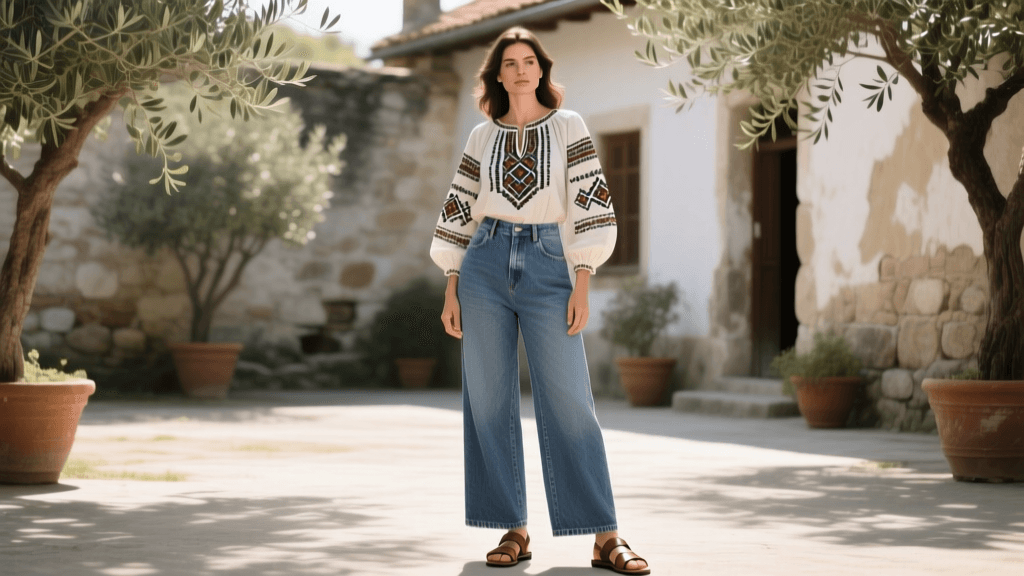
Pair a delicate, white-on-white Poltava vyshyvanka with wide-leg, high-waisted linen trousers and structured leather loafers for a sophisticated summer aesthetic. For the cooler months, a heavily embroidered Hutsul blouse layered under a sleek, unstructured wool blazer creates a striking contrast between rustic folk art and modern urban silhouettes. The Romanian ie, with its voluminous sleeves and intricate shoulder detailing, pairs beautifully with a simple midi skirt or tailored denim, allowing the altița to serve as the focal point of the ensemble.
Conclusion
The enduring appeal of the Slavic vyshyvanka and the Romanian ie lies in their profound connection to human history and the natural world. As we move through 2026, the conscious consumer's demand for garments with a soul, a story, and a sustainable footprint continues to elevate these Eastern European masterpieces. By understanding the regional nuances, demanding ethical sourcing, and practicing meticulous care, you do more than acquire a beautiful piece of clothing; you become a custodian of an ancient, living textile tradition.