Hardanger Bunad Silver Jewelry & Skaut Headwear 2026
Introduction to Hardanger Bunad Accessories
The Hardanger bunad, originating from the breathtaking fjord-carved Vestland region of Norway, is widely considered one of the most historically significant and visually striking folk dresses in Europe. While the vibrant wool skirts, linen aprons, and intricately woven belts form the foundation of this garment, it is the accompanying silver jewelry (sølv) and traditional headwear that truly elevate the ensemble into a masterpiece of cultural heritage. As we navigate through 2026, a profound resurgence in ancestral craftsmanship and sustainable heritage fashion has placed Hardanger accessories at the forefront of European folk dress revival.
Unlike mass-produced costume jewelry, authentic Hardanger silver and hand-embroidered headwear are heavily regulated by regional heritage boards. They represent generational wealth, marital status, and deep community ties. This comprehensive 2026 guide explores the anatomy of Hardanger silver, the intricate construction of the traditional skaut headwear, and practical advice for sourcing, styling, and preserving these heirloom pieces today.
The Anatomy of Hardanger Sølv (Silver Jewelry)
Hardanger silver is renowned for its bold, symbolic motifs and exceptional metalwork. Historically, rural communities utilized silver as a portable form of wealth, often melting down coins to forge brooches and neck rings. In 2026, with global silver commodity prices experiencing significant volatility, authentic bunad silversmiths are strictly adhering to traditional 830 silver alloys (83% pure silver) to maintain historical accuracy, as championed by regional preservation societies.
The Sølje (Brooch) and Halsring (Neck Ring)
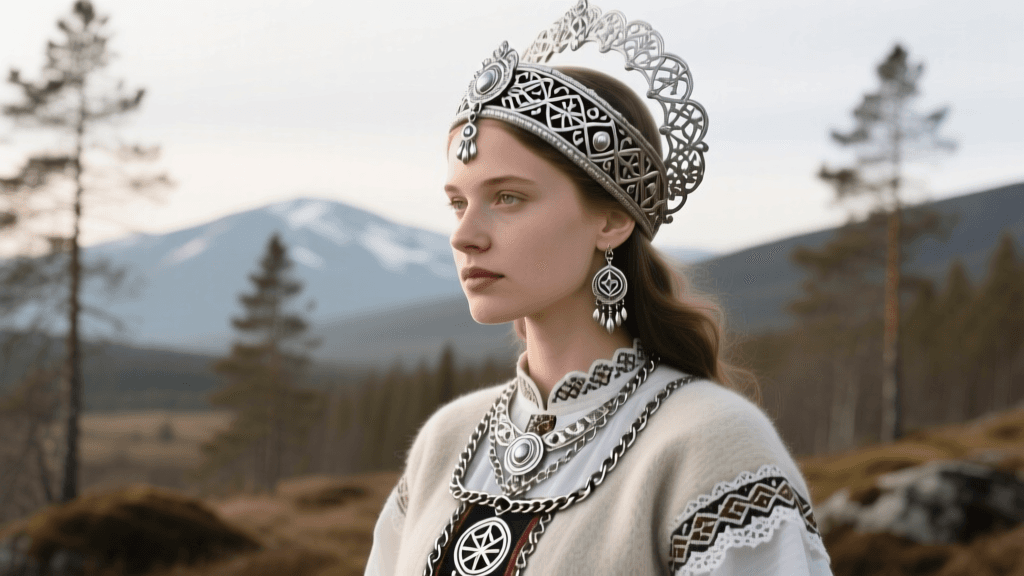
The crown jewel of the Hardanger silver collection is the sølje. Worn at the collar of the linen shirt, the traditional Hardanger sølje often features a central cross or heart motif surrounded by dangling, spoon-shaped pendants known as skjeer. These spoons symbolize abundance and the hope that the wearer will never know hunger. The halsring (neck ring) is a rigid silver collar that rests elegantly on the collarbone, often fastened with a decorative hook and eye mechanism that showcases the silversmith's mastery of traditional joinery.
The Bryststykke (Breastpiece) and Belt Accessories
Pinned to the front of the bodice, the bryststykke is a large, ornate silver plate that serves both a decorative and structural purpose, helping to secure the heavy wool bodice. Modern 2026 reproductions often feature intricate filigree work and repoussé techniques that mimic 18th-century agrarian designs. Completing the metalwork are the beltespenne (belt buckle), vespestikke (purse clasp), and mansjettknapper (cufflinks), all of which must harmonize in motif and finish. According to the Norwegian Institute of Bunad and Folk Costumes, maintaining regional consistency across all metal accessories is paramount for historical authenticity.
Traditional Headwear: The Skaut, Band, and Brudekrone
In Hardanger folk dress, headwear is not merely an accessory; it is a strict visual indicator of a woman's age, marital status, and role within the community. The rules governing headwear are deeply ingrained in local tradition and are meticulously observed during national holidays like Constitution Day (Syttende Mai) and summer weddings.
The Skaut: Married Women's Headdress
The skaut is the formal headwear reserved exclusively for married women. It is a marvel of textile engineering, constructed from crisp, white linen and folded into a complex, structured shape that frames the face. The true artistry of the skaut lies in its kvitsaum (whitework embroidery). Artisans employ specialized techniques such as hardangersaum (geometric cutwork) and rikke (drawn thread work) to create lace-like patterns directly within the linen weave.
As of 2026, the demand for custom, locally embroidered skauts has outpaced the supply of master embroiderers in the Vestland region. Consequently, brides and married women are advised to commission their headwear up to 18 months in advance. The Norwegian Museum of Cultural History notes that the preservation of these specific whitework stitches is currently a major focus of national textile conservation efforts.
The Band and the Brudekrone
Unmarried women and young girls traditionally wear a band, a stiffened ribbon often adorned with metallic threads, beads, or subtle embroidery, which wraps around the head and ties at the nape of the neck. For a bride, however, the brudekrone (bridal crown) takes center stage. Historically made of silver, brass, or even gilded cardboard adorned with glass stones and ribbons, the bridal crown is a towering, intricate piece that signifies the bride's purity and her transition into married life. Many families in 2026 are choosing to rent antique brudekroner from local heritage museums rather than commission new ones, honoring the circular economy and historical continuity.
2026 Market Guide: Sourcing and Pricing
Acquiring authentic Hardanger accessories requires navigating a specialized market of certified silversmiths and heritage textile artisans. Below is a comparative overview of estimated costs and wait times for new, custom-commissioned pieces in the current 2026 market.
| Accessory Type | Material / Technique | Estimated 2026 Price (NOK) | Artisan Waitlist |
|---|---|---|---|
| Full Silver Set (Sølvsett) | 830 Silver, Cast & Filigree | 38,000 - 48,000 NOK | 6 - 9 Months |
| Antique Sølje (Restored) | Vintage 830/925 Silver | 8,000 - 15,000 NOK | Immediate (Auction/Dealer) |
| Custom Skaut (Married) | Linen, Hardangersaum & Rikke | 6,500 - 9,000 NOK | 12 - 18 Months |
| Unmarried Band | Silk Ribbon, Metallic Thread | 1,200 - 2,500 NOK | 2 - 4 Months |
'When investing in bunad silver, always verify the maker's mark and the silver content hallmark. In 2026, the influx of overseas mass-produced imitations makes purchasing from certified Norwegian guild members more critical than ever.' — Heritage Textile & Metalwork Advisory Board.
Care, Maintenance, and Preservation
Proper care is essential to ensure these heirloom pieces survive for future generations. The high copper content in 830 silver makes it more prone to tarnishing than modern 925 sterling silver, requiring a dedicated maintenance routine.
Polishing and Storing Silver
- Avoid Harsh Dips: Never use liquid chemical silver dips, as they can strip the intentional oxidation (patina) that highlights the intricate filigree and repoussé details of the Hardanger designs.
- Gentle Polishing: Use a high-quality, untreated microfiber cloth or a specialized silver polishing cloth infused with mild anti-tarnish agents. For deep crevices, a soft-bristled baby toothbrush with a paste of baking soda and water can be used sparingly.
- Storage: Store silver in airtight, anti-tarnish flannel bags. Placing a piece of standard white chalk or a silica gel packet inside the storage box will absorb ambient moisture and significantly slow the tarnishing process.
Preserving the Skaut and Linens
The whitework embroidery of the skaut is highly susceptible to environmental damage, discoloration, and structural weakening.
- Washing: Hand wash the linen skaut in lukewarm water using a pH-neutral, enzyme-free detergent designed for delicate heritage textiles. Never wring or twist the fabric, as this will distort the drawn thread work.
- Starching and Ironing: Traditional skauts require a light application of spray starch to maintain their rigid, folded structure. Iron the piece while it is still slightly damp, using a medium-hot iron on the reverse side to protect the raised embroidery stitches.
- Archival Storage: When not in use, wrap the skaut in acid-free, unbuffered tissue paper and store it in a cedar or archival-quality cardboard box away from direct sunlight to prevent the linen from yellowing.
Conclusion: Wearing Heritage in the Modern Era
The Hardanger bunad and its accompanying accessories are far more than historical costumes; they are living, breathing testaments to Norwegian artistry, community identity, and generational continuity. Whether you are commissioning a new 830 silver sølje, patiently awaiting the completion of a hand-embroidered skaut, or carefully restoring an inherited brudekrone, you are participating in a vibrant cultural dialogue. As documented by researchers at the Museum of Cultural History in Oslo, the meticulous preservation of regional folk dress accessories ensures that the stories woven into linen and forged in silver will continue to resonate throughout the 21st century and beyond.