Hardanger Bunad Bodice Construction: 2026 Pattern Guide
Introduction to Hardanger Bunad Tailoring in 2026
The Hardanger bunad remains one of Norway's most iconic and meticulously constructed folk dresses, renowned for its striking silhouette, intricate wool embroidery, and heavy silver filigree. As we move through 2026, the revival of heritage tailoring has brought a renewed focus on the structural integrity of traditional European folk garments. Modern makers and historical costumers alike are moving away from fast-fashion approximations, seeking instead to master the authentic construction patterns and techniques that allow these garments to last for generations. According to the Norwegian Institute of Bunad and Folk Costume, preserving the authentic tailoring methods of the 'liv' (bodice) is just as critical as preserving the regional embroidery motifs. This comprehensive guide will walk you through the precise pattern drafting, structural interfacing, and peplum construction techniques required to build a historically accurate Hardanger bunad bodice using the best sustainable materials available in 2026.
The Architecture of the Hardanger Bodice
Unlike a simple vest or a modern fitted top, the Hardanger bunad bodice is a highly structured garment designed to shape the torso, support heavy silver embellishments, and transition seamlessly into the pleated peplum (skjøt) at the hips. The silhouette is characterized by a deep V-neckline, a snug fit through the waist, and a flared hip extension that sits over the skirt waistband. The structural foundation of this garment relies heavily on internal canvas, precise dart manipulation, and specialized seam finishing. Understanding the historical tailoring techniques that influenced 19th-century European folk dress is essential; resources like the Victoria and Albert Museum's Fashion Collection provide invaluable context on how rural tailors adapted urban corsetry and bodice-blocking techniques into regional folk costumes.
2026 Material Sourcing: Traditional vs. Sustainable Alternatives
Sourcing the correct materials is the first step in authentic bunad construction. In 2026, the textile industry has made massive strides in sustainable heritage fabrics, allowing tailors to maintain historical accuracy without relying on ecologically damaging processes. Below is a comparison of traditional materials and their modern, sustainable equivalents for bodice construction.
| Component | Traditional Material | 2026 Sustainable Alternative | Weight / Specification |
|---|---|---|---|
| Outer Fabric | 100% Worsted Wool | Recycled Mulesing-Free Wool Blend | 250-300 g/m² |
| Structural Interfacing | Horsehair Canvas | Organic Hemp/Bamboo Tailoring Canvas | 180-200 g/m² |
| Bodice Lining | Bleached Linen | GOTS-Certified Raw European Linen | 120-140 g/m² |
| Seam Binding | Cotton Twill Tape | Recycled Cotton Herringbone Tape | 12mm width |
Drafting the Base Pattern Block
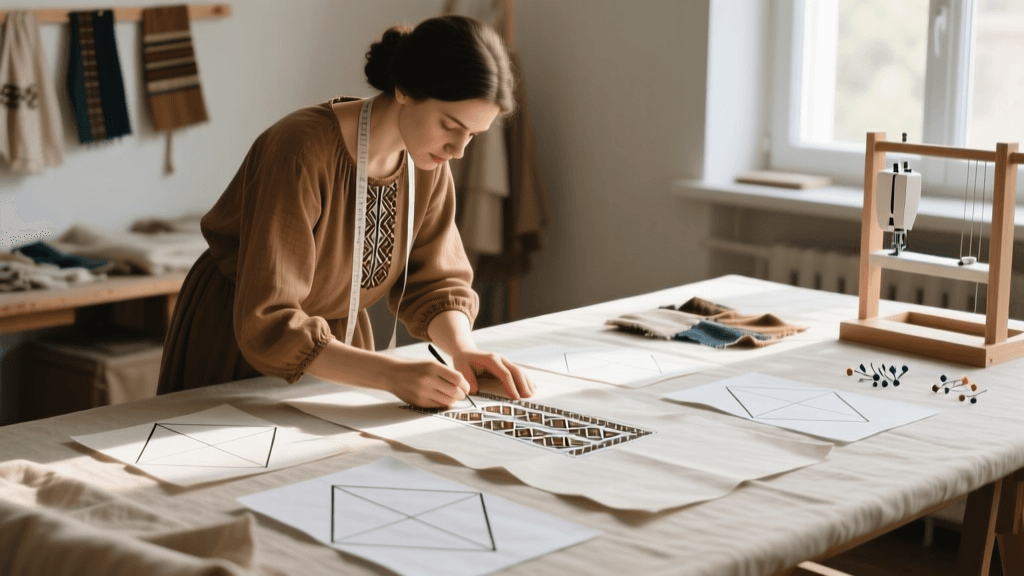
Drafting the Hardanger bodice requires a specialized approach to princess seams and armscye (armhole) depth. Because the bunad is worn over a linen underdress (serk), you must account for an additional 2 to 3 centimeters of ease across the bust and back compared to a standard modern sloper. Begin by taking the following precise measurements over the undergarments you intend to wear:
- Full Bust: Measure around the fullest point, ensuring the tape is level across the back.
- Underbust: Measure snugly directly beneath the bustline; this will dictate the lower edge of the structured bodice.
- Back Width: Measure across the shoulder blades from armhole to armhole.
- Waist to Hip: Measure from the natural waist down to the iliac crest, which determines the length of the peplum.
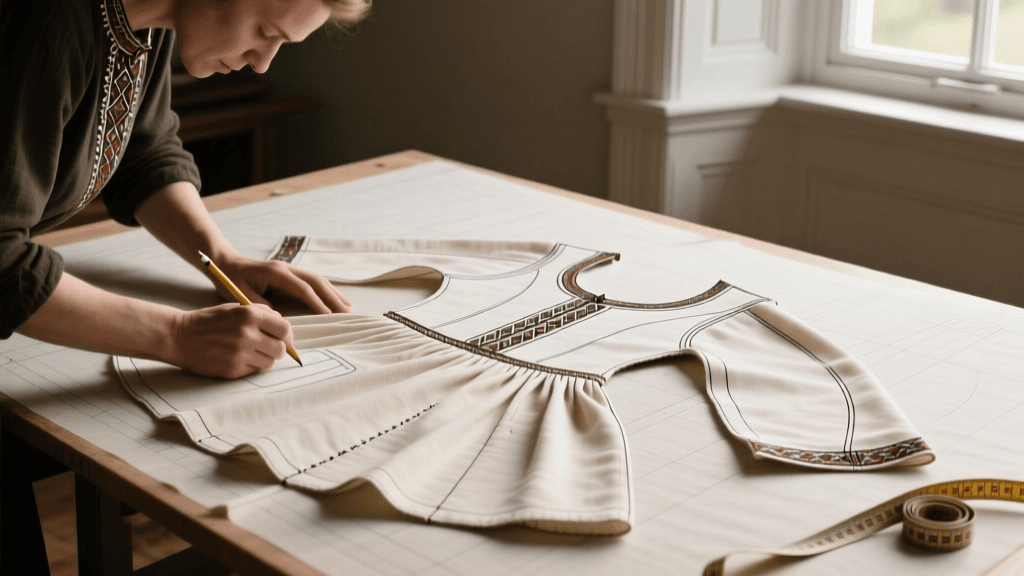
Once your base block is drafted, manipulate the waist darts into traditional princess seams. The front princess seam should originate from the midpoint of the shoulder and curve gently inward toward the waist, then flare out slightly to accommodate the hip. The back panels typically feature two smaller darts rather than full princess seams, maintaining a smoother line across the shoulder blades to support the heavy wool skirt that will be laced or hooked over the bodice.
Structural Interfacing and Pad Stitching
The secret to a bunad that maintains its shape for decades lies in the internal canvas. Do not use modern fusible interfacing; the heat and adhesives will degrade the wool over time and create an unnatural, stiff drape. Instead, cut your organic hemp canvas to match the front panels and the peplum pieces, stopping exactly at the seam lines.
Baste the canvas to the wrong side of the wool outer fabric using long, diagonal basting stitches. Next, execute traditional pad stitching along the front edges and the V-neckline. Pad stitching involves making small, diagonal stitches (approximately 5mm apart) that catch only a single thread of the outer wool fabric while taking a slightly longer bite of the canvas. This technique forces the canvas and wool to behave as a single, moldable unit. When pressed over a tailor's ham using a damp pressing cloth and an iron set to 160°C, the pad-stitched edges will naturally roll inward, creating a beautiful, contoured fit that hugs the torso without buckling.
Constructing the Peplum (Skjøt)
The peplum, or hip flap, is a defining feature of the Hardanger bodice. It is designed to protect the waistline of the heavy wool skirt from friction and wear. The peplum is typically constructed from three to five panels, heavily interfaced with canvas, and finished with cartridge pleats or deep knife pleats at the side seams to allow for movement.
To construct the side pleats, mark your fold lines at precise 2-centimeter intervals on the wrong side of the peplum side panels. Fold the fabric along these lines and press sharply. To secure the pleats internally without visible topstitching, use a catch-stitch to anchor the inner folds of the pleat to the hemp canvas layer. This ensures the pleats remain crisp and structured, even when the wearer is sitting or dancing during folk festivals. The bottom edge of the peplum must be finished with a wide, bias-cut facing made from the same wool, which provides a clean, durable hem that resists stretching.
Reinforcing for Silver Filigree (Sølje)
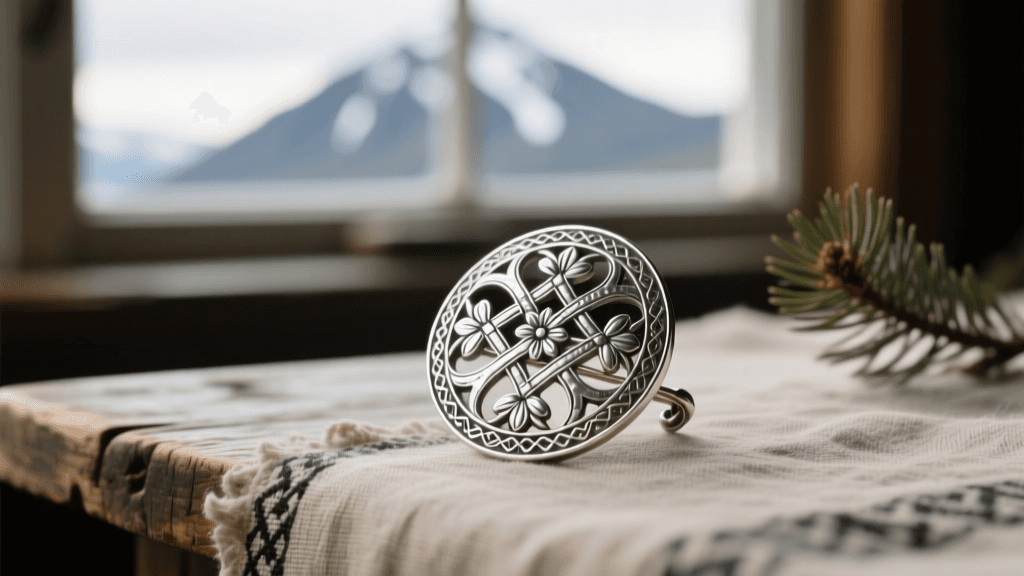
A fully accessorized Hardanger bunad features substantial silver filigree clasps (sølje) down the front opening and at the shoulder straps. The weight of these silver pieces can easily tear through unreinforced wool. According to preservation guidelines highlighted by the Metropolitan Museum of Art Costume Institute, historical garments that survive with their original metalwork intact almost always feature hidden structural reinforcements behind the stress points.
To replicate this in your 2026 build, sew a length of heavy-duty recycled cotton herringbone tape directly over the hemp canvas on the inside of the front opening, precisely where the buttonholes and silver hooks will be placed. When you cut your buttonholes, cut through all three layers (wool, tape, and canvas) and bind them with a tight, hand-worked buttonhole stitch using heavy silk twist thread. This creates an anchor point that distributes the weight of the silver across the entire canvas structure, preventing the wool from sagging or tearing over years of use.
According to master tailors in the Voss and Hardanger regions, the true hallmark of a heritage bunad is not found in the brightness of the embroidery, but in the invisible architecture of the bodice. A well-canvassed liv will mold to the wearer's body over time, becoming a second skin that supports the garment's heavy textiles and silver with effortless grace.
Final Assembly and Lining
Once the outer shell, canvas, and peplum are fully constructed and pressed, it is time to attach the GOTS-certified raw linen lining. Cut the lining pieces slightly smaller than the outer shell—about 2 millimeters smaller along all outer edges. This technique, known as 'undercutting,' ensures that the lining never rolls to the outside of the garment. Slip-stitch the lining to the inner edges of the wool facings using a fine silk thread, leaving a small gap at the bottom of the peplum to allow the layers to shift independently during movement.
By combining meticulous 19th-century pattern drafting techniques with the best sustainable textiles of 2026, you can create a Hardanger bunad bodice that is not only a stunning example of European folk dress but a durable, wearable heirloom. The time invested in pad stitching, proper canvas selection, and structural reinforcement will pay dividends every time the garment is worn, ensuring that this vital piece of cultural heritage continues to thrive in the modern era.