Styling Haori and Noragi Jackets in 2026 Modern Wardrobes
The Neo-Heritage Movement of 2026
As we navigate the global fashion landscape of 2026, the intersection of traditional Asian garments and contemporary Western wardrobes has evolved from a niche subculture into a mainstream style pillar. The 'Neo-Heritage' movement is no longer just about wearing cultural artifacts as costumes; it is about thoughtful integration, sustainable sourcing, and respectful styling. Among the most versatile and visually striking pieces leading this charge are the Japanese Haori and Noragi jackets. When styled correctly, these traditional garments offer a masterclass in silhouette, texture, and historical depth, elevating modern minimalist capsules into works of wearable art.
Integrating these pieces requires an understanding of their origins, structural nuances, and the current 2026 market for both vintage and contemporary artisanal reproductions. Whether you are looking to add a layer of sophisticated drape to your corporate attire or inject artisanal indigo into your weekend streetwear, mastering the Haori and Noragi is essential for the modern sartorialist.
Understanding the Foundations: Haori vs. Noragi
Before attempting to mix these garments with modern clothing, one must understand their distinct historical contexts and structural differences. According to the Metropolitan Museum of Art, the evolution of Japanese textiles and garments is deeply tied to social class, function, and regional craftsmanship, which directly informs how they drape and feel on the body today.
The Haori: Elegance and Drape
The Haori is a traditional hip- or thigh-length kimono-style jacket, historically worn over the kosode (a predecessor to the modern kimono). Originally popularized by samurai and later adopted by the merchant classes, the Haori is characterized by its open front, lack of overlapping lapels, and wide, flowing sleeves (sode). It is typically crafted from silk, featuring either subtle woven patterns (kasuri) or elaborate hand-painted linings. In a modern context, the Haori acts as an unstructured, fluid overcoat that adds movement and a soft, architectural silhouette to any outfit.
The Noragi: Structure and Utility
Conversely, the Noragi represents the agrarian and working-class roots of Japanese textile history. Designed as a durable work jacket for farmers and laborers, the Noragi is constructed from heavy, resilient fabrics like cotton, hemp, or sashiko-quilted textiles. It often features a structured collar, a tied front, and reinforced stitching. The Noragi is the historical ancestor of modern workwear jackets, making it an incredibly natural fit for contemporary streetwear and rugged casual capsules.
Outfit Formula 1: The Creative Corporate (Haori)
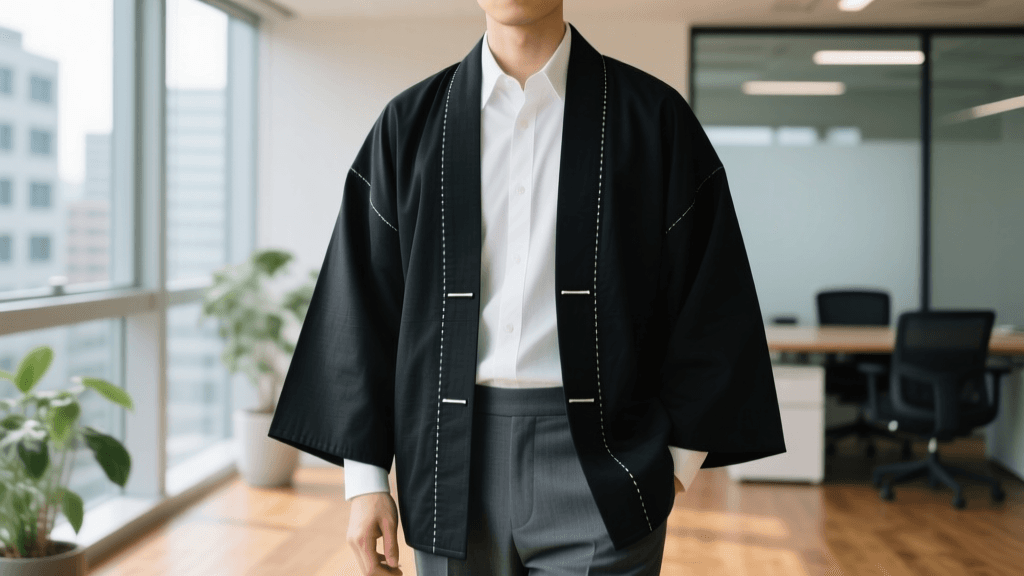
For the modern creative professional in 2026, the strict suiting rules of the past decade have given way to 'soft tailoring' and expressive layering. A vintage or artisanal Haori is the perfect replacement for the standard wool blazer in creative corporate environments.
- The Base Layer: Start with a fine-gauge merino wool mock-neck or turtleneck in charcoal, navy, or deep olive. The high collar mirrors the high neckline of traditional Japanese under-layers, providing a clean canvas that prevents the open Haori from looking sloppy.
- The Trousers: Opt for high-waisted, wide-leg wool trousers with a single pleat. The volume of the trousers balances the wide sleeves of the Haori, maintaining a cohesive, intentional silhouette.
- The Haori Selection: Choose a Haori in a solid, muted tone like matte black, deep plum, or a subtle geometric kasuri weave. Avoid overly bright ceremonial silks, which can clash with office lighting and feel costumey.
- Footwear and Accessories: Ground the outfit with chunky lug-sole loafers or split-toe leather derbies. Instead of the traditional woven haori himo (cords), use a minimalist matte-metal lapel pin to secure the collar slightly if needed, or simply let it hang open for a relaxed drape.
Outfit Formula 2: Elevated Streetwear (Noragi)
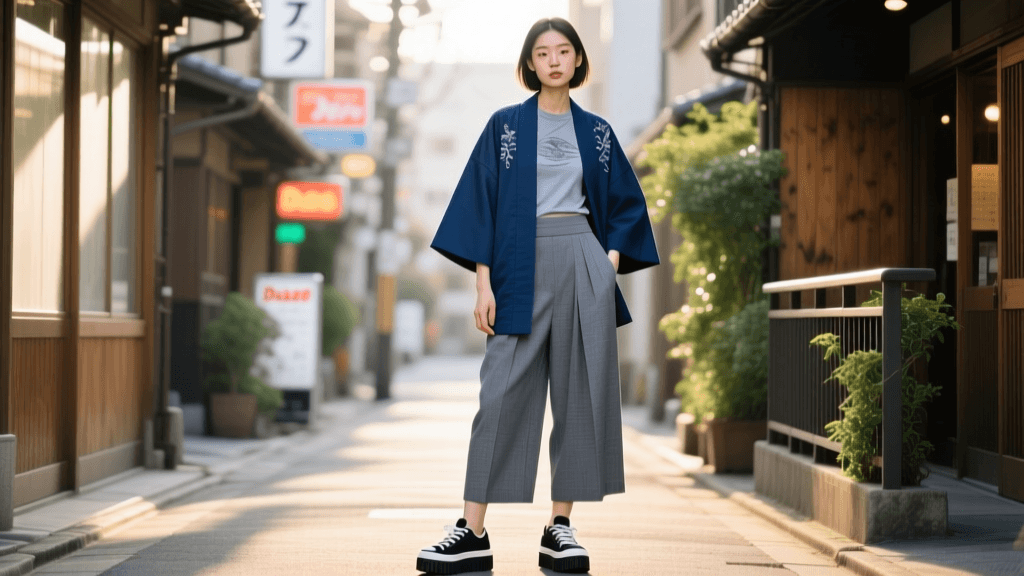
Streetwear in 2026 continues to favor relaxed silhouettes, but with a heavy emphasis on heritage fabrics and artisanal craftsmanship. The Noragi bridges the gap between vintage Americana workwear and Japanese heritage fashion.
- The Base Layer: A heavyweight, boxy-fit cotton t-shirt or a faded, breathable linen button-down. Earth tones like ochre, slate, and off-white work best to complement the deep blues of traditional indigo.
- The Bottoms: Wide-leg selvedge denim or heavy canvas utility pants. The rugged texture of the denim pairs perfectly with the utilitarian history of the Noragi.
- The Noragi Selection: Look for a vintage sashiko-stitched Noragi or a modern reproduction dyed with natural ai (Japanese indigo). The fading and patina on vintage pieces add an irreplaceable layer of character that modern fast-fashion cannot replicate.
- Footwear: Retro-runner sneakers with suede overlays or heavy-duty canvas lace-up boots. The contrast between the historical jacket and modern technical footwear is a hallmark of 2026 neo-heritage styling.
Comparison Chart: Integrating Asian Outerwear in 2026
| Feature | Haori | Noragi |
|---|---|---|
| Historical Origin | Samurai / Elite Merchant Class | Peasant / Agrarian Workwear |
| Primary Fabrics | Silk, Crepe, Brocade | Cotton, Hemp, Sashiko Quilting |
| Modern Silhouette | Fluid, Unstructured, Open Front | Boxy, Structured, Tie-Front |
| Best 2026 Pairing | Soft Tailoring, Knitwear, Trousers | Denim, Canvas, Streetwear Sneakers |
| Average Market Price | $80 - $250 (Vintage) / $400+ (Artisan) | $150 - $400 (Vintage) / $500+ (Artisan) |
| Care Requirement | Professional Dry Clean / Spot Treat | Gentle Hand Wash / Indigo Re-dyeing |
Sourcing and Pricing in the 2026 Market
Navigating the vintage and artisanal market in 2026 requires a discerning eye. The surge in popularity of Japanese heritage wear has led to a proliferation of high-quality reproductions alongside genuine vintage pieces. The Victoria and Albert Museum notes that the global appreciation for Asian textile techniques has significantly driven up the value of well-preserved, historically significant garments.
For authentic vintage Haori, specialized online exporters based in Kyoto and Tokyo offer verified pieces ranging from $80 for simple, unpatterned silk jackets to over $250 for those featuring intricate hand-painted linings or rare kasuri weaves. When shopping for Noragi, look for sellers who provide macro-photography of the sashiko stitching and evidence of natural indigo dye, which fades to a distinctive, chalky blue over time, unlike the flat, synthetic indigo used in mass-market replicas. Investing in artisanal reproductions from contemporary heritage brands is also a viable route, with prices typically starting around $400, reflecting the cost of natural dyes and hand-loomed fabrics.
Care, Maintenance, and Preservation
Proper maintenance of these historical textiles is crucial for longevity. Vintage silk Haori are particularly sensitive to light and moisture. Never hang a silk Haori on a standard wire hanger; the weight of the fabric will distort the shoulders. Instead, store them flat or on wide, padded wooden hangers in a breathable cotton garment bag away from direct sunlight.
For cotton and hemp Noragi, especially those dyed with natural indigo, washing requires a gentle touch. Indigo will naturally bleed and fade, which is part of the garment's evolving beauty. However, to preserve the structural integrity of sashiko quilting, hand wash the jacket in cold water using a pH-neutral detergent specifically formulated for delicate natural fibers. According to guidelines referenced by the V&A Conservation Department, avoiding harsh alkaline soaps and mechanical agitation is paramount when dealing with historical protein and cellulose fibers. Air dry the Noragi flat in the shade, and use a soft-bristled brush to remove surface dust from heavy canvas or quilted sections between wears.
Conclusion
Mixing traditional Asian pieces with modern wardrobes in 2026 is an exercise in cultural appreciation, sustainable fashion, and personal expression. By understanding the distinct histories of the Haori and Noragi, and by carefully selecting complementary modern basics, you can build a wardrobe that honors the past while firmly rooted in the present. Whether draped over a merino turtleneck in a minimalist studio or layered over raw denim on the city streets, these garments prove that true style transcends both time and geography.