Modern Haori Styling 2026: Mix Traditional Asian & Urban Wear
The Renaissance of Heritage Outerwear in 2026
As we navigate the 2026 fashion landscape, the global appetite for "quiet luxury" and heritage craftsmanship has reached a defining peak. Discerning wardrobes are moving away from hyper-branded streetwear, leaning instead into garments that carry historical weight, artisanal construction, and timeless versatility. At the forefront of this East-meets-West sartorial movement are traditional Asian outerwear pieces—specifically the Japanese haori and the Chinese Tangzhuang (Mandarin collar jacket). Once reserved strictly for ceremonial occasions or cultural festivals, these garments have been reimagined by contemporary stylists and heritage enthusiasts as the ultimate transitional layers for modern urban living.
Mixing traditional Asian pieces with a modern wardrobe is not about creating a costume; it is about juxtaposing the structured, historical silhouettes of the East with the relaxed, utilitarian lines of contemporary Western fashion. According to the Victoria and Albert Museum's extensive archives on the evolution of the kimono and its layers, the haori was historically worn as a protective outer layer over the kimono, a functional purpose that translates seamlessly into today's need for versatile, lightweight outerwear. In 2026, mastering this blend requires an understanding of proportion, fabric technology, and cultural respect.
The Haori: From Ceremonial Layer to Urban Staple
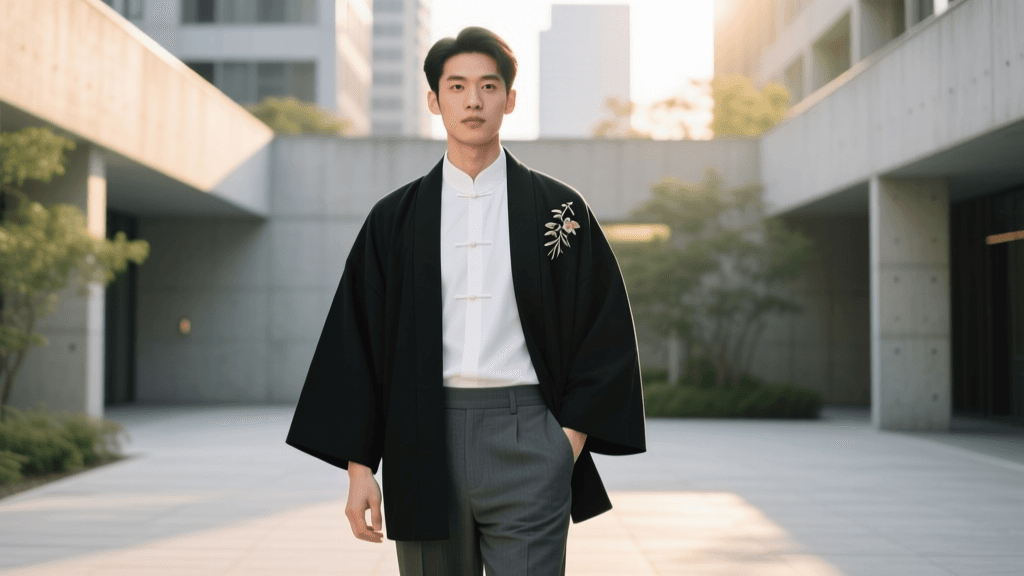
The haori is a hip- or thigh-length jacket with wide sleeves and an open front, traditionally secured by a braided cord known as a haori himo. Its lack of buttons or zippers gives it a fluid, forgiving drape that makes it an exceptional layering piece over modern basics. In 2026, the most compelling way to style a vintage or contemporary silk haori is by contrasting its delicate, often hand-painted or woven motifs with rugged, utilitarian textiles.
The Urban Contrast Formula
Consider pairing a mid-length, indigo-dyed cotton haori with raw, wide-leg selvedge denim and a heavyweight organic cotton t-shirt. The stiffness of the raw denim grounds the ethereal drape of the haori, while a minimalist leather crossbody bag adds a distinctly modern, metropolitan edge. For cooler autumn months in 2026, layer a fine-gauge merino wool turtleneck beneath a padded, tech-fabric haori—a modern innovation that retains the traditional T-shape silhouette while offering climate-responsive insulation for city commuters.
The Mandarin Collar Jacket in the Contemporary Office
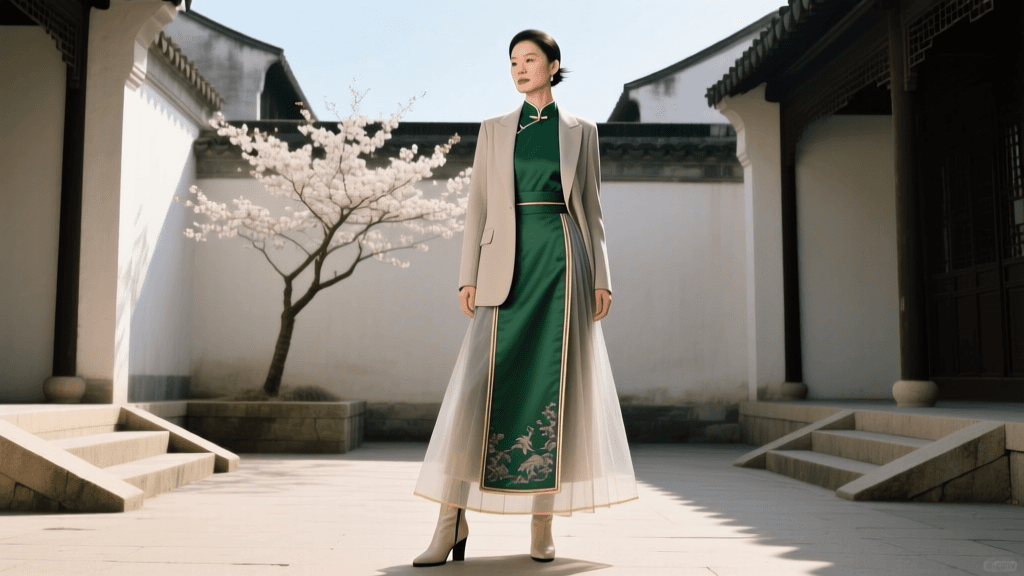
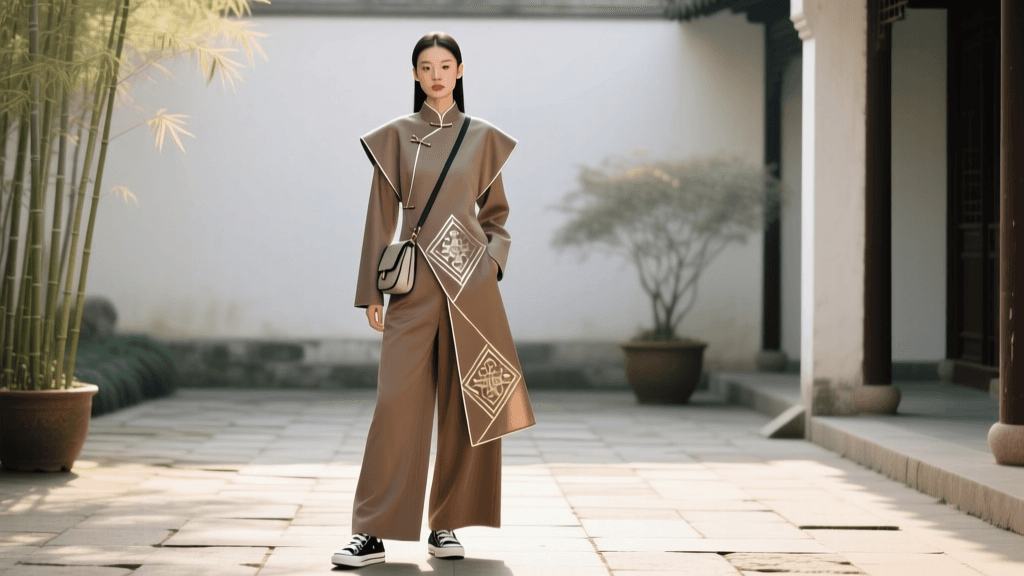
The Mandarin collar jacket, characterized by its short, unfolded stand-up collar and central frog fastenings (pankou), offers a masterclass in minimalist elegance. While heavily brocaded, stiff tourist-market versions are best avoided, the 2026 iteration of this garment favors matte crepes, sustainable Tencel-linen blends, and unstructured tailoring. It serves as a brilliant alternative to the standard Western blazer in creative and modern corporate environments.
- The Monochromatic Office Look: A charcoal grey, matte-silk Mandarin collar jacket worn over a matching high-waisted, pleated wide-leg trouser. This creates a continuous vertical line that is both commanding and deeply sophisticated.
- The Smart-Casual Weekend: A relaxed, unlined linen Tangzhuang in a muted sage green, layered over a crisp white poplin shirt (left untucked) and tailored olive chinos. Leave the top two frog fastenings undone to mimic the relaxed vibe of a modern cardigan.
Fabric Technology and Heritage Textiles: A 2026 Comparison
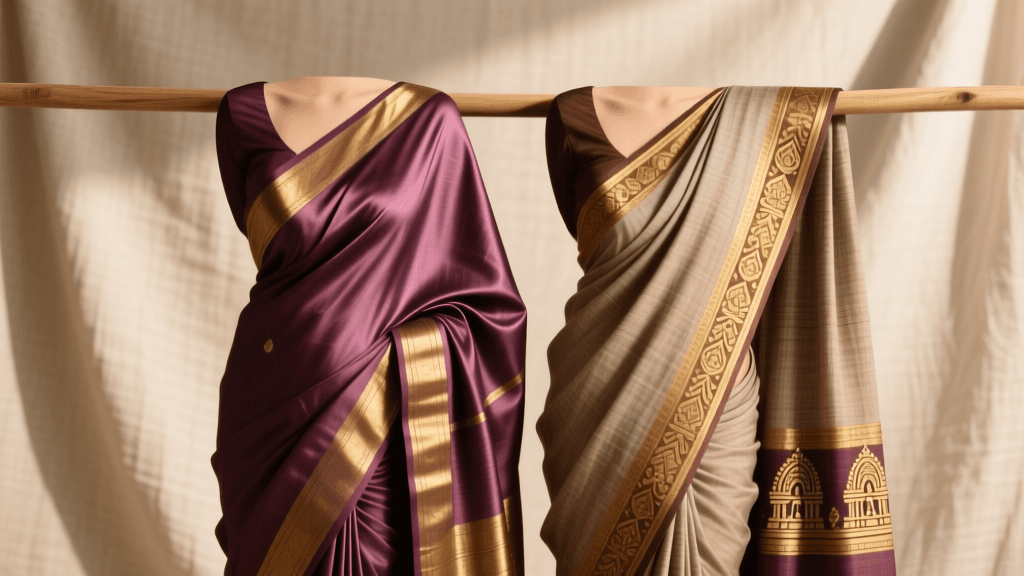
Understanding the textile is crucial when integrating these pieces into a daily rotation. The preservation of traditional weaving techniques, such as those recognized by UNESCO's Intangible Cultural Heritage list for traditional silk weaving, ensures that authentic vintage pieces remain highly coveted. However, 2026 also brings incredible advancements in sustainable heritage-inspired fabrics.
| Fabric Type | Drape & Feel | Best Modern Pairing | 2026 Care Protocol | Approx. Price Range |
|---|---|---|---|---|
| Vintage Silk Crepe | Luxurious, fluid, delicate | Tailored wool trousers, silk slip dresses | Specialist eco-dry clean only | $150 - $450 (Resale) |
| Sashiko-Quilted Cotton | Structured, textured, warm | Raw denim, heavyweight hoodies, leather boots | Machine wash cold, air dry | $120 - $300 |
| Tencel-Linen Blend | Breathable, matte, relaxed | Office wear, wide-leg linen pants, loafers | Gentle cycle, steam to remove wrinkles | $90 - $220 |
| Recycled Tech-Nylon | Water-resistant, crisp, lightweight | Athleisure, technical cargos, chunky sneakers | Wipe clean or gentle machine wash | $110 - $280 |
Mastering Proportions: Cropped vs. Longline Silhouettes
The most common mistake when styling traditional Asian outerwear is ignoring the waistline. Traditional garments often feature a dropped, straight shoulder and a boxy cut that can overwhelm a modern figure if not balanced correctly.
Cropped Haori (Hip-Length)
A cropped haori naturally hits at the hip bone, acting similarly to a classic denim or bomber jacket. To maintain a flattering silhouette in 2026, pair cropped styles with high-waisted bottoms. High-waisted, wide-leg trousers or vintage-inspired mom jeans will elongate the legs, ensuring the boxy cut of the jacket doesn't truncate your frame. Tucking in your inner layer—a fitted ribbed knit or a simple bodysuit—is essential to define the waist beneath the open jacket.
Longline and Kimono-Sleeve Dusters
Longline jackets that fall to the mid-calf require a streamlined inner layer to prevent the outfit from looking bulky. A 2026 favorite is the ribbed knit midi dress or a tailored, sleeveless jumpsuit worn beneath a sweeping, longline haori duster. The continuous vertical line of the inner garment draws the eye up and down, while the wide sleeves of the traditional piece add dramatic, architectural volume from the back and side profiles.
Color Theory and Pattern Clashing
Traditional Asian textiles are renowned for their intricate motifs, from the Japanese seigaiha (wave) patterns to Chinese floral brocades. When integrating these into a modern wardrobe, the rule of thumb for 2026 is "one hero piece per outfit." If your haori features a vibrant, hand-painted landscape or a dense, metallic brocade, the rest of your wardrobe must act as a neutral canvas.
Opt for grounding tones like charcoal, oat, olive, and deep navy. However, if you are wearing a solid-colored, traditionally cut jacket—such as a deep persimmon-dyed linen Tangzhuang—you have the freedom to introduce subtle modern patterns, like a faint windowpane check on your trousers or a micro-stripe on your inner button-down shirt. The Metropolitan Museum of Art's historical archives on Asian silk dyes highlight the incredible depth of natural dyes like indigo, madder root, and safflower; honoring these rich, organic colors means letting them speak for themselves without competing against neon or synthetic modern hues.
Footwear and Accessory Integration
Footwear can make or break the integration of heritage garments into street style. Avoid traditional wooden sandals (like geta) unless you are attending a specific cultural event, as they can tip the outfit into costume territory. Instead, lean into modern footwear that echoes the geometric or minimalist lines of the garments.
- Split-Toe Boots: Modern interpretations of the Tabi boot remain a staple in avant-garde 2026 streetwear, offering a subtle nod to Japanese design without being overtly traditional.
- Chunky Loafers: A polished, heavyweight leather loafer provides a necessary anchor to the flowing, lightweight fabrics of a silk haori or linen Mandarin jacket, bridging the gap between East Asian heritage and Western prep.
- Minimalist Sneakers: Clean, unbranded leather sneakers in white or black maintain the urban utility required for daily city wear, ensuring the traditional jacket feels like a natural part of a modern commute.
Caring for Mixed-Media Heritage Pieces
As you curate your 2026 capsule wardrobe, proper garment care is paramount. Vintage silks and naturally dyed cottons (such as those dyed with persimmon tannin or traditional indigo) are highly sensitive to the harsh alkaline detergents and high heat of modern washing machines. Always store silk haoris on wide, padded hangers to prevent the delicate shoulder seams from stretching or tearing under the weight of the wide sleeves. For naturally dyed cottons, wash them separately in cold water using pH-neutral, plant-based detergents to prevent the colors from bleeding or fading. By treating these traditional garments with the same care as high-end contemporary tailoring, you ensure they remain a vital, wearable part of your urban wardrobe for decades to come.