Hanfu Fabric Drape & Comfort Analysis: 2026 Buyer Guide
The Xin Zhongshi Revolution: Why Drape Matters in 2026
The Xin Zhongshi (new Chinese style) movement has completely transformed the global Hanfu market in 2026. No longer confined to ceremonial wear or weekend photoshoots, traditional Chinese garments are now integrated into daily wardrobes, office attire, and international street fashion. However, the transition from costume to daily wear hinges entirely on one critical factor: fabric drape and comfort. In 2026, consumers and designers alike are prioritizing textiles that honor historical silhouettes while offering modern breathability, ease of care, and kinetic flow. Understanding the physics of how fabric falls, folds, and moves is essential for anyone looking to invest in high-quality Hanfu this year.
The Physics of Traditional Chinese Garment Drape
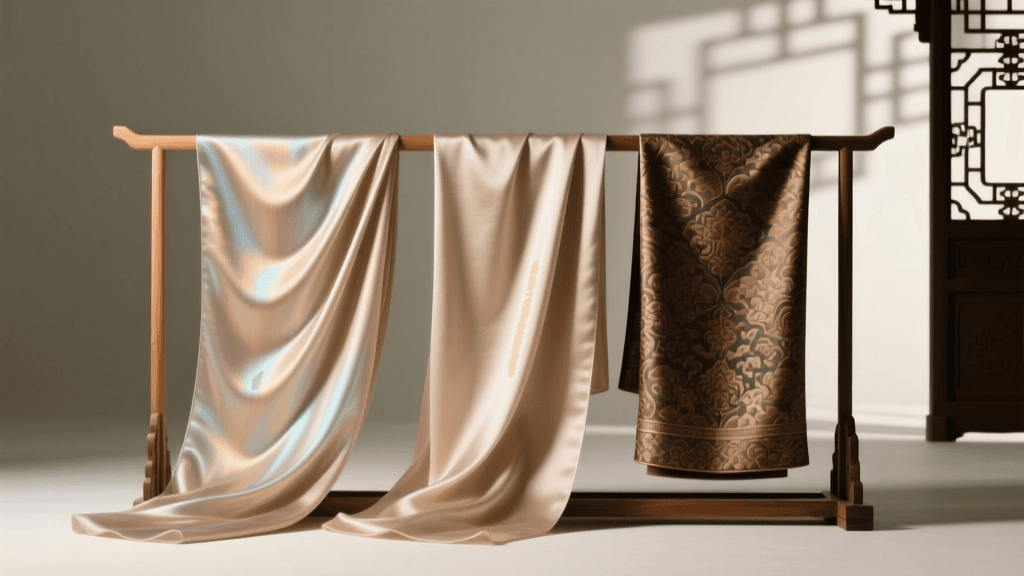
In traditional Chinese tailoring, garments are rarely cut to follow the body's contours. Instead, they rely on flat cutting, where the fabric's natural drape (悬垂性) creates the three-dimensional silhouette. The drape coefficient of a textile determines how it behaves under gravity. For a mamianqun (horse-face skirt), the fabric must possess enough weight and structural memory to keep the central pleats sharp and flat, while allowing the side pleats to flare gracefully during movement. If a fabric is too stiff, the skirt will bell out awkwardly; if it is too flimsy, the pleats will collapse and lose their architectural integrity. According to the Metropolitan Museum of Art's Silk Road collection archives, historical weavers spent centuries perfecting the balance between warp tension and weft density to achieve this exact kinetic flow.
2026 Hanfu Fabric Profile Analysis
To navigate the 2026 market, buyers must understand the unique properties of the most prominent textiles used in modern Hanfu production. Below is an in-depth analysis of the top four fabrics dominating the Xin Zhongshi space this year.
1. Xiangyunsha (Gambiered Canton Gauze)
Often referred to as 'soft gold,' Xiangyunsha remains the pinnacle of luxury Hanfu fabrics in 2026. This unique silk is dyed using the juice of the dioscorea cirrhosa tuber and coated with iron-rich mud from the Pearl River Delta. The resulting fabric features a rich, dark patina on one side and a glossy, textured finish on the other. The mud-coating process, as documented by BBC Travel's in-depth feature on the fabric, gives it a distinct rustling sound and a crisp, structured drape. In 2026, sustainable dyeing vats in Guangdong have optimized the curing process, reducing the traditional 15-day drying cycle to a more eco-friendly 9-day cycle without sacrificing the fabric's iconic crispness. It is exceptionally cool to the touch, making it ideal for humid summers, though its high cost (averaging $140 to $180 USD per meter in 2026) reserves it mostly for statement pieces and high-end outerwear.
2. Tencel-Linen Blends
The breakout star of the 2026 daily-wear Hanfu market is the Tencel-linen blend. Typically woven with a 60% Tencel (lyocell) and 40% linen ratio, this fabric solves the historical issue of linen's severe wrinkling while maintaining its excellent breathability. Tencel adds a luxurious, fluid drape and a subtle sheen, allowing ruqun skirts and wide-sleeved beisizi to flow beautifully. With a standard weight of 160 to 180 GSM (grams per square meter), it provides enough opacity for unlined summer garments while remaining incredibly lightweight. Priced accessibly at $25 to $40 USD per meter, it has become the default choice for independent Xin Zhongshi brands targeting young professionals who need machine-washable, low-maintenance traditional garments.
3. Digital-Printed Chiffon and Georgette
For budget-conscious buyers and those seeking vibrant, intricate motifs, high-density digital-printed chiffon remains a staple. Modern 100D and 150D polyester chiffons produced in 2026 feature advanced anti-static weaves, a massive improvement over the clingy, static-prone versions of the early 2020s. Chiffon offers an ethereal, high-flow drape that is perfect for the sweeping ribbons and sheer overlays of Tang-style shanqun. However, it lacks the structural memory required for sharp pleating, meaning it is rarely used for mamianqun. While highly affordable ($8 to $15 USD per meter), its synthetic nature means it traps heat, making it less comfortable for peak summer wear compared to natural fibers.
4. Song Brocade (Songjin)
Song Brocade is characterized by its complex, multi-layered weaving technique, resulting in a heavy, ornate, and highly structured fabric. In 2026, computerized jacquard looms have made Songjin more accessible, though authentic silk versions remain a premium investment. With a drape coefficient that leans heavily toward stiffness, Songjin is not meant to flow; it is meant to architect. It is the premier choice for structured jackets, formal collars, and the waistbands of horse-face skirts. According to the Victoria and Albert Museum's textile archives, the structural integrity of Chinese brocades was historically utilized to convey status and formality, a tradition that holds true in modern formal Xin Zhongshi evening wear.
Comparative Data: Drape, Weight, and Cost
The following table provides a quick reference guide for comparing the primary Hanfu fabrics available in the 2026 market, focusing on metrics that directly impact comfort and silhouette.
| Fabric Type | Drape Profile | Weight / Thickness | Breathability | 2026 Avg Cost (USD/m) |
|---|---|---|---|---|
| Xiangyunsha (Silk) | Crisp, structured flow | 19 Momme | Excellent | $140 - $180 |
| Tencel-Linen Blend | Fluid, heavy fall | 160 - 180 GSM | Very High | $25 - $40 |
| High-Density Chiffon | Ethereal, high sweep | 75D - 100D | Low (Synthetic) | $8 - $15 |
| Song Brocade (Silk) | Stiff, architectural | 220 - 250 GSM | Moderate | $90 - $150 |
| Cotton-Linen (Ramie) | Matte, moderate structure | 140 GSM | High | $15 - $25 |
Climate Adaptability and Comfort Metrics
Comfort in traditional garments is deeply tied to microclimate management. Because Hanfu often involves multiple layers (such as an inner zhongyi, a main garment, and an outer jacket), the innermost layers must possess high moisture-wicking capabilities. In 2026, textile innovators have introduced nano-cellulose finishes to traditional ramie and linen weaves, significantly reducing the 'prickle' factor historically associated with raw plant fibers. For humid, tropical climates, Xiangyunsha and pure ramie are unparalleled; the natural fibers absorb perspiration and dry rapidly, while the crisp weave keeps the fabric off the skin, promoting air circulation. Conversely, for air-conditioned office environments or cooler autumn months, Tencel-linen blends and lightweight Song brocade provide necessary insulation without adding bulk, maintaining the sleek lines demanded by modern Xin Zhongshi aesthetics.
'The true mastery of Hanfu design in the modern era is not in replicating the past, but in understanding how a fabric's kinetic energy interacts with the human body in motion.' — 2026 Xin Zhongshi Textile Symposium, Shanghai.
Actionable Buying Guide for 2026
When shopping for Hanfu on platforms like Taobao, Red (Xiaohongshu), or independent international boutiques this year, rely on specific technical keywords rather than just visual appeal. Look for the following indicators in product descriptions:
- 垂坠感 (Chuízhuì gǎn - Drape Feel): This indicates the fabric has been tested for its falling properties. High垂坠感 is essential for skirts and wide sleeves.
- 抗皱 (Kàngzhòu - Anti-Wrinkle): Crucial for daily wear. If a natural fiber garment claims this, check if it is a Tencel blend or features a modern enzymatic wash treatment.
- 克重 (Kèzhòng - GSM Weight): For skirts, a GSM of 160 or higher is recommended to ensure the pleats do not become transparent in direct sunlight and have enough weight to swing properly.
- 姆米 (Mǔmǐ - Momme): When buying silk, never accept a garment that does not list its momme weight. For durable Hanfu, 16 to 19 momme is the sweet spot for longevity and drape.
Care and Maintenance for Optimal Drape
The drape of a Hanfu garment can be permanently ruined by improper care. Xiangyunsha must never be machine washed or wrung out; it requires gentle hand washing in cool water with a pH-neutral silk detergent and must be dried in the shade to preserve the mud-coating's integrity. Tencel-linen blends, while more forgiving, should be washed on a delicate cycle and removed immediately to prevent hard creases from setting. To restore the drape of a stored mamianqun, avoid ironing the pleats directly. Instead, use a handheld garment steamer in 2026's latest high-pressure models, allowing the steam to relax the fibers and let gravity naturally pull the pleats back into their original, sharp alignment. By respecting the unique properties of these textiles, wearers can ensure their traditional garments remain comfortable, beautiful, and structurally sound for years to come.