2026 Hanfu Fabric Drape & Comfort Analysis: Top Textiles
The Evolution of Hanfu Textiles in 2026
As the global Hanfu movement continues to mature in 2026, the focus of enthusiasts and designers has shifted decisively from historical reenactment to daily wearable integration. This evolution has placed unprecedented demands on textile performance. Modern wearers no longer view Hanfu merely as ceremonial attire; they require garments that offer dynamic movement, thermoregulation, and structural elegance. At the core of this sartorial shift is the concept of xuíchuíxìng (悬垂性), or fabric drape. Understanding how different textiles behave under the force of gravity, and how they interact with the human body during motion, is essential for selecting the perfect Hanfu for contemporary life.
The 2026 textile market offers a fascinating dichotomy. On one hand, there is a renaissance of heritage weaving techniques supported by advanced, computerized looms that improve consistency. On the other, sustainable modern cellulosic fibers are being engineered to mimic the luxurious hand-feel of traditional mulberry silk while offering superior breathability and easier maintenance. In this comprehensive analysis, we break down the drape coefficients, textural nuances, and comfort metrics of the most prominent Hanfu fabrics available today.
The Physics of Hanfu Drape (Xuíchuíxìng)
Drape is the ability of a fabric to fold and hang gracefully under its own weight. In traditional Chinese garment construction, which relies heavily on flat-pattern cutting and minimal darts, the drape of the fabric is responsible for creating the garment's three-dimensional silhouette. A fabric with high flexural rigidity will stand away from the body, creating architectural, voluminous shapes typical of formal Tang Dynasty styles. Conversely, a fabric with low flexural rigidity will cling and flow, creating the sleek, elongated lines characteristic of Song and Ming Dynasty daily wear.
According to the Metropolitan Museum of Art's Heilbrunn Timeline of Art History, the historical development of complex silk weaves in China was deeply intertwined with the desire to manipulate how light and shadow played across the folds of a garment. Today, textile engineers measure this using the drape coefficient (DC), calculated via 3D optical scanning. A lower DC indicates a softer, more fluid drape, while a higher DC indicates a stiffer, more structured material.
2026 Hanfu Fabric Comparison Matrix
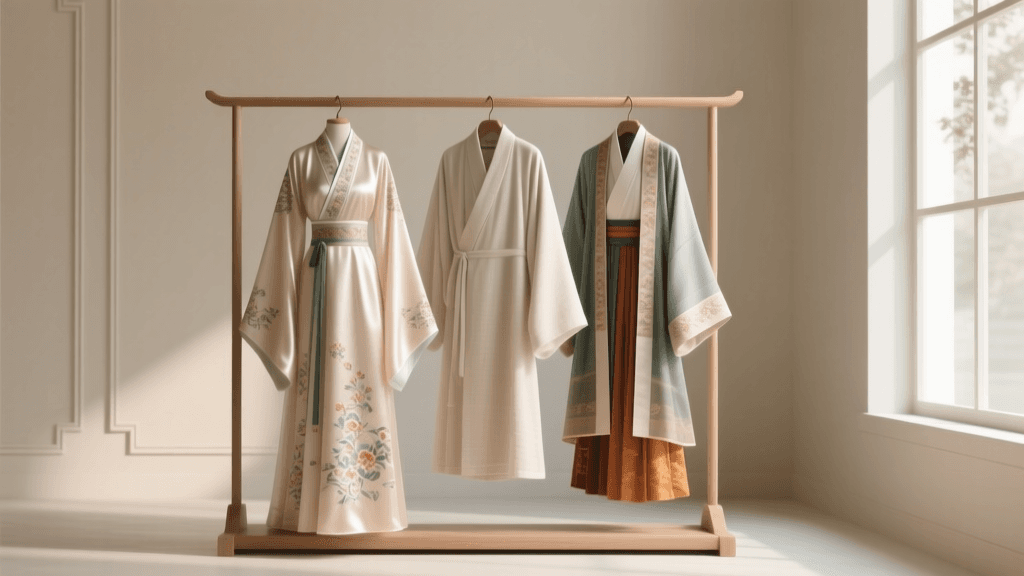
To help you navigate the current market, we have compiled a comparative analysis of the top five Hanfu textiles dominating the 2026 spring and summer collections. This matrix evaluates drape quality, breathability, weight, and current retail pricing.
| Fabric Type | Drape Quality | Breathability | Weight (g/m²) | Best Season | Avg. 2026 Price (USD/m) |
|---|---|---|---|---|---|
| Xiangyunsha (Gambiered Gauze) | Fluid, heavy folds | Exceptional | 85 - 110 | Summer / Early Autumn | $45 - $90 |
| Song Brocade (Songjin) | Structured, moderate | Low | 140 - 180 | Autumn / Winter | $60 - $120 |
| Cupro (Copper Ammonia) | Highly fluid, silk-like | High | 70 - 95 | Spring / Summer | $15 - $30 |
| Ramie-Silk Blend Gauze | Crisp, architectural | Exceptional | 50 - 75 | Peak Summer | $25 - $50 |
| Polyester Jacquard | Stiff, voluminous | Very Low | 120 - 160 | Winter (Layered) | $8 - $15 |
Deep Dive: Xiangyunsha (Gambiered Canton Gauze)
Xiangyunsha remains the undisputed pinnacle of luxury summer Hanfu textiles. Originating from the Pearl River Delta, this fabric is created through a painstaking process of dyeing mulberry silk with the tannin-rich juice of the薯莨 (Dioscorea cirrhosa) yam, followed by coating it with iron-rich river mud and sun-drying. The traditional techniques behind these textiles, such as those recognized by UNESCO's Intangible Cultural Heritage list for Chinese sericulture, represent a harmonious blend of human craftsmanship and natural chemistry.
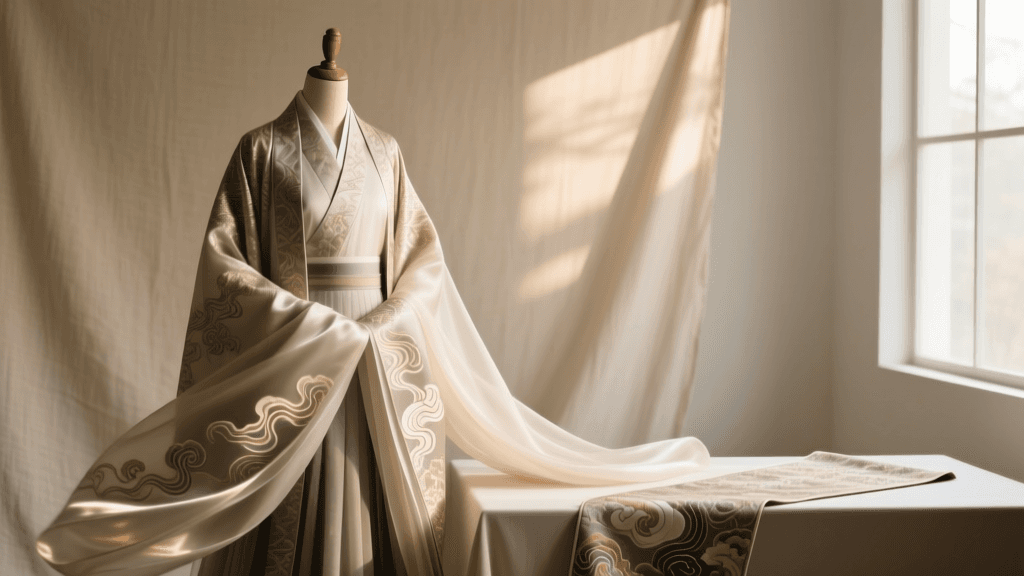
Texture and Drape: In 2026, advancements in the mud-coating application process have yielded Xiangyunsha that is noticeably softer than historical iterations, eliminating the 'crinkly' stiffness that plagued older batches. The drape is heavy and liquid, creating striking, deep folds that move with a satisfying, weighted sway. The surface features a subtle, leather-like luster on one side and a matte, earthy finish on the other.
Comfort Metrics: The tannin and iron reaction creates a microscopic porous structure that makes Xiangyunsha incredibly breathable and naturally antibacterial. It wicks moisture away from the skin rapidly, making it the ultimate choice for high-humidity environments. However, its lack of elasticity means patterns must be cut with generous ease to ensure freedom of movement.
Modern Cellulosics: Cupro and Lyocell Blends
For daily commuters and students, pure silk is often impractical due to its high cost and delicate care requirements. Enter Cupro (copper ammonia rayon) and Lyocell. Modern 2026 Hanfu makers are increasingly turning to sustainable cellulosic fibers tracked by Textile Exchange to create affordable, durable, and highly comfortable garments.
Texture and Drape: Cupro is derived from cotton linter and possesses a circular cross-section that gives it a frictionless, silk-like hand feel. Its drape coefficient is exceptionally low, meaning it clings beautifully to the body and flows like water. It is frequently used for Song Dynasty-style beizi (long coats) and pleated baiqun (skirts), where continuous, unbroken vertical lines are desired.
Comfort Metrics: Cupro and Lyocell excel in thermoregulation. They absorb moisture better than standard viscose and release it quickly into the air. Furthermore, modern 2026 blends often incorporate a 5% elastane thread, providing a mechanical stretch that accommodates the wide arm sweeps and deep bows associated with traditional etiquette without straining the seams.
Song Brocade and Structural Rigidity
While summer demands fluidity, autumn and winter Hanfu require structure and insulation. Song Brocade (Songjin) is a complex, multi-layered weave that utilizes a supplementary weft to create intricate, low-relief patterns. Unlike the high-gloss, flamboyant Shu brocades of the Sichuan region, Song brocade is characterized by its subdued elegance and matte finish.
Texture and Drape: The drape of Song brocade is highly structured. It resists bending, which makes it ideal for outer garments like the pifeng (cloak) or the stiff collars of Ming Dynasty aoqun (jacket and skirt sets). The fabric holds its shape away from the body, creating a dignified, imposing silhouette that traps a layer of insulating air close to the skin.
Comfort Metrics: Because of its density and the use of tightly twisted yarns, Song brocade has low breathability and can feel abrasive against sensitive skin if worn directly. In 2026, it is standard practice to fully line Song brocade garments with a soft, lightweight silk habotai or a smooth cotton voile to ensure skin comfort while maintaining the outer fabric's architectural drape.
Biomechanics and Daily Wear Comfort
When analyzing Hanfu comfort, we must consider the biomechanics of movement. Traditional Hanfu features wide sleeves (guangxiu) and overlapping skirts that add significant weight and drag to the wearer's gait. A fabric that is too heavy, such as a dense polyester jacquard, can cause shoulder fatigue over a full day of wear. Conversely, a fabric that is too light and lacks body, such as a single-layer chiffon, may tangle around the legs during walking.
The ideal Hanfu textile balances weight with surface friction. For skirts, a moderate surface friction ensures that the pleats remain separated and do not collapse into a single tube of fabric. For upper garments, a low-friction interior allows the sleeves to slide easily over the wearer's base layers. In 2026, many premium manufacturers are utilizing 'sand-washed' silk finishes to reduce the surface friction of heavy crepes, ensuring that wide sleeves glide effortlessly without catching on undergarments.
Care and Maintenance for Drape Longevity
The drape of a Hanfu garment is directly tied to the structural integrity of its fibers. Improper care can permanently alter the flexural rigidity of the textile, ruining its intended silhouette.
- Washing: Never machine-wash Xiangyunsha or Song Brocade. The agitation breaks the delicate sericin bonds in silk and can cause the mud-coating of Xiangyunsha to flake. Use a pH-neutral silk detergent and gently agitate in cold water for no more than three minutes.
- Drying: Avoid direct sunlight for all dyed silks and cellulosics to prevent UV degradation, which makes fibers brittle and ruins the fluid drape. Dry flat on a mesh rack to prevent gravity from stretching the wet fibers out of shape.
- Storage: Do not hang heavy Hanfu garments on thin wire hangers, as this will distort the shoulder drape and cause permanent creasing. Use wide, padded wooden hangers for jackets and cloaks. Skirts should be rolled rather than folded to preserve the sharpness of knife pleats and prevent permanent horizontal crease lines that disrupt the vertical flow of the fabric.
Conclusion
The Hanfu landscape in 2026 is a testament to the seamless integration of ancient aesthetics and modern textile science. Whether you are investing in the heritage luxury of Xiangyunsha for a summer tea ceremony, or opting for the sustainable, fluid drape of Cupro for your daily commute, understanding the physics of fabric drape and the biomechanics of comfort is the key to building a functional, elegant, and historically respectful wardrobe.