2026 Hanfu Storage Rotation & Seasonal Maintenance Guide
The Art and Science of Hanfu Preservation in 2026
As the global appreciation for traditional Chinese clothing continues to flourish in 2026, the Hanfu community has evolved from merely acquiring beautiful garments to mastering the intricate art of their preservation. A high-quality Hanfu ensemble is not just a piece of clothing; it is a wearable piece of cultural heritage, often crafted from delicate mulberry silk, intricate Zhuanghua brocade, or breathable summer ramie. However, the shifting climates and seasonal transitions pose a significant threat to these natural fibers. Improper storage can lead to irreversible damage, including silk shattering, brocade snagging, and mold proliferation.
This comprehensive 2026 Hanfu storage rotation and seasonal maintenance guide is designed for both the dedicated collector and the everyday enthusiast. By integrating modern archival techniques with smart home climate control, you can ensure your traditional garments remain pristine for generations. Whether you are transitioning from heavy winter velvet cloaks to lightweight summer gauze skirts, understanding the specific needs of your textile wardrobe is paramount.
Understanding Hanfu Fabric Profiles
Before initiating any seasonal rotation, it is critical to categorize your Hanfu collection by fabric type. Different natural fibers react uniquely to humidity, light, and pressure. According to the Victoria and Albert Museum's textile conservation guidelines, protein-based fibers like silk require vastly different environmental conditions compared to cellulose-based fibers like linen or cotton.
Mulberry Silk (Sang蚕丝) and Gauze (Luo罗)
Silk is a protein fiber that is highly sensitive to environmental extremes. In high humidity, silk can absorb moisture, leading to mildew and permanent staining. In excessively dry conditions, the fibers become brittle and can 'shatter' along fold lines. Summer Hanfu made from Luo (gauze) or Sha (sheer silk) are particularly vulnerable to snagging and structural collapse if hung improperly for long periods.
Brocade (Zhi锦) and Embroidered Textiles
Brocade garments, especially those featuring metallic threads or dense Zhuanghua weaving, are incredibly heavy. The weight of the fabric can cause stress on the shoulders if stored on standard hangers. Furthermore, the metallic threads used in modern 2026 reproduction brocades can tarnish if exposed to sulfur compounds often found in cheap cardboard boxes or synthetic plastic garment bags.
Ramie (Zhu苎麻) and Linen Blends
Cellulose fibers like ramie and linen are highly durable and excellent for moisture-wicking, making them the premier choice for mid-summer Hanfu. However, they are prone to severe creasing. While they are less susceptible to silk shattering, they are highly attractive to silverfish and other cellulose-eating pests if not properly cleaned before long-term storage.
The 2026 Seasonal Rotation Calendar
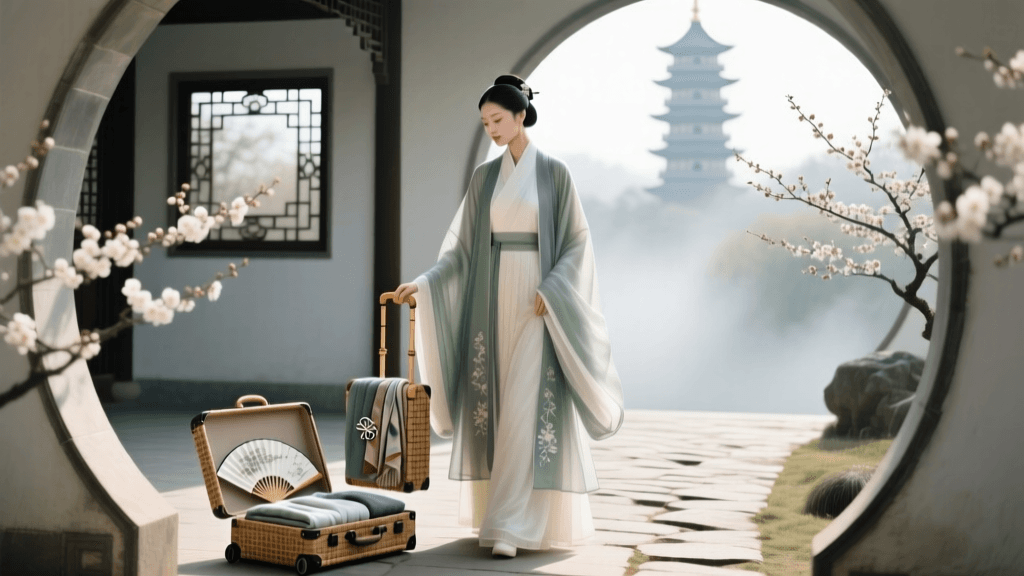
Seasonal rotation is not just about swapping out clothes; it is a scheduled maintenance protocol. In 2026, we recommend aligning your wardrobe rotation with the traditional solar terms, optimized for modern climate realities.
- Spring Equinox (Chunfen - Late March): Transition heavy winter cloaks (Doupeng) and lined Ao (jackets) into deep storage. Bring out transitional spring silk and cotton blends.
- Summer Solstice (Xiazhi - Late June): Rotate out spring layers. Introduce sheer gauze (Luo), ramie, and lightweight linen garments. This is the peak time to check your wardrobe dehumidifiers, as ambient humidity reaches its annual maximum.
- Autumn Equinox (Qiufen - Late September): Pack away summer sheers and ramie. Introduce mid-weight brocade and layered autumn sets. Perform a thorough pest-inspection of the wardrobe before sealing it for cooler months.
- Winter Solstice (Dongzhi - Late December): Deploy heavy winter garments, velvet-lined skirts, and wool-blend cloaks. Ensure your smart wardrobe heating elements are calibrated to prevent condensation.
Essential Archival Storage Materials
The days of stuffing delicate Hanfu into plastic bins or wire hangers are over. The 2026 standard for home archival storage requires specific, chemically inert materials. The Canadian Conservation Institute strongly advises against the use of standard plastics, which off-gas volatile organic compounds (VOCs) that degrade natural dyes and fibers over time.
Acid-Free Tissue Paper and Archival Boxes
Unbuffered, acid-free tissue paper is non-negotiable for folding silk and brocade. It prevents the fibers from touching themselves directly, reducing friction and preventing permanent crease lines. In 2026, museum-grade archival boxes lined with Tyvek are widely available for home collectors, typically ranging from $45 to $85 per box, offering superior protection against dust, light, and acidic degradation.
Breathable Cotton Garment Bags
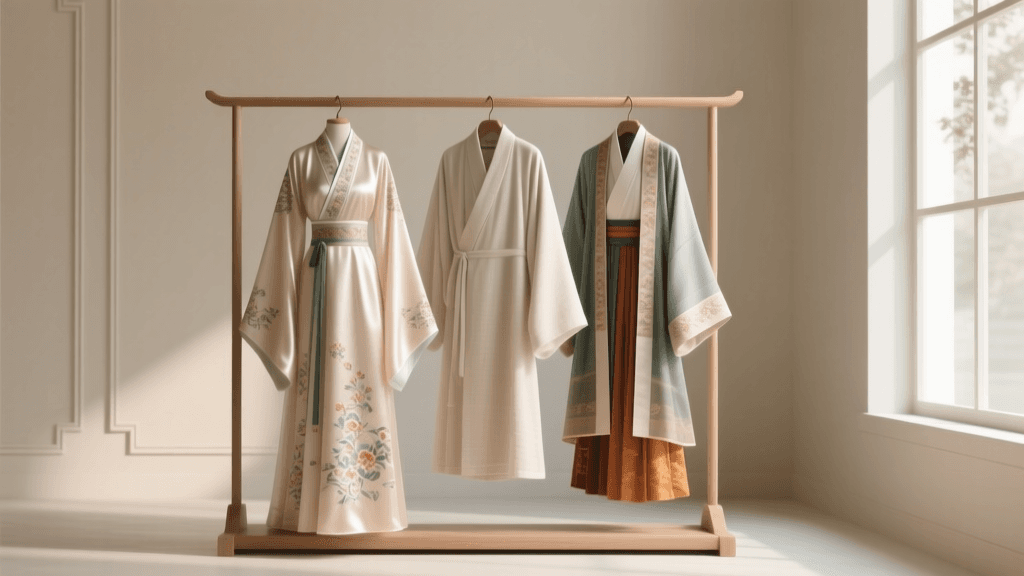
For garments that must be hung, such as structured Ming dynasty-style Ao or heavy winter cloaks, use unbleached, breathable cotton garment bags. Avoid any bags treated with synthetic water repellents. Ensure the bags are washed in hot water without fabric softeners before their first use to remove any residual manufacturing sizing.
Hanfu Fabric Storage Matrix
Use the following data table as a quick-reference guide when organizing your seasonal wardrobe rotation. Matching the correct storage method to the specific textile is the most effective way to prevent long-term degradation.
| Fabric Type | Ideal Humidity | Storage Container | Folding / Hanging Method |
|---|---|---|---|
| Mulberry Silk (Satin/Crepe) | 45% - 55% | Acid-Free Archival Box | Padded Fold with Tissue Rolls |
| Sheer Gauze (Luo/Sha) | 45% - 55% | Archival Box or Cotton Bag | Loose Roll (Never Fold) |
| Heavy Brocade (Zhi) | 40% - 50% | Acid-Free Archival Box | Flat Storage (Hanging causes stress) |
| Ramie / Linen | 40% - 55% | Cotton Storage Bin | Hung on Padded Hangers or Folded |
| Winter Velvet / Wool Blend | 35% - 45% | Breathable Cotton Bag | Hung on Wide, Contoured Hangers |
Step-by-Step Seasonal Maintenance Routine
Executing a proper seasonal rotation requires a methodical approach. Follow these steps every time you pack away a season's worth of Hanfu.
1. Pre-Storage Cleaning and Inspection
Never store worn Hanfu, even if it appears clean. Human sweat, skin oils, and invisible stains oxidize over time, turning yellow and attracting pests. For silk and brocade, professional dry cleaning using liquid silicone or advanced 2026 eco-friendly hydrocarbon solvents is recommended. For ramie and linen, a gentle hand wash with pH-neutral detergent followed by a thorough air dry is sufficient. Inspect every seam, pleat, and embroidered motif for loose threads or signs of insect activity before packing.
2. The Archival Folding Technique
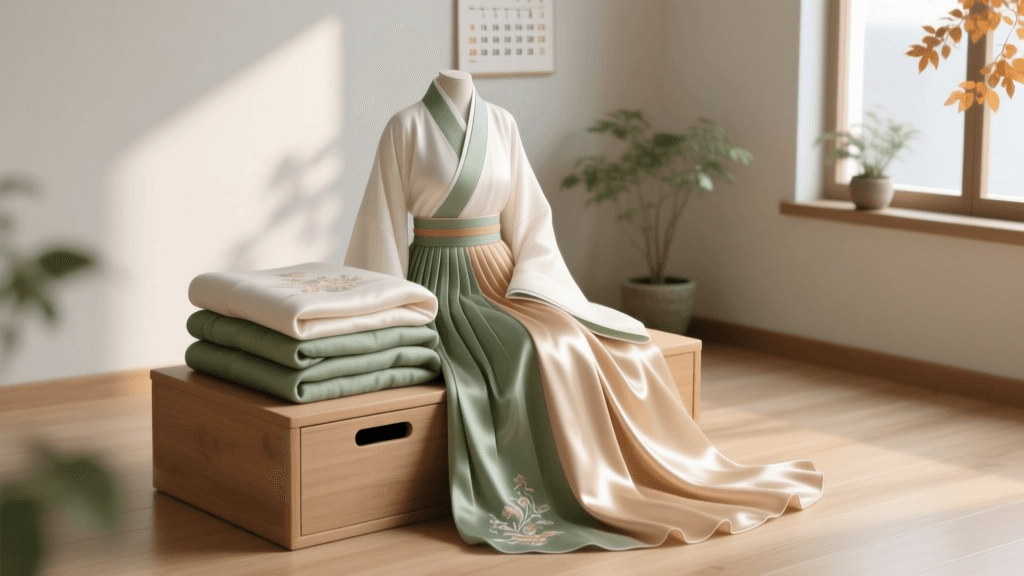
Sharp folds break fibers. When folding silk skirts (like Mamianqun) or tops, use the 'padded fold' method. Crumple acid-free tissue paper into soft 'sausages' and place them inside every fold line. This creates a gentle curve rather than a sharp crease, distributing the stress across a wider area of the fabric. For heavily pleated Mamianqun, never fold across the pleats; instead, roll the skirt gently around an acid-free cardboard tube covered in washed cotton muslin.
3. Pest Deterrence Without Chemical Damage
Traditional mothballs (naphthalene or paradichlorobenzene) are highly toxic and can melt synthetic threads or permanently stain silk. In 2026, the gold standard for pest deterrence in textile archives is natural camphor wood blocks or sustainably harvested cedar rings. Place these in small breathable muslin pouches and tuck them into the corners of your storage boxes. Remember that cedar loses its aromatic oils over time; lightly sand the wood blocks every six months during your seasonal rotation to reactivate their natural pest-repelling properties.
Integrating Smart Climate Control in 2026
The modern Hanfu collector leverages smart home technology to maintain optimal microclimates within their wardrobes. Fluctuating temperatures and humidity spikes are the enemies of natural dyes and protein fibers. In 2026, integrated wardrobe dehumidification systems have become highly accessible and energy-efficient.
Devices utilizing advanced Peltier thermoelectric cooling or desiccant rotor technology can be installed directly into closet spaces. These smart dehumidifiers connect to home automation networks, allowing you to monitor the exact relative humidity (RH) inside your Hanfu wardrobe via a smartphone app. Set your alerts to trigger if the RH drops below 40% or exceeds 60%. For localized protection inside archival boxes, rechargeable silica gel cassettes with digital humidity indicator cards provide a secondary layer of defense against ambient moisture.
Handling and Displaying Your Collection
When retrieving garments for wear or display, always ensure your hands are freshly washed and completely dry, or wear clean, lint-free cotton gloves. The natural oils and acids on human skin can transfer to delicate silks, causing localized degradation over time. If you are displaying a prized Hanfu piece on a dress form, ensure the mannequin is padded with polyester batting and covered in washed cotton jersey to prevent the hard fiberglass or plastic from stressing the garment's seams.
'A garment is a living record of its time. How we care for it in the quiet months of storage dictates how beautifully it will speak when it is brought back into the light.' — Textile Conservation Proverb
Conclusion
Mastering Hanfu storage rotation and seasonal maintenance is an ongoing commitment to the preservation of Asian textile traditions. By understanding the unique biological makeup of your fabrics, adhering to a strict seasonal calendar, and utilizing 2026's advanced archival materials and smart climate technologies, you protect your investment and your cultural heritage. Treat your Hanfu collection with the same reverence as a museum curator, and your garments will remain vibrant, structurally sound, and ready to be worn for decades to come.