Hanfu Family Ceremonies 2026: Weddings, Births & Ancestral Rites
The Evolution of Ceremonial Hanfu in 2026
The Hanfu movement has undergone a profound transformation over the last decade. What began as a niche interest in historical reconstruction has firmly established itself as a cornerstone of modern cultural identity. In 2026, traditional Han Chinese clothing is no longer reserved solely for street fashion, photography, or cultural festivals. Today, Hanfu is the premier choice for major family life-cycle rituals. From the joyous celebrations of a child's first month to the solemnity of ancestral worship, families are increasingly investing in historically accurate, bespoke garments to honor their heritage. This comprehensive guide explores the protocols, garment selections, and 2026 market trends for integrating Hanfu into your most important family ceremonies.
As the demand for ceremonial Hanfu has surged, the 2026 market has responded with remarkable innovations in textile technology and sustainable sourcing. Modern families no longer have to choose between historical accuracy and physical comfort. Artisans in Hangzhou and Suzhou are now utilizing temperature-regulating silk-cupro blends and lightweight, ethically sourced brocades that allow for hours of wear during elaborate rituals without the heavy burden of traditional theatrical costumes. Understanding which garments to wear, and when, is essential for navigating these deeply symbolic events.
Birth and First-Month Ceremonies: Manyue and Zhuazhou
In traditional Chinese culture, the survival and health of a newborn are celebrated with immense gratitude. The Manyue (first-month celebration) and Zhuazhou (first birthday) are critical milestones. In 2026, it is highly customary for both the infant and the parents to don coordinating Hanfu to signify family unity and to invite auspicious energy into the child's life.
For infants, the focus is on protective motifs and soft, natural fibers. The traditional tiger-head hat (Hutou Mao) and tiger-head shoes (Hutou Xie) remain ubiquitous, symbolizing the warding off of evil spirits and the blessing of robust health. In 2026, leading ateliers are crafting these accessories using organic, unbleached cotton lined with hypoallergenic bamboo silk, ensuring comfort for sensitive newborn skin. Infants are often dressed in a Doukou (belly band) or a miniature, soft-collared Jiaoling (cross-collar) robe in vibrant marigold or crimson.
Parents attending these ceremonies typically opt for the Ming-dynasty style Aoqun (a lined jacket paired with a skirt). For the mother, a pastel or jade-green silk Ao with subtle floral embroidery represents growth, nurturing, and springtime vitality. The father may wear a simpler, unembroidered cotton or linen cross-collar robe in complementary earth tones. The 2026 trend heavily favors subdued elegance over ostentatious display for birth rites, keeping the visual focus on the child while maintaining a dignified, traditional aesthetic.
The Modern Hanfu Wedding: Hunli
The traditional Chinese wedding, or Hunli, is the pinnacle of ceremonial dress. While Western-style white gowns dominated the late 20th and early 21st centuries, 2026 has seen a massive resurgence in couples choosing full Hanfu wedding attire for their primary vows and tea ceremonies. The most popular and historically resplendent choice remains the Ming-dynasty bridal ensemble, characterized by the Fengguan Xiapei (phoenix crown and cloud scarf) and the Mamianqun (horse-face skirt).
The Mamianqun is a marvel of structural tailoring, featuring flat front and back panels with deeply pleated sides. In 2026, bespoke wedding Mamianqun are frequently woven with real gold and silver threads, incorporating motifs of dragons, phoenixes, and peonies to symbolize imperial grace, marital harmony, and prosperity. The accompanying Fengguan (phoenix crown) was historically a heavy, elaborate headdress. Today, master artisans utilize 3D-printed resin armatures combined with traditional silk-thread 'kingfisher feather' embroidery techniques, reducing the weight of the crown by nearly 60% while maintaining its breathtaking visual impact.
For grooms, the standard ceremonial garment is the Yuanlingpao (round-collar robe), often styled after the official court dress of the Ming dynasty. Grooms typically wear robes in deep crimson or navy, adorned with rank-style square badges (Buzi) featuring auspicious birds or mythical beasts. A crucial element of the groom's attire is the Wusha Mao (black gauze hat) or a formal scholar's cap, paired with a leather or silk ceremonial belt. Couples in 2026 are increasingly commissioning matching sets where the bride's skirt and the groom's robe share a unified brocade pattern, symbolizing their intertwined destinies.
Ancestral Worship and Memorial Rites: Jisi
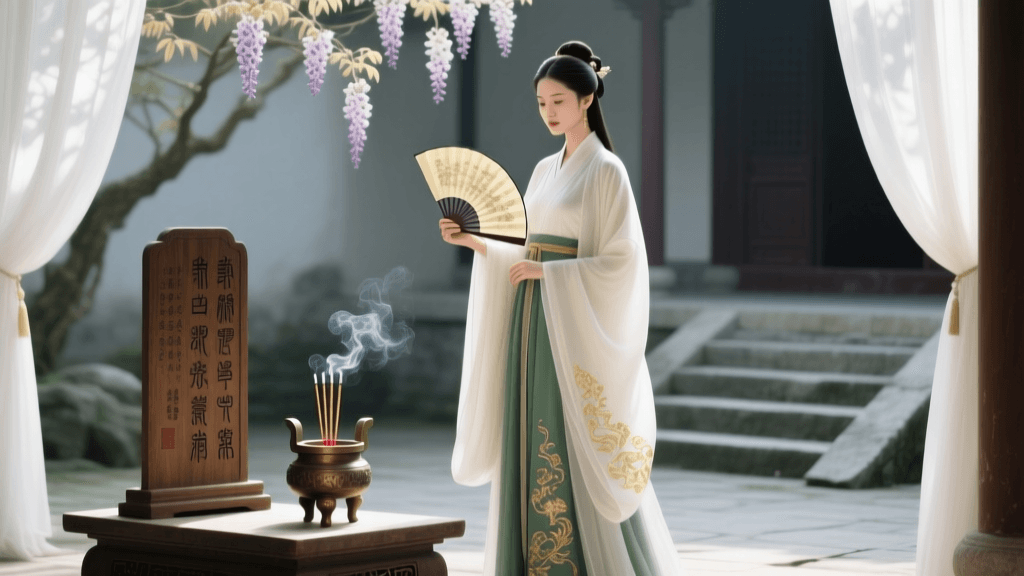
Ancestral veneration, or Jisi, requires an entirely different sartorial approach. Whether attending the Qingming Festival tomb-sweeping ceremonies, the Hungry Ghost Festival, or private family memorial altars, the guiding principles for Hanfu in these contexts are solemnity, humility, and respect. Flashy embroidery, bright reds, and excessive gold are strictly prohibited during periods of mourning or solemn remembrance.
The most appropriate garment for ancestral rites is the Shenyi (deep robe) or the Xuan Duan (a formal, straight-cut black robe). The Shenyi is a profound garment in Confucian philosophy, constructed from twelve separate pieces of fabric to represent the twelve months of the year, symbolizing the wearer's harmony with the cosmos and the passage of time. For 2026, eco-conscious families are seeking out Shenyi dyed using traditional, natural methods—such as deep indigo, gallnut black, or raw unbleached hemp—which align beautifully with the spiritual grounding of ancestral worship.
According to the UNESCO Intangible Cultural Heritage registry, the traditional sericulture and silk craftsmanship of China emphasize a deep respect for nature, a philosophy that perfectly mirrors the reverence shown to ancestors during Jisi. Wearing natural, unadorned fibers during these rites is seen as a mark of genuine filial piety, stripping away worldly vanity to honor those who came before.
2026 Ceremonial Hanfu Comparison Chart
Navigating the costs, lead times, and styling requirements for ceremonial Hanfu can be complex. The table below provides a structured overview of what families should expect when commissioning garments for major life events in the current 2026 market.
| Ceremony Type | Primary Garment | 2026 Color Trends | Avg. Custom Cost (USD) | Tailor Lead Time |
|---|---|---|---|---|
| Birth (First Month) | Lotus Collar, Tiger Shoes, Aoqun | Crimson, Marigold, Jade, Pastels | $250 - $650 | 2 - 4 Weeks |
| Wedding (Ming Style) | Fengguan Xiapei, Mamianqun, Yuanlingpao | Deep Crimson, Gold, Emerald, Navy | $3,200 - $8,500+ | 4 - 6 Months |
| Ancestral Rites | Shenyi, Xuan Duan | Indigo, Charcoal, Unbleached Hemp | $400 - $950 | 3 - 5 Weeks |
Sourcing, Tailoring, and Fabric Innovations
The 2026 Hanfu market has matured significantly, moving away from mass-produced, synthetic costumes toward high-quality, bespoke tailoring. For family ceremonies, purchasing off-the-rack is generally discouraged, as ceremonial garments require precise measurements to ensure the correct drape, particularly for the complex pleating of the Mamianqun and the exact shoulder alignment of the Yuanlingpao.
Families planning a Hanfu wedding or major ancestral rite should begin consulting with specialized ateliers at least six months in advance. The most highly regarded workshops remain concentrated in the Jiangnan region, particularly in Hangzhou and Suzhou, where the legacy of silk weaving is deeply embedded in the local culture. Historical silhouettes and weaving techniques are heavily documented and preserved by institutions like the Victoria and Albert Museum's Asian collections, which serve as a vital reference point for modern master tailors striving for historical accuracy.
When sourcing fabrics for 2026 ceremonies, look for certifications of natural fiber content. The integration of modern textile engineering means you can now source 'washable silk' and 'wrinkle-resistant brocade' for travel-heavy wedding weekends, ensuring that your garments remain pristine from the morning tea ceremony to the evening banquet. Always request fabric swatches before committing to a bespoke order to verify the weight, sheen, and breathability of the material.
Etiquette and the Rules of Wear
Wearing Hanfu for family ceremonies is not merely about aesthetics; it is an exercise in cultural etiquette. The most fundamental rule of Hanfu is Jiaoling Youren—the left lapel must always cross over the right lapel. This rule has been a defining characteristic of Han Chinese dress for millennia. Reversing this (right over left) is historically reserved exclusively for the deceased and is considered highly inauspicious and deeply offensive in the context of birth or wedding ceremonies. The Smithsonian National Museum of Asian Art frequently highlights this structural rule in its educational exhibitions, noting its profound philosophical ties to the concepts of life, yang energy, and societal order.
Additionally, the tying of sashes and belts must be done with care. Ceremonial sashes should be tied securely but comfortably, with the ends hanging evenly to symbolize balance and harmony. For weddings, the layering of garments is crucial; a bride may wear up to three distinct layers, and it is vital that the collars of each layer are staggered perfectly to create a visually pleasing, stepped neckline. Mastering these subtle details elevates the wearing of Hanfu from a simple costume change to a profound participation in living history, ensuring that your family's most important milestones are honored with grace, accuracy, and deep cultural resonance.