Hanfu Travel Wardrobe 2026: Packing Essentials & Destination Styles
The Rise of the Hanfu Travel Wardrobe in 2026
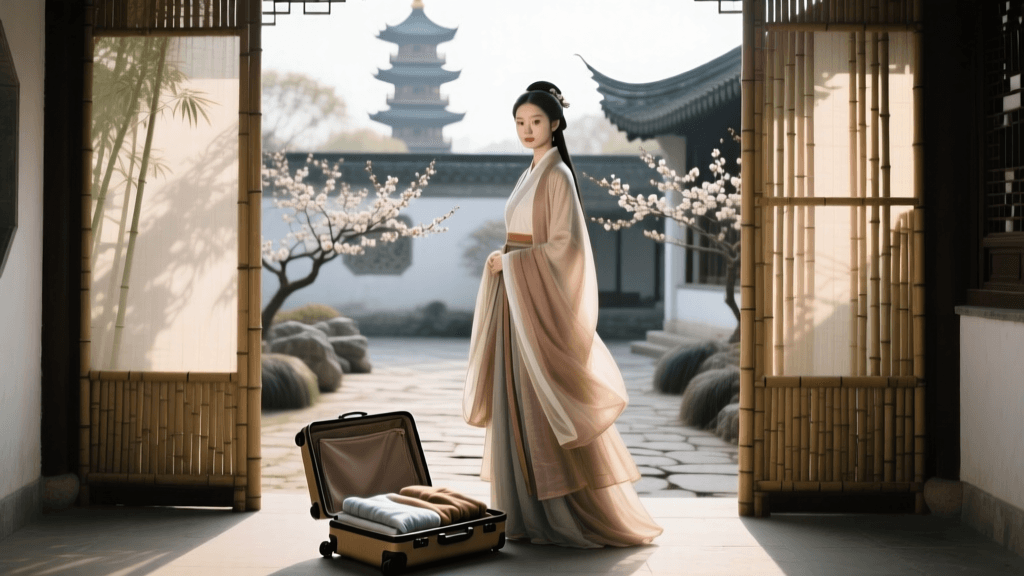
In 2026, traveling through China’s historical landscapes wearing traditional Hanfu has evolved from a niche hobby into a mainstream cultural tourism phenomenon. With the expansion of the high-speed rail network and the rise of heritage-focused boutique hotels, exploring ancient capitals and serene water towns in traditional dress is more accessible than ever. However, the logistics of transporting delicate garments, preserving intricate pleats, and adapting to varying regional climates require a strategic approach. Building a functional Hanfu travel wardrobe is about balancing historical aesthetics with modern textile innovations and smart packing techniques.
Whether you are planning a multi-city tour via the Beijing-Shanghai high-speed corridor or a weekend retreat to a mountain temple, this comprehensive guide will help you curate, pack, and maintain a destination-ready Hanfu wardrobe for your 2026 travels.
Destination-Specific Wardrobe Curation
China’s vast geography means that a one-size-fits-all wardrobe will not suffice. Your destination should dictate the dynasty, silhouette, and fabric weight of your Hanfu choices.
Xi’an and the Tang Dynasty Aesthetic
Xi’an, the ancient capital of Chang’an, is synonymous with the opulent Tang Dynasty. When visiting the Datang Everbright City or the City Wall, the Qixiong Ruqun (chest-high skirt) is the most popular choice. For travel, opt for a lightweight, synthetic-crepe Qixiong Ruqun. The chest-high tie can be challenging to secure during long walking tours, so modern travelers in 2026 frequently use hidden silicone grip-tape along the inner bodice lining to prevent slipping without sacrificing the traditional silhouette.
Suzhou, Hangzhou, and the Song Dynasty Minimalist
The water towns of Jiangnan demand elegance and mobility. The Song Dynasty Beizi (a long, open-front outer coat) paired with a pleated skirt or wide-leg trousers is ideal. The Beizi acts as a versatile layering piece—perfect for cool, misty mornings by the West Lake or the Humble Administrator’s Garden. Because Song-style garments are generally more tailored and less voluminous than Ming or Tang styles, they are significantly easier to pack and less likely to drag on damp cobblestone streets.
Beijing and the Ming Dynasty Grandeur
For the grand architecture of the Forbidden City or the Temple of Heaven, the Ming Dynasty Mamianqun (horse-face skirt) and Aoqun (jacket and skirt) offer a regal, structured look. The stiff, woven brocades of a Mamianqun photograph beautifully against red palace walls, but they are notoriously difficult to pack. We will cover specific pleat-preservation techniques later in this guide.
The 2026 Fabric Guide: Wrinkle-Resistance vs. Authenticity
Historically, Chinese textiles like pure silk were prized for their beauty but required meticulous care, a challenge for modern travelers. As noted by The Metropolitan Museum of Art, silk production and weaving have been central to Chinese cultural heritage for millennia. However, for a 2026 travel wardrobe, relying exclusively on traditional mulberry silk is impractical. Modern textile engineering has introduced travel-friendly alternatives that mimic the drape and sheen of silk while offering superior durability.
| Fabric Type | Wrinkle Resistance | Breathability | Best For | Est. 2026 Price (USD) |
|---|---|---|---|---|
| Tencel / Lyocell | High | Excellent | Summer travel, Song dynasty Beizi, humid climates | $60 - $95 |
| Polyester Crepe | Very High | Moderate | Ming dynasty Mamianqun, autumn layering | $45 - $80 |
| Cotton-Linen Blend | Moderate | Very High | Casual day trips, Ming Aoqun, spring weather | $50 - $85 |
| Mulberry Silk | Low | Excellent | Indoor banquets, luxury dining, evening events | $150 - $350+ |
| Nano-Coated Tech-Silk | High | High | Stain-resistant travel, unpredictable weather | $120 - $200 |
Pro Tip for 2026: Look for garments treated with hydrophobic nano-coatings. Several leading Hanfu brands have introduced stain-resistant tech-silk Mamianquns that repel splashes from street food or tea, a lifesaver when navigating bustling night markets.
The Art of Packing: Preserving Pleats and Silks
Packing a Mamianqun without ruining its signature knife and box pleats is a common pain point. Do not roll a heavily pleated skirt; instead, use the accordion fold method.
- Lay the skirt flat on a clean surface and ensure all pleats are perfectly aligned.
- Fold the skirt vertically along the existing pleat lines, accordion-style, until it forms a long, narrow rectangle.
- Place tissue paper or a clean, smooth cotton cloth between the folds to prevent friction.
- Wrap the folded skirt around a cylindrical packing tube or a rolled-up towel to maintain tension without creating hard creases.
- Secure the bundle with a silk ribbon or place it inside a dedicated cylindrical garment bag.
For tops and outer cloaks (Pifeng), use compression packing cubes (12x16 inches is the ideal dimension for folded Hanfu tops). To minimize wrinkles, line the inside of the packing cube with a dry-cleaning bag; the slippery plastic reduces fabric friction, which is the primary cause of travel creases.
On-the-Go Garment Care
A portable, dual-voltage (100-240V) handheld steamer is non-negotiable for a Hanfu travel wardrobe. Irons can easily scorch synthetic brocades or leave shiny marks on Tencel. Steam gently while the garment is hanging on a padded hanger in your hotel bathroom. For quick touch-ups on the go, a wrinkle-release spray formulated for delicate synthetics and silks can save a photoshoot.
Accessories, Footwear, and Airport Security
Accessories elevate a Hanfu outfit from a simple costume to a culturally resonant ensemble, but they present unique challenges for modern transit.
Navigating TSA and Security with Hairpins (Zan)
Traditional metal hairpins, especially those with long, pointed shafts or elaborate filigree, can trigger security alerts or be confiscated at airports and high-speed rail checkpoints. For your 2026 travel wardrobe, pack resin, acrylic, or carved wood hairpins for transit days and general sightseeing. Reserve your authentic metal and jade hairpins for destination photoshoots, packing them safely in your checked luggage or a padded, hard-shell jewelry case in your carry-on.
Footwear: Balancing Aesthetics and Endurance
Traditional Yunxie (cloud shoes) with their upturned toes are visually stunning but offer virtually zero arch support for walking the 5+ miles a day typical of heritage site tours. In 2026, the most practical solution is to wear modern, minimalist leather loafers or neutral-toned orthotic slip-ons that mimic the profile of traditional shoes, reserving authentic embroidered cloud shoes strictly for stationary photography. Many travelers also utilize discreet, skin-toned arch-support inserts inside traditional cloth shoes if they insist on wearing them for extended periods.
Inner Layers and Climate Adaptation
Hanfu layering is inherently adaptable, but managing body temperature across varying climates requires the right Zhongyi (inner wear). In the sweltering humidity of southern China during the summer, a bamboo-fiber Zhongyi is essential. Bamboo fabric wicks moisture away from the skin and prevents the outer silk or Tencel layers from clinging uncomfortably. Conversely, if you are visiting northern heritage sites in the crisp autumn, a thermal, moisture-wicking base layer worn beneath a Ming Dynasty Yese (cross-collar robe) provides insulation without adding visible bulk to the traditional silhouette.
Exploring Heritage Sites Responsibly
As Hanfu tourism continues to grow, it is vital to respect the spaces we visit. Many UNESCO-listed locations have strict preservation guidelines. According to the UNESCO World Heritage Centre, the conservation of China's immense cultural and natural heritage requires mindful visitor engagement. When wearing voluminous Hanfu, be acutely aware of your surroundings to avoid brushing against fragile wooden structures, ancient frescoes, or delicate garden flora. Opt for skirts with a slightly shorter hemline (ankle-length rather than floor-sweeping) when hiking or exploring unpaved historical ruins to prevent snagging and to keep the hems clean.
Conclusion: Your 2026 Hanfu Journey
Curating a Hanfu travel wardrobe in 2026 is a rewarding exercise in blending deep cultural appreciation with modern travel pragmatism. By selecting wrinkle-resistant fabrics, mastering the art of pleat preservation, and choosing destination-appropriate silhouettes, you can fully immerse yourself in the historical tapestry of Asia without sacrificing comfort. Pack smart, respect the heritage sites, and let your wardrobe be a bridge between the ancient world and your modern journey.