Complete Hanfu Storage Rotation & Seasonal Care Guide 2026
The Evolution of Hanfu Preservation in 2026
As the global appreciation for traditional Chinese clothing continues to surge in 2026, the modern Hanfu enthusiast's wardrobe has evolved from a casual hobby into a serious collection of wearable art. Today's collectors and cultural practitioners invest heavily in authentic, high-quality garments featuring intricate embroidery, genuine silk brocades, and historically accurate weaves. However, owning these magnificent pieces is only half the journey; preserving them requires a meticulous approach to storage rotation and seasonal maintenance. Unlike modern synthetic fast fashion, traditional Hanfu relies on natural fibers that are highly susceptible to environmental fluctuations, light exposure, and improper folding. This comprehensive guide outlines the best practices for maintaining your Hanfu wardrobe, ensuring that your garments remain pristine for generations to come.
Understanding Hanfu Fabric Categories for Rotation
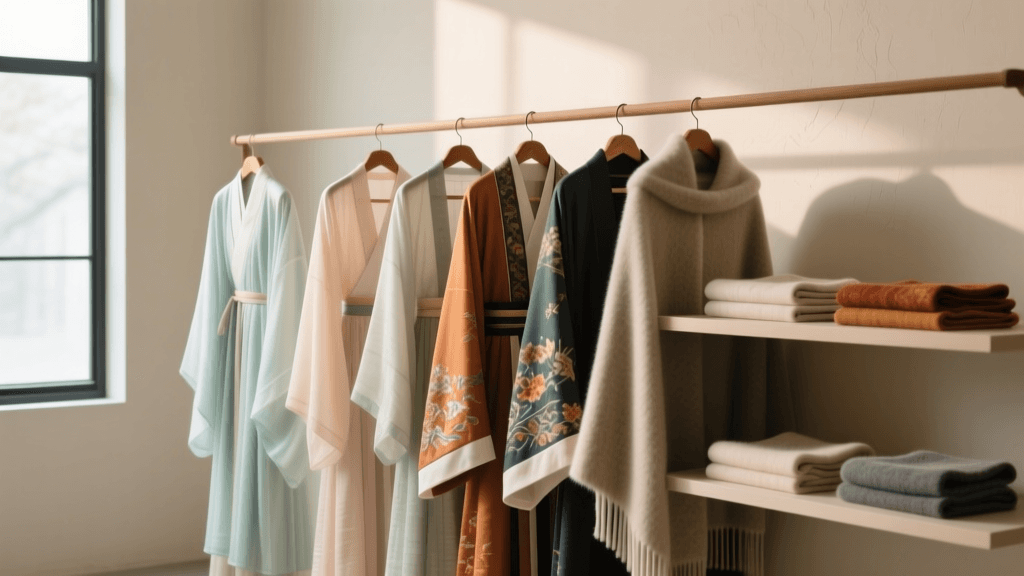
Seasonal rotation is not merely about swapping out heavy clothes for light ones; it is about matching the historical textile technology to the appropriate climate. Traditional Chinese weaving techniques produce fabrics with vastly different structural integrities and humidity tolerances. Understanding these categories is the first step in a successful rotation schedule.
Spring and Summer: The Breathable Weaves
For the warmer months, the focus shifts to Sha (gauze) and Luo (leno weave). These fabrics are characterized by their open, porous structures that allow for maximum airflow, making them ideal for the sweltering humidity of an Asian summer. Garments like the Tang dynasty-style Shan (open-front shirts) and lightweight Qixiong Ruqun (chest-high skirts) are typically crafted from these materials. Because of their delicate, net-like structures, Luo and Sha are highly prone to snagging and must be stored away from rough surfaces or Velcro fasteners when transitioning into autumn.
Autumn and Winter: The Structured and Insulated Weaves
As temperatures drop, the wardrobe transitions to Ling (twill) and Duan (satin), as well as heavy brocades like Zhuanghua and Zhijin (gold-woven fabrics). These textiles are dense, lustrous, and designed to hold structural shapes, such as the crisp collars of a Ming dynasty Ao (jacket) or the deep, heavy pleats of a Mamianqun (horse-face skirt). Winter garments often feature linings of cotton, velvet, or even modern thermal blends. The weight of these garments means they must be stored with adequate support to prevent the shoulders from stretching or the metallic threads from fracturing under tension.
The Pre-Storage Cleaning Protocol
Before any garment enters long-term seasonal storage, it must be impeccably clean. Invisible residues from sweat, body oils, and environmental pollutants can oxidize over time, leading to permanent yellowing and the degradation of silk proteins. According to the Victoria and Albert Museum's textile conservation guidelines, soil and organic residues are primary attractants for textile pests and can accelerate the chemical breakdown of natural fibers.
For unlined silk garments, professional dry cleaning specializing in heritage textiles is highly recommended. However, for everyday Hanfu pieces made of cotton, linen, or washable silk blends, hand-washing is the preferred method. In 2026, the market offers excellent pH-neutral, enzyme-free detergents specifically formulated for delicate protein fibers. Never use standard alkaline laundry detergents or fabric softeners, as these strip the natural sericin from silk and leave a waxy buildup that attracts dust. After washing, garments should be rolled in clean, dry microfiber towels to gently press out excess water and then laid flat on a mesh drying rack in a shaded, well-ventilated area. Direct UV exposure must be strictly avoided, as it rapidly fades the complex botanical dyes often used in traditional Hanfu coloring.
Creating the Ideal Microclimate: Storage Environments
The environment in which you store your Hanfu is just as critical as how you fold it. The ideal storage microclimate for natural fibers is a stable temperature of around 65°F (18°C) with a relative humidity (RH) between 45% and 55%. Fluctuations in humidity cause fibers to expand and contract, leading to micro-tears in delicate silk weaves. In 2026, integrating smart WiFi thermo-hygrometers into your wardrobe or storage chests allows you to monitor these metrics in real-time via your smartphone, alerting you if your storage environment drifts out of the safe zone.
The Canadian Conservation Institute's notes on textile storage emphasize the importance of using archival-quality materials to prevent acid migration. Standard cardboard boxes and wooden drawers emit acidic gases that will stain and weaken silk over time. Always line wooden drawers with acid-free tissue paper or unbleached, washed cotton muslin. When folding heavy garments like a Mamianqun, pad the folds with crumpled acid-free tissue to prevent hard creases from forming, which can eventually cause the silk to split along the fold lines.
Hanfu Storage Material Compatibility Chart
| Garment Type | Primary Material | Ideal Storage Method | Padding / Support |
|---|---|---|---|
| Mamianqun (Pleated Skirt) | Satin / Brocade | Flat fold in archival box or specialized skirt hanger | Acid-free tissue in pleats to maintain structure |
| Beizi (Open-front Coat) | Luo (Gauze) / Silk | Breathable cotton garment bag on padded hanger | Wide, velvet-covered hanger to prevent shoulder dimples |
| Ruqun (Jacket & Skirt Set) | Cotton / Linen | Folded in cedar-lined drawer or cotton storage bin | Unbleached muslin interleaving between layers |
| Winter Ao (Lined Jacket) | Heavy Brocade / Wool | Flat storage to prevent gravity stretching | Buffered tissue paper to support heavy metallic threads |
Pest Management Without Chemical Damage
Historically, camphor and naphthalene (mothballs) were used to protect Asian textiles from insects. In modern preservation, these chemical repellents are strictly forbidden for use on Hanfu. The off-gassing from traditional mothballs not only leaves a pervasive, nearly impossible-to-remove odor but can also chemically react with the metallic threads (gold and silver foil) used in Ming and Song dynasty reproduction garments, causing them to tarnish and turn black.
Instead, rely on natural, non-toxic pest deterrents. Japanese Hinoki wood blocks, dried lavender sachets, and untreated cedar rings are excellent alternatives. These natural options repel silverfish and clothes moths without introducing harmful volatile organic compounds (VOCs) into your storage space. Ensure that these botanical deterrents are wrapped in small cotton pouches so they do not come into direct contact with the silk, which could result in oil stains from the wood or botanical matter.
Travel Packing for Destination Hanfu Photoshoots
With the rise of cultural tourism in 2026, many enthusiasts travel to historical hubs like Xi'an, Luoyang, or Kyoto for destination photoshoots. Packing Hanfu requires a different strategy than everyday clothing. Never use vacuum-sealed bags for silk or brocade Hanfu; the intense compression will crush the fibers and destroy the structural pleats of skirts. Instead, utilize silk-lined travel folders or the 'bundle wrapping' technique. Bundle wrapping involves wrapping your garments around a soft core (like a pouch of socks or undergarments), which eliminates hard fold lines and minimizes wrinkling during transit. Always pack a portable, handheld steamer in your luggage to gently coax out any minor travel wrinkles upon arrival at your hotel.
Reviving Stored Hanfu: Unboxing and Pressing
When the season changes and it is time to bring your garments out of storage, do not rush to wear them immediately. Unbox the garments in a clean, dry room and allow them to 'breathe' for at least 24 hours. This airing-out process allows any trapped, stale air to dissipate and gives the fibers a chance to acclimate to the room's current ambient humidity.
When it comes to removing wrinkles, direct contact with a hot iron is the enemy of silk. Always use a garment steamer, keeping the nozzle a few inches away from the fabric to allow the steam to penetrate the fibers gently. For garments that require crisp lines, such as the collar of a Yuanlingpao (round-collar robe) or the waistband of a skirt, use an iron on the lowest 'silk' setting. Crucially, you must place a clean, white cotton pressing cloth between the iron and the Hanfu. Never iron directly over embroidery or metallic threads, as the heat will melt the synthetic cores of modern reproduction threads or flatten the dimensional texture of traditional couching techniques.
Conclusion
Proper Hanfu storage rotation and seasonal maintenance is an act of cultural stewardship. By understanding the unique properties of traditional weaves, utilizing modern climate-monitoring technology, and adhering to museum-grade preservation standards, you ensure that your collection remains a vibrant, living testament to Asian textile heritage. As we move through 2026 and beyond, treating these garments with the respect and care they deserve guarantees that the beauty of Hanfu will continue to be worn, celebrated, and preserved for the future.