Hanfu vs Theatrical Xifu in Peking Opera & Kunqu 2026
The 2026 Renaissance of Traditional Performing Arts Wardrobes
As we navigate through 2026, the global appreciation for traditional Asian garments has evolved far beyond casual streetwear and seasonal festivals. The Hanfu movement, which began as a grassroots effort to reclaim historical Chinese clothing, has now deeply intersected with the world of traditional performing arts. Enthusiasts, costume designers, and cultural historians are increasingly looking toward Peking Opera (Jingju) and Kunqu theatre to understand the theatrical evolution of these garments. However, a critical distinction remains between historical Hanfu and theatrical Xifu (stage costumes). Understanding these differences is essential for anyone involved in cultural performances, historical reenactments, or high-end traditional fashion. In this comprehensive guide, we break down the anatomy, sourcing, and styling of stage versus street wear in the modern era.
Defining the Garments: Historical Hanfu vs. Theatrical Xifu
To the untrained eye, a beautifully embroidered robe on stage might look identical to a high-end Hanfu outfit worn on the streets of Shanghai or Chengdu. However, their foundational design philosophies are entirely different. Hanfu refers to the historical dress of the Han people, strictly adhering to the sartorial rules, silhouettes, and textile technologies of specific dynasties (most notably the Tang, Song, and Ming). It is designed for daily life, ceremonial duties, and historical accuracy.
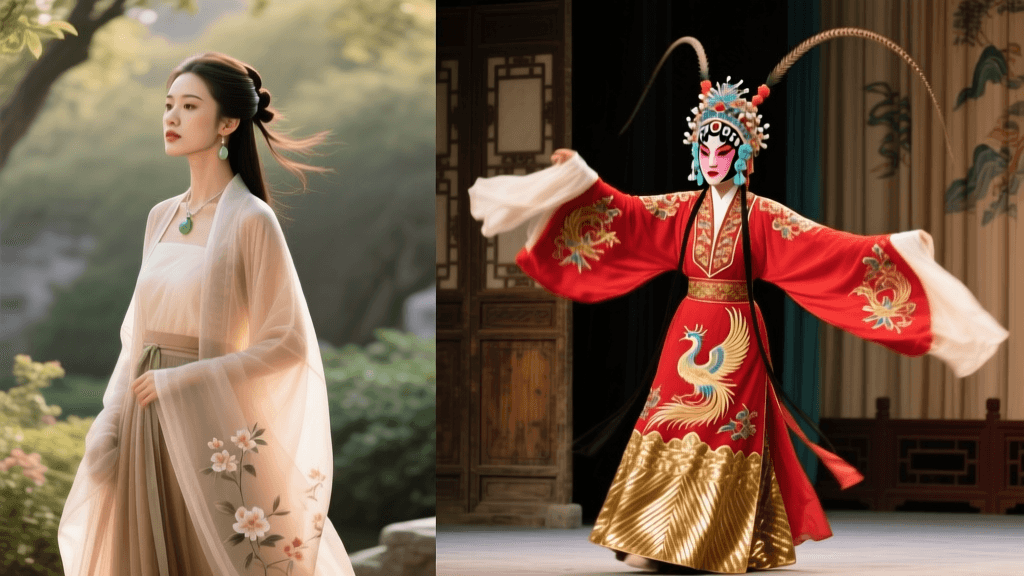
Xifu, on the other hand, is the traditional costume of Chinese opera. It is an anachronistic, highly stylized amalgamation of various historical periods, prioritizing visual impact, character archetypes, and stage mobility over historical accuracy. While a Ming Dynasty official's robe was tailored to reflect strict sumptuary laws and subtle social hierarchies, a theatrical Mang (python robe) is exaggerated with bold colors, oversized sleeves, and padded shoulders to ensure the character is instantly recognizable from the back row of a grand theatre.
The Kunqu Connection: Ming Dynasty Elegance on Stage
Kunqu is widely regarded as the 'mother of Chinese operas,' and its aesthetic is deeply intertwined with actual historical Hanfu. According to the UNESCO Intangible Cultural Heritage registry, Kunqu's elegant, refined nature is reflected not just in its vocal techniques, but in its visual presentation. Because Kunqu solidified its theatrical form during the Ming Dynasty (1368–1644), its costumes are heavily based on authentic Ming Hanfu silhouettes.
When watching a Kunqu performance in 2026, you will notice the female Dan roles wearing garments that closely resemble the historical Aoqun (a lined jacket paired with a pleated skirt) and the Pifeng (a long, open-front cloak). The embroidery in Kunqu is notoriously delicate, favoring soft pastels, elegant cranes, plum blossoms, and subtle water motifs. For modern Hanfu enthusiasts, Kunqu serves as a living, breathing museum of Ming Dynasty fashion, offering incredible inspiration for those looking to assemble historically accurate, high-society Ming wardrobes.
Peking Opera: The Stylization of Martial Arts and Qing Influences
If Kunqu is a delicate watercolor painting, Peking Opera (Jingju) is a bold, high-contrast oil canvas. As noted by Encyclopædia Britannica, Peking Opera emerged later, blending various regional styles and incorporating significant influences from the Qing Dynasty (1644–1911). This historical shift drastically altered the wardrobe.
Peking Opera costumes are designed for extreme physical exertion, including acrobatics, martial arts, and rapid character transformations. The Kao (a stylized suit of armor worn by generals) features four triangular flags attached to the back, a purely theatrical invention that has no basis in actual historical warfare but looks magnificent during stage combat. Furthermore, the color coding in Peking Opera is rigid: yellow is reserved for emperors, red denotes loyalty and bravery, and black signifies integrity and bluntness. This strict color-coding is a theatrical necessity, not a historical Hanfu rule.
Comparative Analysis: Hanfu, Kunqu, and Peking Opera Xifu
To help collectors, performers, and designers make informed decisions in 2026, we have compiled a structural comparison of these three distinct garment categories.
| Feature | Historical Hanfu (Ming Era) | Kunqu Theatrical Costumes | Peking Opera Xifu |
|---|---|---|---|
| Primary Silhouette | Aoqun (Jacket & Skirt), Shenyi | Stylized Ming Aoqun, Pifeng | Mang (Python Robe), Kao (Armor) |
| Sleeve Style | Pipa sleeves, modest cuffs | Extended white silk Shuixiu (Water Sleeves) | Exaggerated Shuixiu, rigid cuffs for martial arts |
| Embroidery & Motifs | Subtle florals, weaving, historically accurate ranks | Elegant cranes, plum blossoms, soft pastels | Bold dragons, tigers, high-contrast metallic threads |
| 2026 Avg. Custom Cost | $250 - $600 USD | $800 - $1,500 USD | $1,200 - $3,000+ USD |
2026 Sourcing Guide: Where to Buy Authentic Stage and Street Wear
The market for traditional garments has matured significantly by 2026. Sourcing the right piece depends entirely on your intended use. If you are building a daily-wear Hanfu wardrobe, mainstream heritage brands like Shisanyu and Zhongling offer excellent, historically informed pieces utilizing modern jacquard looms and AI-assisted pattern drafting to keep costs between $150 and $300.
However, if you are sourcing for a theatrical production, amateur Kunqu troupe, or high-fashion editorial shoot, you must turn to specialized theatrical workshops. The epicenter of this craft remains Suzhou, where multi-generational embroidery artisans craft bespoke Xifu. In 2026, a custom-embroidered Kunqu Pifeng utilizing traditional Su embroidery (Suxiu) techniques will cost upwards of $1,200 and require a lead time of three to four months. For Peking Opera martial costumes, buyers often source from specialized Beijing-based theatrical suppliers who understand the precise weight distribution required for acrobatic flags and padded armor.
Tips for Sourcing Theatrical Garments:
- Verify the Silk Weight: Stage costumes require heavier silk satins (often 22-30 momme) to drape correctly under stage lighting and withstand rigorous movement. Daily Hanfu typically uses lighter 12-16 momme silks or breathable linens.
- Check the Lining: Authentic Xifu is fully lined with durable cotton or heavy silk to absorb sweat during intense performances. Unlined garments are strictly for casual street wear.
- Custom Fittings: Theatrical costumes are tailored to accommodate thick stage makeup, elaborate headdresses (like the Kunqu Diancui hairpieces), and internal padding. Always provide your full performance measurements, not just your street-clothes measurements.
The Mechanics of Movement: Water Sleeves and Stagecraft
One of the most iconic elements bridging Hanfu and theatrical costumes is the Shuixiu, or 'water sleeve.' In historical Ming Dynasty Hanfu, sleeves were generous and elegant, often featuring the iconic Pipa (lute) shape, but they were designed to allow the wearer to perform daily tasks, hold objects, and navigate society.
In Kunqu and Peking Opera, the water sleeve is an extension of the actor's emotional vocabulary. These are not merely long sleeves; they are separate, meticulously weighted extensions of white silk, often exceeding 100 centimeters in length, stitched onto the cuff of the main garment. Master performers use over thirty distinct water sleeve techniques to convey weeping, anger, shyness, or joy. For modern Hanfu photographers and amateur performers in 2026, incorporating detachable theatrical water sleeves into a historical Ming Hanfu photoshoot has become a popular trend, allowing for dramatic, sweeping imagery that captures the spirit of the stage while maintaining a historically grounded base garment.
Conclusion: Respecting the Heritage of Both Worlds
As the boundaries between historical reenactment, modern fashion, and traditional performing arts continue to blur in 2026, it is vital to respect the unique purposes of both Hanfu and Xifu. Hanfu connects us to the daily lives, societal structures, and textile innovations of our ancestors. Theatrical Xifu connects us to the boundless imagination, physical prowess, and archetypal storytelling of the stage. By understanding the distinct fabrics, motifs, and construction techniques of Peking Opera and Kunqu costumes, enthusiasts can make informed, respectful, and visually stunning choices for their wardrobes, performances, and cultural studies.