Hanfu Undergarments: Layers, Structure, and Styling Basics
The Architecture of Hanfu: Why Undergarments Matter
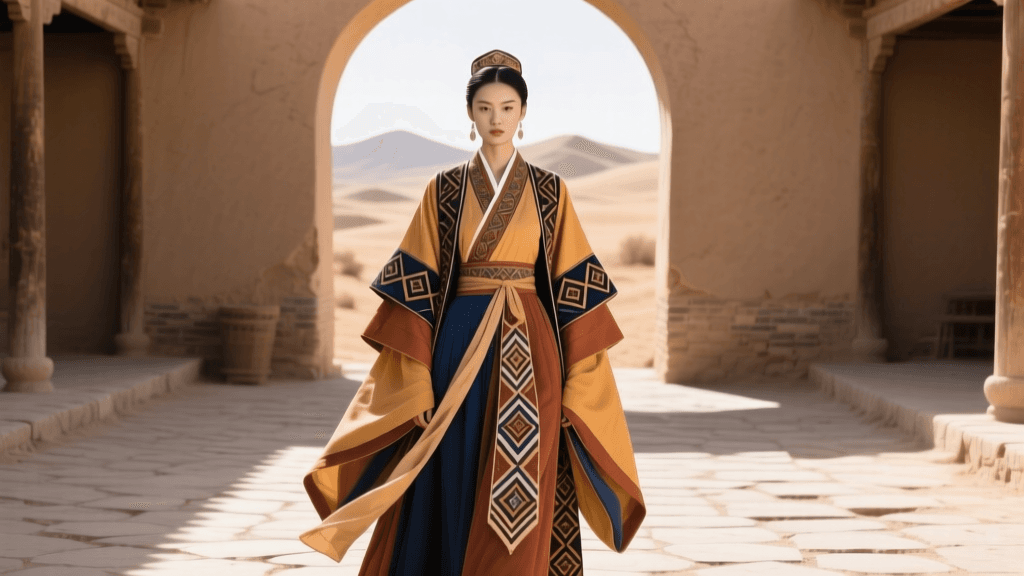
When most people envision traditional Chinese clothing, they picture the sweeping sleeves of the ruqun (blouse and skirt) or the elegant draping of the shenyi (deep robe). However, the true elegance and structural integrity of Hanfu rely entirely on what lies beneath. The modern Hanfu movement, which has seen millions of young Chinese people embracing their sartorial heritage, places a heavy emphasis on historical accuracy and silhouette. As noted by BBC Culture, the revival is not merely about wearing a costume, but about understanding the profound cultural and structural nuances of traditional dress.
Hanfu is inherently modular. Unlike Western tailoring, which relies on darts, seams, and structured corsetry to shape the body, traditional Chinese garments are flat-cut. The three-dimensional silhouette, the graceful drape of the sleeves, and the modest, layered neckline are all achieved through strategic undergarments and precise wrapping techniques. Understanding these foundational layers is essential for anyone looking to wear Hanfu authentically and comfortably.
Core Undergarment Layers Explained
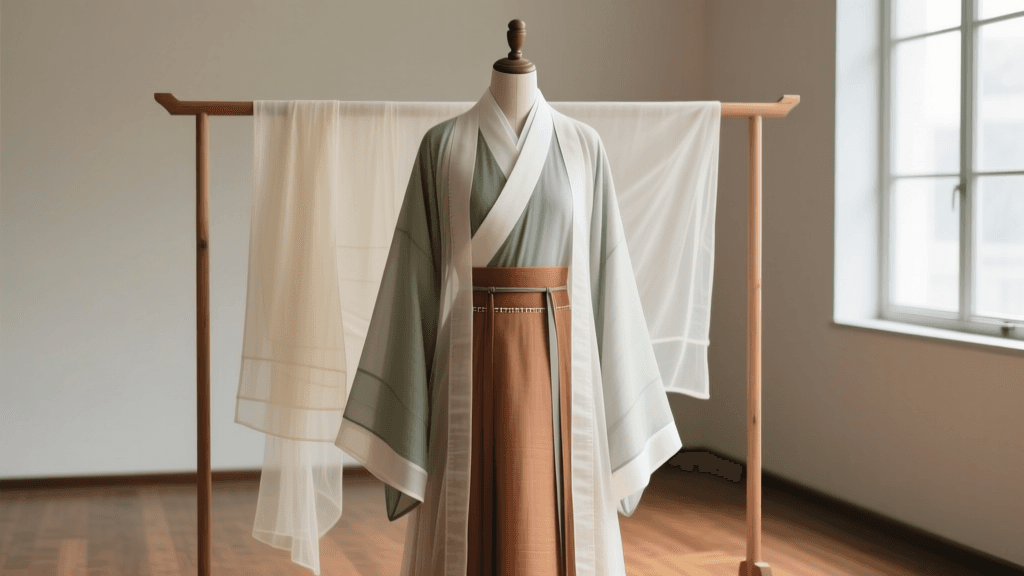
A complete Hanfu ensemble is built from the skin outward. Skipping the base layers often results in a flat, costume-like appearance, collar gaping, and discomfort. Here is a breakdown of the essential structural layers.
Zhongyi (中衣): The Inner Canvas
The zhongyi is the foundational inner shirt and trousers set. It serves multiple purposes: it protects expensive outer silk garments from body oils, provides a layer of modesty, and creates the iconic layered collar effect (cengci).
- Collar Height: The collar of the zhongyi must sit exactly 1 to 1.5 centimeters above the outer garment's collar. This white or neutral border frames the face and signifies proper dressing etiquette.
- Sleeve Length: Traditional zhongyi sleeves often extend slightly past the wrist. When worn under wide-sleeved outer robes, the inner cuff peeks out, adding depth to the ensemble.
- Material: For daily wear, 120-150 GSM (grams per square meter) cotton or cotton-linen blends are ideal. They offer breathability while providing enough stiffness to keep the collar standing upright.
Ku (袴) and KuZhe (袴褶): The Lower Layers
Historically, ku referred to trousers worn beneath skirts and robes. In ancient times, particularly before the widespread adoption of closed-crotch trousers in the Han Dynasty, ku were often open-crotch leg warmers tied at the waist, as the outer skirts provided sufficient modesty. Today, modern Hanfu practitioners utilize closed-crotch cotton ku or lightweight linen wide-leg pants. These lower layers prevent the outer skirt from tangling between the legs during movement and provide necessary warmth in winter.
Moxiong (抹胸) and Baofu (抱腹): Chest Binders
For women's styles, particularly those from the Tang and Song dynasties, the moxiong (chest wrapper) or baofu (belly and chest binder) is crucial. These garments provide bust support and create a smooth foundation for the high-waisted skirts of the Tang era or the slender, elegant silhouettes of the Song era.
While historical moxiong were wrapped and tied tightly with fabric ribbons, modern Hanfu brands often integrate hook-and-eye closures, elastic bands, or even built-in bra cups to accommodate modern comfort standards without sacrificing the external historical silhouette.
Historical vs. Modern Alternatives: A Structural Comparison
The modern Hanfu market has adapted historical undergarments to suit contemporary lifestyles, budgets, and climates. Below is a comparison of traditional standards versus modern alternatives frequently used by today's enthusiasts.
| Layer | Historical Standard | Modern Hanfu Alternative | Est. Cost (USD) | Structural Impact |
|---|---|---|---|---|
| Zhongyi (Top) | Cross-collared raw silk or fine ramie, hand-stitched. | Cross-collared cotton undershirt with snap buttons or velcro inner ties. | $15 - $30 | Maintains collar layering; modern closures prevent the inner shirt from shifting during wear. |
| Moxiong | Wrapped silk or linen binder, tied with ribbons. | Elasticized tube top or structured camisole with silicone grip lining. | $10 - $25 | Provides modern bust support; silicone lining prevents the heavy outer Tang skirt from dragging it down. |
| Ku (Bottom) | Open-crotch or wide-crotch split trousers. | Closed-crotch cotton bloomers or lightweight linen palazzo pants. | $12 - $20 | Prevents skirt tangling; offers modesty and warmth without adding bulk to the waistline. |
| Petticoat | Multiple layered linen underskirts. | Modern A-line cotton petticoat or lightweight tulle slip. | $15 - $35 | Essential for Ming Dynasty mamianqun (horse-face skirts) to maintain the pleated structure and volume. |
Fabric Choices and Seasonal Structuring
The choice of undergarment fabric dictates not only the comfort of the wearer but also the drape of the outer garments. The history of Chinese textile production is deeply intertwined with these choices. As detailed by the Metropolitan Museum of Art's Heilbrunn Timeline of Art History, Chinese silk and sericulture have dictated fashion hierarchies for millennia, while plant-based fibers served as the practical foundation for daily wear.
Summer: Ramie and Lightweight Linen
In the sweltering heat of southern China, historical undergarments were crafted from ramie or fine linen. Ramie is highly breathable, moisture-wicking, and naturally stiff. This stiffness is highly desirable for the zhongyi collar, ensuring it stands up crisply against the neck even in high humidity. When purchasing summer under-layers, look for a linen-cotton blend (e.g., 55% linen, 45% cotton) to reduce wrinkling while maintaining structural integrity.
Winter: Quilted and Padded Layers
During winter, the layering system expands. A zhongyi made of flannel or brushed cotton provides a thermal base. For extreme cold, historical figures wore padded inner jackets (mian'ao). Today, practitioners often layer modern thermal wear (like Uniqlo Heattech) beneath a traditional cotton zhongyi, ensuring the modern base remains invisible while the traditional collar and sleeves remain exposed.
The Role of Silk
While silk is the most prestigious fabric in Chinese history, recognized globally for its cultural significance and even inscribed on the UNESCO Representative List of the Intangible Cultural Heritage of Humanity, it is rarely used for the innermost zhongyi today. Silk (measured in momme, with 16-19 momme being standard for apparel) lacks the friction needed to keep outer layers in place and is difficult to wash frequently. Silk is best reserved for the outer ru (blouse) or qun (skirt), while cotton anchors the outfit.
Practical Styling: Tying the Jiaoling Youren
The most critical rule of Hanfu structure is jiaoling youren (交领右衽): the left side of the garment must cross over the right side, with the collar forming a 'y' shape. This rule applies to every single layer, from the innermost zhongyi to the outermost robe. Getting the undergarment tie wrong will ruin the entire silhouette.
Step-by-Step Inner Tying Guide
- Align the Collar: Wrap the right side of the zhongyi across your chest first. Then, pull the left side over it. Ensure the seam where the collars cross sits exactly at the hollow of your collarbone.
- Secure the Inner Tie (Nei Dai): Most zhongyi have a small inner tie on the right side of the torso. Tie this snugly. This anchor point prevents the garment from shifting when you raise your arms.
- Secure the Outer Tie (Wai Dai): Pull the outer tie across to your right side seam and tie it securely. The tension here dictates the tightness of the collar against your neck.
- Check the 'Y' Shape: Look in a mirror. The left collar should cleanly overlap the right. If the collar is gaping, your inner tie is too loose, or the garment's shoulder seam is too wide for your frame.
Troubleshooting Common Silhouette Issues
Even with the right garments, beginners often face structural issues. Here is how to solve them:
- The Collar is Sinking: This happens when the outer garment is too heavy for the inner garment. Switch to a zhongyi with a thicker, stiffer collar band, or add a discrete strip of iron-on interfacing inside the inner collar.
- The Skirt is Bunching at the Waist: Ming Dynasty horse-face skirts feature heavy, structured pleats. If you wear a thick, modern elastic waistband underneath, it will create a bulky ridge. Always tuck your zhongyi top smoothly into your ku or use a seamless, low-rise slip to keep the waistline flat.
- Sleeves are Dragging: While historical ceremonial sleeves touched the floor, daily wear requires practicality. If your zhongyi sleeves are too long and bunching under your outer robe, use a traditional arm band (bi gou) or a discrete modern elastic hair tie around the forearm to gather the inner sleeve, allowing the outer sleeve to drape cleanly.
Conclusion
Mastering Hanfu is an exercise in patience, layering, and respect for historical engineering. The undergarments are not mere afterthoughts; they are the architectural scaffolding that allows traditional Chinese garments to achieve their legendary grace. By investing in high-quality zhongyi, understanding the structural purpose of the moxiong and ku, and mastering the art of the jiaoling youren tie, wearers can achieve a silhouette that is both historically resonant and beautifully authentic. Whether you are attending a traditional festival or simply exploring the depths of Asian sartorial traditions, remembering that true elegance starts from the base layer will transform the way you wear Hanfu.