From Silk Markets to Screens: The Evolution of Buying Hanfu
The Historical Roots: Silk Roads and Bazaars
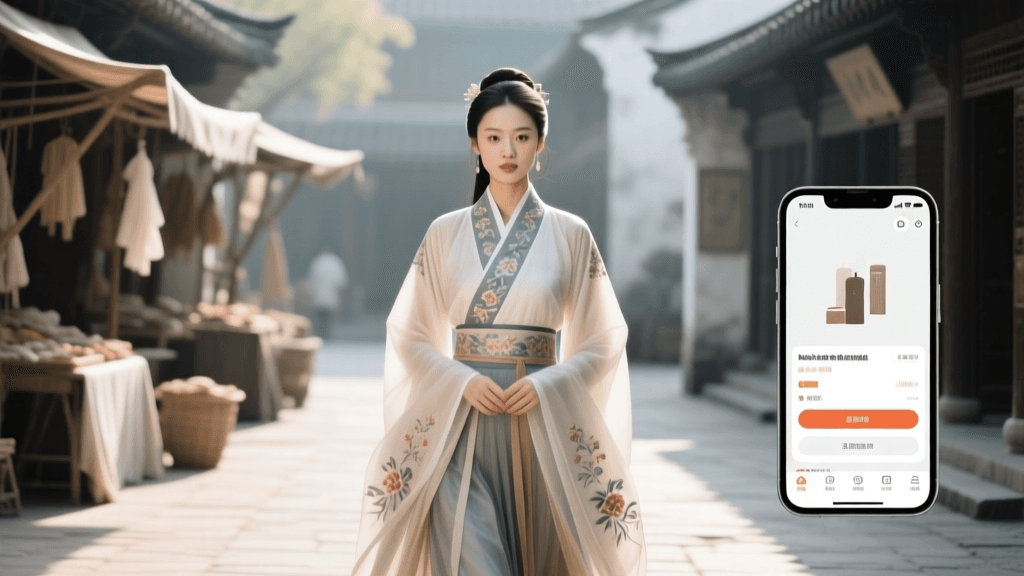
For centuries, the acquisition of traditional Chinese clothing was an inherently tactile, localized, and deeply communal experience. Long before the advent of digital storefronts, textiles were the lifeblood of the Chinese economy and a primary medium of cultural exchange. As documented in historical analyses of historical trade routes like the Silk Road, silk was not merely a fabric but a currency, a diplomatic gift, and a closely guarded state secret. In ancient and imperial China, acquiring a garment meant visiting bustling local bazaars, negotiating with silk merchants, and commissioning local tailors who understood the strict sumptuary laws dictating who could wear specific colors, motifs, and structural layers.
Traditional markets in cities like Suzhou and Hangzhou served as the epicenters of this trade. Buyers would select raw bolts of silk, linen, or brocade, feeling the weight and drape of the material before handing it over to a tailor. This process required a deep understanding of fabric behavior, as traditional Chinese garments like the ruqun (blouse and skirt) or shenyi (deep robe) relied on flat-pattern cutting and precise fabric manipulation rather than the complex, curved darts of Western tailoring.
The Modern Physical Market: Hangzhou and Suzhou Today
Today, the tradition of buying textiles in person survives in massive wholesale and retail hubs like the Hangzhou China Silk City and the Suzhou Silk Market. For modern Hanfu enthusiasts and designers, these markets offer an unparalleled sensory experience. You can find thousands of vendors selling everything from raw mulberry silk and ramie to intricate jacquard brocades and modern synthetic blends.
However, navigating these physical markets requires specific skills. Haggling is expected, and minimum order quantities (MOQs) can be a barrier for individual buyers. While some shops offer bespoke tailoring, the lead time for a custom, historically accurate Hanfu set can range from three to six weeks. Furthermore, authenticating the quality of silk versus synthetic blends requires a trained eye—or a trusty lighter to perform a burn test on fringe threads.
The E-Commerce Explosion: Taobao and the Cao County Phenomenon
The digital revolution fundamentally democratized access to traditional Chinese garments. Driven by China's massive e-commerce infrastructure, platforms like Taobao and Tmall transformed Hanfu from a niche hobbyist pursuit into a multi-billion-dollar mainstream industry. The epicenter of this digital boom is Cao County in Shandong Province, a region that pivoted from producing performance costumes to manufacturing over 50% of China's Hanfu.
E-commerce allowed specialized brands—such as Ming Hua Tang, Shisanyu, and Zhongzheng—to bypass traditional retail gatekeepers and sell directly to consumers. Through livestreaming, detailed fabric macro-videos, and 3D modeling, online brands replicated the tactile experience of the silk market. Consumers could now view the drape of a mamianqun (horse-face skirt) in motion, read thousands of user reviews regarding fabric transparency, and order custom sizing with a few clicks.
Physical Markets vs. E-Commerce: A Buyer's Comparison
Whether you are a local resident or an international buyer, choosing between physical markets and e-commerce depends on your budget, timeline, and need for customization. Below is a structured comparison to guide your purchasing strategy.
| Feature | Physical Silk Markets (e.g., Hangzhou/Suzhou) | E-Commerce Platforms (Taobao / Brand Sites) |
|---|---|---|
| Price Range | Variable; requires haggling. Raw fabric is cheap, but tailoring adds significant cost. | Highly competitive. Budget sets start at 150 RMB ($20 USD); premium sets exceed 2000 RMB. |
| Lead Time | 2 to 6 weeks for custom tailoring. | 3-7 days for ready stock; 1-3 months for 'Yushou' (pre-sale) crowdfunding batches. |
| Customization | Unlimited. You control every measurement, fabric choice, and trim detail. | Limited to brand sizing charts, though some offer custom waist/length adjustments for a fee. |
| Quality Control | High tactile control. You inspect the weave, weight, and dye consistency in person. | Relies on vendor photos and reviews. Risk of color discrepancy or synthetic blends. |
| Best For | Designers, bulk buyers, and those seeking 100% bespoke, historically accurate commissions. | Everyday enthusiasts, international buyers, and those seeking trendy, ready-to-wear designs. |
Practical Guide: How to Buy Hanfu Online Today
Transitioning from Western fashion to traditional Chinese garments requires a shift in how you approach sizing, fabrics, and purchasing logistics. Here is actionable advice for building your Hanfu wardrobe online.
1. Mastering Traditional Measurements
Unlike Western fashion, which relies on complex curved seams to hug the body, Hanfu utilizes flat-pattern cutting. The fit is determined by the drape of the fabric and the tying of sashes. When ordering online, you must provide specific metrics in centimeters (cm):
- Bust and Waist: Measure the fullest part of your chest and your natural waist. For the mamianqun, the waist measurement is critical as the skirt relies on a flat front panel and pleated sides that wrap around.
- Shoulder Width: Measure from the edge of one shoulder bone to the other. This ensures the collar sits correctly without pulling.
- Arm Length (Wingspan): For traditional wide sleeves (guangxiu or huixiu), measure from the base of your neck, over the shoulder, down to your wrist or middle finger, depending on the desired historical sleeve length.
- Height: Crucial for determining the length of the skirt or robe, ensuring it hovers exactly 2-3 cm above the ground to prevent dragging.
2. Choosing the Right Fabric for the Season
Traditional Chinese layering is deeply tied to the agricultural calendar and seasonal shifts. When browsing e-commerce listings, look for these specific fabric keywords:
- Spring/Autumn: Look for Tian Si (celestial silk) or mid-weight cotton-linen blends. These provide structure for outer layers like the beizi (long open-front coat) without causing overheating.
- Summer: Seek out Xiangyunsha (gambiered Canton gauze) or pure ramie. Ramie is highly breathable, naturally antibacterial, and offers a crisp, historically accurate drape that resists clinging to the skin in high humidity.
- Winter: Opt for woven wool blends, velvet-lined ao (jackets), and heavy brocades (zhijin). Winter garments often feature a lined interior (li) for insulation.
3. Understanding the Cost Tiers and Pre-Sales
The Hanfu market is segmented into distinct pricing tiers. Budget brands (150-300 RMB) often use polyester blends and machine embroidery, suitable for casual wear and photography. Mid-tier brands (400-900 RMB) offer authentic weaving techniques, natural fibers, and accurate historical patterning. Haute Couture brands like Ming Hua Tang (2000+ RMB) utilize genuine gold-leaf thread, hand-woven silk, and museum-grade reproduction techniques.
Actionable Tip: Be prepared for the 'Yushou' (pre-sale) model. Because high-quality Hanfu requires specialized loom setup and intricate embroidery, brands often open crowdfunding batches. You pay a deposit, and the garment is manufactured and shipped 1 to 3 months later. Always check the estimated shipping date in the product description.
Navigating Cross-Border Shipping and Agents
For international enthusiasts participating in the global Hanfu movement, buying directly from Taobao can be challenging due to language barriers and domestic-only shipping policies. To bridge this gap, buyers utilize Taobao shopping agents like Superbuy, Sugargoo, or Wegobuy.
These platforms allow you to paste a Taobao product URL into their search bar. The agent purchases the item, receives it in their domestic Chinese warehouse, and provides you with high-resolution quality control (QC) photos. Once you approve the garment, you select an international shipping line. For heavy winter brocades or multiple sets, opt for sea freight or EMS to save on volumetric weight costs. For lightweight summer ramie sets, standard e-packet or specialized clothing lines offer a balance of speed and affordability.
Conclusion: Bridging the Ancient and the Digital
The journey of buying Hanfu has evolved from the bustling, fragrant alleys of ancient silk bazaars to the algorithmic precision of modern e-commerce. Yet, the core philosophy remains unchanged: a deep reverence for the textile arts, structural harmony, and cultural identity. Whether you are negotiating for a bolt of raw silk in Hangzhou or meticulously analyzing the weave density of a digital macro-photograph on Taobao, acquiring traditional Chinese garments is an investment in a living, breathing heritage. By understanding the metrics, fabrics, and market dynamics, you can confidently navigate both worlds and build a wardrobe that honors the past while embracing the future.