2026 Hanfu Climate Guide: Tropical, Desert & Cold Wear
The Global Hanfu Renaissance in Extreme Climates
The global Hanfu movement has evolved dramatically by 2026. What was once primarily worn during mild spring festivals or indoor cultural events is now a year-round, global wardrobe staple. From the sweltering humidity of Southeast Asia to the arid, sun-baked dunes of the Middle East, and the freezing, wind-swept streets of Northern Europe, enthusiasts are adapting traditional Chinese garments to survive and thrive in extreme climates. However, wearing historical clothing in modern extreme weather requires more than just passion; it demands a deep understanding of historical textile science, structural layering, and modern 2026 fabric innovations.
Historically, Chinese clothing was deeply tied to the changing of the seasons and the local geography. The ancients understood that survival and comfort relied on specific weaves, dyes, and silhouettes. Today, we can leverage this historical wisdom alongside cutting-edge 2026 textile technology to wear Hanfu comfortably anywhere on Earth. This comprehensive guide breaks down the best Hanfu styles, fabrics, and layering techniques for tropical, desert, and freezing cold environments.
Tropical and Humid Climates: Breathability and Moisture Management
In tropical regions like Singapore, Kuala Lumpur, or Miami, the primary enemies of comfort are high heat, oppressive humidity, and intense UV radiation. Heavy silks and synthetic brocades will quickly lead to heat exhaustion. The key to tropical Hanfu is maximizing airflow, utilizing moisture-wicking natural fibers, and adopting silhouettes that do not cling to the skin.
Recommended Styles: Song Dynasty Aesthetics
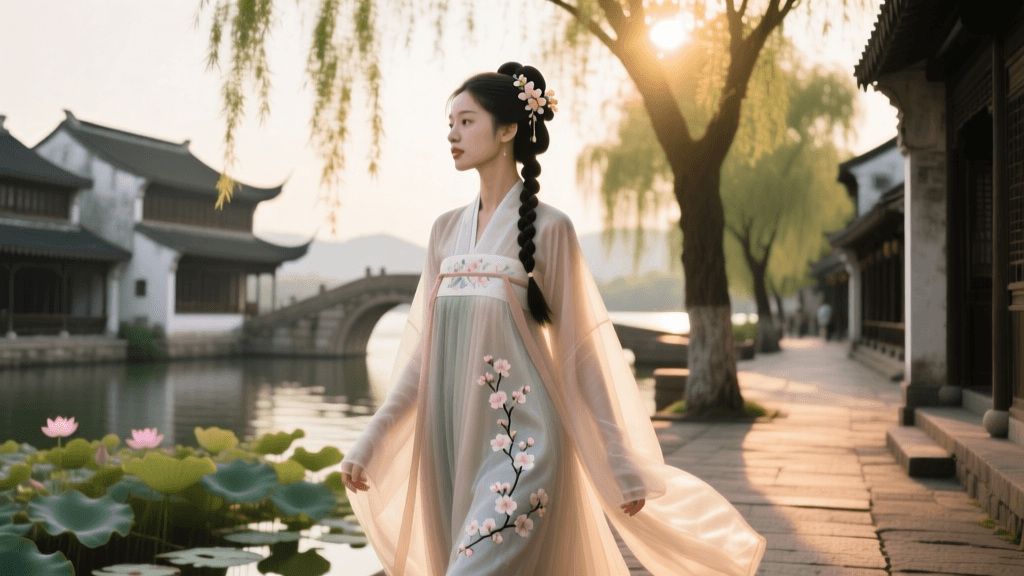
The Song Dynasty (960–1279 AD) is the undisputed champion of summer and tropical wear. The Beizi (an open-front, long-sleeved jacket) worn over a Baoqun (a lightweight, single-layer wrap skirt) or Baidi (a pleated skirt) offers exceptional ventilation. The open front of the Beizi allows for a natural cross-breeze, while the loose, straight cut prevents the fabric from trapping body heat. For a more formal look, the Qixiong Shanqun (chest-high skirt) from the Tang dynasty, when made in ultra-lightweight fabrics, keeps the waistline cool and unrestricted.
Ideal Fabrics: Ramie and Gambiered Silk
Forget heavy mulberry silk for the tropics. Instead, look for Ramie (Zhuma), a historic Chinese bast fiber that is naturally antibacterial, highly breathable, and dries significantly faster than cotton. According to the Food and Agriculture Organization, ramie's unique fiber structure makes it one of the most effective natural cooling textiles available. Another premium choice is Xiangyunsha (Gambiered Guangdong Silk). This intangible heritage fabric, recognized by UNESCO, is dyed with yam juice and sealed with river mud. The resulting fabric is crisp, cool to the touch, naturally water-resistant, and repels insects—making it the ultimate luxury textile for tropical Hanfu in 2026.
Desert and Arid Regions: Sun Protection and Temperature Swings
Desert climates, such as those found in Dubai, Arizona, or the Gobi region, present a unique dual challenge: blistering, UV-intensive daytime heat followed by rapidly dropping, chilly nights. Furthermore, blowing sand and dry winds can damage delicate fibers and irritate the skin. Desert Hanfu must focus on UV protection, physical barriers, and modular layering.
Recommended Styles: Wei-Jin and Early Ming Layering
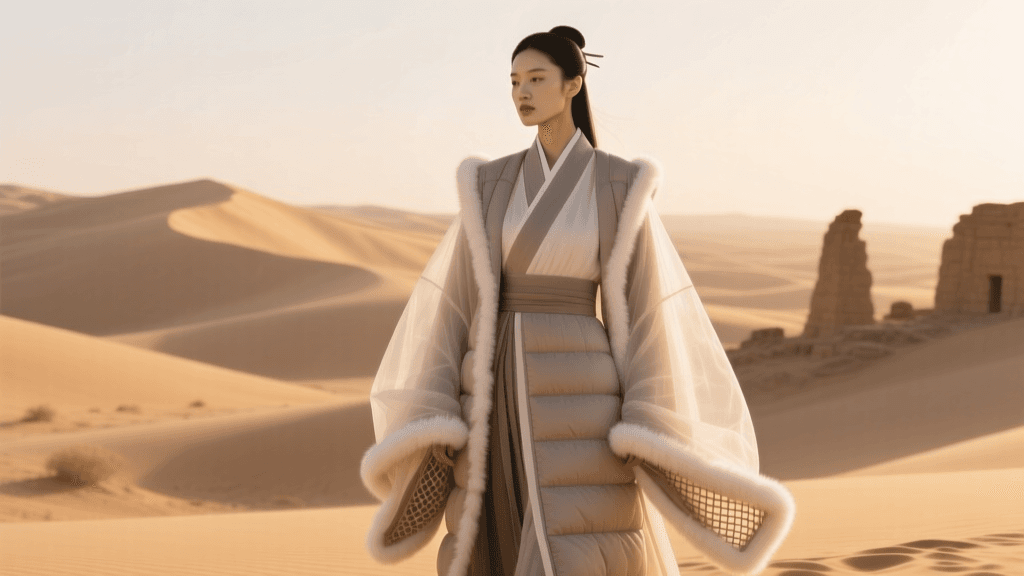
For the daytime, the wide-sleeved, flowing silhouettes inspired by the Wei-Jin period are ideal. The massive sleeves act as bellows, pumping cool air over the arms and torso as you walk. However, you must protect your neck and head. Pairing a lightweight Ruqun with a Maoqin (a traditional headscarf or wrap) shields the neck from severe sunburn. As the sun sets and temperatures plummet, transition to a Doupeng (a sleeveless, hooded cloak) worn over your base layers. The Doupeng traps your body heat instantly without restricting arm movement, making it perfect for desert evenings.
Ideal Fabrics: Raw Silk and Cotton-Linen Blends
Raw silk (Tussah or Shantung) is highly recommended for desert wear. Unlike highly processed, glossy silks, raw silk retains its natural sericin coating, which provides excellent UV resistance and a slightly textured surface that doesn't cling to sweaty skin. For inner layers, modern 2026 cotton-linen blends offer the softness of cotton with the structural integrity and quick-drying properties of linen. Avoid pure synthetic polyesters, which will trap sweat and cause severe chafing in dry, sandy conditions.
Cold and Freezing Regions: Insulation Without Sacrificing Silhouette
Wearing Hanfu in freezing climates like Harbin, Montreal, or Hokkaido requires mastering the art of invisible insulation. The goal is to maintain the elegant, flowing drape of traditional garments while integrating modern thermal technology to prevent hypothermia. The Ming Dynasty provides the best historical blueprint for cold-weather dressing.
Recommended Styles: Ming Dynasty Outerwear
The Ming Dynasty (1368–1644 AD) experienced several mini-ice ages, resulting in highly sophisticated cold-weather garments. The Aoqun (a lined, long-sleeved jacket paired with a skirt) is the foundational winter outfit. For outerwear, the Pifeng (a long, open-front cloak with a high collar) is essential. In 2026, many tailors are designing Pifeng with hidden interior wind-flaps and magnetic closures to prevent icy drafts from penetrating the chest. The Mamianqun (horse-face skirt) is also ideal for winter; its deep, overlapping pleats allow for the wearing of thick thermal leggings underneath without disrupting the skirt's exterior silhouette.
Ideal Fabrics: Wool Blends, Velvet, and Aerogel Linings
Historically, winter Hanfu utilized animal furs and heavy quilted cotton. Today, we have superior alternatives. Look for outer garments made from wool-cashmere blends or silkworm velvet (Zhangrong), which provide immense wind resistance and heat retention. The most significant 2026 innovation in cold-weather Hanfu is the integration of aerogel-infused silk linings. Originally developed for space exploration, aerogel is incredibly thin but offers unparalleled thermal insulation. A Ming-style Ao lined with aerogel-silk will keep you warm in sub-zero temperatures without adding the bulky, unflattering volume of traditional cotton padding.
2026 Hanfu Climate Comparison Chart
To help you quickly select the right garments for your next trip or local weather, refer to this structured comparison chart:
| Climate Zone | Recommended Era & Style | Ideal Primary Fabric | Key 2026 Adaptation |
|---|---|---|---|
| Tropical / Humid | Song Dynasty (Beizi, Baoqun) | Ramie, Xiangyunsha | Antibacterial nano-treatments for sweat resistance |
| Desert / Arid | Wei-Jin (Wide sleeves, Doupeng) | Raw Silk, Cotton-Linen | UV-blocking sericin coatings and sand-repellent weaves |
| Cold / Freezing | Ming Dynasty (Aoqun, Pifeng) | Wool Blends, Zhangrong Velvet | Aerogel thermal linings and magnetic wind-flaps |
Sourcing and Caring for Extreme Weather Hanfu
When sourcing extreme-weather Hanfu in 2026, it is crucial to buy from specialized vendors who understand textile properties. For tropical ramie and Xiangyunsha, look for heritage workshops in Guangdong and Guangxi that have modernized their quality control for international shipping. For winter wool and aerogel-lined pieces, specialized boutiques in Hangzhou and Beijing now offer custom-measurement services via 3D body-scanning apps, ensuring your thermal layers fit perfectly beneath your historical silhouettes.
Maintenance Tips for Longevity
- Tropical Ramie: Hand wash in cool water with a pH-neutral detergent. Never wring ramie; instead, roll it in a towel to absorb moisture and lay it flat in the shade. Direct tropical sun will make the fibers brittle over time.
- Desert Raw Silk: Sand particles can grind into the fibers. Always shake out your garments vigorously before storing. Dry clean only when necessary, as frequent washing strips the protective sericin coating that provides UV resistance.
- Cold Weather Wool & Velvet: Brush wool Pifeng with a natural bristle brush after every wear to remove dust and restore the nap. Store aerogel-lined garments flat; hanging them for long periods can cause the specialized inner linings to shift or separate from the outer shell.
Conclusion
The beauty of Hanfu lies in its incredible adaptability. By understanding the historical context of Chinese garment design and embracing the textile innovations of 2026, you can wear traditional Asian attire comfortably in the most extreme environments on the planet. Whether you are navigating the humid streets of Singapore, the shifting sands of the Sahara, or the snowy avenues of Harbin, the right fabric and silhouette will ensure you do so with both elegance and resilience.
For further reading on the historical evolution of these textiles, the Metropolitan Museum of Art's guide on Chinese Silk provides an excellent foundation on how ancient weaving techniques laid the groundwork for the advanced fabrics we utilize today.