Cinematic Hanfu Travel Photography: Styling & Location Guide
The Rise of Hanfu Tourism in China
Over the past decade, traditional Chinese clothing has transitioned from niche hobbyist circles to a mainstream cultural phenomenon. According to a comprehensive cultural report by Sixth Tone, the Hanfu market has exploded into a multi-billion-yuan industry, heavily driven by domestic tourism and social media photography. Cities like Xi'an, Hangzhou, and Luoyang have transformed into open-air studios where travelers don silk robes to capture cinematic, historically inspired portraits.
As noted by BBC Travel, walking through the Datang Everbright City in Xi'an feels like stepping onto a movie set, with thousands of visitors wearing meticulously styled Tang dynasty garments. However, capturing the perfect Hanfu travel photograph requires more than just renting a beautiful outfit. It demands an understanding of historical silhouettes, fabric behavior in natural environments, and strategic lighting. This guide provides actionable styling and photography tips to elevate your traditional Chinese garment travel experience.
Choosing the Right Dynasty Style for Your Destination
China's vast geography and varied climate mean that a heavy brocade Ming dynasty outfit will be miserable in the humid southern summer, while a sheer Tang dynasty chiffon set will leave you freezing in a northern autumn. Matching your Hanfu style to your destination is crucial for both comfort and photographic authenticity.
| Dynasty Style | Best Destination | Ideal Weather | Fabric Recommendation | Photographic Vibe |
|---|---|---|---|---|
| Tang (Qixiong Ruqun) | Xi'an, Luoyang | Warm / Hot | Lightweight Chiffon, Silk | Opulent, vibrant, flowing |
| Song (Beizi & Skirt) | Hangzhou, Suzhou | Mild / Spring | Linen, Cotton blends, Ramie | Elegant, minimalist, scholarly |
| Ming (Mamian Qun) | Beijing, Nanjing | Cool / Autumn | Brocade, Woven Jacquard | Regal, structured, dramatic |
Tang Dynasty: The Xi'an Aesthetic
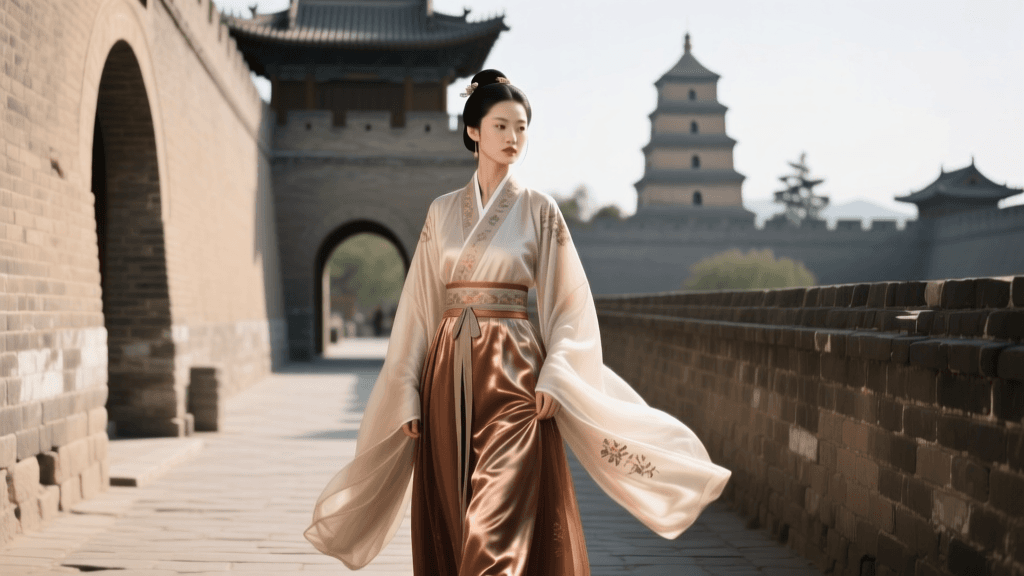
The Tang dynasty (618–907 AD) is synonymous with cosmopolitan opulence. The Qixiong Ruqun (chest-high skirt) paired with a sheer Daxiushan (large-sleeved robe) creates a striking silhouette. For travel photography in Xi'an, opt for vibrant jewel tones like pomegranate red, emerald green, or gold. The lightweight chiffon fabrics catch the wind beautifully, creating dynamic movement in your shots.
Song Dynasty: The Jiangnan Elegance
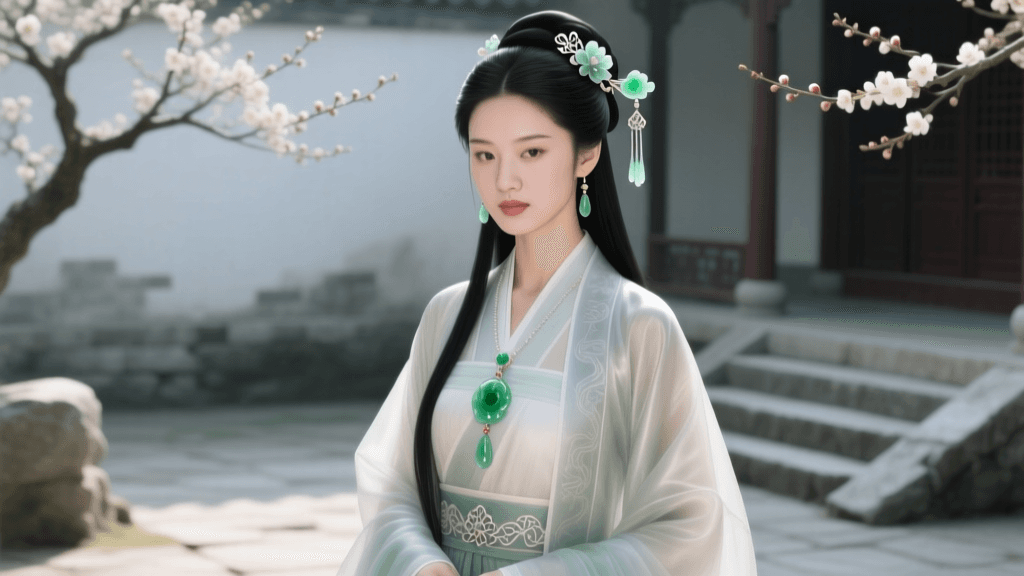
If you are visiting the classical gardens of Suzhou or the misty shores of Hangzhou's West Lake, the Song dynasty (960–1279 AD) aesthetic is unmatched. Characterized by slender lines, muted pastel colors, and the iconic Beizi (a long, open-front jacket), this style exudes quiet intellectualism. Linen and ramie fabrics photograph beautifully against the grey-tiled roofs and bamboo groves of southern China.
Ming Dynasty: Northern Majesty
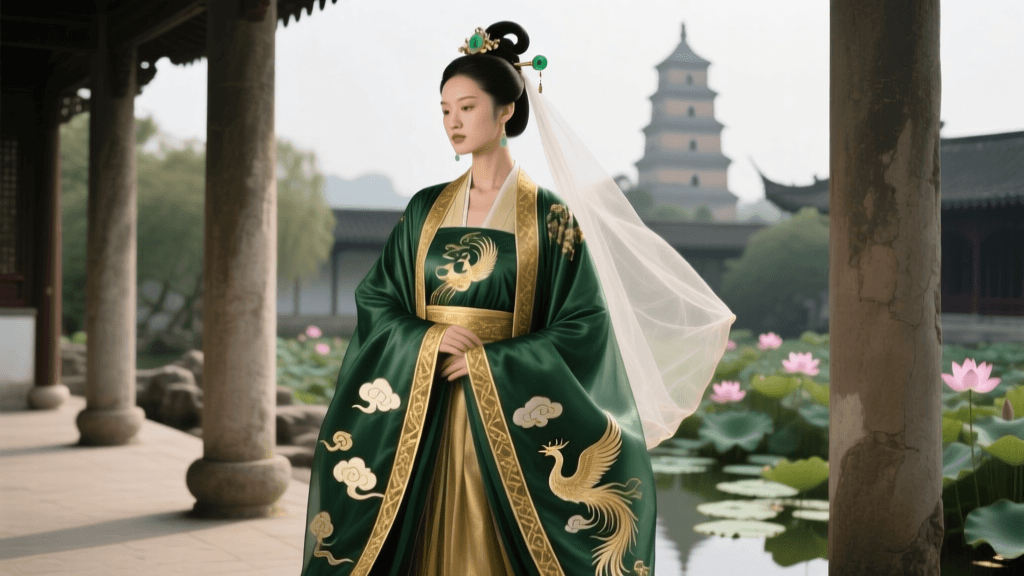
The Ming dynasty (1368–1644 AD) offers structured, regal silhouettes perfect for the imposing architecture of Beijing's Forbidden City or Nanjing's Ming Xiaoling Mausoleum. The Mamian Qun (horse-face skirt) features deep, flat pleats that swing dramatically when you walk. Because these garments are often made of thick, woven jacquard or brocade, they are ideal for crisp autumn days.
Fabric, Fit, and Financials: Renting vs. Buying
When planning a Hanfu travel photoshoot, you must decide whether to rent locally or purchase your own set. Both options have distinct advantages regarding fit, cost, and convenience.
The Rental Experience
In major tourist hubs like Xi'an and Luoyang, Hanfu rental shops line the streets near historical sites. A standard rental package—including the garment set, hair styling, and traditional makeup—typically costs between 199 and 399 RMB ($28 to $55 USD) for a 12-hour period.
- Pros: Access to high-end, expensive silk garments; professional hair and makeup included; no luggage burden.
- Cons: Sizing is often limited to standard Asian proportions (usually fitting waist sizes of 64cm to 76cm); garments may show wear and tear from heavy tourist use.
Purchasing Your Own Hanfu
For frequent travelers or photography enthusiasts, buying a mid-tier Hanfu set from reputable Taobao brands like Shisanyu or Ming Huatang is a worthwhile investment. A high-quality Ming dynasty Mamian Qun costs between 300 and 800 RMB ($40 to $110 USD).
- Measurements Matter: Unlike Western wrap skirts, a Mamian skirt must be sized precisely to your waist and height. For a person who is 165cm tall, a skirt length of 105cm to 110cm is ideal to avoid dragging the hem on dirty cobblestones while maintaining the floor-grazing cinematic look.
- Travel Tip: Pack a portable handheld steamer. Brocade and jacquard fabrics wrinkle heavily in suitcases, and crisp pleats are essential for the structured Ming aesthetic.
Top Locations & Lighting Strategies
Lighting and location dictate the mood of your Hanfu photography. Cultural heritage platforms like Radii China highlight how younger generations use these historical spaces to reconnect with their roots, making the environment just as important as the garment.
Datang Everbright City (Xi'an) - The Blue Hour
While many tourists shoot at night when the lanterns are fully lit, the most cinematic photos are captured during the blue hour (roughly 20 minutes after sunset). The deep indigo sky provides a cool contrast to the warm, golden glow of the traditional wooden architecture and red lanterns. Use a fast prime lens (like an 85mm f/1.4) to isolate your subject and create beautiful bokeh from the distant lights.
West Lake (Hangzhou) - Early Morning Mist
To capture the ethereal Song dynasty aesthetic, arrive at the lesser-known western shores of West Lake (such as the Maojiabu area) at 6:00 AM. The morning mist rolling off the water creates a natural softbox effect, diffusing the light and eliminating harsh shadows. The muted, natural light perfectly complements the soft celadon and pearl-white tones of Song-style linen garments.
The Imperial Ancestral Temple (Beijing) - Golden Hour
For Ming dynasty photography, the symmetry of Beijing's imperial architecture demands dramatic lighting. Shoot during the late afternoon golden hour when the sun casts long, warm shadows across the red walls and golden roof tiles. The low-angle sunlight catches the metallic threads in a brocade Mamian skirt, making the intricate woven patterns pop on camera.
Hair, Makeup, and Movement on the Go
Authentic styling goes beyond the clothing. Traditional Chinese photography relies heavily on the harmony between the garment, the hair, and the subject's posture.
Hair and Accessories
Modern Hanfu styling frequently utilizes high-quality lace-front wig caps to achieve the voluminous updos of the Tang dynasty or the sleek, jeweled crowns of the Ming dynasty without the hours of preparation.
- Essential Kit: Bring a box of matte U-pins, a teasing comb, and a strong-hold hairspray. Wind is the enemy of elaborate updos, especially on the open terraces of the Forbidden City.
- Accessories: Invest in lightweight resin or velvet faux flowers, and metallic Buyao (step-shake hairpins). Avoid heavy glass beads for travel, as they can cause headaches during long 8-hour photoshoots.
Posing and Fabric Manipulation
Wearing Hanfu is not just about putting on a historical garment; it is about embodying the posture, restraint, and grace of the culture. The fabric should dictate your movement, not the other way around.
— Traditional Dress Revival Society, Beijing
When posing, utilize the unique construction of the garments. For wide-sleeved Tang robes, practice the 'lotus hand' gesture (fingers gently curved, thumb tucked) and use the wind to billow the sleeves. For Ming dynasty skirts, practice the 'Ming turn'—a slow, deliberate pivot that allows the heavy pleats of the Mamian skirt to fan out in a perfect circle before settling back into place. Keep your shoulders relaxed and your chin slightly tucked to maintain the dignified profile characteristic of classical Chinese portraiture.
Final Thoughts for the Traveling Photographer
Embarking on a Hanfu travel photography journey is a deeply rewarding way to experience Asia's sartorial heritage. By respecting the historical context of the garments, choosing fabrics suited to the local climate, and mastering the unique lighting of China's ancient capitals, you will return home with a portfolio that is not only visually stunning but culturally resonant. Whether you are wandering the bustling night markets of Xi'an or the quiet bamboo paths of Hangzhou, let the rich legacy of traditional Chinese clothing guide your lens.