Dressing the Divine: Hanfu in Chinese Mythology & Legends
The Intersection of Myth and Silk
Chinese mythology is a vast, intricate tapestry of celestial deities, earthbound spirits, and legendary heroes. From the primordial creators chronicled in the Classic of Mountains and Seas (Shan Hai Jing) to the complex pantheons of Daoist and Buddhist folklore, these figures have captivated imaginations for millennia. According to the World History Encyclopedia, Chinese mythological beings are deeply intertwined with natural phenomena, cosmic balance, and moral allegories. But beyond their supernatural powers, these entities are defined by their visual representation—specifically, their divine garments.
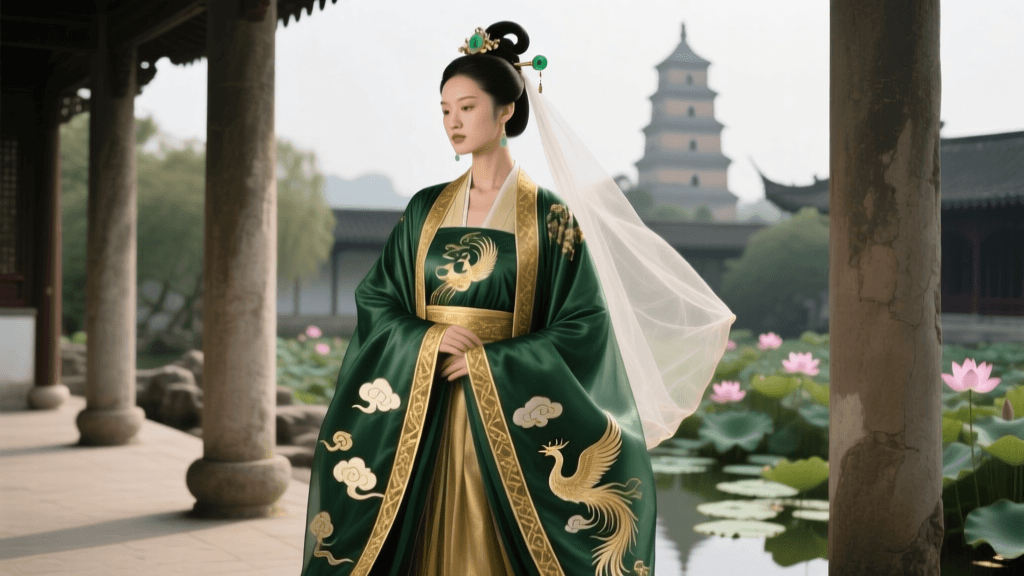
For modern Hanfu enthusiasts, historical reenactors, and cosplayers, recreating the clothing of Chinese mythology is a profound way to connect with cultural heritage. Unlike everyday historical dress, mythological Hanfu embraces theatricality, exaggerated silhouettes, and luxurious textiles. As noted by Encyclopædia Britannica, the visual language of Chinese deities often borrows from the highest echelons of imperial court dress, elevated by supernatural motifs like clouds, dragons, and lotuses. This guide provides actionable, practical advice for sourcing, tailoring, and styling traditional garments inspired by Chinese legends.
Archetypes of the Divine: A Styling Guide
To accurately portray a mythological figure, one must understand the sartorial codes associated with their archetype. Below is a comparison chart detailing the core garment types, recommended fabrics, and color palettes for three major mythological categories.
| Mythological Archetype | Primary Garment Type | Fabric Recommendation | Color Palette |
|---|---|---|---|
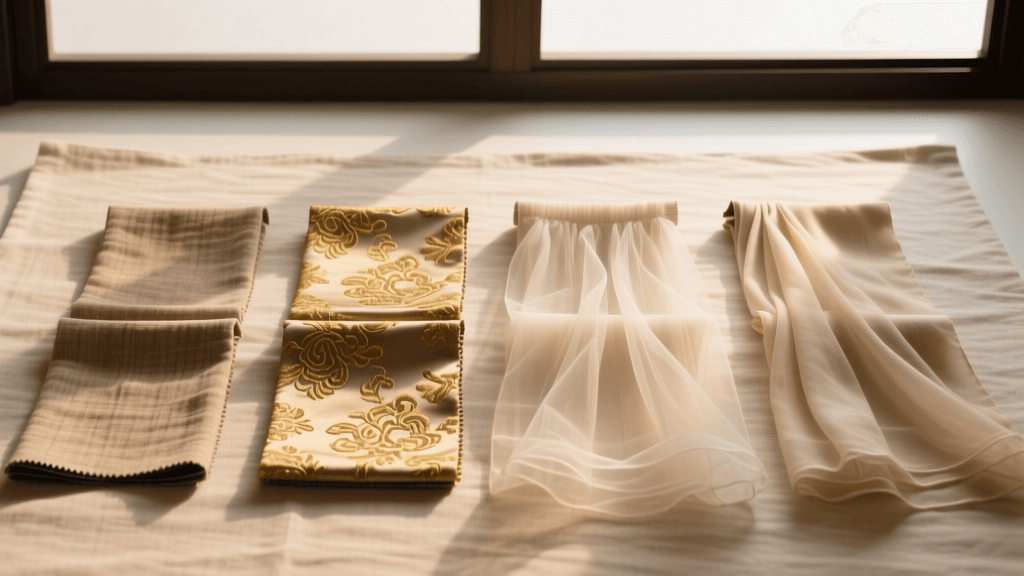
| Celestial Maiden (Xiannü / Feitian) | Daxiushan (Large Sleeve Shirt) & Pibo (Silk Scarf) | Silk Organza, Chiffon, 16mm Silk Charmeuse | Celadon, Pearl White, Pale Gold, Sky Blue |
| Martial Deity / Dragon King | Shanwen Kaijia (Armor) & Yuanlingpao (Round Collar Robe) | Heavy Brocade, Faux Leather, EVA Foam, 30mm Silk | Imperial Yellow, Crimson, Obsidian, Bronze |
| Fox Spirit (Huli Jing) / Nature Demon | Song Dynasty Beizi (Outer Coat) & Mamianqun (Horse-face Skirt) | Jacquard Weave, Crepe de Chine, Faux Fur Trim | Snow White, Fox Red, Ink Black, Silver |
The Celestial Maiden: Weaving the Clouds
The Celestial Maiden, or Xiannü, is perhaps the most iconic figure in Chinese mythological art, heavily inspired by the Dunhuang murals depicting Feitian (flying apsaras). The goal of this ensemble is to create an illusion of weightlessness and perpetual motion.
Actionable Tailoring Advice:
- The Daxiushan: This large-sleeved shirt requires extreme proportions. For a dramatic, divine silhouette, request a sleeve width of 60cm to 80cm, with the sleeve length extending 20cm past the fingertips. Use 16 momme silk charmeuse for the inner lining to provide opacity, and layer it with stiff silk organza for the outer shell to hold the bell shape.
- The Pibo (Silk Scarf): The Pibo is the defining accessory of the flying immortal. To achieve the floating effect seen in classical paintings, your Pibo must be at least 2.5 meters long and 40cm wide. Cut the edges on the bias and finish them with a narrow rolled hem to prevent fraying while maintaining fluid drape.
- Styling Tip: Drape the Pibo over the forearms and secure it lightly at the wrists with hidden elastic loops. This prevents the silk from slipping off during movement or outdoor photoshoots.
Martial Deities and the Dragon King: Armor of the Heavens
Deities of war, guardians of the realms, and the Dragon Kings of the Four Seas require garments that project authority, power, and invincibility. Their clothing bridges the gap between high-court formality and battlefield functionality.
Actionable Tailoring Advice:
- Shanwen Kaijia (Mountain-Pattern Armor): Historically, this armor was made of interlocking metal scales. For modern mythological cosplay, commission a set made from EVA foam sealed with Plasti Dip, or opt for a textile interpretation using heavy metallic brocade quilted in a diamond pattern. The shoulder guards (Pibo) should extend at least 15cm past the natural shoulder line to create an imposing, superhuman silhouette.
- The Yuanlingpao (Round Collar Robe): Worn beneath or instead of armor, this robe should feature a stiffened collar and side slits for mobility. Use 30 momme heavy silk or cotton-linen blends for structure. The garment must be tailored to the floor, with a hem circumference of at least 3.5 meters to allow for wide, martial stances.
- Mythological Motifs: According to The Metropolitan Museum of Art, silk weaving in China reached unparalleled heights in complexity, allowing for intricate motifs. If commissioning custom fabric, incorporate the Mang (four-clawed dragon) or the Feiyu (flying fish) patterns, which are historically associated with divine and imperial martial favor.
The Nine-Tailed Fox Spirit: Elegance and Enchantment
The Huli Jing (fox spirit) represents transformation, allure, and the untamed forces of nature. Unlike the rigid structure of martial deities, the fox spirit's wardrobe emphasizes fluidity, subtle sensuality, and layered elegance, often drawing from Song and Ming dynasty aesthetics.
Actionable Tailoring Advice:
- Song Dynasty Beizi: This long, open-front outer coat is perfect for portraying a sophisticated spirit. Choose a Beizi that falls below the knee, featuring narrow sleeves and side slits that reach the waist. A crepe de chine fabric with a subtle jacquard weave (such as plum blossoms or bamboo) adds tactile depth without overwhelming the silhouette.
- The Mamianqun (Horse-face Skirt): To mimic the swishing tail of a fox, the Mamianqun is essential. For a true mythological drape, the skirt requires 6 meters of fabric to create deep, sharp pleats. Opt for a gradient-dyed silk or a skirt with metallic woven borders (Lan) at the hem to catch the light during movement.
"She wore a robe of white fox fur, light as a cloud, and a skirt of crimson silk that rippled like water. Her movements were silent, yet the air around her hummed with ancient magic." — Adapted from classical Ming dynasty vernacular fiction.
Sourcing and Tailoring Mythological Hanfu
Acquiring garments that meet the specific demands of mythological styling requires navigating both ready-to-wear markets and custom tailoring services. Here is a practical breakdown of how to build your divine wardrobe.
Where to Buy
While mainstream Hanfu brands like Shisan Yu and Chong Hui Han Tang offer beautiful historical replicas, mythological and fantasy Hanfu (often categorized as Xianxia or Wuxia style) are best sourced from specialized Taobao studios or independent cosplayers on platforms like Xianyu and Etsy.
- Ready-to-Wear (Taobao): Expect to pay between $50 and $120 USD for a standard Xianxia Hanfu set. Look for shops with high ratings in the 'Fantasy/Performance' category.
- Custom Tailoring (Taobao Agents): For specific mythological accuracy, custom sets range from $150 to $350 USD. You will need to use an agent (like Superbuy or Wegobuy) to communicate with artisans who can weave custom brocades or hand-embroider deity motifs.
Crucial Measurements for Divine Proportions
Mythological Hanfu relies heavily on exaggerated proportions. When submitting measurements to a tailor, do not just provide your body metrics; provide your desired garment metrics.
- Arm Span: Measure from fingertip to fingertip. For celestial robes, add 40cm to this measurement to ensure the sleeves pool elegantly at the wrists.
- Hem Length: Measure from the navel to the floor, then add 10cm. Mythological figures are often depicted hovering or gliding; the extra fabric creates a pooling effect that hides the feet and enhances the illusion of levitation.
- Cross Collar Depth: Specify a deeper V-neck for the inner garments to allow for elaborate chest accessories and layered necklaces, typical of Daoist deity depictions.
Accessorizing the Immortals: Hair and Jade
No mythological ensemble is complete without the appropriate crown and ornaments. In Chinese mythology, hair represents spiritual energy and connection to the heavens.
Hairpins and Crowns: Invest in a Guan (crown) for martial or high-ranking deities, typically made of brass or carved wood. For goddesses and spirits, the Buyao (step-shake) hairpin is mandatory. The Buyao features dangling ornaments that tremble with every step. For a mythological upgrade, choose Buyao crafted with Kingfisher feather inlay (or modern enamel alternatives) and pearl drops. Ensure the main prong is at least 15cm long to anchor securely into thick, styled hairpieces.
Jade Ornaments: Jade is believed to protect the wearer from malevolent spirits. A Jinbu (jade step-tassel) worn at the waist not only adds visual weight to the flowing silk but also produces a soft, chiming sound that was historically associated with the presence of nobility and immortals. Source authentic Hetian jade pendants or high-quality glass resin replicas from specialized jewelry markets, budgeting around $40 for resin and $200+ for genuine nephrite.
Conclusion
Recreating the clothing of Chinese mythology is more than an exercise in costume design; it is a revival of ancient storytelling. By understanding the specific textiles, exaggerated measurements, and symbolic accessories required for each divine archetype, enthusiasts can bring the legends of the Dragon Kings, Fox Spirits, and Celestial Maidens into the modern world. Whether you are preparing for a cultural convention, a historical photoshoot, or a traditional festival, dressing the divine allows you to wear a piece of China's boundless mythological imagination.