The Ultimate Hanfu Fabric Guide: Linen, Brocade, Gauze & Organza
Introduction to Hanfu Textiles
The modern Hanfu revival movement has brought traditional Chinese clothing back to the global stage, blending historical authenticity with contemporary wearability. However, the true essence of Hanfu lies not just in its structural silhouettes—such as the flowing sleeves of the Tang dynasty or the pleated elegance of the Ming dynasty—but in the textiles themselves. Choosing the correct fabric is paramount for achieving the right drape, ensuring seasonal comfort, and honoring the historical context of the garment. Whether you are commissioning a bespoke piece, sewing your own, or purchasing from a modern Hanfu brand, understanding the nuances of linen, brocade, gauze, and organza will elevate your traditional wardrobe.
This comprehensive guide breaks down the foundational fabrics of traditional Chinese clothing, offering practical advice on sourcing, costs, care, and historical applications. By mastering these textiles, you can curate a Hanfu collection that is both historically informed and suited for modern daily life.
Linen (Ma): The Breathable Foundation
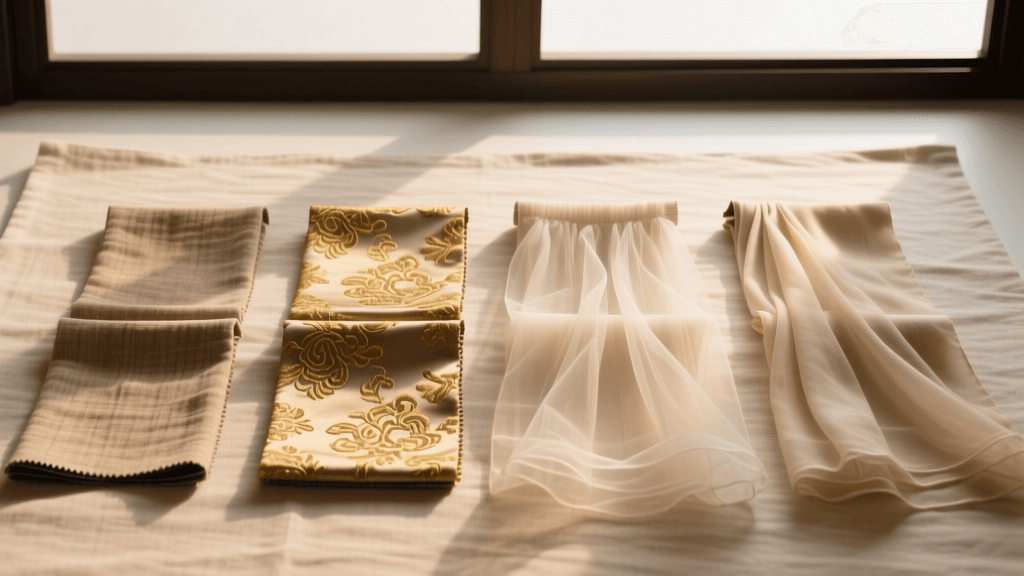
Long before silk became the dominant luxury textile, plant-based fibers were the cornerstone of Chinese clothing. Historically, before the widespread dominance of silk among the elite, linen and ramie were the primary textiles for the common populace and everyday wear. Known collectively as 'Ma' in ancient China, these fibers include ramie (Zhu Ma), hemp, and flax linen. Ramie, in particular, has been cultivated in China for thousands of years and is prized for its exceptional breathability, natural luster, and resistance to bacteria and mold.
In the context of modern Hanfu, linen and ramie blends are the undisputed champions of summer wear. They are most frequently used for Song dynasty styles, such as the lightweight Beizi (open-front jacket) and the simple, elegant Ruqun (blouse and skirt combinations). The fabric provides a crisp, structured drape that holds the architectural lines of Song-era collars beautifully, though it is prone to natural wrinkling, which many enthusiasts embrace as part of the fabric's organic charm.
Practical Guide to Linen Hanfu
- Cost: High-quality European flax linen or Chinese ramie-linen blends typically range from $15 to $35 per meter.
- Measurements: A standard Song Beizi requires approximately 2.5 to 3 meters of fabric, while a pleated linen skirt may require 3 to 4 meters.
- Care Instructions: Machine wash cold on a gentle cycle or hand wash. Linen shrinks if exposed to high heat, so always line dry. Iron on a high setting with heavy steam while the garment is still slightly damp to achieve a crisp finish.
Brocade (Zhi Jin): The Luxurious Statement
When discussing opulence in traditional Chinese dress, brocade reigns supreme. As noted by Encyclopedia Britannica, brocade features a raised, embossed pattern created by a complex supplementary weft technique, giving the fabric a rich, tapestry-like appearance. In Chinese textile history, the 'Three Famous Brocades' are Shu brocade from Sichuan, Song brocade from Suzhou, and Yun brocade from Nanjing. Each boasts unique weaving techniques, with Yun brocade historically reserved for imperial dragon robes due to its incorporation of gold and silver threads.
Today, brocade is the fabric of choice for formal Hanfu and cold-weather garments. It is most famously utilized in the Ming dynasty Mamianqun (horse-face skirt). The heavy weight and stiff drape of brocade are essential for the Mamianqun, as the fabric's structural integrity ensures that the deep, intricate knife pleats hold their shape perfectly without collapsing. Brocade is also used for winter Ao (padded or lined jackets) and formal ceremony garments.
Practical Guide to Brocade Hanfu
- Cost: Authentic woven brocade (especially silk-blend or pure silk) is an investment, ranging from $40 to over $150 per meter depending on the complexity of the jacquard weave and metallic thread content.
- Measurements: A traditional Ming Mamianqun requires a significant amount of fabric to create the overlapping panels and deep pleats. Expect to purchase between 4.5 and 6 meters of brocade, depending on your waist measurement and desired pleat depth.
- Care Instructions: Dry clean only. The complex weave and potential metallic threads will snag and warp in water. If ironing is necessary, use a low heat setting and always place a cotton pressing cloth between the iron and the brocade to prevent scorching or flattening the raised motifs.
Gauze (Luo & Sha): The Ethereal Summer Layer
Silk gauze represents the pinnacle of ancient Chinese summer luxury. According to UNESCO's Intangible Cultural Heritage listings, traditional sericulture and silk craftsmanship in China encompass highly specialized weaving techniques like those used for gauze. In historical texts, 'Luo' refers to a complex leno weave with diamond-shaped pores, while 'Sha' refers to a plain, sheer gauze. These fabrics were highly prized during the Tang and Song dynasties for creating ethereal, multi-layered looks that provided modesty without trapping heat.
One of the most coveted and historically significant gauze fabrics is Xiangyunsha, or Gambiered Canton Gauze. Originating from Guangdong, this fabric undergoes a painstaking dyeing process involving the juice of the Dioscorea cirrhosa tuber and iron-rich river mud, resulting in a dark, crackling, leather-like finish on one side and a matte black on the other. Modern Hanfu enthusiasts prize Xiangyunsha for high-end, bespoke Ming and Song summer garments, as well as elegant outer layers that catch the wind and light beautifully.
Practical Guide to Gauze Hanfu
- Cost: Standard silk Sha ranges from $30 to $60 per meter. Authentic, traditionally dyed Xiangyunsha is a premium luxury, costing between $80 and $250 per meter.
- Measurements: Because gauze is sheer, it is often used for outer layers like the Tang dynasty Pibo (shawl) or a sheer Song Beizi. A Pibo requires 2 to 2.5 meters, while a full-length sheer duster coat requires about 3.5 meters.
- Care Instructions: Hand wash gently in cool water with a pH-neutral silk detergent. Never wring or twist gauze, as the leno weave can distort. Roll in a towel to press out water and dry flat in the shade.
Organza & Modern Synthetics: The Contemporary Drape
While historical accuracy is a major pillar of the Hanfu community, practicality and budget often lead modern wearers to synthetic alternatives. Polyester organza and chiffon have become ubiquitous in the commercial Hanfu market, serving as affordable, durable stand-ins for silk Luo and Sha. Organza, with its stiff, wiry hand and sheer appearance, mimics the structural qualities of historical gauze but at a fraction of the cost.
Synthetic fabrics are particularly popular for everyday Hanfu, cosplay, and performance wear. A polyester organza Mamianqun, for instance, will hold its pleats remarkably well—sometimes even better than pure silk—because the synthetic fibers can be heat-set permanently. However, the trade-off is breathability; polyester traps heat, making it less suitable for the height of summer compared to natural silk or linen.
Practical Guide to Organza Hanfu
- Cost: Highly accessible, typically ranging from $5 to $15 per meter.
- Measurements: Similar to silk gauze, organza is often used for layered skirts, sheer outer jackets, and decorative Pibo shawls. Allow 3 to 4 meters for a layered, voluminous skirt.
- Care Instructions: Machine washable on a gentle cycle. Organza can be ironed, but it requires a very low, synthetic heat setting to prevent melting the fibers. Heat-pleating at home is possible with a low-heat iron and parchment paper.
Comprehensive Hanfu Fabric Comparison Chart
| Fabric Type | Historical Era Prominence | Best Hanfu Styles | Drape & Hand | Est. Cost (USD/m) | Maintenance Level |
|---|---|---|---|---|---|
| Linen / Ramie | Pre-Qin to Modern | Song Beizi, Everyday Ruqun | Crisp, structured, prone to wrinkles | $15 - $35 | Medium (Wrinkles, shrinks) |
| Silk Brocade | Tang, Song, Ming | Ming Mamianqun, Winter Ao | Heavy, stiff, luxurious, textured | $40 - $150+ | High (Dry clean only) |
| Silk Gauze (Luo/Sha) | Tang, Song, Ming | Sheer Beizi, Pibo, Summer Layers | Ethereal, lightweight, fluid, sheer | $30 - $250 | High (Delicate hand-wash) |
| Polyester Organza | Modern Adaptation | Performance Mamianqun, Cosplay | Stiff, sheer, holds pleats permanently | $5 - $15 | Low (Machine washable) |
Practical Sourcing and Buying Tips for Enthusiasts
When sourcing fabrics for your own Hanfu projects or evaluating commercial pieces, always consider the climate and the specific dynasty you are emulating. If you are commissioning a Ming dynasty outfit for an autumn wedding, request a medium-weight Song brocade or a silk-linen blend to ensure the garment has enough body to support the pleats while providing warmth. Conversely, for a Tang dynasty summer festival look, prioritize pure silk Sha or a high-quality ramie blend to ensure airflow and historical resonance.
Always purchase 10% to 15% more fabric than your calculated measurements dictate. Traditional Chinese tailoring relies on flat-cutting techniques and wide seam allowances, and natural fibers like linen and silk gauze can shrink or fray significantly during the pre-washing and finishing processes. Finally, when buying brocade online, always request a swatch. The digital representation of jacquard weaves often fails to capture the true scale of the motif or the metallic sheen of the threads, which can drastically alter the final look of your Mamianqun.
Conclusion
The beauty of Hanfu is inextricably linked to the textiles that give it form. From the humble, breathable roots of ancient linen to the imperial grandeur of woven brocade, and the sheer elegance of silk gauze, each fabric tells a story of Chinese technological and artistic achievement. By understanding the practical applications, costs, and care requirements of these materials, modern wearers can make informed choices that honor the past while seamlessly integrating traditional aesthetics into the present day.