Hanfu Travel Wardrobe 2026: Packing Essentials & Destination Guide
The Rise of the 2026 Hanfu Travel Wardrobe
In 2026, the global resurgence of traditional Chinese clothing has evolved from local street fashion into a major pillar of international cultural tourism. Travelers are no longer just visiting historical sites; they are immersing themselves in the destinations through the lens of traditional dress. However, traveling with Hanfu presents a unique set of logistical challenges. From preserving the razor-sharp knife pleats of a Ming Dynasty skirt to protecting delicate silk embroideries from the rigors of airline luggage, building a functional Hanfu travel wardrobe requires strategic planning.
Whether you are preparing for a Hanfu-themed photoshoot in Kyoto, attending a cultural festival in Paris, or exploring the ancient city walls of Xi'an, this comprehensive guide covers everything you need to know about packing, preserving, and styling your traditional garments on the road in 2026.
Building Your Hanfu Travel Capsule
The key to a successful travel wardrobe is versatility. Rather than packing bulky, highly ceremonial pieces, the modern Hanfu traveler in 2026 relies on a curated capsule wardrobe that blends historical accuracy with modern travel practicality.
The Song Dynasty Beizi (褙子)
The Song Dynasty Beizi is the ultimate travel outerwear. Characterized by its straight silhouette, side slits, and lightweight construction, the Beizi layers effortlessly over modern clothing or traditional undergarments. For travel, opt for a Beizi made from a 2026 Tencel-silk blend. These innovative fabrics offer the lustrous drape of traditional mulberry silk but possess the wrinkle-resistance and machine-washability required for life out of a suitcase.
The Ming Dynasty Mamian Qun (马面裙)
The Mamian Qun, or horse-face skirt, remains the most versatile piece in the Hanfu canon. Its flat front and back panels with pleated sides make it incredibly adaptable. For travel, select a skirt with a 4.5-meter hem circumference rather than the traditional 6-meter hem. This slightly reduced volume prevents the fabric from dragging on cobblestone streets or getting caught in subway doors, while still providing the iconic twirl for photography. As noted by the Metropolitan Museum of Art's Heilbrunn Timeline of Art History, Chinese silk and textile structures have historically adapted to global trade and movement; today's travel-friendly Mamian Qun continues this legacy of functional adaptation.
The Tang Dynasty Qixiong Ruqun (齐胸襦裙)
While more voluminous, the chest-high ruqun is essential for warm-weather destinations and specific cultural festivals. When packing this style, choose synthetic georgette or high-grade cupro. These materials mimic the ethereal, floating quality of Tang Dynasty silk paintings but are far less prone to water spotting and snags.
Strategic Packing and Wrinkle Prevention
Packing Hanfu requires a departure from standard folding techniques. The preservation of structural elements, particularly pleats and embroidered collars, is paramount.
The Pleat-Preservation Rolling Method
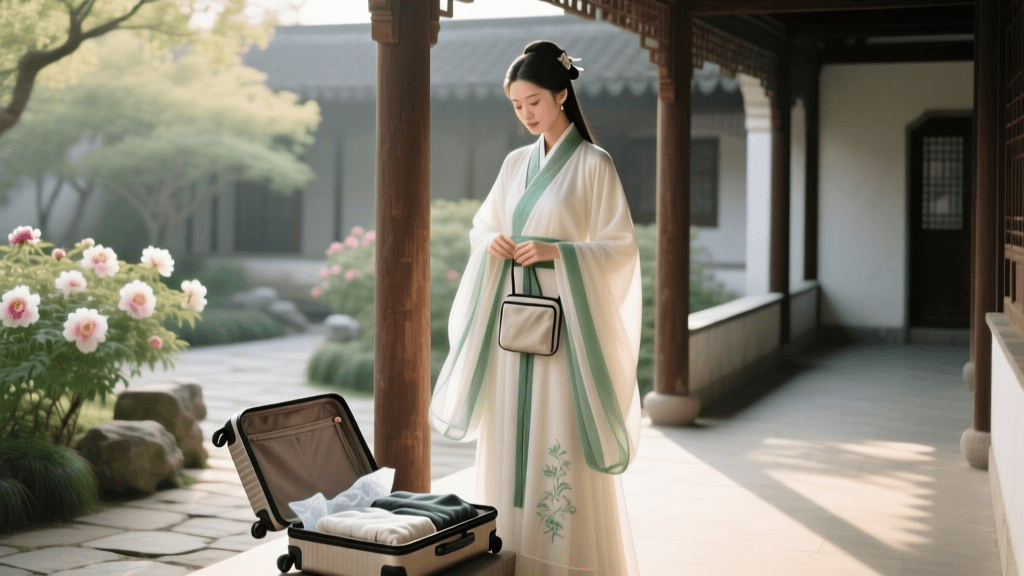
Never fold a Mamian Qun or a pleated Baidi skirt in half. Instead, lay the skirt flat on a clean surface. Align the pleats perfectly, and place a sheet of acid-free tissue paper over the fabric. Starting from the waistband, roll the skirt downward in a loose, continuous cylinder. The tissue paper prevents friction between the fabric layers, which is the primary cause of micro-wrinkles and pleat degradation. Place the rolled skirt into a dedicated silk garment bag.
Protecting Embroideries and Collars
Garments with heavy metallic thread embroidery or stiffened standing collars (like the Ming Dynasty Ao) require rigid support. Use flexible plastic collar stays or roll a soft cotton t-shirt and place it inside the collar before packing to maintain its circular shape. According to preservation guidelines highlighted by institutions like the Victoria and Albert Museum, maintaining the structural integrity of historical garment shapes during transit prevents permanent stress fractures in delicate threads.
Essential 2026 Travel Tech for Garment Care
- Dual-Voltage Portable Steamer: A compact, 100-240V steamer is non-negotiable. Look for models with a ceramic soleplate and a continuous steam output of at least 20g/min to effectively relax silk creases without direct contact.
- Static-Defying Spray: Winter travel to Northern China or Europe can cause synthetic Hanfu linings to cling. A travel-sized, alcohol-free anti-static spray is essential.
- Silk-Safe Stain Remover Pen: Opt for a water-based, enzyme-free stain pen designed specifically for protein fibers like silk and wool.
Destination-Specific Styling Guide
Adapting your Hanfu to your destination's climate, culture, and terrain is crucial for both comfort and aesthetic harmony. Below is a strategic guide for popular 2026 Hanfu travel destinations.
| Destination | Climate & Terrain | Recommended Hanfu Style | Fabric & Footwear Strategy |
|---|---|---|---|
| Kyoto, Japan | Humid summers, crisp autumns; gravel paths and wooden temples. | Song Dynasty Beizi over a simple pleated skirt. Minimalist aesthetics blend well with Zen gardens. | Breathable ramie or linen blends. Wear split-toe Tabi boots with cloud shoes (Yunxie) for gravel grip. |
| Paris, France | Mild, unpredictable rain; extensive walking on cobblestones and metro stairs. | Ming Dynasty Mamian Qun paired with a modern tailored blazer or turtleneck for 'Hanfu-fusion' street style. | Wrinkle-resistant Tencel-polyester blends. Leather Mary Janes or Chelsea boots instead of traditional cloth shoes. |
| Xi'an, China | Dry, hot summers and cold winters; expansive paved plazas and ancient walls. | Full Tang Dynasty regalia or elaborate Ming Dynasty Ao Qun for immersive Datang Everbright City night tours. | Rich brocades or heavy silks. Cushioned insoles are mandatory for traditional flat-soled embroidered shoes. |
| London, UK | Cool, damp, and windy; frequent transitions between outdoors and heated museums. | Layered Ming Dynasty Ao (jacket) with a thick, wool-blend Mamian Qun. Add a traditional cloak (Doupeng) for wind. | Wool-crepe and heavy jacquard. Waterproof leather ankle boots that can be hidden beneath the skirt hem. |
Footwear and Delicate Accessories
The right accessories elevate a Hanfu outfit, but they are notoriously difficult to transport.
Footwear: Balancing Tradition and Transit
Traditional Yunxie (cloud shoes) and Qiao shoes are beautiful but offer zero arch support and poor traction on wet surfaces. For 2026 travel, the trend is 'invisible modernization.' Many travelers opt for high-quality leather loafers, ballet flats, or low-profile ankle boots that match the hem color of their skirt. If you must wear traditional cloth shoes, invest in a pair of custom-molded orthotic inserts designed for flat footwear, and treat the soles with a waterproofing spray before your trip.
Packing Hairpins (Zan and Buyu)
Elaborate hairpins, especially the 'Buyu' (step-shake pins) with dangling enamel or pearl elements, are highly susceptible to bending and breaking in transit. Never pack these in soft pouches. Instead, use a hard-shell sunglasses case or a specialized jewelry roll with rigid compartments. Wrap each pin individually in microfiber cloth to prevent the metal from tarnishing and to stop the dangling elements from tangling with one another.
Caring for Traditional Textiles on the Road
Understanding the material science of your garments is vital when you are far from home. The UNESCO Intangible Cultural Heritage listings emphasize the deep historical roots of sericulture and silk craftsmanship in China. Because authentic silk is a protein fiber, it requires specific care that differs vastly from plant-based or synthetic fibers.
If you must wash a silk Hanfu piece in a hotel sink, never use standard alkaline laundry detergents, which will strip the silk's natural sericin coating and leave it brittle. Use a pH-neutral baby shampoo or a dedicated silk wash. Gently agitate the water, submerge the garment for no more than three minutes, and never wring or twist the fabric. Instead, lay the garment flat on a dry, clean bath towel, roll the towel up like a sleeping bag to press out the excess water, and then unroll and hang it in a well-ventilated area away from direct sunlight.
Conclusion
Traveling with Hanfu in 2026 is a deeply rewarding experience that bridges the gap between historical reverence and modern exploration. By curating a versatile capsule wardrobe, utilizing specialized packing techniques to protect pleats and embroideries, and adapting your styling to the specific demands of your destination, you can ensure that your traditional garments remain as breathtaking on the streets of Paris or Kyoto as they are in the halls of a museum. Pack smart, respect the textiles, and let your wardrobe tell a story that spans centuries and continents.